
Intro
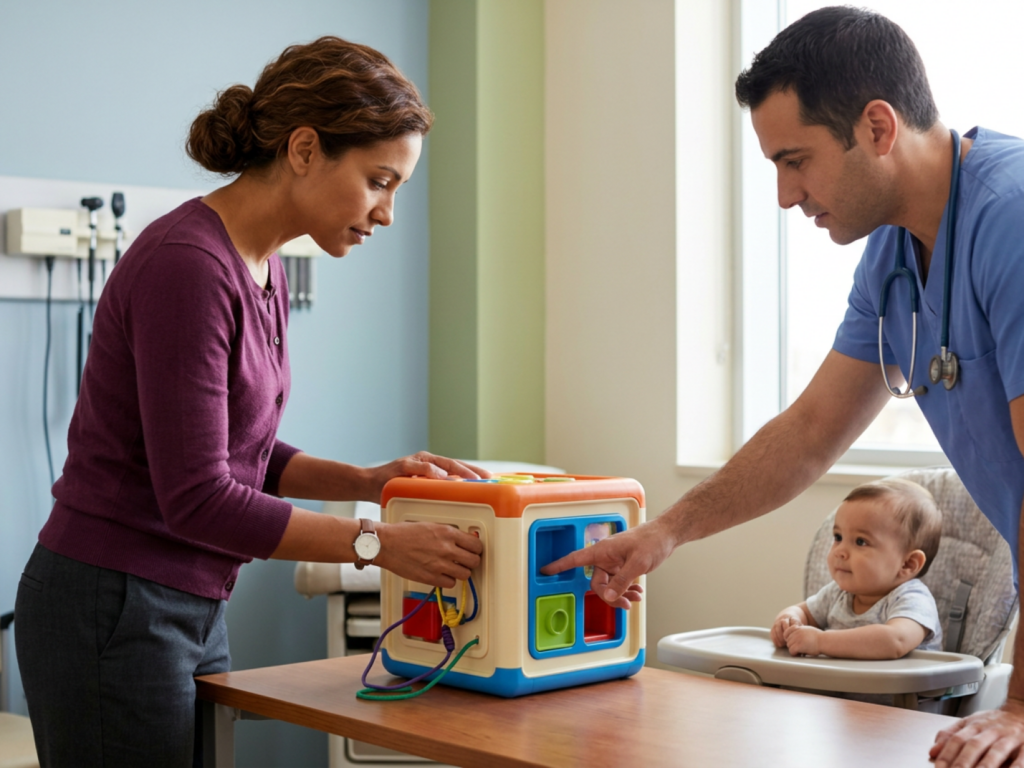
Choosing a toy for a baby is an act of care, but the number of products, labels, materials, and developmental claims can make the decision feel difficult. The safest choice is usually not the most elaborate toy. It is a well-constructed, age-appropriate object that matches your baby's current abilities and can be used under appropriate supervision.
Safety depends on both the toy and the way it is used. A toy that is appropriate for a six-month-old may be unsafe for a younger infant, and even a compliant product can become hazardous when damaged, modified, attached to a cord, or placed in a crib. Use the following criteria as a practical screening process, and consult your pediatrician or another qualified healthcare professional when your baby has specific medical, developmental, or feeding-related needs.
Highlights
Choose toys designed for your baby's current age, motor abilities, and developmental stage.
Prevent choking by avoiding small detachable parts and testing whether any component can fit entirely in a baby's mouth.
Treat button batteries, loose magnets, long cords, and broken components as high-priority hazards.
Inspect toys regularly, because wear, cracks, loose stitching, and battery-compartment damage can change a product's risk profile.
Use toys as part of supervised interaction rather than as unattended objects in a crib or sleep space.
Start with age, ability, and setting
Age recommendations are an important starting point, but they are not a substitute for observing your individual baby. A label such as “6 months and up” generally reflects expected motor skills, oral exploration, and the size or complexity of components. Consider whether your baby can sit, roll, crawl, pull, grasp, transfer objects between hands, or place items in the mouth. These abilities affect how a toy may be accessed and used.
Choose simple toys that match the baby’s current stage. Young infants may benefit from large, lightweight objects that are easy to grasp and visually inspect. As babies become more mobile, they can reach objects that were previously out of range, pull toys from shelves, and investigate parts by chewing or shaking them. A product that was safe on a supervised play mat may become unsafe when used near stairs, furniture, cords, pets, or older children’s small toys.
Read the entire package, including warnings, cleaning instructions, and limitations. A toy intended for supervised floor play may not be suitable for a high chair, stroller, bath, or car seat. Do not assume that a toy is safe simply because it is marketed for babies or described as educational. The relevant question is whether its design remains safe in the environment where your baby will actually use it.
Screen for choking and aspiration hazards
Choking is one of the most important toy-related risks during infancy because babies naturally explore objects orally and have immature airway-protection skills. Examine the complete toy and every detachable component. Buttons, wheels, beads, eyes, caps, foam pieces, ribbons, and sound-producing parts should not be loose or removable. Avoid toys with small parts for babies who still mouth objects, even when those parts are supplied as accessories.
Apply a strict rule to toys that can be pulled apart, unscrewed, or bitten into. If a component could fit entirely inside a baby’s mouth, it presents a potential choking hazard. Household substitutes such as coins, pen caps, bottle tops, and small construction pieces should also be kept out of reach. Older siblings’ toys require the same assessment, because a baby may crawl to them quickly.
Inspect stuffed animals, fabric books, and soft toys for detached eyes, loose seams, filling, plastic film, and long labels. Avoid toys that shed fibers or fragments when rubbed, chewed, or twisted. Do not give a baby toys with deflated balloons, balloon fragments, or easily torn latex components. If a toy breaks, remove all pieces immediately and do not return it to service merely because the damage appears minor.
Choking can be silent or rapidly progressive. If a baby cannot breathe, cry, or cough effectively, or becomes cyanotic or unresponsive, activate emergency services and follow current infant choking guidance from a qualified medical source. Do not perform blind finger sweeps, which can push an object farther into the airway.
Evaluate cords, loops, magnets, and batteries
Strangulation hazards often come from strings, cords, ribbons, straps, and loops rather than from the main toy body. Avoid toys with long cords or elastic attachments that can wrap around the neck, particularly when the baby is mobile. Do not attach toys to a crib, play yard, clothing, wrist, or stroller using an improvised cord. Remove crib toys and hanging mobiles when your baby begins pushing up on hands and knees or can reach them, and follow the manufacturer’s removal instructions.
Button or coin batteries are especially dangerous if swallowed. They can lodge in the esophagus and cause severe tissue injury within a short time, sometimes before obvious symptoms appear. Prefer toys with securely fastened battery compartments that require a tool to open. Check that the compartment has not cracked, warped, or lost its screw. Store spare batteries securely and recycle used batteries promptly rather than leaving them in drawers or bags accessible to children.
Magnets deserve particular caution. Small, high-powered magnets can cause serious gastrointestinal injury if more than one is swallowed or if a magnet is swallowed with another metal object. Avoid toys with loose, accessible, or poorly secured magnets. Do not rely on a baby appearing well after a suspected ingestion. Contact emergency services or a poison information service promptly for guidance, and do not induce vomiting unless instructed by a healthcare professional.
Remote controls, light-up toys, musical products, and novelty items may contain batteries or magnets that are not obvious from the exterior. Open and inspect the product before giving it to a baby, and reassess it after drops, chewing, or repeated use.
Check construction, materials, and labels
A safer toy should be sturdy, stable, and free of sharp edges, points, pinch areas, and splinters. Examine plastic for cracks, brittle areas, and rough molded seams. Wooden toys should be smoothly finished and free of splintering. Metal components should not protrude or have accessible rust, sharp edges, or unstable hinges. A rattle or shaker should remain sealed when twisted, dropped, or shaken with reasonable force.
Look for clear manufacturer information, age guidance, and applicable safety compliance labeling for the jurisdiction where you live. Traceability matters if a product is recalled. Be cautious with unbranded products, counterfeit items, toys purchased from informal marketplaces, or products with incomplete instructions. Safety standards reduce risk, but no label eliminates the need for inspection and supervision.
For materials, choose products from reputable manufacturers with transparent information about composition and intended use. Avoid toys with a strong chemical odor, peeling paint, accessible liquid, or surfaces that become sticky or powdery. Babies may mouth toys, but that does not mean every toy should be chewed. Do not use products in ways the manufacturer does not specify, such as freezing a toy that is not designed for freezing or filling a hollow toy with liquid.
Washable, nonporous surfaces are often easier to maintain than complex toys with deep seams, fabric layers, or inaccessible cavities. Follow the cleaning instructions and avoid harsh chemicals that could remain on the surface. If a toy cannot be cleaned after contamination with saliva, vomit, stool, or another body fluid, consider replacing it.
Use teething and sensory toys thoughtfully
Teething products require the same structural scrutiny as any other toy, with additional attention to chewing forces and temperature. Select a one-piece or securely constructed product intended for infants, without beads, detachable decorations, liquid-filled sections, or long attachments. Discard a teether at the first sign of cracking, tearing, stickiness, or missing material.
Avoid necklaces, bracelets, and other teething jewelry around a baby’s neck or within reach. They can present strangulation and choking risks, and they should not be used during sleep. Be cautious with products advertised as amber, healing, sensory, or pain-relieving accessories; marketing claims do not replace evidence-based pediatric advice.
Follow the product’s temperature instructions. A frozen object may be excessively hard or cold and can injure oral tissues. If a product is cooled, use only the method specified by the manufacturer and check it before offering it. Never apply medication, alcohol, honey, or another substance to a toy or a baby’s gums unless a healthcare professional has specifically advised it. Honey is not appropriate for infants under 12 months because of botulism risk.
For sensory toys, prioritize materials that are securely sealed and easy to clean. Avoid loose glitter, water beads, expanding polymers, and toys that can release small particles. A simple, washable object that supports grasping, reaching, or cause-and-effect play is often safer than a complicated product with multiple detachable features.
Manage toys during play, sleep, and travel
Supervision is an active safety measure, not merely being in the same room. Stay close enough to intervene when a baby is using a toy, especially when the toy contains moving parts, is used during feeding, or is being explored by mouth. Stop play if the baby becomes fatigued, frustrated, or begins using the toy in an unintended way.
Keep toys out of the crib and other sleep spaces unless your healthcare professional has given individualized advice for a specific medical circumstance. Soft toys, loose blankets, cords, and attached products can obstruct the airway or create entrapment risks. A toy should not be used to prop a baby, alter sleep position, or substitute for a firm, flat, separate infant sleep surface.
Secure toys during travel so they cannot become projectiles during sudden braking. Do not hang bulky or corded toys from a car seat unless the car-seat manufacturer explicitly permits the accessory. Keep small toys away from changing tables, sofas, and elevated surfaces where a baby may roll or reach unexpectedly. In the bath, use only products designed for water and maintain constant hands-on supervision; bath toys do not prevent drowning.
Create a regular toy audit. Inspect before first use, after washing, after a drop, and whenever the toy has been shared with another child. Search the manufacturer’s recall information when concerns arise, and remove recalled products immediately. Do not donate a damaged or recalled toy to another family.
Build a practical buying and inspection routine
A repeatable routine can make toy decisions less stressful. Before purchasing, identify the intended setting and ask whether the toy has small parts, cords, batteries, magnets, detachable components, or materials that are difficult to clean. Check the age range and manufacturer information. After purchase, register the product when possible so recall notices can reach you.
Before each use, look at seams, fasteners, battery compartments, paint, edges, and attachments. Shake and gently twist the toy according to its normal use, but do not deliberately create damage. If anything moves that should be fixed, feels sharp, leaks, sheds, or has changed shape, place the toy in a secure discard container. Do not repair a safety-critical component with tape, glue, thread, or a household fastener unless the manufacturer provides an approved repair method.
Keep a small number of age-appropriate toys available and rotate them rather than filling the play area. Fewer objects make inspection and cleaning easier and reduce the chance that a baby will encounter a small item from an older child’s collection. Ask caregivers, relatives, and childcare providers to follow the same rules, especially regarding batteries, jewelry, crib objects, and recalled products.
When a safety question involves your baby’s airway, swallowing, oral injury, developmental abilities, or a possible ingestion, contact a pediatrician, emergency service, or poison information service appropriate to your location. Professional advice is particularly important for premature infants, babies with neuromuscular conditions, impaired swallowing, or other individualized medical needs.
Safety warnings
- Keep button batteries, loose magnets, and spare batteries completely inaccessible.
- Never leave cords, straps, necklaces, or long loops around a baby's neck or in a sleep space.
- Remove toys with small detachable parts, cracks, loose seams, sharp edges, or leaking contents.
- Do not place soft toys, hanging toys, or loose accessories in an infant's crib.
- Treat suspected battery or magnet ingestion as urgent and seek immediate professional guidance.
Tools & Assistance
- Use a current consumer-product recall database for your country.
- Keep the local poison information service and emergency number available.
- Ask a pediatrician or occupational therapist about toy selection for individualized developmental needs.
- Inspect toys with a bright light and check battery compartments with the appropriate screwdriver.
- Create a labeled storage area separating infant toys from older children's small-part toys.
FAQ
Are age labels on toys reliable?
They are useful safety guidance based on expected abilities and product design, but they cannot account for every baby's motor development or oral behavior. Observe your baby and follow the more protective interpretation when uncertain.
Can a baby sleep with a soft toy?
Loose soft toys and other objects should generally be kept out of an infant's sleep space. Discuss any individualized medical circumstance with your pediatrician rather than modifying the sleep environment independently.
What should I do if a toy contains a button battery?
Choose a product with a securely fastened compartment and store spare batteries away from children. If ingestion is possible, seek urgent guidance from emergency services or a poison information service.
How often should baby toys be replaced?
There is no universal timetable. Replace a toy whenever it is damaged, difficult to clean, recalled, missing a component, or no longer appropriate for your baby's abilities or the setting.
Are teething necklaces safe for babies?
Teething necklaces, bracelets, and similar jewelry can create choking and strangulation hazards and should not be placed around a baby or used during sleep. Ask a pediatric healthcare professional about safer soothing options.
Sources
- Nemours KidsHealth — Choosing Safe Toys for Babies
- American Academy of Pediatrics — How to Buy Safe Toys
- Institut national de santé publique du Québec — Choosing toys
Disclaimer
This article provides general educational information and is not a substitute for individualized medical advice, diagnosis, or emergency care. Consult a qualified healthcare professional for concerns about your baby's development, swallowing, injury, or possible ingestion.














Please log in to leave a comment.