
Intro
Washing a baby’s hair can seem simple, but it often feels delicate in practice. Newborn and infant scalps are sensitive, babies are slippery when wet, and many caregivers worry about temperature, soap, and whether they are doing too much or too little.
The good news is that safe baby hair washing is usually straightforward: use warm water, a gentle cleanser when needed, support the head securely, and avoid harsh rubbing. If your baby has cradle cap, a common and usually harmless form of seborrheic dermatitis, scalp care may need a little extra gentleness and consistency.
Highlights
Most baby hair washing is about scalp care, not hair care. A mild baby shampoo and gentle rinsing are usually enough.
Safety starts before the first drop of water: keep one hand on the baby, prepare everything in advance, and use warm—not hot—water.
A baby’s scalp should never be scrubbed aggressively. Soft fingertips, light brushing, and careful loosening of scales are the safer approach.
Cradle cap often improves with regular gentle cleansing, but persistent, inflamed, or spreading rash deserves medical review.
If you are unsure how often to wash, or if your baby has skin conditions, ask a pediatrician or other healthcare professional for individualized advice.
Why baby hair washing needs a gentle approach
Babies have thinner skin and a more vulnerable scalp barrier than older children and adults. That means the goals of washing are modest: remove sweat, milk residue, oil, and debris without irritating the skin or causing temperature stress. In routine care, frequent shampooing is usually unnecessary unless your baby’s scalp becomes visibly dirty or your clinician has recommended a specific schedule.
For many families, the hardest part is not the shampoo itself but the handling. Babies may flinch at water on the face, become upset by cool air, or slip in your hands. A calm, organized routine reduces both risk and stress.
Prepare the space before you start
Preparation matters more than speed. Gather a basin, a cup or washcloth for rinsing, a soft towel, a clean brush if you use one, and a mild baby shampoo if needed. Make sure the room is comfortably warm so your baby does not get chilled.
Have everything within arm’s reach before you begin, because you should never need to step away from a wet baby. If you are washing hair during a bath, keep one hand supporting the baby securely at all times. If you are using a sponge bath for a newborn, you can still wash the scalp carefully with a damp washcloth and a very small amount of shampoo if needed.
How to wash the scalp safely
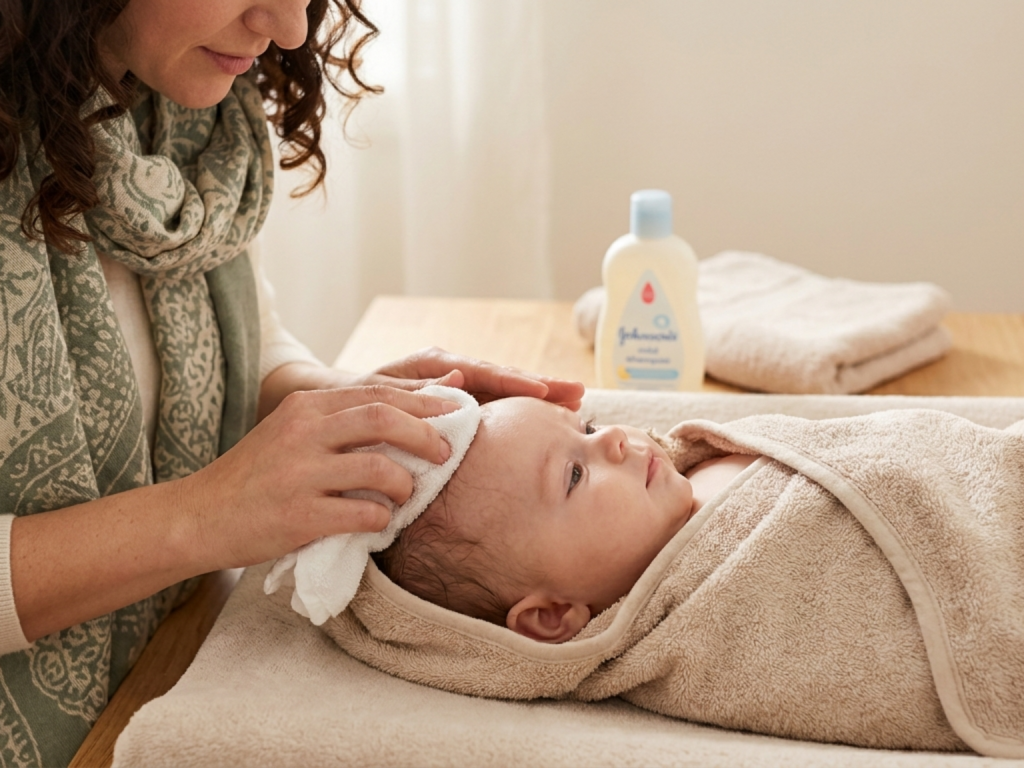
Start with warm water. Test it before contact; it should feel comfortably warm, not hot. Wet the hair and scalp gently, then apply a small amount of mild baby shampoo if needed. Work it in with your fingertips using light pressure rather than nails or vigorous rubbing.
Rinse thoroughly so residue does not remain on the skin. Leftover shampoo can contribute to dryness or irritation, especially in infants with sensitive skin. If your baby has very little hair, remember that the scalp itself is the focus. The cleaner the scalp, the cleaner the hair will be.
Keep the face clear of water as much as possible. Some caregivers use a washcloth across the forehead or tilt the head slightly back while rinsing. If water does reach the eyes, rinse gently with clean water and stay calm; most babies recover quickly from this temporary discomfort.
Washing a baby with cradle cap
Cradle cap is a common infant scalp condition, medically referred to as infantile seborrheic dermatitis. It often appears as greasy scales or yellowish flaking on the scalp and is usually not dangerous. Gentle washing can help loosen scale and reduce buildup.
A practical approach is to soften the scales first, then wash with a mild baby shampoo and rinse well. Some clinicians advise using a soft brush or washcloth to loosen scales carefully after washing. The key is restraint: do not pick, scratch, or force scales off, because that can irritate the skin and increase inflammation.
If cradle cap extends beyond the scalp, becomes red or oozing, or does not improve over time, medical assessment is appropriate. The appearance can overlap with other skin conditions, and caregivers should not try to self-diagnose a persistent rash.
Drying and aftercare
After rinsing, wrap the baby in a soft towel and pat the scalp dry. Patting is preferred over rubbing, which can irritate delicate skin. If your baby has a lot of hair, gently separate damp sections so the scalp dries fully.
A soft brush can be used after the bath if it is part of your routine and your baby tolerates it. For cradle cap, brushing should remain light and comfortable, not forceful. If you notice dryness, irritation, or increased flaking after washing, you may be overdoing the shampooing or using a cleanser that is too harsh.
In general, simplicity is safest. Many babies need only brief, gentle scalp cleansing as part of normal bathing, with no special products beyond a mild baby shampoo.
How often should you wash baby hair?
There is no single universal schedule that fits every infant. Some babies rarely need hair washing beyond occasional gentle cleansing, while others may need more regular scalp care if they have cradle cap or spit-up residue that reaches the hairline. The best frequency depends on your baby’s age, skin sensitivity, scalp condition, and environment.
Overwashing can strip natural oils and worsen dryness, while underwashing may allow scale or residue to accumulate. If your baby’s scalp is healthy, a gentle approach at bath time is often sufficient. If you are unsure, ask your pediatrician for a schedule tailored to your baby’s needs.
When to seek medical advice
Most baby scalp concerns are mild, but some signs deserve a professional look. Contact a healthcare professional if the scalp becomes very red, swollen, painful, crusted, bleeding, or oozing, or if your baby seems unwell. You should also ask for guidance if you are not sure whether the rash is cradle cap or something else.
Medical review is especially important if scalp scaling is severe, spreads beyond the head, or does not improve despite gentle care. Do not use medicated products, essential oils, or home remedies unless a clinician recommends them.
Safety reminders
- Never leave a baby unattended near water, even for a moment.
- Do not use hot water; always check that the temperature is comfortably warm.
- Avoid scrubbing, scratching, or picking at the scalp scales.
- Do not apply adult shampoos, fragranced products, or home remedies without professional advice.
- Seek medical care for redness, swelling, pain, oozing, or worsening rash.
Tools & Assistance
- A mild baby shampoo approved for infant use
- A soft washcloth or gentle baby brush
- A clean towel and a warm room
- Your pediatrician or family doctor for individualized advice
FAQ
Can I wash my newborn’s hair every day?
Usually no. Most newborns do not need daily shampooing unless a clinician recommends it. Gentle cleansing as needed is often enough.
Is cradle cap caused by poor hygiene?
No. Cradle cap is common in infants and is not a sign of poor care. Gentle washing can help, but it is not caused by being dirty.
Should I remove the scales from cradle cap?
Only very gently. Softening the scalp and loosening scales carefully is reasonable, but do not pick or force them off.
What shampoo is best for baby hair?
A mild baby shampoo is usually preferred. If your baby has sensitive skin or a scalp condition, ask a healthcare professional for guidance.
Sources
- Mayo Clinic — Cradle Cap (Seborrheic Dermatitis) in Infants
- National Health Service (NHS) — Your baby's first bath
- MedlinePlus — Cradle cap
Disclaimer
This article is for general informational purposes only and does not replace medical advice, diagnosis, or treatment. If your baby has a persistent rash, skin irritation, or any concerning symptoms, contact a qualified healthcare professional.















Please log in to leave a comment.