

Intro
Once the placenta has been delivered, birth enters a critical transition period sometimes called the fourth stage of labor. The baby is usually the emotional focus, but the birthing parent still needs close, calm, skilled observation while the uterus contracts, bleeding is assessed, and comfort, warmth, and bonding are supported.
Highlights
The first hour after placental delivery is a high-priority monitoring period because postpartum bleeding can change quickly.
Immediate care focuses on uterine tone, blood loss, vital signs, perineal assessment, cleanliness, warmth, hydration, and early parent-baby contact when clinically appropriate.
A firm, well-contracted uterus and controlled vaginal bleeding are reassuring signs, but ongoing assessment by trained clinicians remains essential.
Any heavy bleeding, faintness, severe pain, fever, or concern for retained placental tissue should be treated as urgent.
The fourth stage begins
After placenta delivery after birth, the clinical priorities shift from completing the third stage of labor to stabilizing the birthing parent and newborn. This period is often called the fourth stage of labor, and it usually includes at least the first hour after the placenta has been delivered. Even when birth has been uncomplicated, the body is making rapid physiologic adjustments: uterine muscle fibers contract to compress blood vessels at the placental site, blood pressure and pulse may shift, and adrenaline can give way to trembling, exhaustion, thirst, or intense emotion.
Good immediate care is practical and observant. The clinician or birth attendant confirms that the placenta and membranes appear complete, assesses the uterus, estimates or measures blood loss, checks the perineum or surgical field, and supports warmth and cleanliness. The mother and baby are commonly kept in the delivery room for close observation for at least one hour after placental delivery, because the earliest postpartum changes can be the most clinically significant.
This is also a time for respect and reassurance. Many people feel relief, awe, anxiety, nausea, shaking, or a sense of being overwhelmed. Supportive care means explaining what is being checked, asking about pain and dizziness, maintaining privacy, and keeping the parent involved in decisions whenever possible.
Uterine tone and bleeding
The uterus is assessed frequently because postpartum uterine tone is central to bleeding control. After the placenta separates, open maternal blood vessels remain at the placental attachment site. A firm, contracted uterus compresses those vessels. A soft or boggy uterus can suggest uterine atony after birth, one of the major mechanisms behind postpartum hemorrhage risk. Clinicians may palpate the uterine fundus through the abdomen, usually near or below the umbilicus soon after delivery, and may massage the uterus if it is not firm.
Blood loss is watched closely, not guessed casually. Care teams may check the amount of blood on pads, linens, drapes, or calibrated collection devices, and they interpret this alongside vital signs and symptoms. A sanitary pad or clean cloth is often placed to collect blood and make ongoing bleeding easier to assess. Normal lochia can include blood and small clots, but persistent heavy flow, rapidly saturating pads, large clots, pallor, dizziness, faintness, or a rising pulse requires immediate clinical attention.
In many settings, active management of the third stage includes a uterotonic medication such as oxytocin around the time of birth or placental delivery, controlled cord traction when appropriate, and uterine assessment after the placenta is delivered. These interventions are intended to reduce postpartum hemorrhage risk, but the exact approach depends on setting, risk factors, route of birth, and local protocols. Patients should not self-administer uterotonics or attempt to manage heavy bleeding without emergency medical care.
Checking the placenta and birth canal
Inspection of the placenta is an important immediate step. The clinician looks at the maternal surface, membranes, and umbilical cord to see whether the placenta appears complete. Missing cotyledons, torn membranes, unusual bleeding, or concern for retained placental tissue may prompt further evaluation. This does not mean every abnormal-looking placenta leads to a complication, but it helps the team decide whether additional assessment is needed.
The birth canal is also examined. After a vaginal birth, the perineum, vagina, cervix when indicated, and any episiotomy or tear are assessed for bleeding and repair needs. Sometimes bleeding continues despite a firm uterus because of a laceration, hematoma, or genital tract trauma. In that situation, uterine massage alone will not solve the problem, and skilled examination matters. Pain that is severe, one-sided, worsening, or associated with pressure may also need prompt evaluation.
For cesarean birth, the same physiologic issue of uterine contraction applies, but the care occurs in the operating room and recovery area. The surgical team manages placental separation during cesarean, checks uterine bleeding, closes the uterus and abdominal layers, monitors anesthesia recovery, and continues postpartum observation. Postpartum bleeding after C-section is assessed through surgical findings, vaginal bleeding, uterine tone, vital signs, and overall clinical status.
Vital signs, symptoms, and comfort
Immediate postpartum monitoring usually includes pulse, blood pressure, uterine tone, bleeding, temperature when indicated, bladder status, pain, and overall appearance. A person can lose a clinically important amount of blood before feeling dramatic symptoms, so objective observation is essential. Tachycardia, low blood pressure, cold clammy skin, confusion, shortness of breath, or marked weakness can be concerning, especially when paired with increased bleeding.
Comfort care should happen alongside clinical monitoring. Clean linens, a dry gown, perineal pads, warm blankets, help changing position, and respectful handling can make the first hour feel less frightening. Shivering is common after birth and may be related to physiologic stress, temperature changes, medications, or fluids, but it should still be interpreted in context. Pain relief options depend on the birth route, perineal repair, anesthesia, breastfeeding plans, allergies, bleeding risk, and clinician judgment.
The bladder deserves attention because a full bladder can interfere with uterine contraction and make bleeding harder to control. The care team may encourage urination when safe, assist with mobility, or use catheter care if one is already in place after epidural anesthesia or cesarean birth. Nausea, thirst, hunger, and fatigue are also addressed gradually, according to clinical status and local policy.
Hygiene and infection prevention
After the placenta is delivered, basic hygiene is not cosmetic; it supports safety, dignity, and accurate observation. The mother is cleaned gently, soiled materials are removed, and the delivery area is tidied. A sanitary pad or clean cloth helps collect blood and makes changes in bleeding visible. The placenta is disposed of safely according to facility policy, local regulation, and any prior cultural or personal arrangements that are compatible with infection-control requirements.
Hand hygiene, clean gloves for examinations, sterile or clean technique for repairs, and careful handling of sharps and contaminated materials reduce infection risk. The immediate postpartum uterus and genital tract are vulnerable because tissue may be injured and the placental site is a healing wound. Fever, foul-smelling discharge, increasing pelvic pain, or feeling acutely unwell later should be discussed urgently with a healthcare professional.
Privacy and consent remain part of safe care. Examinations should be explained before they occur, and the patient should know why fundal checks, pad checks, perineal inspection, or additional procedures are being done. When urgent bleeding is present, care may need to move quickly, but clear communication still helps reduce fear and supports informed participation whenever possible.
Parent-baby contact and feeding
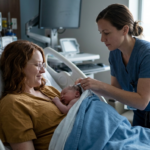
When both parent and newborn are stable, skin-to-skin contact after birth can continue or begin soon after the placenta is delivered. This supports newborn thermoregulation, bonding, and early feeding cues. It also allows the care team to observe both patients in the same space: the baby’s breathing, color, tone, and warmth, and the parent’s bleeding, uterine tone, comfort, and alertness.
The first breastfeed after birth often happens during this early period, but timing should be individualized. Some babies latch quickly; others need time, positioning help, or assessment. A parent who is dizzy, heavily bleeding, sedated, recovering from surgery, or emotionally overwhelmed may need practical support to hold the baby safely. Feeding support should never distract from maternal stabilization. If the parent or baby needs urgent care, bonding can be protected in other ways, such as partner-supported closeness, expressed colostrum when appropriate, or reuniting as soon as medically feasible.
Newborn care may include drying, warmth, identification procedures, Apgar assessment, cord care, prophylactic medications or vaccines according to local policy, and monitoring for breathing or transition concerns. These steps should be coordinated so the parent is not unnecessarily separated from the baby when both are well.
When care escalates
Immediate postpartum care is designed to identify problems early, not to imply that complications are expected. Escalation may be needed for heavy bleeding, a uterus that remains soft despite massage, suspected retained placental tissue, genital tract trauma, abnormal vital signs, severe pain, loss of consciousness, seizure, or signs of shock. Depending on the situation, clinicians may call for additional staff, administer medications, start intravenous fluids, obtain blood tests, prepare blood products, examine the uterus or birth canal, or transfer to a higher level of care.
Some people have higher baseline risk and may need more intensive observation. Risk factors can include prior postpartum hemorrhage, prolonged labor, multiple pregnancy, chorioamnionitis, anemia, hypertensive disorders, operative birth, cesarean birth, uterine overdistension, or a history of retained placenta after vaginal birth. Risk, however, is not destiny; complications can also occur after apparently low-risk births, which is why routine observation matters for everyone.
Before leaving the birth room, recovery area, or birth setting, the patient should understand who is monitoring them, how bleeding is being assessed, when to ask for help, and which symptoms are urgent. The immediate hour is only the beginning of postpartum recovery, but careful care at this point can prevent delays, reduce complications, and help the new parent feel seen as a patient as well as a parent.
Seek urgent help
- Heavy bleeding, soaking pads quickly, or passing large clots needs immediate medical assessment.
- Fainting, severe dizziness, chest pain, shortness of breath, confusion, or cold clammy skin can be emergency signs.
- A uterus that feels persistently soft or bleeding that continues despite a firm uterus should be evaluated urgently.
- Severe pelvic, abdominal, perineal, or one-sided pain should not be dismissed.
- Fever, foul-smelling discharge, or feeling acutely unwell after birth warrants prompt professional care.
Tools & Assistance
- Call the maternity unit, birth center, or emergency services for heavy bleeding or collapse symptoms.
- Use postpartum pads to help clinicians estimate bleeding; avoid tampons immediately after birth.
- Ask the care team to explain fundal checks, placental inspection, and any recommended medications or procedures.
- Keep a support person nearby during the first hours if possible, especially when standing or walking for the first time.
- Attend recommended postpartum follow-up and seek earlier review for warning signs.
FAQ
How long is close monitoring needed after the placenta is delivered?
Many protocols keep the mother and baby in the delivery room for at least one hour after placental delivery, with continued monitoring based on clinical status, birth route, bleeding, and risk factors.
Is uterine massage always necessary?
Clinicians often assess the fundus frequently and may massage the uterus if it is soft or bleeding is concerning. The need and frequency depend on uterine tone, bleeding, comfort, and local clinical practice.
How much bleeding is normal right after birth?
Some bleeding is expected, but heavy flow, rapidly soaked pads, large clots, dizziness, faintness, or worsening weakness should be treated as urgent and assessed by a healthcare professional.
Can skin-to-skin continue during postpartum checks?
Often yes, if both parent and baby are stable. Care teams can usually assess bleeding, uterine tone, and newborn transition while supporting skin-to-skin contact.
What happens if the placenta looks incomplete?
The clinician may evaluate for retained placental tissue or ongoing bleeding. Further examination or treatment depends on symptoms, uterine tone, blood loss, and the overall clinical picture.
Sources
- NCBI Bookshelf — LABOUR, DELIVERY AND IMMEDIATE POSTPARTUM CARE
- World Health Organization — Labor and Delivery protocol
- Médecins Sans Frontières — Normal third stage of labour
Disclaimer
This article is for general medical information and does not replace care from a qualified healthcare professional. Seek urgent medical help for heavy bleeding, collapse symptoms, severe pain, fever, or any concern after birth.

















Please log in to leave a comment.