
Intro
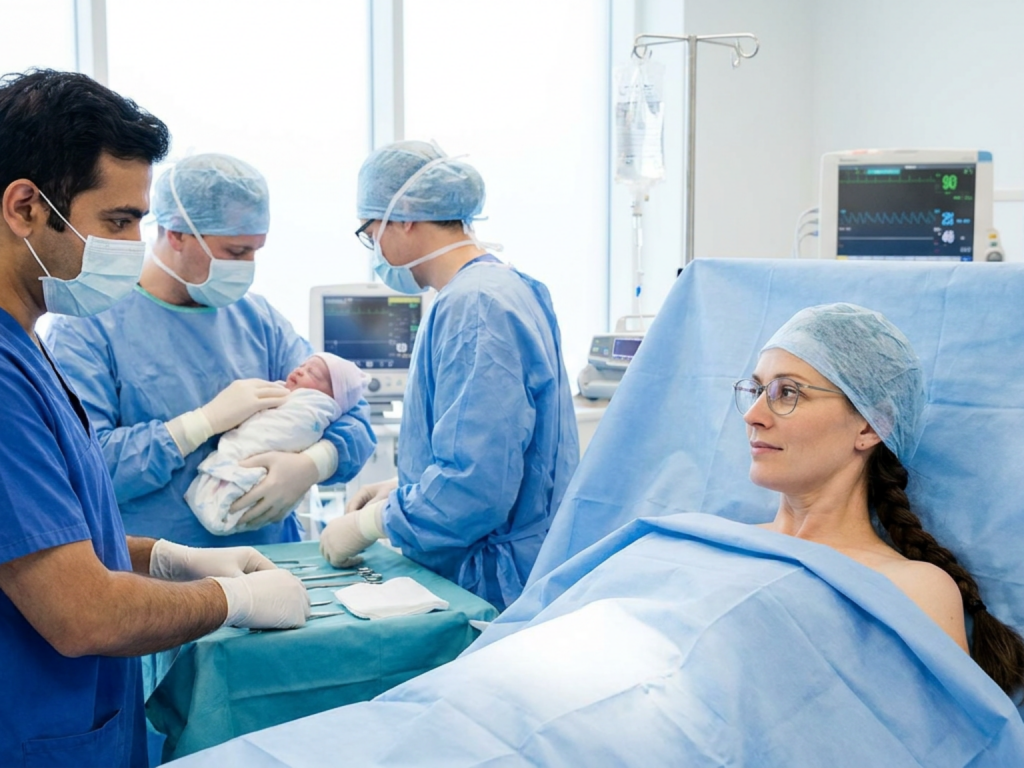
In a cesarean birth, the baby’s delivery is often the moment everyone has been waiting for, but the operation is not finished once the baby is born. The placenta also needs to be delivered, the uterus assessed, bleeding controlled, and the uterine and abdominal incisions closed.
Understanding placenta delivery during C-section can make the surgical timeline feel less mysterious. While your own care plan depends on your anatomy, pregnancy history, placenta location, bleeding risk, and the clinical situation, the overview below explains what commonly happens and why your obstetric team may choose one technique over another.
Highlights
Placenta delivery is part of the surgical sequence after the baby is born and the umbilical cord is clamped or managed according to the birth plan and clinical situation.
In a cesarean section, the placenta is usually separated and removed through the uterine incision rather than being pushed out through the vagina by contractions.
Techniques vary: some clinicians use controlled cord traction, while others manually remove the placenta depending on safety, bleeding, and placental separation.
The team checks the uterus for bleeding, retained placental tissue, tone, and surgical complications before closing the uterine and abdominal incisions.
Where placenta delivery fits in the C-section timeline
A cesarean section is a surgical birth in which the baby is delivered through incisions in the abdomen and uterus. After the baby is lifted out, the surgical team usually manages the umbilical cord, confirms newborn stability, and then turns attention to the placenta and uterus. This is sometimes described as the third stage of birth, although in cesarean delivery it occurs within the operative field rather than through the birth canal.
In many C-sections, placenta delivery happens within minutes after the baby is born, but timing can vary. The team may wait briefly if delayed cord clamping is appropriate, or act more quickly if there is heavy bleeding, an unstable newborn, placenta previa, suspected placental adherence, or another urgent concern. After the placenta is delivered, the surgeon inspects the uterus, controls bleeding, and closes the uterine incision. The abdominal layers are then closed. From the patient’s perspective, this part may feel quieter or longer than expected because the baby has already arrived, yet the operation still requires careful surgical completion.
How the placenta is removed during cesarean birth
During vaginal birth, uterine contractions and gentle traction help the placenta separate and descend through the vagina. During C-section, the uterus is open, so the placenta is delivered through the uterine incision. The clinician looks for signs that the placenta has separated from the uterine wall, such as bleeding behind the placenta, lengthening of the cord, or visible separation at the placental edge.
Two broad approaches may be used. With controlled cord traction, the clinician gently guides the placenta out by traction on the umbilical cord while supporting the uterus and watching for safe separation. With manual removal, the clinician places a hand inside the uterus to separate and remove the placenta directly. Many patients have heard that the doctor “physically removes” the placenta during a C-section, and that can be accurate, especially when manual removal is needed. However, surgical practice varies, and some evidence suggests cord traction may have advantages when it is feasible and safe.
The goal is the same in either approach: remove the entire placenta and membranes, minimize blood loss, avoid unnecessary uterine trauma, and reduce infection risk.
Cord traction versus manual removal
Controlled cord traction and manual placental removal are not simply stylistic preferences; they have different implications. A systematic review summarized in PubMed found that manual removal of the placenta at caesarean section was associated with higher risks such as more endometritis, greater blood loss, and longer hospital stay compared with cord traction. The review concluded that placental delivery with cord traction offered advantages including less endometritis, less blood loss, and shorter hospital duration.
That does not mean cord traction is always possible or that manual removal is always wrong. If the placenta does not separate, bleeding is brisk, the cord is fragile, the uterus is difficult to access, or there is concern about retained tissue, the surgeon may need to use a hand to complete the delivery. In urgent or complex surgery, the safest method is the one that allows prompt control of bleeding and complete placental removal.
Patients do not need to choose the technique in the moment, but it is reasonable to ask during prenatal planning how your hospital generally manages placenta removal during C-section, especially if you have a history of postpartum hemorrhage, uterine surgery, placenta previa, or infection after a previous birth.
What the surgical team checks after the placenta is out
Once the placenta is delivered, the team does several important checks before closing. The placenta may be examined to see whether it appears complete, with no obvious missing lobes or membranes. The uterine cavity can be checked for retained placental fragments or clots. The surgeon evaluates the uterine incision, the placental implantation site, and the overall uterine tone.
Bleeding control is central at this stage. The uterus normally contracts down after placental separation, compressing blood vessels where the placenta was attached. If the uterus is soft, a condition called uterine atony, bleeding can increase. Clinicians may use uterine massage, medications that help the uterus contract, suturing techniques, or additional interventions depending on the clinical picture. Specific medication choices depend on the patient’s medical history and should be directed by the obstetric team.
The team also considers infection prevention. Cesarean birth is abdominal surgery, and the uterus has been opened. Sterile technique, appropriate perioperative antibiotics when indicated, efficient placental delivery, and careful removal of tissue all help reduce complications. Finally, the uterine incision is closed with stitches, and the abdominal wall is repaired layer by layer.
Special situations: retained placenta, previa, and accreta spectrum
Most placenta deliveries during C-section are straightforward, but some pregnancies require additional planning. Placenta previa, where the placenta covers or lies near the cervix, is a common reason for planned cesarean delivery and can increase bleeding risk depending on placental location. The surgeon may need to modify the uterine incision or delivery sequence to avoid cutting through the placenta when possible.
A more serious issue is placenta accreta spectrum, in which the placenta attaches too deeply into the uterine wall and may not separate normally. In suspected accreta, attempts to manually peel the placenta away can cause severe hemorrhage. These cases are usually managed with advance planning, blood bank readiness, experienced surgical teams, and sometimes cesarean hysterectomy. The exact approach is highly individualized.
Retained placental tissue can also occur if fragments remain inside the uterus. During C-section, the open uterus gives the surgeon direct access to inspect and clear tissue, but no method eliminates risk completely. After birth, persistent heavy bleeding, fever, worsening pain, or foul-smelling discharge may indicate a complication and should be assessed promptly. If you were told your placenta was difficult to remove, ask what was found and what follow-up is recommended.
What you may feel, hear, and ask about
Most C-sections are performed with regional anesthesia, such as spinal or epidural anesthesia, so the patient is awake but should not feel sharp pain. During placenta delivery, you may notice pressure, tugging, rocking, or movement of the body. These sensations can be surprising, but they are usually related to surgical manipulation of the uterus and abdomen. If you feel pain, nausea, shortness of breath, panic, or anything that worries you, tell the anesthesia professional immediately.
Because the baby may be nearby, in skin-to-skin contact, or receiving newborn assessment, you may not see the placenta being delivered. Some families want to know whether the placenta was complete, whether it looked normal, or whether it will be sent to pathology. Pathology examination may be recommended after certain complications, growth concerns, infection concerns, stillbirth, abnormal placental appearance, or other medical indications.
If you want a family-centered cesarean experience, discuss preferences before surgery when possible: delayed cord clamping, seeing the baby, partner presence, skin-to-skin, whether you want to see the placenta, and what should happen if urgent bleeding changes the plan. Your preferences matter, and so does surgical safety.
Recovery considerations linked to placental delivery
Placenta delivery is one part of a larger postoperative recovery. Blood loss, uterine tone, infection risk, and completeness of placental removal all influence how closely you are monitored after surgery. In the recovery area and postpartum unit, nurses and clinicians typically check vital signs, vaginal bleeding, uterine firmness, pain control, urine output, and the incision. Some vaginal bleeding, called lochia, is expected after C-section because the placental site inside the uterus still needs to heal.
It can be emotionally complex to learn that the placenta required extra manipulation, that bleeding was heavier than expected, or that an abnormality was found. These details can sound frightening, especially when you are tired and recovering. Ask your obstetrician for a plain-language explanation before discharge: whether the placenta separated normally, whether blood loss was within expected range, whether pathology was ordered, and whether any warning signs apply specifically to you.
At home, follow your discharge instructions and contact your care team if symptoms feel outside the expected pattern. Recovery is not a test of toughness; timely help is part of safe postpartum care.
Seek urgent medical advice if these occur
- Heavy bleeding that soaks a pad quickly, large clots, dizziness, or fainting.
- Fever, chills, worsening uterine tenderness, or foul-smelling vaginal discharge.
- Severe or increasing abdominal pain not relieved as expected after surgery.
- Redness, swelling, pus, opening, or worsening pain at the incision.
- Shortness of breath, chest pain, one-sided leg swelling, or sudden weakness.
Tools & Assistance
- Ask your obstetric team to review the operative note before discharge.
- Keep a written list of postpartum warning signs and emergency contact numbers.
- Use scheduled postpartum follow-up to discuss placental pathology results if ordered.
- Track bleeding, temperature, pain level, and incision appearance during early recovery.
- Seek urgent maternity triage or emergency care for severe bleeding or concerning symptoms.
FAQ
Is the placenta delivered through the same incision as the baby?
Yes. In a C-section, the placenta is generally delivered through the uterine incision before the uterus and abdomen are closed.
Will I feel the placenta being removed?
With regional anesthesia, you may feel pressure, pulling, or movement, but you should not feel sharp pain. Tell the anesthesia team immediately if you do.
Is manual removal of the placenta always used?
Not always. Some clinicians use controlled cord traction when safe. Manual removal may be needed depending on separation, bleeding, and surgical circumstances.
Can placental removal cause bleeding?
Bleeding can occur after placental separation because the placental site contains open blood vessels. The team monitors uterine tone and uses appropriate measures to control bleeding.
Can I ask to see the placenta after a C-section?
Often yes, if the clinical situation allows and hospital policy permits. If pathology examination is needed, handling options may be limited.
Sources
- PubMed — Methods of delivering the placenta at caesarean section
- Mayo Clinic — C-section
- Healthline — Placenta Delivery: What to Expect
Disclaimer
This article is for general educational purposes only and is not a substitute for individualized medical advice, diagnosis, or treatment. Always consult your obstetrician, midwife, anesthesiologist, or emergency services for concerns about cesarean birth or postpartum symptoms.
















Please log in to leave a comment.