
Intro
The first hours after a home birth are a period of physiologic transition for both newborn and parent. The priorities are simple but important: support breathing and warmth, start feeding early, monitor bleeding and recovery, and make sure help is available quickly if anything changes.
This stage is usually calm, but it should not be casual. Even when birth has gone well, the baby still needs thermal protection, observation, and early feeding support, and the parent needs assessment for bleeding, pain, blood pressure concerns, and overall recovery. The goal is not to do everything at once; it is to do the right things in the right order and know when to escalate.
Highlights
Drying, warmth, and skin-to-skin contact are immediate priorities because newborns lose heat quickly after birth.
Early breastfeeding or other early feeding support helps the baby stabilize and gives useful information about alertness and suck.
A home birth still needs a documented early postnatal check, ideally within 24 hours, for both baby and parent.
Warning signs in the first hours include breathing difficulty, poor tone, excessive sleepiness, heavy bleeding, or maternal collapse.
The safest home-birth plan includes a low threshold for contacting the midwife, obstetric team, pediatric clinician, or emergency services.
Set the first priorities: warmth, breathing, and observation
The first minutes after a home birth should be organized around a small number of clinical priorities. The newborn should be dried promptly, placed skin-to-skin on the parent when possible, and covered to preserve heat. Newborn thermoregulation is fragile, and heat loss can happen quickly in a room that feels comfortable to adults.
At the same time, the baby should be observed for breathing effort, color, tone, and responsiveness. A vigorous newborn often settles on the parent’s chest, but a baby who is limp, blue, gasping, or not breathing normally needs immediate skilled assessment. If a resuscitation-capable clinician is present, neonatal resuscitation steps should be started without delay.
Skin-to-skin contact after birth is not just a bonding measure. It supports temperature stability, helps regulate heart rate and breathing, and makes early feeding more likely. Keep the environment warm, reduce unnecessary handling, and avoid separating the baby unless a clinical reason exists.
Support the first feeding without forcing the timeline
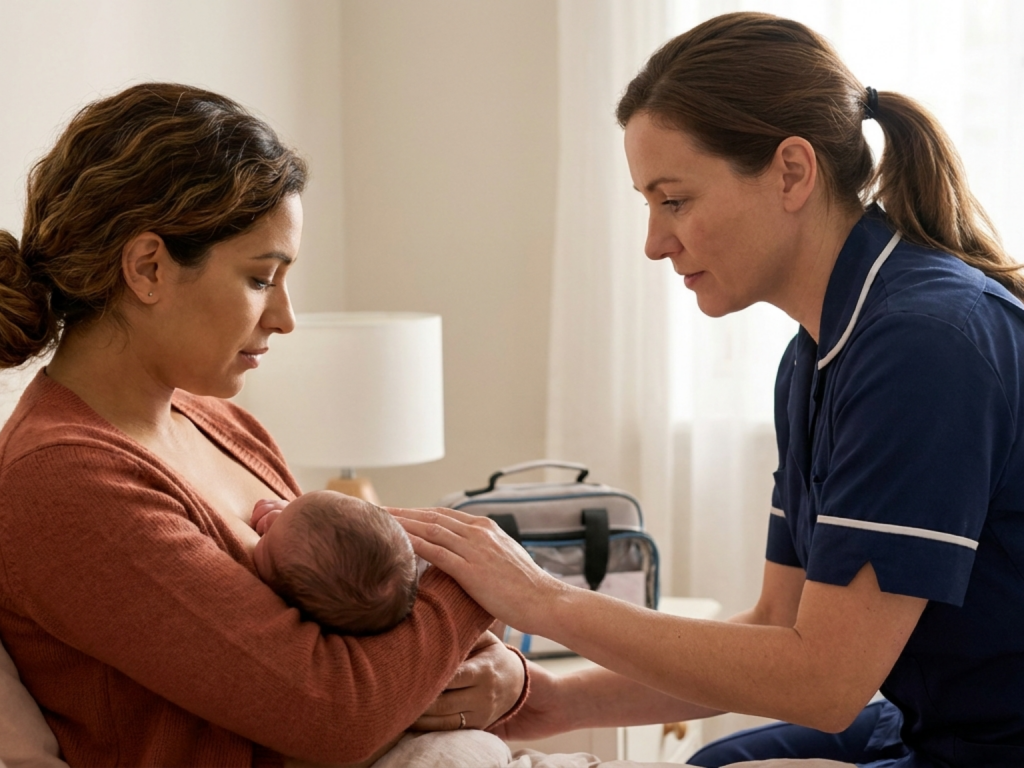
Early feeding is one of the main tasks of the first hours after home birth. WHO guidance supports breastfeeding within the first hour when feasible, but the practical aim is broader: help the baby find the breast, assess latch and suck, and watch for coordinated swallowing and sustained interest. If breastfeeding is not possible, the same principle applies to the chosen feeding plan, with direct support from the care team.
The first feeding tells you a lot. A newborn who roots, latches, and transfers milk or colostrum is demonstrating neurologic and physiologic adaptation. A baby who remains sleepy, disorganized, or unable to feed may simply need more time, but that pattern can also signal hypothermia, low blood sugar risk, or another issue that deserves assessment.
Do not treat the first feed as a performance test. The goal is to support attachment, position the baby well, and reassess if feeding is delayed or weak. If there are concerns about the latch, suck, or alertness, ask for a newborn feeding assessment rather than trying to troubleshoot alone for hours.
Watch the birthing parent closely in the first hours
Immediate postpartum care at home is not only about the newborn. The parent needs monitoring for bleeding, uterine tone, pain, dizziness, and general recovery. Normal after-birth bleeding can be expected, but it should not be steadily soaking pads or accompanied by faintness, pallor, or a rapid decline in well-being. The uterus should feel firming over time as it contracts; poor uterine tone can increase bleeding risk.
Check for headache, severe weakness, shortness of breath, chest pain, or any sense that the parent is becoming less responsive. If the birth involved tears, perineal discomfort or swelling is common, but severe pain or rapidly increasing pain is not something to ignore. Hydration, rest, and a calm environment matter, but they do not replace clinical observation.
Postpartum care also includes practical support: help the parent eat, drink, urinate when able, and change position safely. Rest is not passive luxury; it is part of recovery. MedlinePlus notes that postpartum care should include attention to healing, bleeding, pain control, and emotional state, all of which apply in the immediate home-birth period.
Know the difference between normal transition and danger signs
Many newborns are sleepy, briefly unsettled, or slow to feed in the earliest hours, and many parents feel shaky, tired, or emotionally intense after labor. Those can be normal findings. The question is whether the overall pattern is stable or trending in the wrong direction.
Concerning newborn findings include persistent breathing difficulty, grunting, marked retractions, cyanosis, poor tone, limpness, repeated vomiting, failure to wake for feeds, or temperature instability. An infant who seems increasingly difficult to arouse or does not respond normally should be assessed promptly.
For the parent, urgent concerns include heavy bleeding, passing large clots, fainting, severe headache, chest pain, shortness of breath, severe abdominal pain, or rapidly worsening weakness. Severe anxiety or confusion also deserves attention, especially if it is new or extreme. These are not issues to watch casually at home; they require immediate clinical contact.
It is better to call early than to wait for a clearer pattern. The first hours are exactly when subtle deterioration can become obvious, and home-birth care works best when escalation is built into the plan.
Arrange early postnatal follow-up within 24 hours
WHO recommends that when birth occurs at home, the first postnatal contact should happen as early as possible and within 24 hours. That visit or contact matters even when everything seems to be going well. It gives the clinician a chance to reassess the newborn’s temperature, feeding, breathing, jaundice risk, urine and stool output, and overall adaptation. It also allows review of maternal bleeding, blood pressure concerns when relevant, pain, and recovery.
This early review is especially important if the birth was rapid, there were any complications, or the family is uncertain about feeding and normal newborn behavior. It is also the right time to check whether the home environment supports safe care, including warmth, access to supplies, and a clear plan for what to do if the baby or parent worsens.
If a clinician is not already scheduled to come, contact the birth attendant, midwife, or local postpartum service as soon as possible. The point is not bureaucratic compliance. It is to avoid missing a problem that may not be obvious during the first calm hour.
Make the home environment support care rather than complicate it
The best home-birth setup in the first hours is simple, warm, and low-distraction. Keep the room comfortably warm, prepare clean towels and blankets, and place essential items within reach so the parent does not need to move excessively. Minimize unnecessary visitors and avoid frequent transfers of the baby from one person to another, because repeated handling can interfere with thermoregulation and feeding cues.
Good organization also means knowing who is responsible for what. One person should be able to observe the baby, one should track the parent’s bleeding and comfort, and one should know how to call the midwife, clinician, or emergency services if needed. That kind of clarity is especially useful when everyone is tired.
Home birth can be a safe setting for immediate recovery when the room is prepared for observation, prompt contact, and easy escalation. The first hours do not need to be elaborate. They need to be calm, warm, and clinically watchful.
Seek urgent help immediately if any of these occur
- The newborn is not breathing normally, is limp, or has persistent blue or gray color.
- The newborn is too sleepy to feed or shows repeated difficulty waking for feeds.
- The parent has heavy bleeding, fainting, chest pain, shortness of breath, or severe headache.
- There is rapidly worsening pain, confusion, or a sudden change in alertness.
- You cannot reach the birth attendant or a clinician and the situation feels unstable.
Tools & Assistance
- Contact information for the attending midwife or birth clinician
- A thermometer and clean blankets for newborn thermal care
- A postpartum bleeding tracker and pad count plan
- A clear emergency transport plan with local emergency numbers
FAQ
How soon should a clinician check after a home birth?
As early as possible, and within 24 hours, according to WHO guidance for home births.
Is skin-to-skin contact safe right away?
Usually yes, and it is encouraged when the baby is stable, because it supports warmth, breathing, and early feeding.
What if the baby does not feed in the first hour?
That can happen, but it should be reassessed promptly. Persistent sleepiness or poor feeding needs clinical review.
How much bleeding is too much for the parent?
Heavy bleeding, rapidly soaking pads, large clots, or dizziness are warning signs and should trigger urgent medical contact.
Sources
- World Health Organization — Essential newborn care
- World Health Organization — WHO recommendations on maternal and newborn care for a positive postnatal experience
- MedlinePlus — Postpartum Care
Disclaimer
This article is for general educational purposes and does not replace individualized medical care. If you have any concern about the newborn or birthing parent, contact a qualified clinician or emergency services promptly.
















Please log in to leave a comment.