
Intro
Real labor can feel powerful, unfamiliar, and emotionally intense, even for someone who understands the physiology well. The sensations are not only about cervical dilation and uterine contractions; they are also shaped by fatigue, fetal position, support, environment, expectations, and whether you feel informed and respected.
This article describes common physical and emotional patterns of real labor while recognizing that every birth is individual. If you are unsure whether you are in labor, have concerning symptoms, or feel something is not right, contact your maternity unit, midwife, obstetrician, or emergency services according to your local guidance.
Highlights
Real labor contractions usually become progressively stronger, longer, and closer together, and they often continue despite hydration, rest, or position changes.
Labor pain can feel crampy, wave-like, pressure-heavy, sharp, or back-centered depending on stage of labor, fetal position, and individual pain processing.
A sense of control, respectful communication, and continuous support can significantly influence how labor is remembered, not just how intense it felt in the moment.
Prolonged labor can be physically and emotionally exhausting, and research links longer active labor with a higher risk of negative birth experience.
Some symptoms, such as heavy bleeding, decreased fetal movement, fever, severe constant pain, or preterm contractions, warrant prompt medical advice.
Real labor is rhythmic, progressive, and hard to ignore
Real labor is often recognized less by a single dramatic sign and more by a pattern. Labor contractions tend to become more regular, more intense, and more difficult to talk or walk through. In physiologic terms, the uterus contracts from the fundus downward, increasing intrauterine pressure so the cervix effaces and dilates while the fetal presenting part descends. To the person experiencing it, this may feel like a tightening that builds, peaks, and releases in waves.
Unlike Braxton Hicks contractions, which are often irregular and may ease with fluids, rest, or a change in position, real labor usually continues to organize. The interval between contractions may shorten, the duration may lengthen, and the recovery time may begin to feel precious. Many people describe a shift from curiosity to concentration: during each contraction, attention narrows and the body demands focus.
Still, real labor does not always begin with textbook timing. Some labors start with period-like cramps, low backache, pelvic heaviness, or bowel-like urgency. Some people have waters breaking before contractions become strong. Others have a long latent phase in which contractions are real but cervical change is slow. Because patterns vary, timing contractions at home is useful, but it should not replace clinical guidance when symptoms are concerning.
The sensation of contractions: waves, cramps, pressure, and release
A contraction in real labor often feels like a wave with a beginning, a peak, and an end. Early on, it may resemble strong menstrual cramps, gastrointestinal cramping, or a tightening band across the lower abdomen. As labor advances, the same wave can become more consuming: the abdomen hardens, breathing changes, and the pelvis may feel compressed from the inside.
Labor pain has both visceral and somatic components. Visceral pain in first-stage labor comes largely from cervical dilation, uterine ischemia during contractions, and stretching of the lower uterine segment; it is often diffuse and referred to the lower abdomen, sacrum, hips, or thighs. Later, somatic pain during descent and birth arises from distension of the vagina, pelvic floor, perineum, and surrounding tissues; it is usually more localized, sharper, and associated with intense pressure.
The relief between contractions matters. In many uncomplicated labors, the pause allows the body to recover briefly, even when the next wave is approaching quickly. People may become quiet, inward, nauseated, shaky, tearful, or focused on a single coping strategy. These reactions do not mean someone is failing. They are common neuroendocrine and emotional responses to an intense, hormonally driven physiologic event.
Early labor versus active labor
In early labor, contractions may be uncomfortable but still manageable. You might be able to eat lightly, shower, rest between waves, or speak through parts of a contraction. The cervix is changing, but the pace may be uneven. This phase can be emotionally tricky because anticipation is high and uncertainty is common. Some people feel excited and energized; others feel frustrated if contractions continue for many hours without seeming to intensify.
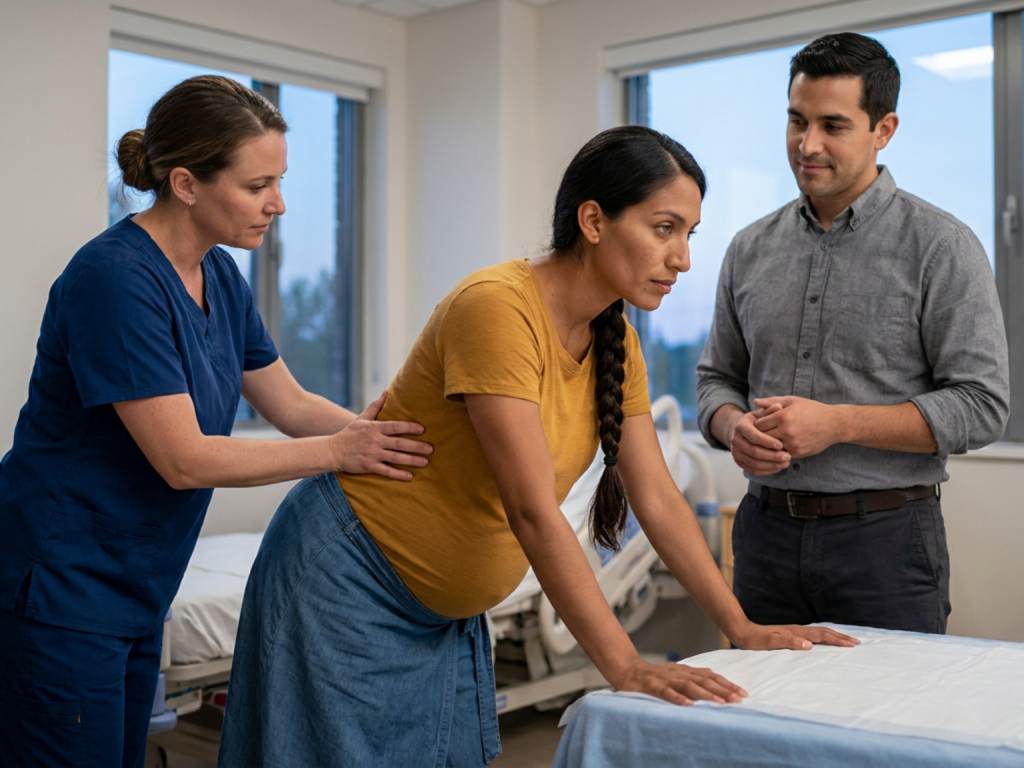
Active labor contractions are usually harder to ignore. Many clinicians define active labor around more rapid cervical change, often beginning near 6 cm dilation, though individual assessment matters. The physical feeling often shifts toward deeper pelvic pressure, stronger abdominal tightening, and a greater need for support. You may stop wanting conversation, close your eyes during contractions, vocalize, sway, lean forward, or need counterpressure on the sacrum.
The experience also depends on labor duration. A population-based study reported that prolonged active labor was associated with a higher risk of a negative birth experience, particularly when active labor extended beyond long-duration thresholds. This makes intuitive sense: pain intensity is important, but cumulative time under stress, sleep deprivation, hunger, uncertainty, and repeated decision-making can profoundly affect what labor feels like. If labor is long, compassionate communication and ongoing reassessment are not luxuries; they are part of good care.
Transition: when labor can feel overwhelming
Transition in labor, the late part of the first stage before full dilation, is often described as the most intense phase. Contractions may come close together, with little time to recover. The cervix is nearing complete dilation, the fetus may be descending, and pressure may increase rapidly. Physically, people may feel shaking, nausea, sweating, chills, hot flashes, burping, vomiting, rectal pressure, or a strong urge to escape the situation.
Emotionally, transition can sound like, “I cannot do this,” even in someone who is coping well. That statement can reflect the intensity of the stage rather than a literal inability. Supportive reassurance, clear updates, and permission to take one contraction at a time can be grounding. If pain relief during childbirth is desired or already in place, the care team can discuss options and assess whether additional measures are appropriate.
It is also important not to assume every overwhelming sensation is normal transition. Sudden severe constant pain, heavy bleeding, fever, persistent abnormal fetal heart rate concerns, or a feeling that something is dangerously wrong should be assessed promptly. Labor is intense, but clinical vigilance remains essential.
Back labor, pelvic pressure, and the urge to push
Some people feel contractions mainly in the abdomen; others feel them in the back, hips, or sacrum. Back labor from fetal position may occur when the fetal occiput is posterior or when pressure is concentrated against the sacral nerves and pelvic structures. It can feel like deep, grinding, persistent pain that does not fully disappear between contractions. Counterpressure, position changes, hands-and-knees posture, side-lying positions, or movement may help some people, but persistent or severe pain should be discussed with the care team.
As the fetal head descends, pressure can become the dominant sensation. Rectal pressure in labor is commonly described as needing to have a bowel movement. This can be surprising or embarrassing, but it is physiologically understandable: the presenting part compresses the rectum, pelvic floor, and pudendal nerve distribution. The urge to push may begin as a subtle bearing-down reflex and then become involuntary and powerful.
During pushing, sensations may shift from diffuse contraction pain to intense stretching, pressure, burning, or splitting feelings at the vaginal opening and perineum. Some people feel relief because pushing gives the intensity a direction; others find it exhausting or frightening. Guided versus spontaneous pushing, epidural labor analgesia, fetal position, pelvic floor tone, and prior births can all influence what this stage feels like.
What emotions feel like during real labor
Real labor is not only a pain experience; it is a meaning-filled event occurring in a vulnerable state. Fear can amplify pain through sympathetic nervous system activation, muscle tension, and hypervigilance. Safety, privacy, and calm explanation can reduce perceived threat. Many people move in and out of confidence: one contraction may feel manageable, the next may feel impossible, and the next may bring renewed determination.
Research on birth experience consistently shows that choice and control matter. In one study, women’s recollections of birth were strongly related to whether they felt they had choice and control, rather than simply to which interventions occurred. This is clinically important. A cesarean birth, induction, epidural, assisted vaginal birth, or unmedicated labor can be remembered positively when a person feels informed, respected, and involved. Conversely, even an uncomplicated birth can feel distressing if someone feels ignored or coerced.
Continuous support can also change the emotional texture of labor. Evidence summarized by the National Partnership for Women & Families reports benefits from continuous labor support, including shorter labors and fewer negative ratings of childbirth experience. Support may come from a trained doula, midwife, nurse, partner, or other trusted person. The key is not performance; it is steady presence, advocacy, reassurance, and helping the laboring person stay connected to their own preferences.
How to tell your team what you are feeling
When labor intensifies, precise language can be difficult. It may help to describe the pattern and quality rather than trying to prove whether it is “real enough.” Tell your clinician how often contractions are coming, how long they last, whether you can talk through them, where the pain is strongest, whether the pain fully releases, whether your waters have broken, and whether fetal movement feels normal for your baby.
Useful descriptions include: “The pain is coming in waves and fully stops between contractions,” “The back pain is constant,” “I feel strong rectal pressure,” “I am shaking and nauseated,” “I feel the urge to push,” or “This pain feels different from the contractions.” If you have bleeding, fever, decreased fetal movement, severe headache, visual symptoms, chest pain, shortness of breath, or contractions before term, say so clearly and seek prompt advice.
If you are planning to labor at home for a time, ask your care team in advance what contraction timing pattern they want you to use and what symptoms should override timing rules. Many people are told to call when contractions are regular, strong, and close together, but recommendations vary by parity, distance from hospital, membrane status, pregnancy risk factors, and local protocols. Your individual plan should come from your healthcare professionals.
Why real labor can feel different for every person
Two people can have similar cervical dilation and contraction frequency yet describe labor very differently. Pain threshold, prior trauma, anxiety, fatigue, fetal position, induction medications, membrane rupture, pelvic anatomy, inflammation, sleep deprivation, cultural expectations, and support all affect perception. A person who feels calm and well-supported may experience intense pain as purposeful. A person who feels unsafe or unheard may experience the same intensity as threatening.
Medical interventions can also change sensation. Oxytocin augmentation may create contractions that feel stronger or closer together for some people. Amniotomy may increase pressure once the cushioning effect of fluid is reduced. Epidural analgesia may reduce pain substantially while leaving pressure, movement, or awareness of contractions. None of these experiences is morally better or worse. The goal is safe, respectful care and a birth experience in which the laboring person is treated as an active participant.
Real labor often feels like crossing a threshold: the body takes over, time becomes contraction-by-contraction, and support becomes essential. It may feel powerful, painful, frightening, beautiful, exhausting, or all of these within the same hour. If your labor does not match someone else’s story, that does not make it less real. Your sensations deserve to be heard, assessed, and supported.
When to seek urgent medical advice
- Call your maternity unit promptly for decreased fetal movement or a major change from your baby’s usual pattern.
- Seek urgent help for heavy vaginal bleeding, severe constant abdominal pain, fainting, chest pain, or shortness of breath.
- Contact your clinician if your waters break, especially if fluid is green, brown, foul-smelling, or you have fever.
- Get assessed for regular contractions before 37 weeks or any preterm labor warning signs.
- Ask for immediate guidance if you feel the urge to push and are not already with your birth team.
Tools & Assistance
- Use a contraction timer to record start time, duration, frequency, and intensity pattern.
- Keep your maternity unit or obstetric triage phone number easily accessible.
- Prepare a short symptom script: contractions, fluid, bleeding, fetal movement, pain location, and gestational age.
- Arrange continuous labor support from a trusted partner, doula, midwife, nurse, or support person.
- Discuss pain relief options and hospital arrival guidance with your healthcare professional before labor.
FAQ
Can real labor start without dramatic pain?
Yes. Some labors begin with mild cramps, backache, pelvic pressure, or irregular contractions that gradually organize. Contact your care team if you are unsure or have concerning symptoms.
Does back pain mean something is wrong?
Not necessarily. Back labor can occur with normal labor, especially depending on fetal position, but severe constant pain or pain that feels unusual should be assessed.
Will I know when to push?
Many people feel intense rectal pressure or an involuntary bearing-down urge, but epidural analgesia or fetal position can alter this sensation. Your birth team can assess cervical dilation and guide you.
Is it normal to feel scared during transition?
Yes, many people feel overwhelmed, shaky, nauseated, or frightened during transition. Support and reassurance help, but symptoms that feel dangerous or abnormal should always be reported.
What if my labor feels different from what I read?
That is common. Labor sensations vary widely. Trust your observations, communicate clearly, and seek professional guidance when you are uncertain.
Sources
- Nature — Maternal childbirth experience and time in labor: a population-based study
- PubMed Central — Women's choice and control impact birthing experiences
- National Partnership for Women & Families — Research and Evidence
Disclaimer
This article is for general educational information and is not a diagnosis or treatment plan. Always consult your midwife, obstetrician, maternity unit, or emergency services for personal medical advice.


















Please log in to leave a comment.