
Intro
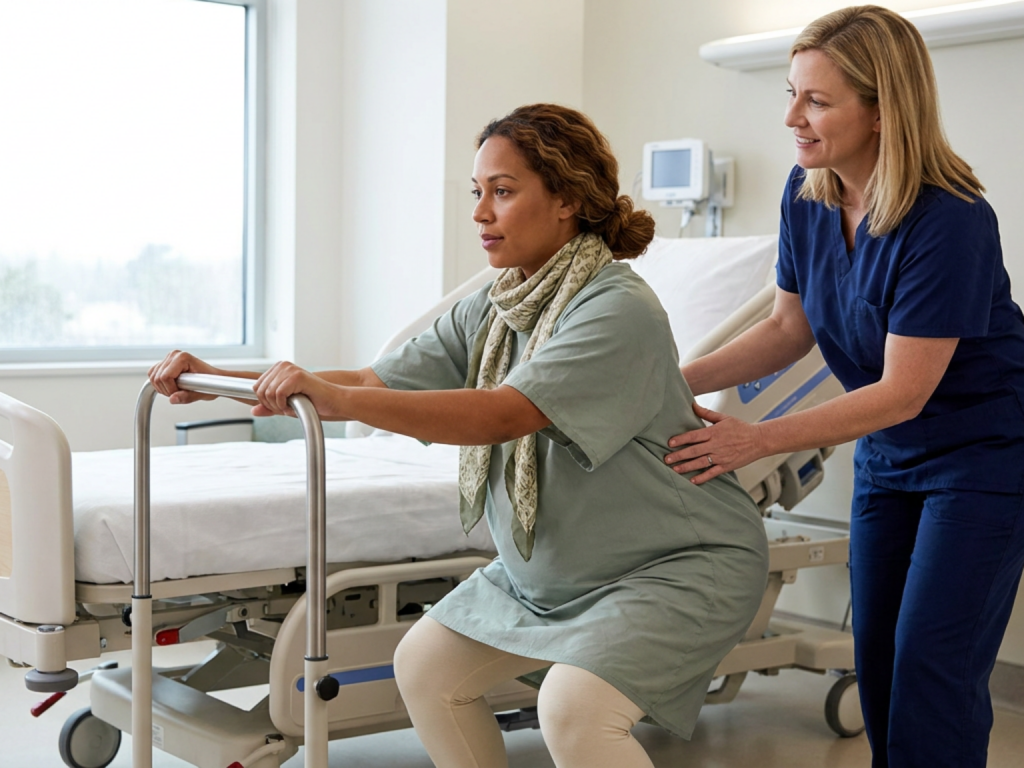
Squatting during labor is one of the oldest and most physiologic birth positions. For some people, it feels instinctive: the torso is upright, the pelvis is mobile, and gravity can assist the baby’s descent. For others, it may feel intense, tiring, or impractical without support. Both experiences are valid.
The safest approach is not to view squatting as a requirement, but as one option within a flexible labor plan. When maternal and fetal status are reassuring and the care team is comfortable supporting mobility, squatting can be a helpful position for the second stage of labor, especially with appropriate support, monitoring, and readiness to change positions if needed.
Highlights
Squatting may widen functional pelvic dimensions and use gravity to support fetal descent, particularly during the pushing phase.
Research in uncomplicated births has found shorter second-stage labor, less oxytocin use, and fewer episiotomy extensions with squatting compared with lying down.
Safety depends on the clinical context, including fetal heart rate status, maternal stability, anesthesia, mobility, and provider access for urgent care.
Supported squatting, use of a squat bar, partner assistance, or a birthing stool can make the position more sustainable and controlled.
Why squatting is considered a physiologic labor position
Squatting places the body in an upright, flexed-hip position. Compared with lying flat on the back, it changes the relationship between the uterus, pelvis, pelvic floor, and maternal trunk. In late labor, this can help the sacrum and coccyx move more freely, allow the pelvic outlet to open, and align the fetus with the birth canal. The effect is not magical or guaranteed, but it is biomechanically plausible and supported by clinical observation.
Many labor units now encourage upright positions during labor when it is safe to do so. Squatting is one of these upright options, along with standing, kneeling, leaning forward, sitting on a birth ball, and using hands-and-knees. These positions may reduce prolonged pressure on the vena cava and aorta compared with flat supine positioning, which can matter for maternal blood return and uteroplacental perfusion.
Squatting is most commonly used during the second stage, when the cervix is fully dilated and the birthing person feels an urge to push. However, some people briefly squat during active labor contractions because it relieves back pressure or helps the pelvis feel more open. It does not need to be held continuously. In fact, alternating squatting with rest positions often makes it more tolerable.
Potential benefits for pushing and the second stage
The main proposed benefit of squatting is improved efficiency during descent and birth. When the torso is upright, gravity may assist the presenting part in applying pressure to the pelvic floor. Hip flexion and abduction can also increase the functional space available at the pelvic outlet. For some people, this creates a stronger, clearer urge to bear down.
A hospital-based randomized controlled trial comparing normal delivery in a squatting position versus a lying-down position found several clinically relevant differences in uncomplicated deliveries. The squatting group had a significantly shorter second stage of labor, reduced need for oxytocin administration, and less extension of episiotomy compared with the lying-down group. Maternal satisfaction related to pain severity was also higher among those who squatted.
These findings do not mean squatting is always superior for every birth. Labor outcomes depend on fetal position, parity, pelvic floor tone, analgesia, fatigue, clinician support, and many other variables. Still, the evidence supports squatting as a reasonable option in selected low-risk situations, especially when the birthing person feels stable and the fetal heart rate tracing remains reassuring.
Some people also report that squatting makes pushing feel more coordinated. It may pair well with open-glottis pushing, in which the person exhales or vocalizes while bearing down rather than holding the breath for prolonged counts. This may reduce unnecessary tension and help pushing feel more body-led.
Pain, control, and emotional experience
Pain in labor is not only a sensory event; it is also shaped by fear, position, muscle tension, fatigue, and the feeling of being able to participate in decisions. Squatting can offer a sense of agency because the person is actively using the body rather than remaining confined to one position. For some, this improves coping and reduces the perception of helplessness.
Squatting may be particularly helpful when pressure is felt low in the pelvis or when back labor improves with forward-leaning positions. It can be combined with sacral counterpressure, warm compresses, water immersion if permitted, rhythmic breathing, or verbal coaching. Supported squatting in labor also allows a partner, doula, midwife, or nurse to provide physical and emotional reassurance.
However, squatting can also intensify pelvic pressure. Some people find that the position makes contractions feel stronger or the urge to push overwhelming. That is not a failure. It may simply mean the body needs a different position, such as side-lying, kneeling over the raised head of the bed, or semi-sitting. The best labor position is often the one that supports progress while preserving safety, endurance, and emotional steadiness.
Maternal satisfaction is an important outcome. A position that helps someone feel respected, informed, and physically supported can positively influence the memory of birth, even when labor is challenging. Squatting should therefore be offered as an option, not imposed as a performance standard.
Safety considerations and when squatting may not fit
Squatting during childbirth is generally considered safe for many uncomplicated labors when the birthing person has adequate strength, balance, and clinical support. Safety is individualized. The care team may recommend avoiding or modifying squatting if there is nonreassuring fetal heart rate status, significant bleeding, severe hypertension symptoms, maternal dizziness, mobility limitations, dense epidural motor block, or a need for immediate operative access.
Continuous fetal heart rate assessment may still be possible in upright positions, but the monitor may need adjustment. Wireless telemetry can make movement easier, while standard external monitors sometimes shift during deep flexion. If fetal monitoring becomes unreliable, the team may ask for a position change to obtain a clear tracing.
Squatting can also be physically demanding. Late pregnancy and labor alter balance, joint laxity, and muscle endurance. A deep unsupported squat may increase the chance of slipping, knee discomfort, ankle strain, or sudden fatigue. People with pelvic girdle pain, prior hip or knee injury, significant symphysis pubis dysfunction, or certain neurologic or musculoskeletal conditions should discuss modifications in advance.
An epidural does not automatically rule out squatting, but it changes the safety equation. If leg strength and sensation are reduced, unsupported squatting is usually unsafe. Some units may offer assisted squatting with a squat bar, lowered bed, or two-person support, while others may recommend side-lying or semi-upright alternatives. The priority is preventing falls and maintaining rapid access if birth needs to be assisted.
How to squat safely during labor
Safe squatting is usually supported, brief, and adaptable. It does not require holding a deep squat for long periods. Many people use the position for one or several contractions, then rest between contractions on the bed, a stool, a birth ball, or in side-lying. This rhythm helps conserve energy.
- Use stable support. A squat bar attached to the labor bed, a partner’s forearms, a rebozo, wall bars, or a birthing stool can reduce strain and improve balance.
- Keep the feet grounded. A wide stance with the heels supported is often more stable than balancing on the toes.
- Let the pelvis move. Small rocking motions, leaning forward, or changing foot angle may help comfort and descent.
- Rest between contractions. Squatting continuously can fatigue the legs and pelvic floor.
- Respond to feedback. If dizziness, sharp joint pain, excessive bleeding, or fetal heart rate concerns occur, change position and follow clinical guidance.
Preparation can help. Prenatal squats, when cleared by a healthcare professional, may improve lower-body strength, hip mobility, and pelvic floor awareness in uncomplicated pregnancies. Fitness guidance commonly emphasizes bodyweight squats, limited range of motion if needed, support from a chair or wall, and avoidance of heavy or high-intensity squatting late in pregnancy unless specifically cleared and well supervised.
Squatting practice is not meant to force the body into birth readiness. It is simply a way to learn alignment, breathing, and support strategies before labor begins.
Discussing squatting with your birth team
If squatting appeals to you, bring it up during prenatal visits rather than waiting until active labor. Ask whether your planned birth setting has squat bars, birthing stools, floor mats, wireless monitoring, or staff familiar with upright pushing. This conversation is especially useful if you are planning epidural analgesia, induction, vaginal birth after cesarean, or a low-intervention birth plan.
You might ask: In what situations would squatting be encouraged? When would you recommend changing positions? Can fetal monitoring be performed while upright? Is the bed adjustable for supported squatting? How do you protect the perineum in a squat? What alternatives are available if I am too tired or numb to squat?
Perineal outcomes deserve a nuanced discussion. Squatting may reduce the need for episiotomy in some settings, yet it can also create rapid descent in certain births. Controlled pushing, communication with the clinician, warm compresses, and slowing the birth of the head when appropriate may all help manage perineal stretch. No position can eliminate the possibility of perineal tears after vaginal birth.
The most supportive plan is flexible. You may intend to squat and then prefer side-lying. You may assume you will stay in bed and then discover that upright movement feels best. Labor often changes quickly, and good care honors both physiologic birth and medical responsiveness. Squatting is safest when it remains one tool among many, guided by your body, your preferences, and real-time clinical assessment.
When to seek immediate clinical guidance
- Do not attempt unsupported squatting if you feel dizzy, weak, numb, or unsteady.
- Follow your care team’s instructions if fetal heart rate monitoring is concerning or cannot be obtained clearly.
- Tell staff promptly about heavy bleeding, severe headache, chest pain, shortness of breath, or sudden severe abdominal pain.
- If you have an epidural, squat only with explicit staff support and fall-prevention measures.
- Discuss squatting in advance if you have placenta-related complications, significant hypertension, pelvic or joint disorders, or a prior complex birth.
Tools & Assistance
- Ask your obstetrician or midwife whether squatting is appropriate for your pregnancy and birth setting.
- Tour the labor unit and ask about squat bars, birthing stools, wireless monitors, and mobility policies.
- Practice supported bodyweight squats only if cleared by your healthcare professional.
- Create a flexible birth preferences document that includes position changes and alternatives.
- Consider childbirth education or doula support focused on safe movement and upright pushing.
FAQ
Is squatting during labor safe for everyone?
No. It can be safe in many uncomplicated labors, but it may need to be avoided or modified with fetal concerns, maternal instability, dense epidural numbness, bleeding, or certain medical and musculoskeletal conditions.
Can I squat if I have an epidural?
Possibly, but only with your care team’s approval and hands-on support. If leg strength or sensation is reduced, unsupported squatting is unsafe because of fall risk.
Does squatting prevent tearing?
No position can guarantee prevention of tears. Some evidence suggests squatting may reduce episiotomy extension in uncomplicated births, but perineal outcomes depend on many factors, including speed of birth and tissue stretch.
Do I need to practice squats before labor?
Practice is optional. With medical clearance, gentle supported squats may build confidence and body awareness, but labor squatting can also be done with assistance even if you did not train beforehand.
How long should I stay in a squat during pushing?
There is no fixed time. Many people squat for selected contractions and rest between them. Fatigue, fetal monitoring, comfort, and provider guidance should shape position changes.
Sources
- National Institutes of Health (NIH) / PubMed Central — A Hospital-Based Randomized Controlled Trial—Comparing Normal Delivery in Squatting Position Versus Lying Down Position
- National Academy of Sports Medicine (NASM) — Squats for Pregnant Women: Prenatal Fitness Tips
- Nowbaby — Squatting Birth Explained
Disclaimer
This article is for informational purposes only and does not replace individualized medical advice. Consult your obstetrician, midwife, or labor care team about which labor positions are safe for your situation.














Please log in to leave a comment.