
Intro
Preparing for a home birth is both practical and deeply personal. The goal is not to create a perfect environment, but to make your home safer, calmer, and easier for you, your support person, and your midwife or birth team to navigate when labor begins.
Home birth is appropriate only for selected pregnancies and should be planned with qualified maternity professionals. This guide focuses on organization, supplies, comfort measures, transfer planning, and postpartum readiness so you can discuss your individual needs with your clinician or midwife.
Highlights
A well-prepared home birth setup prioritizes safety, communication, cleanliness, warmth, hydration, and rapid access to transport if plans change.
Most medical equipment is typically brought by the midwife or clinical team, but families usually prepare household supplies, comfort items, newborn basics, and postpartum care materials.
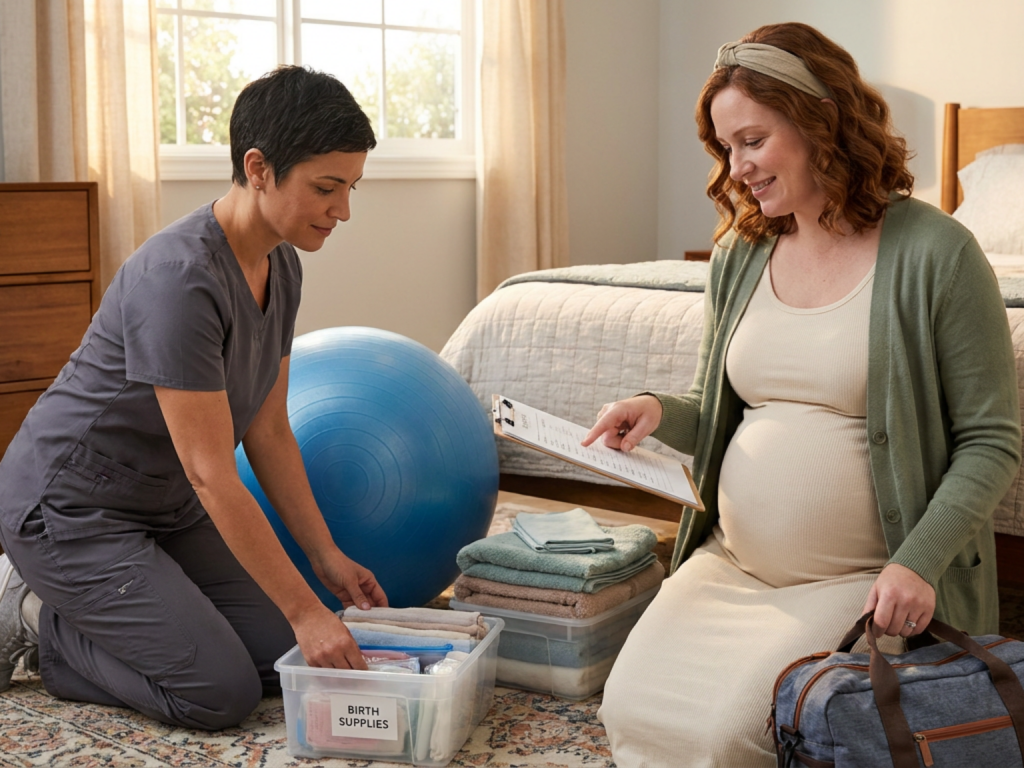
Organizing supplies into labeled bins helps the birth team find items quickly without interrupting your concentration during labor.
A home birth plan should always include a hospital transfer plan and a packed go bag, even when pregnancy has been low risk.
Start with clinical eligibility and team communication
Home birth preparation should begin with a medical conversation, not a shopping list. A qualified midwife, obstetric clinician, or maternity care team can help determine whether home birth is a reasonable option in your circumstances. Factors often considered include gestational age, fetal presentation, placental location, previous obstetric history, medical conditions, medications, blood group considerations, fetal growth, and the distance to emergency obstetric and neonatal care.
Ask your midwife what equipment they bring, what supplies they expect you to provide, how they monitor maternal and fetal wellbeing, and what circumstances would prompt transfer. This helps avoid duplicate purchases and clarifies roles. It is also wise to keep a medication and allergy list, antenatal records, identification, insurance information if relevant, and emergency contacts in one visible folder.
A home birth plan works best when it is flexible. Consider writing a low-intervention birth plan that explains your preferences for movement, hydration, fetal monitoring, vaginal examinations, cord clamping, newborn care, feeding, and privacy. Keep it concise and discuss it in advance so it becomes a shared communication tool rather than a script.
Choose the birth space and protect the room
The best room is usually warm, private, easy to clean, and close to a bathroom. Natural light can be helpful for mood and visibility, but dimmable lighting is valuable in active labor. Your midwife may need access to an electrical outlet, running water, clear floor space, and a firm surface for equipment or newborn assessment.
Before labor, remove clutter and identify where people will stand, where supplies will be placed, and how emergency access would work. If stairs, narrow doorways, pets, or parking limitations could slow care, plan around them. Good household preparation before labor includes making sure your address is easy to find, phones are charged, and the route to the hospital is understood by at least one support person.
Protecting furniture and floors is a practical necessity. Prepare plastic sheeting, waterproof mattress protectors, disposable underpads, old sheets, and large towels. Many families layer the bed with a waterproof sheet, then a regular sheet, then another waterproof layer and clean sheet, so soiled layers can be removed quickly while a clean surface remains underneath.
- Keep a large trash bag or laundry bag nearby for wet towels and linens.
- Have a small lamp, flashlight, or headlamp available for focused light if needed.
- Maintain room warmth, especially for the newborn, who loses heat quickly after birth.
Organize supplies into labeled birth bins
One of the simplest ways to reduce stress is to group supplies into clearly labeled bins, baskets, or bags. Your labels might read labor comfort, birth linens, baby, postpartum, water birth, snacks, and transfer bag. Show your support person and midwife where everything is before your due period begins.
For labor and birth, common household supplies include clean towels, washcloths, old sheets, waterproof pads, disposable gloves if requested by your midwife, a digital thermometer for household use, tissues, paper towels, a bowl or emesis bag for nausea, and drinking straws or a water bottle. Your midwife may bring sterile instruments, medications, fetal monitoring equipment, oxygen, suturing supplies, emergency equipment, and documentation forms; do not assume, ask directly.
Comfort supplies can be just as important. Prepare a birth ball, pillows, heat packs, massage oil if tolerated, a comb or other acupressure coping tool, a fan, soft lighting, music, affirmations if you like them, and loose clothing or a robe. Warm socks are useful because chills can occur during labor and after birth.
Food and fluids should be easy to access. Many people prefer small, digestible options such as toast, crackers, bananas, yogurt, soup, honey, fruit, or electrolyte drinks, but individual guidance may vary, especially if transfer or anesthesia becomes necessary. Discuss eating and drinking in labor with your care team if you have specific medical risks.
Prepare for water birth if you plan to use a pool
If you are considering laboring or giving birth in water, plan the logistics well before labor. A birth pool takes time to inflate, fill, monitor, empty, and clean. Confirm whether you are renting or buying a pool, whether it requires a single-use liner, and whether your floor can safely support the weight when filled.
Typical water birth supplies include the pool, a new liner, an air pump, a clean hose that reaches the tap, tap adapters, a debris net, a water thermometer, a submersible pump for emptying, and a drainage hose. You may also need a groundsheet or waterproof layer underneath. Practice connecting the hose and adapters before labor so you do not discover a mismatch while contractions are intensifying.
Water temperature should be monitored according to your midwife’s guidance. Overheating can be unsafe, and water that is too cool may be uncomfortable or contribute to maternal or newborn heat loss. Your midwife will also advise when entering the pool is appropriate and when leaving the pool may be recommended, such as for assessment, maternal symptoms, abnormal fetal heart rate findings, heavy bleeding, or slow progress depending on the clinical picture.
Keep extra towels near the pool, including warm towels for the baby and dry towels for the birthing parent. Make sure the support person knows how to maintain water level, protect flooring, and keep the surrounding area dry enough to reduce slipping hazards.
Set up newborn and immediate postpartum essentials
After birth, the priorities are warmth, observation, feeding support, bleeding assessment, and recovery. Prepare a baby bin with newborn diapers, wipes or cotton wool, a few bodysuits or sleepers, hats if recommended in your climate or setting, receiving blankets, muslin cloths, and a safe newborn sleep space. Wash baby clothing and blankets beforehand with a gentle detergent if that is your usual preference.
Immediate skin-to-skin contact is often encouraged when mother and baby are stable, but dry warm towels are still essential. Babies can lose heat quickly, particularly in a cool room or after water birth. Ask your midwife how newborn assessment, vitamin K, weight, feeding evaluation, and documentation are handled in your location.
Create a postpartum recovery station near the bathroom and another near your bed or main resting area. Useful items include maternity pads, disposable or washable absorbent underwear, a peri bottle, soft toilet paper, clean washcloths, a water bottle, easy snacks, prescribed medications if applicable, and a notebook or app for feeding and diaper tracking if you find that helpful. If you plan to breastfeed or chestfeed, add nipple cream if recommended, nursing pads, supportive pillows, and contact information for lactation help.
Postpartum bleeding can be heavy at first, but it should follow the parameters your midwife explains. Do not hesitate to call your care team for concerns about excessive bleeding, dizziness, fever, severe pain, foul-smelling discharge, urinary difficulty, calf pain, chest symptoms, or mood symptoms that feel frightening or unmanageable.
Pack a go bag and plan transfer before it is urgent
A planned home birth should always include a transport plan for labor. Transfer is not a failure; it is a safety pathway. Reasons may include request for pharmacologic pain relief, prolonged labor, maternal exhaustion, abnormal vital signs, meconium with concern, fetal heart rate concerns, bleeding, retained placenta, significant perineal trauma, or newborn transition concerns.
Pack a go bag by 36 to 37 weeks, or earlier if advised. Include your antenatal notes, identification, insurance or payment documents if relevant, phone charger, toiletries, spare clothing, maternity pads, newborn clothing, diapers, feeding supplies, and any medications you normally use. A hospital bag checklist for baby can be helpful, but keep the bag streamlined so it can be carried quickly.
Decide who drives, who stays with other children, where the car keys are kept, which hospital you would attend, and when an ambulance should be called rather than using a private vehicle. Keep the maternity triage or labor ward number visible. If you live in a rural area, apartment building, or location with difficult access, discuss this specifically with your midwife.
Your birth preparation checklist should include practical household steps too: fuel in the car, clear driveway or entrance, charged phones, pet arrangements, childcare backup, and a written address with directions for emergency services if your home is hard to locate.
Support people, atmosphere, and recovery logistics
The people in the room shape the emotional environment. Choose support people who can stay calm, follow the midwife’s instructions, protect privacy, offer reassurance, and manage practical tasks without needing constant direction. Review your preferences with them in advance, including photos, visitors, communication with family, and when you want quiet.
Consider preparing a simple role list. One person may handle hydration and snacks, another may manage the birth pool, and another may care for older children or pets. If only one support person will be present, prioritize the essentials: communication, comfort, supplies, and transfer readiness.
After birth, reduce obligations. Arrange meals, laundry help, school runs, pet care, and visitor boundaries. The first days postpartum can involve uterine cramping, perineal soreness, breast or chest changes, sleep disruption, and emotional shifts. Planning support is part of medical recovery, not a luxury.
Finally, remember that preparation is not proof of control. Birth can change quickly, and compassionate flexibility is a strength. A well-prepared home simply gives your clinical team and loved ones the best chance to support you safely, respectfully, and calmly.
Seek urgent professional help
- Call your midwife, maternity triage, or emergency services for heavy bleeding, fainting, chest pain, severe shortness of breath, or seizure.
- Seek immediate advice for reduced or absent fetal movements, severe headache, visual symptoms, or severe upper abdominal pain.
- During labor, contact the birth team urgently for fever, abnormal fetal heart rate concerns, green or foul-smelling fluid, or significant pain between contractions.
- After birth, urgent assessment is needed for excessive bleeding, fever, worsening severe pain, calf swelling, or thoughts of self-harm.
- For the newborn, seek urgent help for breathing difficulty, poor tone, blue color, persistent low temperature, poor feeding with lethargy, or fewer wet diapers than advised.
Tools & Assistance
- Schedule a dedicated home visit or planning call with your midwife to review supplies and transfer criteria.
- Create labeled bins for labor, birth linens, baby essentials, postpartum care, snacks, and water birth equipment.
- Pack a transfer go bag and keep it beside your antenatal records.
- Test the birth pool setup, hose connection, room temperature, lighting, and phone charging points before labor.
- Arrange postpartum household support for meals, laundry, childcare, pets, and visitor boundaries.
FAQ
Do I need to buy medical equipment for a home birth?
Usually, the midwife or clinical team brings medical equipment, but this varies by service and location. Ask exactly what they provide and what household supplies you should prepare.
When should I finish preparing my home birth supplies?
Many families aim to have supplies organized by 36 to 37 weeks, or earlier if advised by their care team. This leaves time to replace missing items and test equipment.
Is a hospital transfer a sign that the home birth failed?
No. Transfer is a planned safety option and may happen for pain relief, monitoring, prolonged labor, maternal concerns, or newborn needs. Planning transfer early makes it calmer if needed.
What is the most commonly forgotten item?
Practical items are often missed: waterproof floor protection, enough clean towels, a working hose adapter for the birth pool, phone chargers, snacks, and a clear childcare plan.
Can I eat and drink during home labor?
Many people use light snacks and fluids for energy, but individual guidance can vary based on medical factors and the possibility of transfer. Discuss this with your midwife or clinician.
Sources
- Babylist — Home Birth Kit Checklist: What to Prep for Labor, Baby and Postpartum
- Private Midwives — What do I need for a home birth?
- HiPP Organic — How to Prepare for a Home Birth
Disclaimer
This article is for general information only and does not replace individualized medical advice. Always plan home birth with qualified maternity professionals and seek urgent care for concerning symptoms.

















Please log in to leave a comment.