
Intro
Contractions can feel powerful, repetitive, and sometimes overwhelming, especially when sensations build faster than expected. Breathing, relaxation, and supportive touch do not replace medical care or pain relief options, but they can help many people feel more oriented, less tense, and better able to work with each contraction.
This article explains practical, non-drug comfort techniques using a medically grounded approach. It focuses on physiologic regulation, muscle relaxation, and safe massage strategies during labor, while emphasizing that individual guidance from a midwife, obstetrician, anesthesiologist, physiotherapist, or maternity triage team remains essential.
Highlights
Slow, regulated breathing can support autonomic nervous system balance and may reduce perceived stress during contractions.
Relaxation is not about pretending contractions are painless; it is about reducing unnecessary muscle guarding between and during uterine waves.
Massage may help through pressure, warmth, rhythmic touch, and reassurance, but it should always be consent-based and adapted moment by moment.
Techniques are most useful when practiced before labor, then simplified during active labor when concentration becomes harder.
Severe pain, bleeding, reduced fetal movement, fever, or concerns about labor progress should prompt professional medical advice.
Why breathing can change the contraction experience
Contractions are coordinated waves of uterine muscle activity. They help the cervix soften, efface, and dilate, and they often come with whole-body responses: faster breathing, sweating, trembling, nausea, back pressure, or an urge to brace. These reactions are partly driven by the autonomic nervous system, the same system that manages heart rate, blood pressure, digestion, and stress arousal.
Breathing techniques cannot stop true labor contractions, and they should not be presented as a cure for pain. Their value is different: slow, intentional breathing can give the brain a predictable rhythm when sensations feel unpredictable. Research on breathing practices suggests that diaphragmatic breathing, paced slow breathing, and other regulated breathing methods may help reduce stress and anxiety by influencing physiologic arousal. In labor, this may support steadier coping, especially when combined with position changes, hydration, warmth, reassurance, and appropriate medical pain relief when desired.
The aim is not to take the biggest possible breath. Forced breathing may increase dizziness, tingling, or panic. A more useful approach is comfortable breathing deep into the belly and lower ribs, with an exhale that is at least as long as the inhale. The exhale is particularly important because it often softens the jaw, shoulders, pelvic floor, and abdominal wall. These areas commonly tighten reflexively during pain, which can make contractions feel more difficult to ride through.
Building a simple breathing rhythm
A reliable starting point is diaphragmatic breathing. Place one hand on the upper chest and one hand on the abdomen or lower ribs. Breathe in gently through the nose or mouth, allowing the lower ribs and belly to expand without pushing. Then breathe out slowly through relaxed lips, as if fogging a mirror or sighing quietly. The chest may move too; the goal is not rigid technique but less upper-chest gripping.
During early labor contraction patterns, a simple rhythm may be enough: inhale for a comfortable count of three or four, exhale for four to six. If counting feels irritating, use words instead. For example, think “in” on the inhale and “soften” on the exhale. Some people prefer a low sound on the exhale, such as a hum, moan, or open-vowel tone. Low vocalization can help prevent breath-holding and jaw clenching.
When contractions become stronger, the rhythm may need to shorten. A useful pattern is cleansing breath, focus breathing, release breath. At the start of a contraction, take one slow breath to orient yourself. During the peak, use light but controlled breathing, keeping the exhale audible and unforced. As the contraction fades, take another slow breath and deliberately drop the shoulders, hands, and tongue. This closing breath marks the end of one wave and helps the body recover before the next.
If breathing becomes fast or panicky, return to a longer exhale rather than trying to inhale more. A partner can quietly breathe with the laboring person, making the exhale visible and slow. This often works better than repeated verbal instructions, especially in active labor cervical dilation when cognitive processing may narrow.
Relaxation between contractions
The interval between contractions is medically and emotionally important. Even short breaks allow oxygenation, hydration, communication, and mental reset. Many people unintentionally carry the last contraction into the next by keeping the fists, forehead, buttocks, and pelvic floor tense. Relaxation practice focuses on releasing that residual guarding.
One practical method is a body scan. As soon as a contraction ends, move attention from head to toe: forehead, eyes, jaw, tongue, shoulders, hands, belly, buttocks, thighs, and feet. The instruction is not “relax everything perfectly.” It is “soften one area by five percent.” Small reductions in muscle tension are realistic and can accumulate over hours.
Another method is paired cueing. Choose one phrase before labor, such as “loose jaw, heavy shoulders” or “down and open.” A partner or doula can say the phrase at the start and end of contractions. This can reduce the need for complex decision-making during intense sensations. Some people also benefit from visualization, such as imagining the contraction as a wave-like uterine tightening that rises, peaks, and recedes.
Environment matters. Dim lighting, fewer unnecessary voices, a warm shower if approved, and privacy can lower perceived threat. Relaxation techniques work best when the person in labor feels respected and not watched critically. If a breathing pattern or visualization becomes annoying, it should be abandoned without judgment. The best technique is the one that helps in that moment.
Massage principles during contractions
Massage during labor is not a single technique. It ranges from still counterpressure on the sacrum to light stroking across the shoulders, firm hip squeezes, hand massage, foot pressure, or warm compresses. Its effects may include sensory gating, reduced muscle tension, emotional reassurance, and a sense of being accompanied. Mayo Clinic includes massage among relaxation approaches for stress reduction, and in labor it is commonly used as a complementary comfort measure.
Consent is central. A person may want firm pressure during one contraction and no touch at all during the next. Partners should ask short questions: “Pressure here?” “More, less, or stop?” During intense labor, a thumbs-up, hand squeeze, or head shake may be easier than speaking. Touch should never be continued because it was discussed in a birth plan if the person now dislikes it.
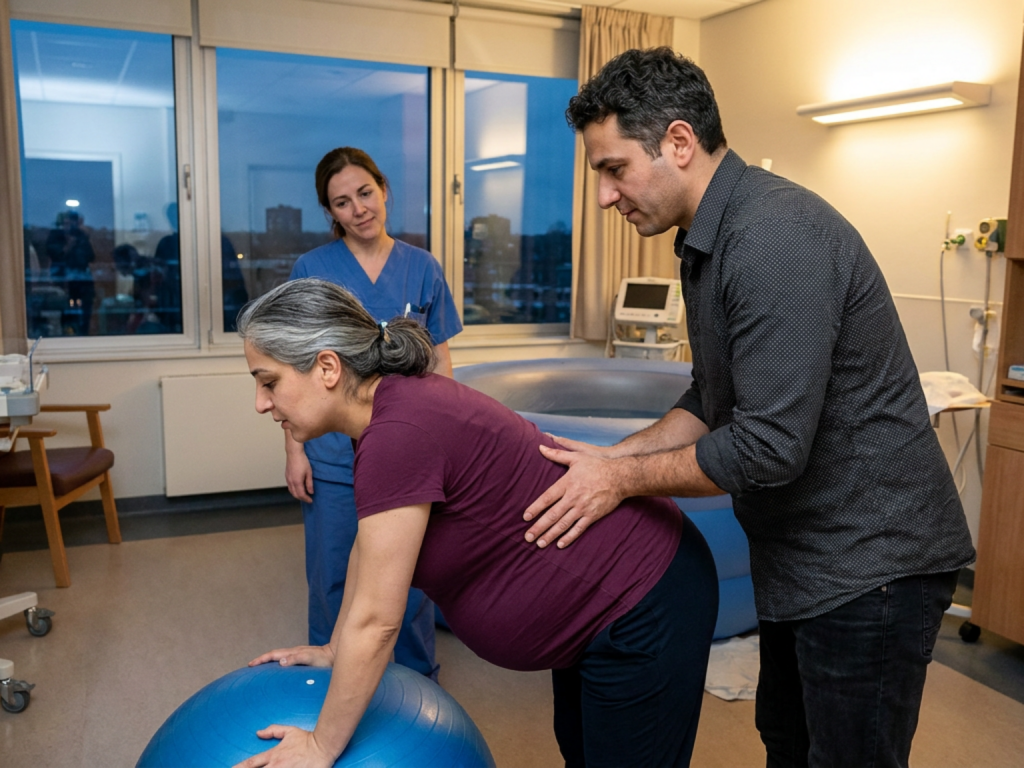
Back pain during contractions often responds to sacral counterpressure. The support person places the heel of one hand, both hands, or a tennis ball against the sacrum and applies steady inward pressure during the contraction. This may feel especially useful when the baby’s position creates posterior pelvic pressure. The force should be firm but not bruising, and it should stop if it causes sharp pain, numbness, or distress.
For hip pressure, the support person places hands on the outer hips and gently presses inward during the contraction, sometimes called a double hip squeeze. This may reduce pelvic discomfort for some people, but it requires good body mechanics from the support person and clear feedback from the laboring person. Shoulder and neck massage are better between contractions, using slow, downward strokes rather than quick rubbing, which can become overstimulating.
Combining breathing and massage as contractions intensify
Breathing and massage often work best as a coordinated sequence. At the first sign of a contraction, the laboring person takes a grounding breath while the support person places hands in the agreed position. During the rise and peak, the support person maintains steady pressure and breathes slowly, creating a visible rhythm. As the contraction fades, pressure is gradually released rather than abruptly removed, and both people pause.
This sequence helps avoid over-talking. In active labor, too many reminders can feel intrusive. One quiet cue may be enough: “Exhale,” “soft jaw,” or “I’m here.” The support person can watch for breath-holding, clenched hands, raised shoulders, or high-pitched panic breathing, then respond with modeling rather than correction. For example, they can lower their own shoulders and make a long, calm exhale.
Different phases may call for different patterns. In early labor, walking, leaning over a counter, and using slow belly breathing may be effective. In more active labor, leaning forward over a birth ball or bed can combine pelvic mobility with sacral pressure. During transition, when contractions may be close together and emotionally intense, techniques often become very simple: one breath, one sound, one pressure point, one contraction at a time.
If there is an epidural, breathing and relaxation still matter. They can help during placement, position changes, examinations, breakthrough pressure, and the second stage of labor. Massage may need adjustment because sensation, mobility, blood pressure monitoring, and IV lines can change what is safe or comfortable. Always follow the maternity team’s guidance about positioning and movement.
Safety, limits, and when to seek guidance
Breathing and massage are supportive tools, not a way to assess labor safety. Contraction frequency and duration, fetal movement, vaginal bleeding, ruptured membranes, fever, severe headache, visual symptoms, high blood pressure concerns, or a sudden change in pain pattern require professional guidance. People with high-risk pregnancies, preterm contractions, placenta-related concerns, hypertensive disorders, fetal growth concerns, or previous complex births should ask their clinician which comfort measures and positions are appropriate.
Avoid massage over areas with infection, suspected thrombosis, significant swelling with pain, skin injury, or unexplained tenderness. Deep calf massage is generally avoided in pregnancy because of venous thromboembolism concerns; calf pain, redness, warmth, or one-sided swelling warrants medical evaluation. Essential oils should be used cautiously, if at all, because scent sensitivity, asthma, nausea, allergies, and pregnancy-specific safety concerns vary. Heat should be warm, not hot, and sensation changes from epidural analgesia can make burns harder to detect.
It is also important to avoid moralizing coping methods. Needing pharmacologic pain relief, requesting an epidural, using nitrous oxide where available, or needing operative assistance is not a failure of breathing or relaxation. Labor is dynamic, and safety takes priority over any planned technique. Comfort measures are most helpful when they remain flexible, consent-based, and integrated with clinical care.
Before labor, consider practicing for a few minutes at a time rather than trying to master many techniques. Choose two breathing patterns, two massage options, and one phrase for support. During labor, the plan can be simplified further. The core goal is compassionate regulation: helping the body and mind meet each contraction with as much steadiness, support, and safety as possible.
Call for medical advice urgently if
- Contractions begin before 37 weeks or are accompanied by pelvic pressure, bleeding, or fluid leakage.
- There is reduced fetal movement, severe abdominal pain between contractions, or a sudden change in pain pattern.
- There is heavy bleeding, fever, fainting, severe headache, visual symptoms, or concern about high blood pressure.
- Breathing techniques cause dizziness, tingling, chest pain, or a feeling of not getting enough air.
- Massage causes sharp pain, numbness, one-sided leg swelling, redness, or warmth.
Tools & Assistance
- Practice diaphragmatic breathing for five minutes daily before labor.
- Create a short labor cue phrase with your support person.
- Ask your midwife or obstetric team which positions and massage techniques suit your pregnancy.
- Keep maternity triage or labor ward contact details easy to access.
- Use a birth ball, warm compress, or tennis ball only if comfortable and approved by your care team.
FAQ
Can breathing techniques make contractions less painful?
They may reduce stress, panic, and muscle tension, which can change how pain is experienced. They do not remove contractions or replace medical pain relief.
What if I forget all the breathing patterns in labor?
That is common. Return to one simple rule: avoid holding your breath and make the exhale slow, soft, and slightly longer than the inhale.
Is massage safe during labor?
Gentle or firm supportive touch is often safe when consent-based and comfortable, but avoid painful areas, deep calf massage, skin injury, and any technique your clinician advises against.
Can these methods be used with an epidural?
Yes, but massage, movement, and heat may need adjustment because sensation, mobility, monitoring, and clinical guidance change after epidural analgesia.
Should a partner talk through every contraction?
Usually less is better. Calm breathing, steady touch, and one short cue often help more than repeated instructions.
Sources
- NIH / PubMed Central — Breathing Practices for Stress and Anxiety Reduction
- NHS — Breathing exercises for stress
- Mayo Clinic — Relaxation techniques: Try these steps to lower stress
Disclaimer
This article is for general medical information and does not diagnose, prescribe, or replace care from a qualified maternity professional. Seek urgent medical advice for concerning symptoms or any uncertainty during pregnancy or labor.


















Please log in to leave a comment.