
Intro
Yes, in most cases you can eat eggs during pregnancy, and for many people they are a nutritious, convenient source of high-quality protein, iodine, choline, vitamin B12, vitamin D, selenium, and other nutrients that support maternal health and fetal growth. The main issue is not that eggs are inherently unsafe, but that raw or undercooked eggs can carry foodborne pathogens, particularly Salmonella, which can cause significant gastrointestinal illness.
Guidance varies by country because food production and vaccination standards differ. In the United Kingdom, certain eggs with recognized safety marks may be eaten raw or lightly cooked, while in the United States the standard advice is to cook eggs until the yolk and white are firm unless pasteurized eggs or pasteurized egg products are used. If you feel anxious about food rules, you are not alone; pregnancy can make ordinary choices feel loaded. The goal is practical risk reduction, not perfection.
Highlights
Eggs are generally safe and nutritious in pregnancy when handled and prepared according to local food-safety guidance.
In the U.S., pregnant people are advised to cook eggs until both yolk and white are firm, or use pasteurized eggs for recipes that are raw or lightly cooked.
In the U.K., British Lion hen eggs and eggs produced under the Laid in Britain scheme may be eaten raw or partially cooked, but other eggs should be thoroughly cooked.
The main concern is Salmonella, which may not usually harm the fetus directly but can make the pregnant person very unwell through vomiting, diarrhea, fever, and dehydration.
Check storage, best-before dates, shell integrity, and ingredient lists in foods such as homemade mayonnaise, mousse, tiramisu, hollandaise, and some dressings.
Are eggs safe to eat in pregnancy?
For most pregnant people, eggs can be part of a healthy diet. They provide complete protein, meaning they contain all essential amino acids, and they are relatively easy to prepare even when appetite is variable. Eggs also contain choline, a nutrient involved in fetal brain and neural development; vitamin B12, important for red blood cell formation and neurologic function; and iodine, which contributes to thyroid hormone production.
The safety question is mainly about microbiological risk. Eggs can be contaminated with Salmonella bacteria either on the shell or, less commonly, inside the egg. Salmonellosis typically causes diarrhea, abdominal cramps, fever, nausea, and vomiting. Pregnancy alters immune function and fluid balance, so illnesses that cause dehydration can be more consequential and may require medical attention. This does not mean you need to avoid eggs entirely; it means you should choose and prepare them with appropriate caution.
Cooked eggs: the safest default
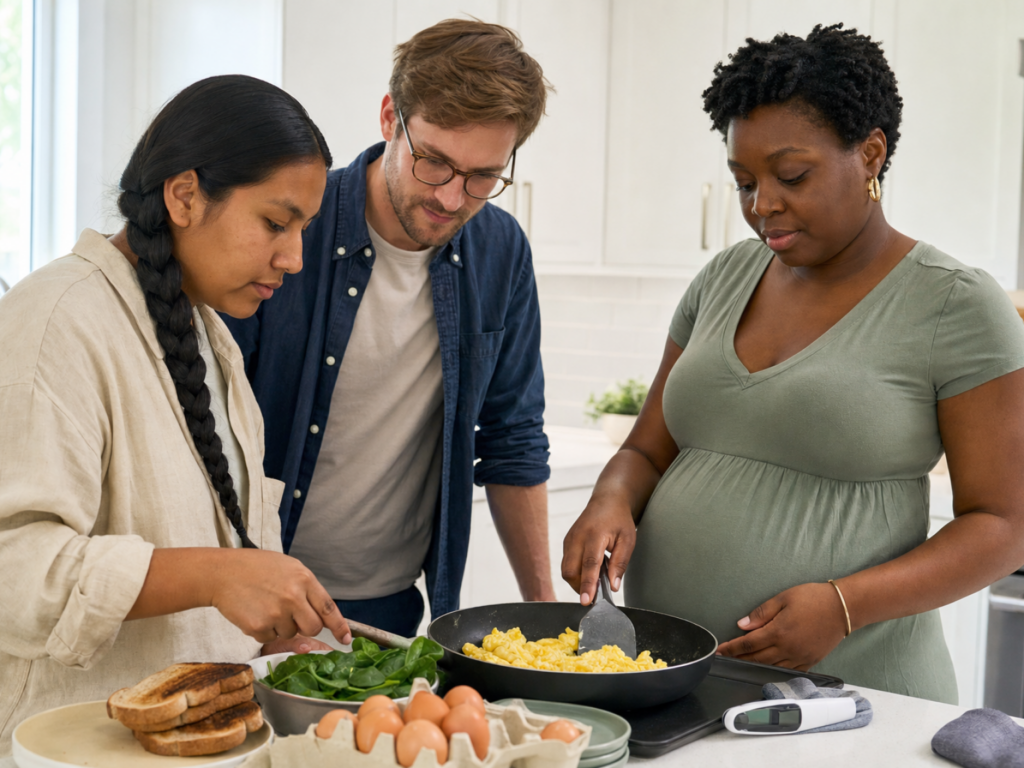
Fully cooked eggs are the safest choice across guidance systems. A fully cooked egg has a firm white and a firm yolk. This applies to boiled, scrambled, fried, poached, baked, and omelet-style preparations. If you are unsure about egg safety standards where you live, or if you are eating in a restaurant where ingredient sourcing is unclear, choosing well-cooked eggs is a sensible default.
Practical examples include:
- Hard-boiled eggs with a fully set yolk.
- Scrambled eggs cooked until no visible liquid egg remains.
- Fried eggs cooked until the yolk is firm rather than runny.
- Omelets and frittatas cooked through to the center.
- Baked dishes containing egg, such as quiche, cooked until the filling is set and hot throughout.
Using a food thermometer is not always necessary for everyday home cooking, but it can be helpful for egg-rich baked dishes or casseroles where the center may look set before it is fully heated.
Can you eat runny eggs while pregnant?
The answer depends on which eggs you are using and which country’s food-safety standards apply. The NHS states that in the U.K., hen eggs stamped with the British Lion mark, and eggs produced under the Laid in Britain scheme, can be eaten raw or partially cooked during pregnancy. This includes soft-boiled, poached, fried eggs with runny yolks, and foods such as homemade mayonnaise if made with those eggs. This advice reflects specific production controls designed to reduce Salmonella risk.
However, the NHS also advises that eggs not covered by these schemes, including many duck, goose, or quail eggs, should be cooked thoroughly until the whites and yolks are solid. Tommy’s, a U.K. pregnancy charity, similarly explains that older advice to avoid all raw or runny eggs in pregnancy is outdated for British Lion stamped eggs, while still emphasizing correct storage and date checking.
In the United States, the FDA takes a more conservative approach for pregnancy: cook eggs until both yolks and whites are firm, and avoid foods containing raw or lightly cooked eggs unless they are made with pasteurized eggs or pasteurized egg products. If you are traveling, eating imported eggs, or unsure of the egg source, thoroughly cooked is the lower-risk option.
Foods that may contain raw or lightly cooked egg
Some higher-risk egg exposure is hidden in foods that do not look like eggs. The FDA specifically warns pregnant people to avoid foods that may contain raw or lightly cooked eggs unless pasteurized eggs are used. These can include homemade mayonnaise, Caesar dressing, hollandaise sauce, béarnaise sauce, eggnog, mousse, meringue, tiramisu, some ice creams, and certain dessert fillings.
Commercially manufactured versions are often made with pasteurized egg or processed in ways that improve safety, but this is not universal. Check labels, ask restaurants how a sauce or dessert is made, and be cautious with homemade foods at gatherings when ingredients are uncertain.
Safer alternatives include:
- Pasteurized shell eggs for recipes that remain runny or raw.
- Pasteurized liquid egg products for sauces, dressings, and desserts.
- Store-bought mayonnaise and dressings that clearly state they are pasteurized or commercially prepared.
- Egg-free versions of desserts or sauces when ingredient safety is uncertain.
Why Salmonella matters more in pregnancy
Salmonella infection is usually self-limiting in healthy adults, but it can still be unpleasant and sometimes serious. During pregnancy, severe vomiting or diarrhea can lead to dehydration, electrolyte disturbance, reduced oral intake, and fever. These issues can become clinically important, especially if symptoms are persistent or the pregnant person cannot keep fluids down.
Salmonella does not typically cross the placenta in the same way as some other pathogens, but severe maternal illness can still affect wellbeing and may require medical assessment. Very rarely, invasive infection can occur. This is why food safety rules often feel stricter in pregnancy: the objective is to prevent illness before it starts.
If you develop fever, severe abdominal pain, bloody diarrhea, signs of dehydration, or persistent vomiting after eating eggs or any other food, contact your midwife, obstetric clinician, primary care physician, or local urgent care service. Do not self-treat with antidiarrheal medication or antibiotics without professional advice, as medication choices in pregnancy require individualized assessment.
How to store and handle eggs safely
Good handling reduces risk whether eggs are fully cooked or used in a recipe. Store eggs according to local packaging instructions; in many places this means refrigeration. Keep them in their original carton so you can see the best-before or use-by date, and avoid using cracked or visibly dirty eggs. Wash hands, utensils, bowls, and work surfaces after contact with raw egg.
Useful precautions include:
- Buy eggs from reputable suppliers and avoid eggs with broken shells.
- Check date marks before use, particularly for recipes involving soft or lightly cooked eggs.
- Keep raw egg away from ready-to-eat foods such as salad, bread, fruit, and cooked meats.
- Cook egg dishes promptly after preparation and refrigerate leftovers quickly.
- Reheat cooked egg dishes until steaming hot, unless the food is specifically intended to be eaten cold and has been stored safely.
If you are managing nausea or fatigue, it may help to prepare simple options such as hard-boiled eggs, well-cooked scrambled eggs, or baked egg muffins in small batches, stored safely and eaten within recommended timeframes.
Nutrition benefits and practical portions
Eggs can be particularly useful in pregnancy because they are nutrient dense without requiring large portions. One egg provides protein and several micronutrients in a compact form, which can be helpful when nausea, reflux, food aversions, or early satiety make meals difficult. Pairing eggs with whole grains, vegetables, avocado, beans, or dairy can make a balanced meal or snack.
There is no universal number of eggs that is right for everyone. Overall diet quality, cholesterol profile, metabolic health, cultural food patterns, and individual medical history all matter. Many people can include eggs regularly as part of a varied diet, but if you have familial hypercholesterolemia, complex lipid disorders, diabetes, kidney disease, or another condition requiring individualized nutrition counseling, ask your clinician or a registered dietitian for tailored advice.
Pregnancy nutrition is broader than any single food. Eggs may contribute protein, but they do not replace the need for diverse sources of iron, folate, calcium, omega-3 fatty acids, fiber, and other nutrients. If you follow a vegetarian diet, have severe nausea, or are avoiding many foods for safety reasons, professional nutrition support can help you maintain adequacy without unnecessary restriction.
Eating eggs in restaurants, cafés, and while traveling
Eating out can be more uncertain because you may not know whether eggs are pasteurized, how they were stored, or whether a sauce contains raw egg. It is reasonable to ask direct questions, such as whether mayonnaise is commercial or homemade, whether hollandaise is made with pasteurized egg, or whether eggs can be cooked until firm. Most restaurants are used to allergy and pregnancy-related food questions.
When traveling, especially internationally, follow the more cautious rule unless you know local egg safety standards. Choose fully cooked eggs, avoid buffet eggs that have been sitting lukewarm, and be careful with desserts, sauces, and drinks that may contain raw egg. Hotel breakfast items such as scrambled eggs should be hot and freshly prepared; if they look wet, lukewarm, or have been sitting out for a long time, choose another option.
When to be cautious or seek help
- Avoid raw or runny eggs unless they meet local safety criteria or are pasteurized.
- Do not eat egg dishes with cracked, dirty, expired, or uncertain-source eggs.
- Seek medical advice for fever, bloody diarrhea, severe abdominal pain, dehydration, or persistent vomiting.
- Use pasteurized eggs for homemade mayonnaise, mousse, tiramisu, eggnog, and similar raw-egg recipes.
- If you are immunocompromised or have a high-risk pregnancy, ask your clinician whether you should follow stricter food-safety precautions.
Tools & Assistance
- Check egg cartons for safety marks, pasteurization information, and best-before dates.
- Ask restaurants whether sauces, desserts, and dressings contain raw egg or pasteurized egg.
- Keep a simple food-safety checklist for high-risk foods in your kitchen.
- Contact your midwife, obstetric clinician, or local urgent care service if food poisoning symptoms develop.
- Consider a registered dietitian if nausea, aversions, or dietary restrictions make protein intake difficult.
FAQ
Can I eat scrambled eggs while pregnant?
Yes, scrambled eggs are a good option if cooked until they are no longer runny. In countries following U.S. FDA guidance, both whites and yolks should be fully firm unless pasteurized eggs are used.
Are soft-boiled eggs safe in pregnancy?
In the U.K., soft-boiled British Lion hen eggs or eggs produced under the Laid in Britain scheme may be eaten during pregnancy. In the U.S. or when egg safety status is unclear, choose hard-boiled eggs with firm yolks.
Can I eat mayonnaise while pregnant?
Commercial mayonnaise is usually made with pasteurized egg and is generally considered safer, but check the label. Homemade mayonnaise should be made with pasteurized eggs, or with approved British Lion or Laid in Britain eggs where that guidance applies.
What if I accidentally ate runny eggs?
Try not to panic. Most exposures do not lead to illness. Monitor for symptoms such as diarrhea, vomiting, fever, or abdominal cramps, and contact a healthcare professional promptly if symptoms are severe, persistent, or you feel dehydrated.
Are duck or quail eggs safe in pregnancy?
They can be eaten if cooked thoroughly until both white and yolk are solid. U.K. guidance allowing raw or runny eggs applies specifically to certain hen eggs, not generally to duck, goose, or quail eggs.
Sources
- NHS — Foods to avoid in pregnancy
- Tommy's — Is it safe to eat raw or runny eggs in pregnancy?
- U.S. Food and Drug Administration — Dairy and Eggs (Food Safety for Moms-to-Be)
Disclaimer
This article is for general information only and does not replace medical advice. If you are pregnant and have food poisoning symptoms or specific dietary concerns, consult your healthcare professional.













Please log in to leave a comment.