
Intro
Preschool eating can feel surprisingly complicated. One day a child may ask for seconds of everything; the next day they may eat only a few bites and declare they are finished. For families and caregivers, portion size is not about rigid control. It is about offering developmentally appropriate amounts, protecting hunger and fullness cues, and creating a calm structure around meals and snacks.
Highlights
Preschoolers usually need smaller portions than adults because their stomach capacity, growth rate, and appetite regulation are different.
Research shows that larger served portions can lead preschool children to eat more food and calories, especially in children more responsive to visible food cues.
Age-appropriate entrée portions may help children eat more fruits and vegetables while reducing overall meal energy density.
A supportive approach uses repeated exposure, predictable routines, and respect for satiety rather than pressure, bribery, or forced finishing.
Why portion size matters in preschool years
Preschool children, often ages 3 to 5, are in a period of rapid neurodevelopment, motor learning, and behavioral independence. Their growth velocity is usually slower than during infancy, so appetite may look uneven. A child who ate robustly as a toddler may seem less hungry at age 4, and this can be normal when growth remains appropriate. Portion sizes help bridge the gap between a caregiver’s wish to nourish and the child’s developing ability to self-regulate intake.
Portion size matters because the amount placed in front of a child is a powerful environmental cue. Preschoolers are still learning interoception in preschoolers, meaning the ability to notice internal body signals such as hunger, fullness, thirst, and stomach discomfort. When very large servings are routine, those external cues may compete with internal satiety signals. This does not mean parents have caused a problem; it means the food environment can be adjusted gently.
A helpful principle is that adults decide what, when, and where food is offered, while the child decides whether and how much to eat from what is provided. This framework respects physiology and reduces mealtime conflict. It also supports preschool emotional regulation because children are less likely to feel trapped, pressured, or shamed at the table.
Daily food group targets as a planning guide
Daily targets are best used as broad planning ranges, not as a scorecard for every meal. Michigan State University Extension describes practical daily amounts for preschoolers: about 1 1/2 cups of fruit, 1 1/2 cups of vegetables, 2 1/2 cups of dairy, 4 ounces of protein foods, and 5 ounces of grains. These totals can be spread across meals and snacks because preschool children often do better with smaller, predictable eating opportunities.
Serving equivalents make the numbers easier to apply. One ounce of grains may be one slice of bread, about 1/2 cup cooked rice or pasta, or an age-appropriate portion of cereal. Protein equivalents may include small amounts of lean meat, poultry, fish, beans, eggs, nut or seed butters where safe, or other culturally familiar foods. Dairy can include milk, yogurt, or cheese, depending on tolerance and family preference. For children with cow’s milk allergy, lactose intolerance, vegan diets, or medical nutrition needs, a pediatric clinician or registered dietitian can help ensure adequate calcium, vitamin D, protein, and energy.
These targets are averages. A child may eat more on active days, less during mild illness, and differently during growth spurts. What matters more than a single meal is the pattern over days to weeks: variety, adequate growth, energy for play, normal stooling, and a reasonably peaceful relationship with food.
What a preschool portion can look like
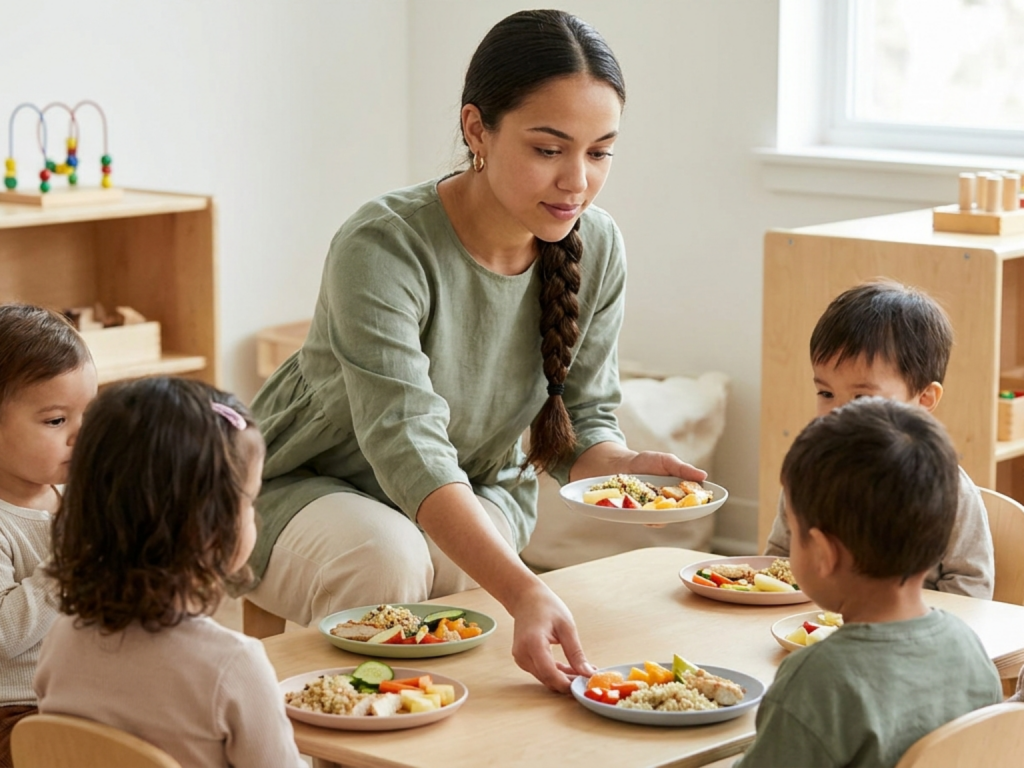
A preschool portion is usually much smaller than an adult portion. A common starting point is about one tablespoon of each food per year of age, then offering more if the child is still hungry. For example, a 4-year-old might start with 4 tablespoons of rice, vegetables, or beans rather than a full adult plate. This approach is not a strict rule; it is a practical way to avoid overwhelming the child and to make seconds feel normal rather than exceptional.
A balanced preschool plate might include a small entrée, a fruit or vegetable, a grain or starchy food, and a protein or dairy component. For lunch, that could be half a small sandwich, a few cucumber slices, a small serving of berries, and milk or yogurt. For dinner, it might be a modest portion of pasta with meat or beans, a few pieces of cooked vegetable, and fruit. Snacks can also be structured: apple slices with yogurt, whole-grain crackers with cheese, or carrots with hummus if textures are safe and accepted.
Texture and choking safety remain important. Whole grapes, hard chunks of raw carrot, large pieces of hot dog, whole nuts, and thick globs of nut butter can pose choking risks for young children. Foods should be cut and prepared in developmentally appropriate ways. Caregivers should supervise eating, encourage sitting while eating, and avoid rushing meals.
Large portions and appetite regulation
Research from Penn State University reports that when preschoolers were served larger portions, they consumed 16% more food and 18% more calories. The effect was stronger in children with higher body mass index percentiles and in children who were more responsive to visible food. Children who were better able to monitor hunger appeared less affected. These findings are clinically meaningful because they show that portion size can influence intake even when no one is forcing the child to eat.
This does not mean a child should be put on a restrictive diet because they ate more from a larger plate. Restriction can backfire by increasing food preoccupation, secrecy, or anxiety. Instead, the practical response is to serve age-appropriate portions, keep highly palatable foods from dominating the plate, and allow additional servings of nourishing foods when the child remains hungry.
The goal is not calorie counting for preschoolers. Unless a medical professional has advised otherwise, children should not be asked to track calories or feel responsible for body size. A safer strategy is environmental: smaller plates, modest first servings, water available between meals, regular meal and snack timing, and repeated exposure to fruits and vegetables without pressure. This protects appetite regulation while still supporting nutrition and growth.
Using portions to encourage fruits and vegetables
Portion size can also be used positively. A study in The American Journal of Clinical Nutrition found that serving smaller, age-appropriate entrée portions to children aged 3 to 5 increased fruit and vegetable intake at lunch while reducing energy density and total energy intake. In practice, this means that when the entrée is not oversized, children may have more appetite and attention available for other foods on the plate.
For many preschoolers, vegetables require repeated neutral exposure. A child may need to see, touch, smell, or taste a vegetable many times before accepting it. Small portions reduce pressure. One broccoli floret or two peas can be a valid exposure. Caregivers can model eating the food, describe it neutrally, and avoid making dessert contingent on vegetable consumption. Statements such as “You can try it if you want” are usually more supportive than “You must eat three bites.”
Fruit is often accepted more readily because of natural sweetness, but it still works best as part of a varied pattern. Offer fruit alongside protein, dairy, or whole grains when possible to support satiety. Juice, if used, should be limited according to pediatric guidance because it is easy to drink quickly and does not provide the same satiety as whole fruit.
Responding to picky eating without pressure
Picky eating is common in the preschool period and may reflect neophobia, sensory sensitivity, autonomy seeking, or normal appetite variability. The caregiver’s tone matters. Pressure, pleading, punishment, or using sweets as a reward can intensify resistance and make meals emotionally charged. A calm routine gives the child repeated chances to learn without turning food into a test of obedience.
Useful strategies include serving at least one familiar accepted food with each meal, offering tiny portions of newer foods, keeping meal timing predictable, and limiting grazing so the child arrives at meals with appropriate hunger. Family-style serving can help some children practice autonomy, but caregivers may still need to guide initial portions. If a child takes more than they can eat, respond neutrally: “Next time we can start with a smaller scoop.”
Some children have feeding challenges that go beyond typical pickiness. Red flags include coughing or choking with meals, recurrent vomiting, pain with eating, very restricted food variety, loss of previously accepted foods, poor growth, lethargy, significant constipation, or intense distress around textures. In these situations, families should consult a pediatrician and may benefit from a registered dietitian, speech-language pathologist, occupational therapist, gastroenterologist, or feeding team depending on the pattern.
Practical portion routines for home and childcare
Consistency between home, preschool, and other caregiving settings helps children feel secure. Adults can agree on a simple routine: meals and snacks at predictable times, water between eating opportunities, age-appropriate first servings, and permission for seconds when hunger remains. This reduces the need for constant negotiation and helps children trust that food will be available again.
Visual cues can help. Use small bowls, child-sized plates, and serving utensils that naturally produce preschool portions. Serve the first portion modestly, then pause before offering more. Ask body-based questions such as “Is your tummy still hungry or starting to feel comfortable?” rather than “Are you being good?” This language reinforces hunger and fullness signals without moralizing food.
Caregivers should also consider sleep, activity, illness, medications, and emotional stress. A tired or overstimulated preschooler may eat poorly or ask for frequent snacks for comfort. Helping preschoolers express emotions can indirectly support mealtimes because children who can name frustration, fatigue, or worry may be less likely to use food refusal or food demands as their only communication. When concerns persist, individualized professional advice is more appropriate than one-size-fits-all portion rules.
When to get medical guidance
- Seek urgent care if a child has choking, breathing difficulty, severe allergic symptoms, or dehydration.
- Consult a pediatrician if growth percentiles change rapidly, appetite drops persistently, or weight concerns arise.
- Do not place a preschool child on a restrictive diet unless guided by a qualified healthcare professional.
- Ask for feeding support if meals involve frequent gagging, vomiting, pain, or extreme texture avoidance.
- Discuss supplements, elimination diets, or specialized milk alternatives with a clinician before starting them.
Tools & Assistance
- Use child-sized plates, cups, and serving spoons to make age-appropriate portions easier.
- Keep a 3- to 7-day food and symptom log if you plan to discuss concerns with a pediatrician.
- Ask your childcare provider how portions, seconds, snacks, and food refusal are handled.
- Consider referral to a registered dietitian for growth, allergy, vegetarian, vegan, or restricted eating concerns.
- Create a calm meal routine with predictable timing and limited grazing between meals.
FAQ
Should preschoolers finish everything on their plate?
Usually no. Forcing a child to finish can weaken satiety awareness and increase mealtime conflict. Offer appropriate portions and allow the child to stop when comfortably full.
How do I know if a portion is too large?
If the serving looks close to an adult portion, it is probably too large. Start small, use child-sized dishes, and offer seconds if the child is still hungry.
Is it okay if my child eats very little at one meal?
Often yes, if growth, energy, hydration, and overall intake across several days are appropriate. Persistent appetite loss or growth concerns should be discussed with a pediatrician.
Can smaller entrée portions really help with vegetables?
Evidence suggests they can. When the entrée is age-appropriate rather than oversized, preschoolers may eat more fruits and vegetables and consume a lower-energy-density meal.
Should I count calories for my preschooler?
Not unless specifically advised by a healthcare professional. Most families should focus on structure, variety, responsive feeding, and appropriate portions rather than calorie tracking.
Sources
- Penn State University — Bigger portions lead to preschoolers eating more over time
- Michigan State University Extension — Portion sizes for preschoolers
- The American Journal of Clinical Nutrition — Serving smaller age-appropriate entrée portions to children aged 3–5 y increases fruit and vegetable intake and reduces energy density and energy intake at lunch
Disclaimer
This article is for general educational purposes only and does not replace medical advice. Consult a pediatrician or qualified healthcare professional for concerns about growth, nutrition, feeding, allergies, or weight.














Please log in to leave a comment.