
Intro
Back labor can be uniquely intense because the pain is concentrated in the sacrum, tailbone, and lower back rather than mainly across the abdomen. Many people describe it as deep pressure, aching, or sharp pain that may worsen during contractions and sometimes does not fully fade between them.
This article explains what back labor is, why it can happen, how severe lower back pain is assessed in labor, and what comfort and medical pain-management options may be discussed with a maternity care team.
Highlights
Back labor usually means labor pain felt predominantly in the lower back or sacral area, often intensified by contractions.
Posterior fetal position is a common contributor, but severe lower back pain can also reflect normal labor mechanics, musculoskeletal strain, or another condition that needs assessment.
Position changes, counterpressure, warmth, movement, water therapy, and continuous support may help some people cope with back labor.
Medication options, including neuraxial analgesia such as an epidural, should be discussed with clinicians in the context of labor progress, fetal monitoring, and personal preferences.
Urgent symptoms such as heavy bleeding, fever, reduced fetal movement, or severe pain between contractions should be assessed promptly.
Understanding back labor
Back labor is commonly used to describe intense discomfort centered in the lower back, sacrum, or tailbone during childbirth. It may peak with uterine contractions, but some people feel persistent pressure or aching even between contractions. This pattern can be physically exhausting because the usual rest period between contractions may feel incomplete. Signs of back labor contractions can include pain that radiates across the low back, sacral pressure, difficulty finding a tolerable position, and worsening pain when lying flat.
Clinically, back labor is not a separate diagnosis by itself. It is a pain pattern that needs to be interpreted alongside cervical change, contraction frequency, fetal position, membrane status, vital signs, and fetal well-being. Research on low-back pain during labor has described it as a common and clinically relevant experience, with associations to labor characteristics and maternal perception of pain intensity. The key point is that severe lower back pain deserves attention, but it does not automatically mean something is wrong.
Why the lower back can hurt so much
One frequently discussed contributor is posterior fetal positioning in labor, often called occiput posterior when the back of the baby’s head faces the mother’s back. In that position, the fetal skull may press more directly against the sacrum and pelvic nerves. This can produce deep pressure in the lower spine and tailbone, especially during contractions and descent. However, not every person with back labor has a persistent posterior position, and not every posterior baby causes severe pain.
Other factors may contribute. The pelvis, sacroiliac joints, pelvic floor, and lumbar muscles are under changing mechanical load throughout labor. Ligament laxity, prior back pain, long labor, fetal size and station, rapid descent, or prolonged immobility can all influence pain perception. Anxiety, fatigue, dehydration, and limited sleep can also lower coping reserves. A careful team will usually assess the whole picture rather than attributing every symptom to fetal position alone.
Assessing severe lower back pain safely
When lower back pain is severe, the first step is not to endure it silently. Tell the nurse, midwife, obstetrician, or anesthesiology team what the pain feels like, when it occurs, where it travels, and whether it fully eases between contractions. Useful details include pain intensity, new numbness or weakness, urinary symptoms, fever, vaginal bleeding, fluid color, fetal movement, and whether the pain feels different from earlier labor.
In labor, clinicians may evaluate maternal vital signs, contraction pattern, cervical progress, fetal position by examination or ultrasound when appropriate, and fetal heart rate monitoring. They may also consider non-labor causes of severe back pain, such as kidney infection, urinary stone, musculoskeletal injury, or, rarely, neurologic or obstetric complications. This does not mean severe pain is dangerous by default; it means pain should be interpreted in context. The goal is to protect safety while offering meaningful relief.
Positioning and movement strategies
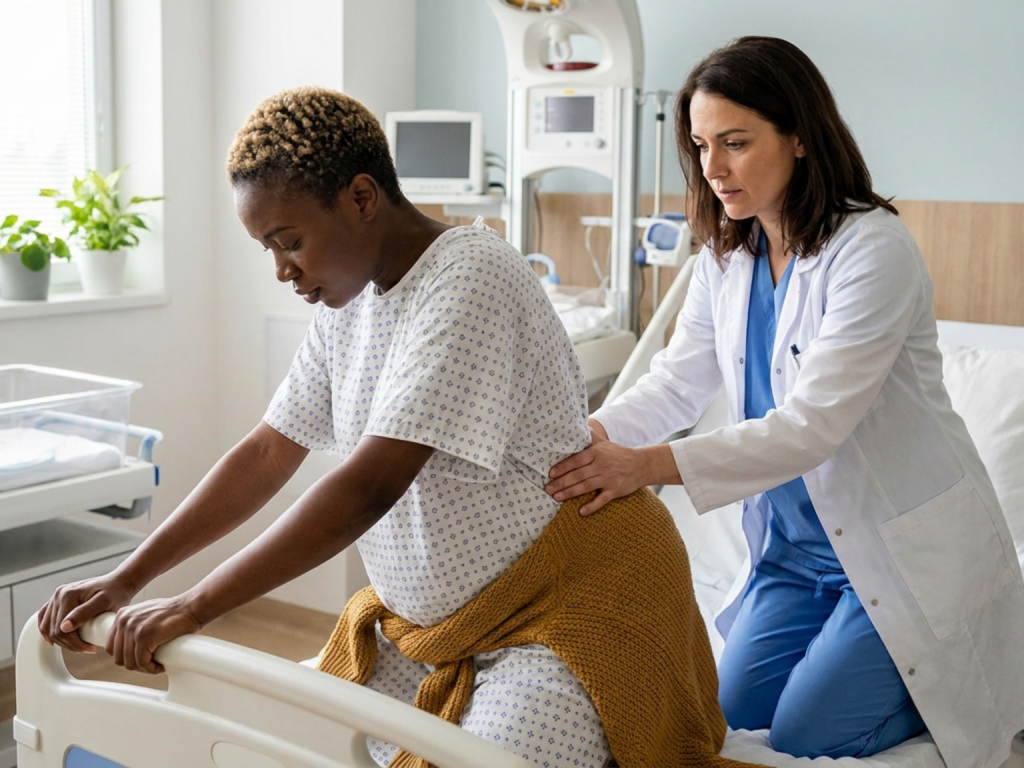
Position changes can reduce sacral pressure and may help the fetus rotate or descend more comfortably. Many people find that upright, forward-leaning, or asymmetrical positions feel better than lying flat on the back. Examples include leaning over a bed, birth ball, or partner; side-lying with support between the knees; lunging with one foot elevated; standing and swaying; or supported kneeling.
The hands-and-knees position for back labor is often suggested because it shifts pressure away from the sacrum and may feel instinctively relieving. It can be adapted with pillows, a raised bed, or a peanut ball so the person in labor does not have to hold full body weight. For someone with an epidural or limited mobility, the team may suggest side-lying releases, supported lateral positioning, or frequent turns. The safest position depends on fetal monitoring, maternal blood pressure, mobility, and the clinical setting.
Hands-on comfort measures
Nonpharmacologic techniques can be valuable even when medical analgesia is planned. Sacral counterpressure during contractions is one of the best-known approaches: a support person or clinician applies firm, steady pressure with the heel of the hand, knuckles, or a closed fist over the sacrum. Some people prefer double-hip squeeze, in which pressure is applied inward to both hips during contractions. These methods should feel relieving, not bruising or coercive, and pressure can be adjusted or stopped at any time.
Warm compresses for lower-back discomfort may ease muscle tension, while cold packs may feel better for inflamed or sharp pain. Massage, sterile water injections in some settings, breathing techniques, low vocalization, shower or tub therapy when permitted, and continuous labor support may reduce distress. These measures do not replace clinical evaluation when symptoms are concerning, but they can restore a sense of agency during a very intense pain pattern.
Medical pain relief options
Medication choices should be individualized with the maternity team. Options may include inhaled nitrous oxide where available, systemic opioid medications in selected situations, or neuraxial analgesia such as an epidural or combined spinal-epidural. Epidural analgesia can substantially reduce contraction pain for many people, including back labor pain, though it may not remove every sensation of pressure. The timing, benefits, side effects, and monitoring needs should be discussed before or during labor as circumstances allow.
Back labor contractions can be emotionally draining, and requesting medication is not a failure of coping. It is a legitimate clinical choice. At the same time, severe or unusual back pain after neuraxial placement, new leg weakness, severe headache, fever, or neurologic symptoms should be reported immediately. Pain management works best when the patient, support team, nurses, obstetric clinicians, midwives, and anesthesia professionals communicate clearly and adjust the plan as labor changes.
Coping through intense labor
Severe lower back pain can make labor feel longer and less predictable. A practical coping plan often combines several layers: position changes, sacral pressure, hydration, bladder emptying, reassurance, focused breathing, and timely medical analgesia if desired. It may help to use short time goals, such as getting through the next few contractions before reassessing. For support people, the most useful role is often specific and physical: apply counterpressure, remind the patient to change position, offer fluids, and communicate pain changes to the care team.
It is also reasonable to revisit the birth plan. A plan is not a contract; it is a starting point. If persistent lower-back pain during labor becomes overwhelming, adapting the plan can be medically and emotionally sound. The priority is safe birth, effective communication, and compassionate pain relief that respects the patient’s values and clinical needs.
Seek urgent assessment
- Severe abdominal pain between contractions or constant pain that feels different from labor pain.
- Heavy vaginal bleeding, fever, chills, fainting, or feeling seriously unwell.
- Reduced fetal movement during labor or concerns about fetal monitoring.
- Green or brown amniotic fluid, foul-smelling fluid, or signs of infection.
- New leg weakness, numbness, loss of bladder or bowel control, or severe headache after neuraxial anesthesia.
Tools & Assistance
- Ask the labor nurse or midwife to assess fetal position and suggest supported position changes.
- Use a birth ball, pillows, peanut ball, shower, or warm compress if approved in the birth setting.
- Teach a support person sacral counterpressure before active labor if back labor is expected.
- Discuss epidural analgesia, nitrous oxide, or other medication options with the obstetric anesthesia team.
- Call the maternity unit promptly if severe back pain occurs with warning signs before hospital arrival.
FAQ
Is back labor always caused by a posterior baby?
No. Posterior fetal position is a common contributor, but pelvic mechanics, muscle strain, labor duration, fetal station, and other medical issues can also influence lower-back pain.
Can position changes really help severe back labor?
They may help some people by reducing sacral pressure or encouraging fetal rotation. They are usually most effective when individualized and adjusted with the clinical team.
Does an epidural work for back labor pain?
An epidural can provide substantial relief for many people, including those with back labor, but it may not eliminate all pressure. Benefits and risks should be discussed with anesthesia clinicians.
When should lower back pain in labor be considered urgent?
Seek prompt assessment for constant severe pain, heavy bleeding, fever, reduced fetal movement, abnormal fluid color, neurologic symptoms, or pain that feels unlike contractions.
Sources
- PubMed — Low-back pain during labor
- PubMed — Low back pain during labor and related factors
- ACOG — What is back labor?
Disclaimer
This article is for informational purposes only and does not replace medical evaluation, diagnosis, or treatment. Always consult your obstetric, midwifery, or emergency care team about severe pain or concerning symptoms.
















Please log in to leave a comment.