
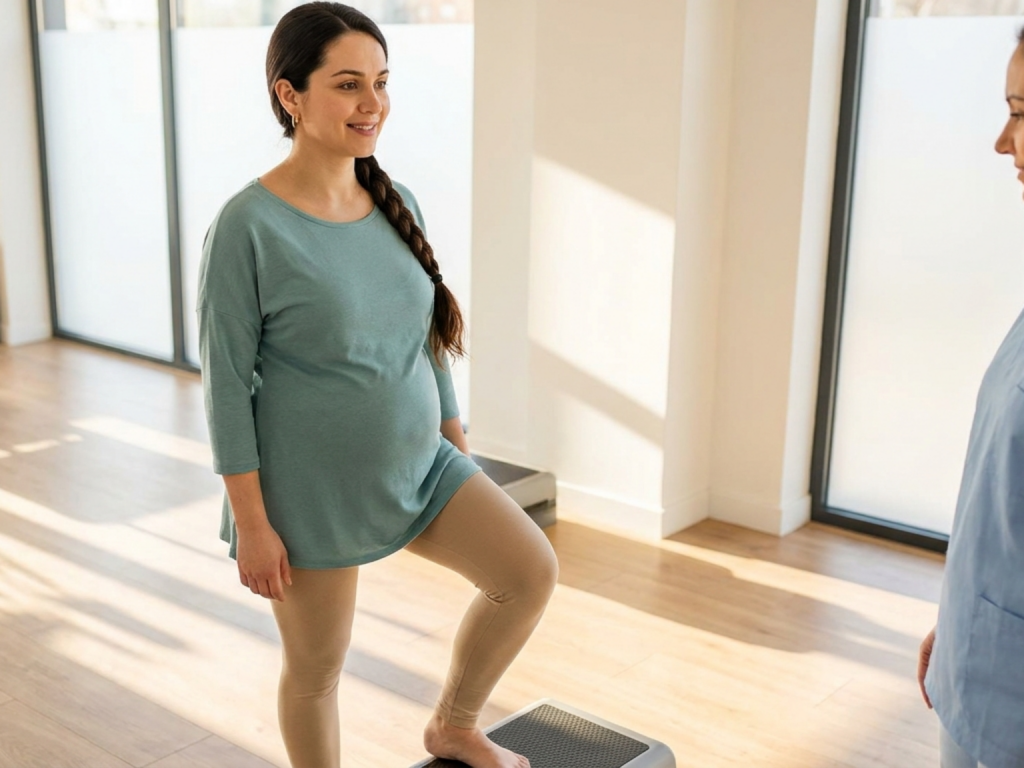
Intro
Pregnancy changes cardiovascular load, joint laxity, balance, thermoregulation, and fatigue patterns, so activity that felt routine before conception may need a different dose or a different format as the months pass. For many people with an uncomplicated pregnancy, exercise remains safe and beneficial, but the goal is not to keep the same routine no matter what; it is to match the workload to the body’s current capacity.
This article focuses on practical trimester-by-trimester activity limits and safe progression. It is written for readers who want the physiology, the red flags, and the logic behind modifications. Even when guidance is reassuring, any plan should be individualized with your obstetric clinician, midwife, or physiotherapist if you have symptoms, medical comorbidities, or a pregnancy that has already been labeled higher risk.
Highlights
Activity limits in pregnancy are usually about adaptation, not prohibition. The safest plan is one that accounts for symptoms, baseline fitness, and any obstetric restrictions.
A moderate target such as regular moderate physical activity while pregnant is often reasonable in uncomplicated pregnancies, but the exact volume and intensity should be individualized.
Progression should be gradual: adjust duration, impact, load, and position one variable at a time rather than trying to increase everything at once.
Each trimester brings different issues, including nausea and fatigue early on, shifting balance in midpregnancy, and comfort, mobility, and overheating concerns later.
Stop and seek medical advice promptly if activity triggers concerning symptoms, especially bleeding, chest pain, faintness, fluid leakage, or contractions that do not settle.
Why trimester-by-trimester limits matter
There is no universal activity prescription that fits every pregnancy. The same session can feel effortless in one trimester and excessive in another because pregnancy alters blood volume, ventilation, ligamentous laxity, posture, and energy availability. Those changes are normal, but they mean that exercise in pregnancy should be assessed against current symptoms rather than against a nonpregnant baseline.
Public health guidance generally supports regular movement for adults, and pregnancy is no exception when there are no contraindications. For many people, a level of moderate physical activity while pregnant is achievable and helpful for mood, glycemic control, sleep, and musculoskeletal comfort. The key nuance is that moderate should remain truly moderate: you should be able to speak in short sentences, recover within a reasonable time, and avoid a pattern of post-exercise symptoms that suggests the workload is too high.
Trimester-specific planning also helps distinguish normal discomfort from a need to scale back. Mild breathlessness, transient fatigue, and postural changes are expected. Persistent pain, dizziness, palpitations, bleeding, or pelvic pressure are not “just part of exercising more” and deserve clinical review. The safest framework is therefore one of flexible limits, symptom monitoring, and periodic reassessment.
First trimester: preserve routine, but lower the ceiling when symptoms say so
In the first trimester, many people are not limited by mechanical constraints so much as by nausea, vomiting, aversions, sleep disruption, and pronounced fatigue. This is often the stage for first trimester exercise with nausea rather than for ambitious progression. If your routine includes walking, stationary cycling, light resistance work, or gentle mobility work, you may be able to continue, but the session may need to be shorter, slower, and more flexible than usual.
The goal is continuity, not intensity. If symptoms are mild, some people do best by exercising earlier in the day, keeping snacks and fluids nearby, and using shorter bouts spread across the week. If nausea is significant, a walk after eating may be more tolerable than a fasted workout. If fatigue is high, maintaining light movement and reducing sedentary time may be enough for that week. Evidence-based activity guidance also supports less sitting and more frequent light movement breaks, because prolonged sedentary time can worsen stiffness and deconditioning.
From a practical standpoint, first-trimester limits often mean cutting back on maximal efforts, impact-heavy sessions, or anything that reliably worsens symptoms. That does not mean exercise must stop entirely. Instead, it means the workload should be symptom-led, with the understanding that tolerance may improve again in the second trimester.
Second trimester: build consistency with safe modifications
The second trimester is often the most comfortable phase, but comfort can create the illusion that the body is unchanged. In reality, ligamentous laxity increases, the center of mass shifts, and balance may become less reliable. This is the time to use safe pregnancy exercise modifications deliberately rather than waiting for a strain or a near-fall to force the change.
Many people can maintain aerobic training, resistance exercise, and mobility work if they avoid breath-holding, sudden pivots, and unstable surfaces. Strength work can remain valuable, but load should reflect technique quality and recovery rather than a pre-pregnancy personal record. A slower tempo, fewer repetitions, and more attention to alignment may be safer than trying to preserve old training metrics. For some, side-lying or incline positions are more comfortable than prolonged supine work if lying flat causes lightheadedness or shortness of breath.
This is also a useful time to protect the pelvis, spine, and lower limbs. Hip abductor and gluteal endurance, calf strength, and trunk control can support gait and reduce strain from postural changes. If an activity requires quick direction changes, jumping, or awkward twisting, consider whether there is a lower-impact substitute that trains the same systems with less fall risk. The best progression in midpregnancy is usually boring in the best sense: steady, repeatable, and easy to recover from.
Third trimester: prioritize comfort, stability, and recovery
In the third trimester, the physiologic and mechanical demands of pregnancy are usually most obvious. The uterus is larger, sleep may be lighter, reflux can be more common, and the pelvis may feel less stable. This is where third trimester low-impact exercise often becomes the most practical and sustainable option. Walking, water exercise, stationary cycling, light resistance work, and gentle mobility sessions are commonly better tolerated than high-impact or high-skill activities.
Progression in late pregnancy should be conservative. If you increase duration, do so gradually; if you add load, keep the movement pattern simple; if you add impact, make sure balance and recovery remain good. Many people find that shorter, more frequent sessions work better than long workouts. Rest days are not a sign of failure. They are part of safe progression when oxygen cost, pelvic pressure, or back discomfort increases.
Late pregnancy also calls for honest attention to breathlessness, positional symptoms, and recovery time. A workout that leaves you unusually wiped out for the rest of the day may be too demanding, even if it felt manageable in the moment. The right question is not “Did I complete it?” but “Did I tolerate it, recover from it, and feel normal enough afterward to continue safely?”
What usually needs to be limited or modified
Some activities are not automatically forbidden, but they deserve closer scrutiny because they increase fall risk, abdominal trauma risk, overheating, or excessive strain. Contact sports, activities with a high risk of falling, and workouts that involve repeated jarring impact are common examples. For anyone with a known pregnancy complication or a clinician-directed restriction, the term individualized lifting restrictions matters more than generic advice, because the safe ceiling can differ substantially from one patient to another.
In daily life and exercise alike, lifting should be deliberate. Avoid breath-holding and awkward twisting when carrying loads. If a task involves repeated floor-to-shelf lifts, heavy asymmetrical carries, or moving children and groceries at speed, consider breaking the task into smaller segments or asking for help. Some people can tolerate lifting well with good mechanics; others need more caution because back pain, pelvic girdle pain, or prior obstetric history changes the risk-benefit balance.
Heat management also matters. Overheating precautions for pregnant people include choosing cooler environments, hydrating before and during activity, and stopping early if you feel flushed, dizzy, or unusually short of breath. A mild rise in exertion is expected; overheating is not. If your environment is hot, humid, or poorly ventilated, the safest modification may be a lower intensity workout or a different location altogether.
Finally, watch for symptoms that should interrupt activity rather than be pushed through. These include vaginal bleeding, fluid leakage, calf pain with swelling, chest pain, faintness, marked shortness of breath at rest, regular painful contractions, or decreased fetal movement when you usually perceive movement. These are reasons to pause and seek urgent clinical guidance, not to test your tolerance.
A practical framework for safe progression
Safe progression is usually easiest when you change one variable at a time. For example, increase duration before you increase intensity; or keep the same pace but add one extra session per week; or maintain duration but move from a hill route to a flatter route. This reduces the chance of overloading joints, the cardiovascular system, or recovery capacity all at once.
A few simple checks can help you calibrate effort. The talk test is useful: you should generally be able to speak in short sentences during moderate work. Perceived exertion should stay in the moderate range, not the maximal range. Recovery should also be informative. If you need prolonged rest, feel lightheaded afterward, or develop new pain the same day or the next, that is a sign to step back.
Plan around the week, not just the single workout. Some days will be lower energy because of sleep disruption, constipation, reflux, or a growing abdomen that makes movement less efficient. On those days, lighter movement still counts. On higher-energy days, you can do a little more, but the safest approach is still conservative progression. If your clinician has already placed you under activity review, or if you are unsure whether an exercise is suitable, ask for individualized advice before increasing load. That is especially important when symptoms, obstetric history, or medical conditions make the risk profile less straightforward.
Used well, trimester-based limits are not a barrier to staying active. They are a way to keep movement restorative, clinically appropriate, and sustainable across a rapidly changing pregnancy.
Seek medical advice promptly if you have
- Vaginal bleeding or fluid leakage
- Chest pain, fainting, or severe shortness of breath
- Regular painful contractions or significant pelvic pressure
- New calf swelling or pain, especially if one-sided
- A clinician-diagnosed condition that comes with activity restriction
Tools & Assistance
- Prenatal visit with an obstetric clinician or midwife to confirm your activity plan
- Referral to pelvic floor or prenatal physiotherapy if pain, instability, or fear of movement is present
- Simple exercise log tracking duration, exertion, symptoms, and recovery
- Hydration plan and cooler indoor or shaded routes for warm weather activity
- A discussion of work-related lifting demands if your job is physically repetitive
FAQ
How much activity is generally considered reasonable in pregnancy?
Many uncomplicated pregnancies can tolerate regular moderate activity, often around 150 minutes per week, but the right target depends on baseline fitness, symptoms, and clinical history.
Do I need to stop exercising in the first trimester if I feel nauseated?
Not necessarily. Many people do better with shorter, lower-intensity sessions, flexible timing, and hydration or snack strategies; persistent symptoms should be discussed with a clinician.
What is the safest approach to progression later in pregnancy?
Increase only one variable at a time, favor low-impact options, and use symptoms, recovery, and balance as your guide rather than trying to match pre-pregnancy performance.
When should I stop exercising and get checked?
Stop for bleeding, fluid leakage, chest pain, faintness, painful contractions, marked shortness of breath at rest, or any symptom that feels unusual or concerning.
Sources
- American College of Obstetricians and Gynecologists — Exercise During Pregnancy
- World Health Organization — Physical activity
- PubMed Central — WHO 2020 guidelines on physical activity and sedentary behaviour
Disclaimer
This article is for educational purposes only and does not replace individualized medical advice. If you have pregnancy complications, warning signs, or uncertainty about activity limits, contact your obstetric clinician promptly.
















Please log in to leave a comment.