
Intro
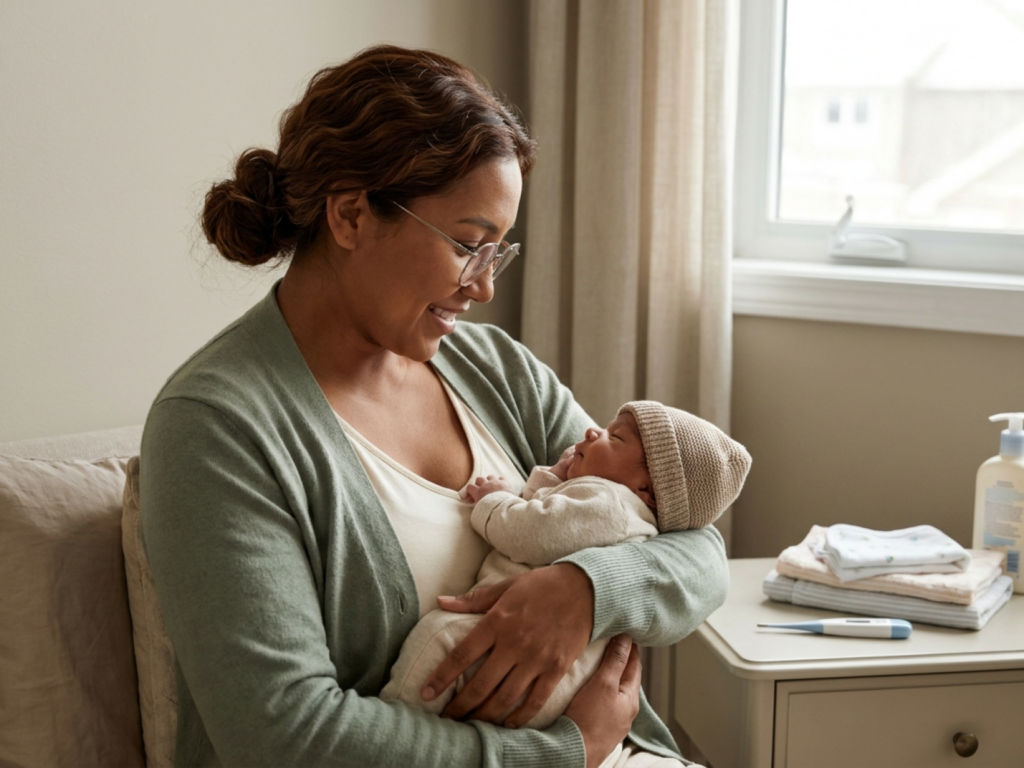
It can be unsettling when a baby who was recently sick, hospitalized, traveling, or thrown off schedule suddenly wants to be held constantly, resists separation, or seems harder to soothe. In many cases, this is not a sign that something has gone wrong with attachment. It is a common, understandable response to stress, discomfort, fatigue, and lost predictability.
Illness and major routine changes can temporarily disrupt a baby’s sense of safety. Babies rely heavily on repetition, familiar caregivers, and consistent cues to organize sleep, feeding, and emotional regulation. When those cues are interrupted, clinginess can increase while the nervous system recalibrates. The goal is not to force independence. It is to restore comfort and predictability while watching carefully for signs that the baby needs medical follow-up.
Highlights
Clinginess after illness or a disrupted schedule is often a proximity-seeking response, not a behavioral problem.
Babies may need extra holding, repetition, and calmer transitions while they recover physically and emotionally.
A simple baby routine after illness can help restore predictability, but it usually works best when returned to gradually.
Persistent poor feeding, dehydration, pain, or worsening distress should prompt a pediatric check-in.
Why illness or a schedule change can make babies clingier
Babies are highly dependent on external regulation. They do not yet have mature circadian timing, emotional self-soothing skills, or the ability to understand that a parent will return after a separation. When illness interrupts sleep, feeding, breathing comfort, or usual caregiver contact, the baby’s stress response can become more active. A major schedule change can create a similar effect because the infant’s brain is constantly trying to predict what happens next.
Clinginess may show up because the baby feels physically unwell, is tired, is over or under-stimulated, or simply no longer recognizes the day in the way they usually do. Hospitalization can intensify this because of unfamiliar people, unfamiliar handling, repeated procedures, and separations from parents. Even after the medical issue improves, the baby may continue to act as if the world is less secure than before. That is why clinginess after illness or a major routine change is often best understood as a temporary adjustment response rather than a sign of willfulness.
In older infants, this can overlap with separation anxiety, which is a normal developmental phase. In younger babies, it may look more like increased crying, wanting to be held constantly, waking more often, or protesting when put down. The behavior can be intense, but it is often the baby’s way of asking for reassurance while the system settles.
What clinginess can look like, and what is usually expected
Parents often notice that a baby who was previously fine with brief separations suddenly becomes harder to hand to another caregiver, more upset at nap time, or less interested in independent play. Some babies want to stay attached to one parent from morning to night. Others become difficult to settle unless they are being held, rocked, nursed, or carried. These changes may be especially noticeable after a fever, stomach illness, ear infection, surgery, a hospitalization, a move, a trip, or a sudden shift in childcare.
There is usually a pattern to the clinginess. It may worsen at the end of the day, during transitions, or when the baby is hungry or overtired. It can also coexist with regression, meaning the baby temporarily returns to behaviors that were common at an earlier stage, such as more crying, shorter naps, more night waking, or more need for contact. This does not automatically mean development has been harmed. Often, it reflects a nervous system that is still reorganizing after stress.
For many families, the most helpful expectation is that recovery is gradual. Once pain, fatigue, and uncertainty improve, the need for constant contact usually starts to ease. If the clinginess is stable or slowly improving, and the baby is otherwise feeding, sleeping, and interacting adequately, that trajectory is often reassuring.
How to comfort your baby without fighting the behavior
The instinct to reassure a clingy baby is usually the right one. Extra physical comfort can be therapeutic, especially in the early recovery period. Gentle holding, skin-to-skin contact when appropriate, rocking, singing, and quiet presence all help reduce arousal and make transitions feel less abrupt. If your baby prefers one caregiver, that preference can be used strategically for a few days while the child regains confidence.
At the same time, comfort works best when it is predictable. Instead of trying many different soothing techniques back to back, choose a simple sequence and repeat it. For example: feed, burp, hold, dim the lights, then lay down drowsy but settled. The repetition itself becomes part of the reassurance. If the baby is old enough and medically stable, brief separations can be practiced very gradually, with a familiar voice and a quick return.
- Use calm, consistent phrases before transitions.
- Keep reunions brief, warm, and predictable.
- Limit extra stimulation when the baby is clearly overwhelmed.
- Let other caregivers help in low-pressure ways, such as feeding, holding, or walking with the baby once the infant accepts it.
Family check-ins can also help. When everyone uses the same language and the same routine cues, the baby has fewer surprises and less to protest.
Rebuilding baby routine after illness or disruption
After the acute phase of illness or a major life change, the goal is to restore predictability in a way the baby can tolerate. A baby routine after illness does not have to be perfect or rigid. It should simply be familiar enough that the baby can anticipate what comes next. The earlier the routine becomes recognizable, the easier it is for the infant to settle.
Start with the anchors that matter most: morning and bedtime routines, feeding rhythm, nap cues, and the order of comforting events. If illness changed sleep timing, do not try to fix everything in one day. A baby routine after disruption works better when it is rebuilt in small steps, such as returning one bedtime cue first, then one daytime nap pattern, then longer awake windows once the child’s energy allows.
Consistency matters more than speed. Use the same lullaby, the same dimming pattern, the same sleep space, or the same pre-feed calm period if those cues previously helped. If a child was hospitalized or had medication changes, follow discharge instructions closely and keep a simple written record if that helps your family track feeding, sleep, and medicine timing. The more predictable the environment, the less the baby has to work to understand it.
When clinginess deserves a call to the pediatrician
Most clinginess after illness or a schedule change improves as the baby’s body recovers and the family’s rhythm becomes familiar again. However, some situations deserve medical review. If the baby seems increasingly irritable rather than gradually calmer, or if the clinginess is paired with signs of ongoing illness, it is appropriate to contact a pediatric clinician.
Watch especially for poor feeding, fewer wet diapers, vomiting, persistent fever, breathing difficulty, lethargy, a new rash, obvious pain, or a return of symptoms that had started to improve. A baby who cannot be soothed at all, is unusually sleepy, or seems dehydrated should not be managed as a routine adjustment issue. Likewise, if the baby was recently discharged from the hospital and separation distress remains intense or interferes with sleep and feeding for more than expected, follow up with the medical team or pediatrician.
A practical way to decide whether to seek help is to ask two questions: Is the baby getting physically better, and is the overall pattern slowly improving? If the answer to either is no, that is a good reason to ask for guidance. Parents do not need to wait until they are certain something is wrong. A check-in can clarify whether this is ordinary post-illness clinginess or something that needs a closer look.
Supporting the caregiver while your baby recalibrates
Clinginess can be exhausting for caregivers. Constant holding, interrupted sleep, and repeated reassurance can leave a parent feeling trapped or worried that they are creating a habit they cannot undo. It may help to remember that temporary dependence after illness is not the same as a permanent pattern. During recovery, closeness is often the bridge back to stability.
Protect the caregiver system as much as possible. Trade off with another adult when you can, simplify meals, lower nonessential tasks, and rest during brief windows instead of trying to catch up on everything. If one parent has the strongest calming effect, that is useful information, not a failure. Use it while also giving other caregivers small, repeated opportunities to connect with the baby in low-stress moments.
It is also normal for parents to feel emotionally raw after a hospital stay or a difficult illness. If you are on edge, sleep deprived, or feeling persistently overwhelmed, you deserve support too. Ask a family member to help with practical tasks, and contact your own clinician or a mental health professional if anxiety, low mood, or post-hospital stress is becoming hard to manage. A calmer caregiver often makes it easier for a baby to feel safe again.
Call for medical help if you notice
- Fever, breathing trouble, or a baby who looks increasingly unwell.
- Poor feeding, fewer wet diapers, vomiting, or signs of dehydration.
- Lethargy, hard-to-soothe crying, or obvious pain that does not improve.
- Clinginess that is getting worse instead of slowly settling as recovery progresses.
Tools & Assistance
- Your pediatrician or pediatric nurse advice line
- Hospital discharge instructions and follow-up plan
- A simple feeding, sleep, and wet-diaper log
- A family calendar for morning and bedtime routines
- Written medication schedule if your baby was prescribed treatment
FAQ
How long can clinginess last after illness or hospitalization?
It varies, but many babies become less clingy as pain, fatigue, and uncertainty improve. If the pattern is not easing or your baby seems medically unwell, contact a pediatrician.
Is my baby being manipulative if they only want to be held?
No. In babies, clinginess is usually a proximity-seeking stress response and a request for regulation, comfort, and predictability.
Should I go back to the old routine right away?
Usually the best approach is to return to familiar cues gradually, as your baby’s energy and medical condition allow, rather than forcing a full reset at once.
What if the clinginess started after a move or schedule change rather than illness?
The same principles often help: keep routines predictable, add extra comfort, and give the baby time to adjust to the new pattern.
Sources
- UC Davis Health — Parenting Through Illness
- University of Maryland Medical System — Taking Your Child Home from the Hospital
- National Child Traumatic Stress Network — After the Hospital: Helping My Child Cope
Disclaimer
This article is for educational purposes only and does not replace individualized medical advice. If your baby has persistent or worsening clinginess, poor feeding, breathing trouble, dehydration, fever, or any other concerning symptom, contact a qualified healthcare professional promptly.
















Please log in to leave a comment.