
Intro
Many pregnant people want a clear answer about whether a daily coffee is still reasonable and whether energy drinks are meaningfully riskier. The short answer is reassuring but not unlimited: for many people, coffee can fit into pregnancy in moderation, while energy drinks deserve much greater caution because they can deliver a concentrated stimulant load and may include other ingredients that make the total effect harder to predict.
The key clinical idea is not simply whether a beverage contains caffeine, but how much caffeine is consumed in the entire day, how fast it is taken in, and whether pregnancy-related factors make side effects more likely. If you are trying to balance comfort, habit, and safety, you are not alone; this is a common and reasonable question to bring to prenatal care.
Highlights
Daily coffee is often compatible with pregnancy when total caffeine stays within the limit recommended by the obstetric team, but dose and cup size matter.
Energy drinks are usually higher risk than coffee because they can contain large caffeine doses, added stimulants, and variable ingredient combinations.
Pregnancy lowers the margin for error: caffeine crosses the placenta, and fetal metabolism is limited compared with adult metabolism.
The safest approach is to count caffeine from all sources, not only the morning cup.
If caffeine worsens sleep, palpitations, anxiety, reflux, or nausea, it is reasonable to reduce intake and ask for individualized advice.
Why pregnancy changes the caffeine question
For a healthy adult, moderate caffeine intake is generally considered safe, and the FDA commonly cites 400 mg per day as the adult upper limit. Pregnancy is different. Caffeine crosses the placenta, the fetus has limited ability to metabolize it, and maternal clearance can slow as pregnancy progresses. Those differences are why many obstetric clinicians use a lower target in pregnancy, often around 200 mg per day.
That lower ceiling does not mean a single cup of coffee is automatically unsafe. It means the safety margin is smaller and the relevant unit is the entire day, not one drink in isolation. A person who feels fine with a beverage outside pregnancy may notice more reflux, jitteriness, insomnia, or palpitations once pregnant, even at the same dose. The point of caution is not to create unnecessary fear; it is to match intake with a physiology that is temporarily different.
Evidence reviews also support the idea that moderate caffeine is usually well tolerated in healthy adults, but pregnancy is a situation where clinicians tend to prefer the conservative end of that evidence. When the literature and clinical practice differ in intensity, the practical response is usually to set a smaller target and review it with the prenatal team.
Is a daily coffee usually safe?
For many pregnant people, coffee intake while pregnant can remain part of the routine if the amount is modest and the total caffeine stays within the plan recommended by the clinician. In practice, coffee is often easier to manage than other caffeinated products because it is familiar, predictable, and easy to measure approximately. That said, caffeine content varies widely by brew method, cup size, and how strong the coffee is prepared.
A small brewed coffee, an espresso drink, a cold brew, or a specialty latte may all look like a single beverage but contribute very different caffeine amounts. This matters because pregnancy guidance is based on totals, not assumptions. A person can unintentionally use up most of the day’s allowance in one large cup, then forget that tea, soda, chocolate, or a headache medicine also contributes caffeine.
Symptom tolerance matters too. If coffee worsens morning nausea, acid reflux, tremor, anxiety, or sleep quality, the practical answer may be to reduce the dose rather than force a rule that feels unnatural. Some people do well with half-caf, smaller servings, or drinking coffee earlier in the day. Others feel better switching to decaf after one small cup. The most useful approach is individualized, not moralized.
Why energy drinks carry a different kind of risk
energy drinks in pregnancy deserve special caution because they can deliver a large amount of caffeine quickly and may also include other stimulants or additives. Unlike coffee, where the main active ingredient is usually clear, energy drink formulations can be less transparent to consumers. Some products combine caffeine with ingredients such as guarana or herbal stimulant blends, which can make the net stimulant effect less predictable.
The concern is not only the caffeine total. Energy drinks are often marketed for alertness or performance, so they can encourage rapid consumption or use during fatigue, nausea, or long work shifts. In pregnancy, that pattern can be more likely to trigger palpitations, sleep disruption, anxiety, or a sense of being overheated and unwell. Some products also contain a large sugar load, which may not be ideal if nausea, gestational glycemic concerns, or dental issues are part of the picture.
From a safety standpoint, the problem is variability. A person may think they are having one drink that is comparable to coffee when the actual stimulant exposure is much higher. That unpredictability is why many clinicians advise avoiding energy drinks entirely during pregnancy rather than trying to fit them into a caffeine budget. If you are looking for a safer source of alertness, it is usually better to adjust sleep routines, hydration, snacks, and coffee quantity than to rely on an energy drink.
Tracking total daily caffeine without missing hidden sources
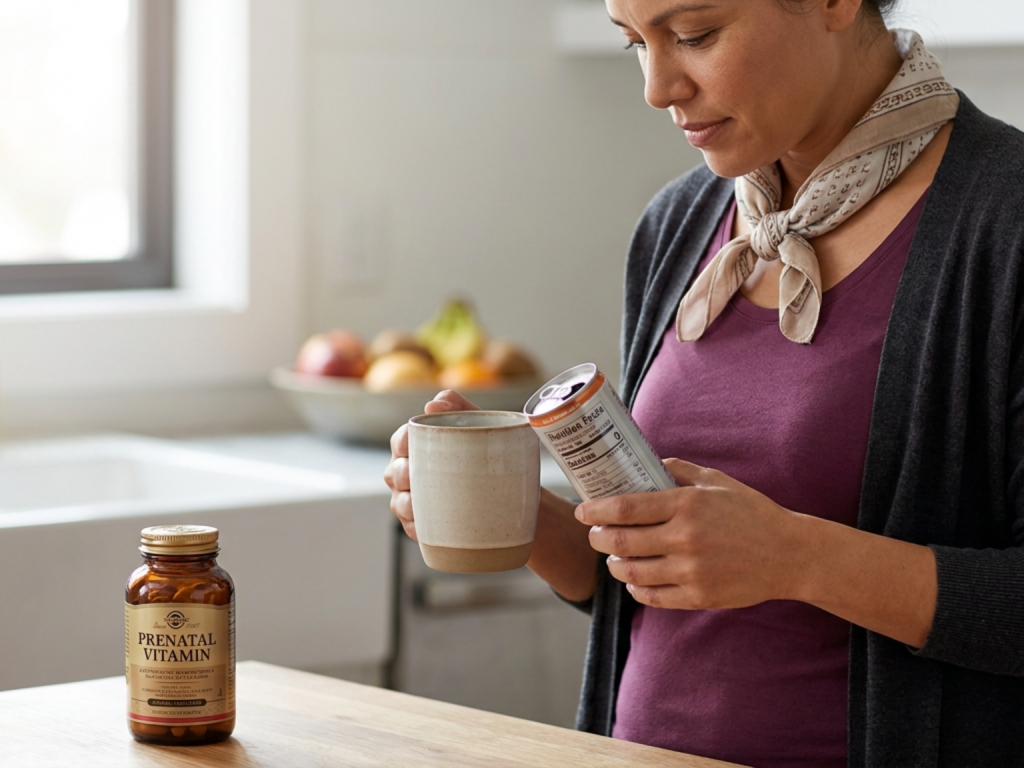
A very practical way to lower risk is tracking total daily caffeine from all sources. This is where people are often surprised. Coffee is obvious, but tea, cola, matcha, chocolate, some bottled beverages, pre-workout drinks, and certain over-the-counter medicines can all add to the total. The sum can be meaningful even when each item seems modest on its own.
This is especially relevant for hidden caffeine sources in pregnancy because serving size can be misleading. A package may list one caffeine value per serving, while the container contains multiple servings. Some labels also use terms like smooth, bold, or extra strength without clearly signaling the actual stimulant load. If you are trying to stay within a conservative pregnancy limit, the best habit is to read the per-serving caffeine amount and then multiply by the number of servings you actually consume.
It also helps to think in terms of routines. For example, one morning coffee plus a cola in the afternoon plus chocolate in the evening may add up more quickly than expected. A simple written tally for a few days can reveal patterns that are easy to miss. This is one reason clinicians often discuss caffeine sources in pregnancy as a whole rather than focusing only on coffee.
- Compare caffeine per serving, not just per container.
- Count beverages, chocolate, and medications together.
- Remember that decaf still contains a small amount of caffeine.
- Review labels again when you switch brands or cup sizes.
Who needs extra caution or a personalized limit?
Most advice about coffee and caffeine is written for otherwise uncomplicated pregnancies, but some people need a more individualized plan. Extra caution is sensible if you have chronic hypertension, arrhythmia, migraine that is caffeine-sensitive, significant reflux, insomnia, panic symptoms, or another condition where stimulants consistently make you feel worse. In those situations, the goal is not just to hit a population guideline; it is to minimize symptoms and keep you functioning comfortably.
A personalized discussion is also important if you are taking medications that can affect heart rate, blood pressure, or alertness. Pregnancy nausea can make dehydration and skipped meals more likely, and caffeine may feel harsher when you are already underfueled. If you notice that a small amount of caffeine causes a disproportionate reaction, that is useful clinical information, not a personal failure.
Bring concrete details to prenatal care if possible: the brand, serving size, timing, and whether symptoms occurred after coffee, tea, or an energy drink. That kind of history helps a clinician judge whether the issue is total dose, speed of intake, or a broader sensitivity. For many patients, a practical plan is enough; for a few, the safest plan is stricter avoidance.
Practical ways to cut risk without making pregnancy harder
If you want a cautious but realistic plan, start by estimating your usual intake over three ordinary days and compare it with the limit your obstetric clinician recommends. Many people find that one modest coffee in the morning leaves enough room to avoid caffeine later in the day, while still preserving the routine that makes the day feel manageable.
If you need to reduce intake, taper gradually when possible. Abruptly stopping caffeine can lead to caffeine withdrawal headaches, fatigue, and irritability, which may be especially inconvenient during pregnancy. A step-down approach often works better: smaller cups, half-caf blends, earlier timing, or a swap to decaf after the first serving. Non-caffeinated options can also help preserve the ritual of holding a warm drink without adding stimulant exposure.
Seek prompt medical advice if you have persistent palpitations, chest pain, fainting, severe anxiety, or an unusually strong reaction after an energy drink. Those symptoms are not things to self-manage with guesswork. When in doubt, ask your prenatal clinician or pharmacist, especially if you are taking medications or have a history of heart or blood pressure problems.
When to be cautious
- Energy drinks should not be treated like ordinary coffee in pregnancy.
- Do not combine caffeine pills, pre-workouts, and caffeinated drinks without clinician guidance.
- If caffeine triggers palpitations, chest pain, faintness, or severe anxiety, seek medical advice promptly.
- If sleep, reflux, or nausea worsens after caffeine, a lower dose may be safer and more comfortable.
- If you have hypertension, arrhythmia, or another medical condition, ask for a personalized caffeine limit.
Tools & Assistance
- Bring a 3-day caffeine diary to your prenatal visit.
- Check beverage labels for caffeine per serving, not just per package.
- Ask your pharmacist whether any over-the-counter medicines contain caffeine.
- Use your obstetric clinician or midwife to set a pregnancy-specific caffeine target.
FAQ
Is one daily coffee usually safe in pregnancy?
Often yes, if the total caffeine for the day stays within the limit recommended by your clinician. Cup size, brew strength, and added espresso shots can change the dose.
Are energy drinks safe if I only have one occasionally?
They are usually a poorer choice than coffee in pregnancy because the caffeine dose can be high and other stimulant ingredients may be present. Many clinicians advise avoiding them.
Does decaf count toward my caffeine total?
Yes, but usually only a small amount. It is still worth counting if you are keeping a strict daily limit.
What if I had more caffeine than usual once?
Do not panic. Return to your usual plan, hydrate, and contact your clinician if you develop significant symptoms such as palpitations, chest pain, or faintness.
Sources
- U.S. Food and Drug Administration — Spilling the Beans: How Much Caffeine is Too Much?
- Mayo Clinic — Coffee and health: What does the research say?
- PubMed Central — The Safety of Ingested Caffeine: A Comprehensive Review
Disclaimer
This article is for education only and does not replace personalized medical advice. If you are pregnant, trying to conceive, or have symptoms after caffeine use, please discuss your individual caffeine limit with a qualified clinician.












Please log in to leave a comment.