
Intro
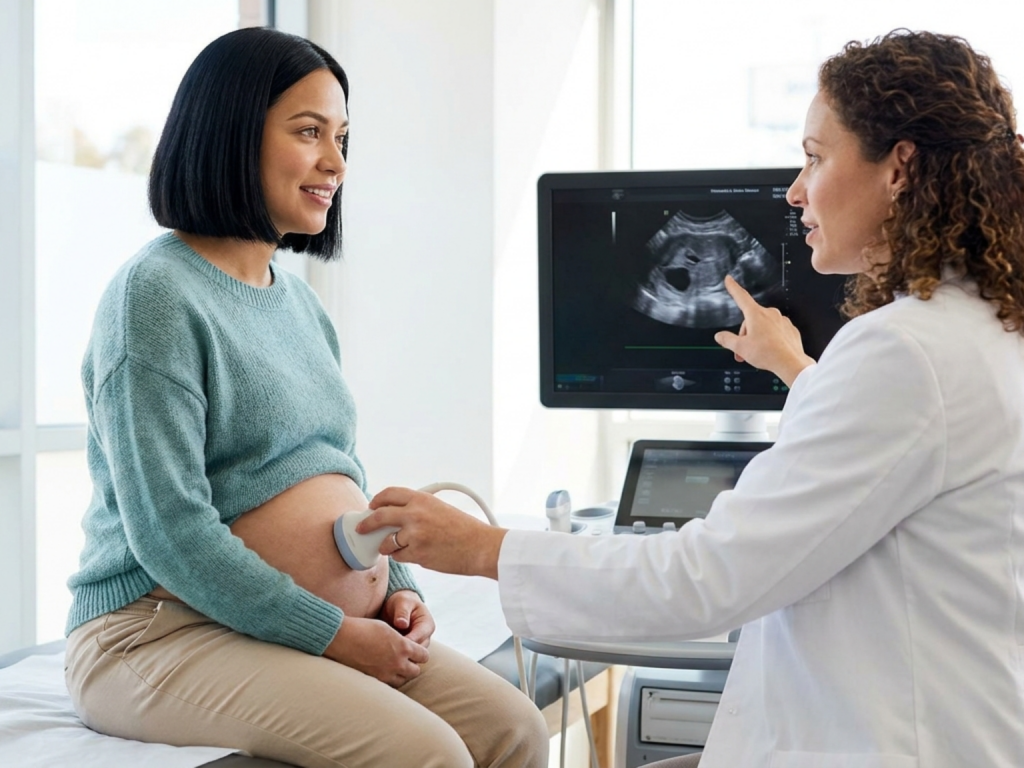
Finding out that you have uterine fibroids or an ovarian cyst during pregnancy can be unsettling, especially if the finding appears on a routine ultrasound and you were not expecting any complications. The reassuring news is that many fibroids and most ovarian cysts found in pregnancy are benign and can be managed with observation, symptom control, and planned follow-up rather than urgent treatment.
That said, pregnancy changes the way these conditions behave. Fibroid size, number, and location can influence pain, placental position, fetal presentation, and the likelihood of cesarean delivery, while the appearance and size of an ovarian cyst help determine whether it can simply be watched or needs closer imaging or surgery. This article explains how clinicians think about both findings and when to seek prompt care.
Highlights
Most pregnancy-related fibroids and many ovarian cysts are monitored rather than treated immediately.
Risk depends more on size, location, and imaging appearance than on the diagnosis alone.
Ultrasound is the first-line test, and MRI can help when ultrasound is unclear.
Sudden severe pain, bleeding, fever, or vomiting needs urgent medical assessment.
Delivery planning is individualized; fibroids do not automatically mean cesarean birth.
What these diagnoses usually mean
Uterine fibroids are benign smooth-muscle tumors of the uterus, also called leiomyomas. In pregnancy, they are often discovered incidentally on ultrasound because many people have no symptoms before conception. Ovarian cysts are fluid-filled or partly solid masses arising from the ovary; in pregnancy, many are functional cysts related to normal ovarian activity, especially in the early weeks. Both findings can sound alarming, but the first question is usually not whether they are present, but whether they are causing symptoms or have imaging features that suggest higher risk.
For many patients, the practical approach is careful observation. Clinicians consider whether the mass is simple or complex, whether it is growing, and whether it is causing pain, bleeding, pressure, or concerns about obstruction. They also look at the broader pregnancy picture, including gestational age, placental location, fetal growth, and any history of prior surgery or infertility. In other words, the diagnosis matters, but the context matters just as much.
How fibroids can influence pregnancy
Pregnancy hormones and increased uterine blood flow can change fibroid behavior. Some fibroids enlarge in early pregnancy, while others remain stable or even become less prominent later on. The most common pregnancy-related fibroid symptom is localized pain, often from so-called red degeneration, a painful ischemic change that can occur when a fibroid outgrows its blood supply. This pain may be significant enough to mimic other acute abdominal conditions, which is why persistent or severe pain should not be dismissed.
Not every fibroid carries the same risk. Submucosal fibroids and those that distort the uterine cavity are more likely to be linked with early pregnancy loss or implantation problems, while large intramural fibroids or lower uterine segment fibroids may contribute to malpresentation, placental complications, preterm birth, or labor obstruction. Multiple fibroids and larger fibroids generally increase the chance that clinicians will watch the pregnancy more closely. Even so, many pregnancies progress normally, and most care is conservative rather than surgical.
When fibroids do cause symptoms, management is usually aimed at comfort and monitoring. Hydration, rest, and pregnancy-appropriate analgesia may be recommended by the obstetric team. Surgery on fibroids during pregnancy is uncommon and reserved for selected situations because any uterine operation adds risk. For people already living with uterine fibroids, the key message is not that pregnancy is unsafe, but that surveillance should be tailored to fibroid characteristics and the clinical picture.
How ovarian cysts are assessed and watched
Ovarian cysts in pregnancy are often benign and transient, particularly simple cysts or corpus luteum cysts identified in the first trimester. Ultrasound is the main imaging test because it is accessible, does not use ionizing radiation, and provides useful information about size, shape, septations, solid components, papillary projections, and vascularity. If ultrasound is inconclusive or the anatomy is difficult to define, MRI can be used as a safe problem-solving tool in pregnancy.
The appearance of the cyst is often more important than the label. A simple, thin-walled, anechoic cyst is commonly observed, especially when it is small and the patient is asymptomatic. By contrast, a complex mass, a lesion with solid areas, rapid growth, bilateral disease, or features concerning for malignancy deserves specialist review. Many clinicians use practical follow-up thresholds based on size and morphology, with smaller simple cysts often monitored and larger or more complex lesions re-imaged.
Symptoms also guide management. Torsion can present with sudden, unilateral, severe pain, often with nausea or vomiting. Rupture can cause abrupt pain and sometimes peritoneal irritation. If there is concern for torsion, rupture, or a persistent mass that is not clearly benign, the care team may consider surgery, often in the second trimester when intervention is necessary and timing is more favorable. The goal is always to balance maternal safety, fetal well-being, and the least invasive effective approach.
When fibroids and ovarian cysts occur together
Having both conditions at the same time can make symptom interpretation harder. A pregnant person may feel pelvic pressure, unilateral pain, back pain, or intermittent cramping, and it is not always obvious whether the cause is fibroid degeneration, cyst enlargement, ovarian torsion, a urinary problem, or a non-gynecologic abdominal emergency. That uncertainty is one reason clinicians take persistent or severe pain seriously rather than attributing it to a known benign finding.
In combined cases, follow-up is often more deliberate. Repeat ultrasound may be used to check whether a fibroid is encroaching on the lower uterine segment or whether a cyst is changing in size or appearance. If the fibroid is large or positioned in a way that may affect the birth canal, the obstetric team may discuss fetal presentation and labor planning earlier. If the cyst is persistent, complex, or large, consultation with gynecology or a maternal-fetal medicine specialist may be appropriate.
It is also common for patients to feel caught between reassurance and worry. That emotional tension is understandable. The presence of fibroids and an ovarian cyst does not automatically mean a poor outcome, but it does justify thoughtful surveillance and a clear plan for what symptoms should trigger urgent evaluation. A good care plan usually includes who to call, when to be seen, and what imaging or follow-up interval is expected.
Symptoms that need urgent medical review
Some symptoms suggest a complication that should be assessed promptly in maternity triage, urgent care, or the emergency department. Severe, constant, or one-sided abdominal or pelvic pain is a red flag, especially if it is new, escalating, or associated with nausea and vomiting. Fever, chills, fainting, shoulder pain, heavy vaginal bleeding, a rigid abdomen, or signs of preterm labor also warrant urgent attention.
- Sudden severe pelvic pain may indicate ovarian torsion, cyst rupture, or fibroid degeneration.
- Heavy bleeding should always be evaluated, even if a fibroid has already been identified.
- Persistent vomiting, fever, or fainting can signal a broader emergency.
- Decreased fetal movement later in pregnancy should be reported immediately.
Because fibroid pain and cyst pain can overlap with obstetric and non-obstetric emergencies, it is safer to call sooner rather than wait. If you are unsure whether a symptom is normal, it is appropriate to contact your obstetric team for guidance. No article can replace a bedside exam, and the threshold for assessment in pregnancy should stay low.
Treatment, follow-up, and emotional support
Most management is conservative. That means symptom relief, observation, and a low threshold for repeat imaging when the diagnosis is not fully secure. Your team may recommend serial ultrasound to monitor growth, placental relationship, fetal presentation, or cyst evolution. If surgery becomes necessary, the reason is usually a specific concern such as torsion, persistent severe symptoms, obstruction, or suspicion of malignancy rather than the mere presence of a mass.
Delivery planning is individualized. Fibroids do not automatically require cesarean delivery, and many people with fibroids still labor vaginally. However, a large lower uterine segment fibroid, significant uterine distortion, or malpresentation may change the delivery discussion. For ovarian cysts, management depends on whether the cyst resolves, remains stable, or shows concerning features over time. After birth, some fibroids and cysts are re-evaluated because postpartum imaging may clarify what was pregnancy-related and what persists.
It is also worth acknowledging the emotional side of all this. Pregnancy already involves uncertainty, and extra findings on ultrasound can make that uncertainty feel much larger. If that is your experience, you are not overreacting. Ask for a clear explanation of what was seen, what would count as a change, and how urgently you should report symptoms. Shared decision-making, especially when imaging findings are stable, can make the plan feel much more manageable.
Seek urgent care if you have:
- Sudden severe abdominal or pelvic pain, especially on one side
- Heavy vaginal bleeding or bleeding with cramping
- Fever, chills, fainting, or persistent vomiting
- Decreased fetal movement in the second half of pregnancy
- A known ovarian cyst with sharp pain or suspected torsion
Tools & Assistance
- Obstetrician or maternal-fetal medicine follow-up for individualized surveillance
- Pelvic ultrasound report review to track fibroid size, cyst appearance, and growth
- MRI consultation when ultrasound does not clearly characterize an adnexal mass
- Maternity triage or emergency department evaluation for acute pain or bleeding
- Symptom diary with timing, location, severity, and triggers of pain
FAQ
Can I have a healthy pregnancy if I have fibroids and an ovarian cyst?
Yes, many people do. The outcome depends on fibroid size and location, cyst appearance, symptoms, and how the pregnancy evolves.
Do ovarian cysts in pregnancy usually go away?
Many functional or simple cysts regress on their own, especially when they are small and have benign ultrasound features.
Does having fibroids mean I will need a cesarean section?
Not necessarily. Delivery mode depends on obstetric factors, including whether a fibroid obstructs labor or affects fetal presentation.
Is MRI safe in pregnancy if ultrasound is unclear?
MRI is commonly used when needed and is considered a useful imaging tool in pregnancy, especially for characterizing masses.
What pain should not be ignored?
Sudden severe pain, pain with bleeding or fever, one-sided pain with nausea or vomiting, or any pain that feels different from typical pregnancy discomfort should be assessed promptly.
Sources
- PubMed Central / National Institutes of Health — Uterine fibroids and pregnancy
- PubMed Central / National Institutes of Health — Management of ovarian cysts and cancer in pregnancy
- MSD Manuals — Fibroids in Pregnancy
Disclaimer
This article is for educational purposes only and does not replace individualized care from your obstetric, gynecologic, or emergency healthcare team.

















Please log in to leave a comment.