
Intro
Hearing that you have uterine fibroids while trying to conceive can be frightening, especially if you have already experienced infertility, pregnancy loss, heavy bleeding, or pelvic pain. Fibroids are common benign smooth-muscle tumors of the uterus, and many people with fibroids conceive and carry pregnancies without major complications. Still, for some, fibroids can affect the reproductive pathway in very specific ways.
The fertility impact depends less on the simple fact that fibroids are present and more on their location, size, number, and relationship to the uterine cavity and fallopian tubes. A careful evaluation with a gynecologist or reproductive endocrinologist can help clarify whether a fibroid is likely to be an incidental finding or a potentially modifiable contributor to difficulty conceiving.
Highlights
Submucosal fibroids, which grow into or distort the uterine cavity, have the clearest association with reduced implantation and pregnancy rates.
Subserosal fibroids, which project outward from the uterus, generally have little effect on fertility unless they are very large or cause other anatomic problems.
Some intramural fibroids, especially larger ones or those that distort the cavity, may affect fertility, but management decisions are individualized.
Fibroids may interfere with sperm transport, egg pickup, embryo implantation, uterine blood flow, or pregnancy maintenance depending on their position.
Treatment is not automatically needed before pregnancy; the decision should balance fertility goals, symptoms, surgical risks, age, ovarian reserve, and prior reproductive history.
Understanding fibroids in a fertility context
Uterine fibroids, also called leiomyomas or myomas, arise from the myometrium, the muscular wall of the uterus. They are hormonally responsive and may enlarge during reproductive years, although their growth patterns vary widely. Some remain small and stable for years; others cause heavy menstrual bleeding, pelvic pressure, urinary frequency, anemia, or reproductive concerns.
In fertility care, the central question is not simply whether fibroids exist, but whether they alter the anatomy or function needed for conception. Pregnancy requires ovulation, sperm transport through the cervix and uterus, fertilization near the fallopian tube, embryo movement into the uterus, and implantation into a receptive endometrium. A fibroid can matter if it disrupts one or more of these steps.
Fibroids are commonly grouped by location:
- Submucosal fibroids: These protrude into the uterine cavity or sit just beneath the endometrium. They are most strongly linked with impaired implantation and lower pregnancy rates.
- Intramural fibroids: These are within the uterine muscle wall. Their fertility impact is most concerning when they are large or distort the endometrial cavity.
- Subserosal fibroids: These grow toward the outer surface of the uterus. They usually have minimal fertility impact because they do not typically affect the cavity.
- Pedunculated fibroids: These are attached by a stalk and may be submucosal or subserosal, so their relevance depends on where they arise.
How fibroids can interfere with conception
Fibroids may reduce fertility through several anatomic and biological mechanisms. A fibroid near the cervix or lower uterine segment may make sperm passage more difficult. A fibroid close to the uterine cornua, where the fallopian tubes enter the uterus, may obstruct or distort the tubal openings. Large or strategically located fibroids can change uterine shape in ways that impair sperm movement, embryo transport, or the ability of the embryo to settle into the cavity.
Another important mechanism is altered endometrial receptivity. The endometrium is the hormonally responsive lining where implantation occurs. Submucosal fibroids can create local inflammation, abnormal uterine contractions, changes in blood supply, and molecular alterations that make the lining less receptive. This is one reason submucosal fibroids are more consistently associated with reduced implantation, including in assisted reproductive technology settings.
Intramural fibroids are more nuanced. A small intramural fibroid that does not distort the cavity may be unrelated to infertility. However, a larger intramural fibroid, or one close enough to compress the cavity, may reduce implantation or increase pregnancy loss risk. Clinicians often interpret these findings alongside age, duration of infertility, semen analysis, ovulatory function, tubal status, previous miscarriages, and ovarian reserve.
Size and location matter more than the diagnosis alone
Two people can both be told they have fibroids and have very different fertility implications. A 2 cm subserosal fibroid on the outer uterine surface may not meaningfully affect conception. A 2 cm submucosal fibroid projecting into the cavity may be much more relevant. Similarly, a 6 cm intramural fibroid that compresses or distorts the uterine cavity may raise more concern than a smaller intramural fibroid far from the endometrium.
Location is therefore central to decision-making. Fibroids that distort the uterine cavity are generally taken more seriously in fertility evaluation because the cavity is where implantation and early placental development occur. Submucosal fibroids have the strongest evidence for a negative fertility effect. Subserosal fibroids generally do not appear to reduce fertility unless they are very large, symptomatic, or associated with other pelvic issues.
Number can also matter. Multiple fibroids may collectively enlarge the uterus, distort anatomy, or complicate pregnancy, even if no single fibroid appears dominant. However, having several fibroids still does not automatically mean they are the cause of infertility. A complete fertility assessment is important, because fibroids can coexist with other factors such as endometriosis, tubal disease, ovulatory dysfunction, thyroid disorders, diminished ovarian reserve, or male-factor infertility.
Fibroids, miscarriage, and pregnancy outcomes
Fibroids may also affect pregnancy after conception, although many pregnancies with fibroids progress normally. Reported risks vary depending on fibroid location, size, and number. Fibroids that distort the cavity are more concerning for early pregnancy loss because they may affect implantation quality, placental development, or uterine contractility.
During pregnancy, fibroids can sometimes enlarge, degenerate, or cause pain because of changes in blood supply. Some fibroids are associated with increased risks of miscarriage, preterm labor, fetal malpresentation, abnormal placentation, placental abruption, and cesarean delivery. These possibilities can feel overwhelming, but risk is not destiny. Many people with fibroids have uncomplicated pregnancies, and obstetric monitoring can be individualized.
If you are pregnant and know you have fibroids, your clinician may follow fibroid size and location with ultrasound, especially if the fibroids are large, near the placenta, or near the cervix. Treatment during pregnancy is usually conservative unless complications arise, because many interventions carry risks to the pregnancy. Any severe pain, heavy bleeding, fever, contractions, or reduced fetal movement later in pregnancy warrants prompt medical assessment.
How fibroids are evaluated when fertility is a concern
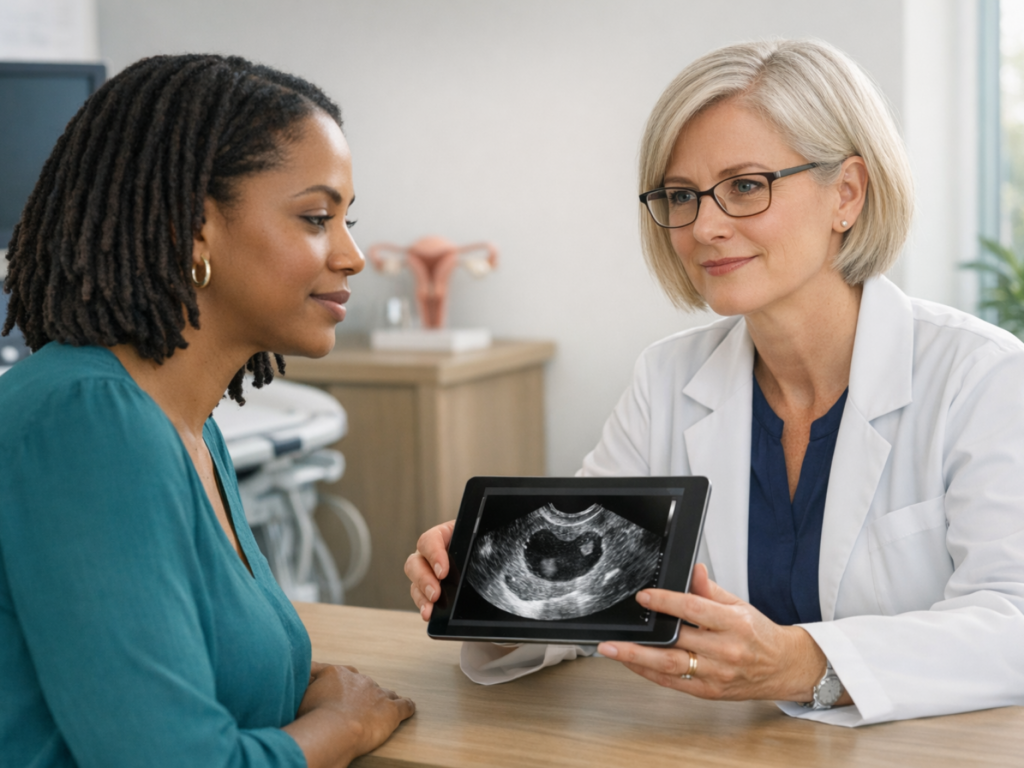
A standard pelvic ultrasound is often the first imaging test used to identify fibroids. Transvaginal ultrasound can describe size, number, and approximate location. However, when fertility is the question, clinicians often need to know whether the endometrial cavity is distorted. Additional tests may be recommended depending on the ultrasound findings and reproductive history.
Common evaluation tools include:
- Saline infusion sonohysterography: Sterile fluid is placed in the uterus during ultrasound to outline the cavity and reveal submucosal fibroids or distortion.
- Hysteroscopy: A thin camera is passed through the cervix to directly view the uterine cavity; some intracavitary fibroids can be treated during operative hysteroscopy.
- Magnetic resonance imaging: MRI can map fibroids in detail, especially when there are multiple fibroids, a very enlarged uterus, or surgical planning questions.
- Hysterosalpingography: An X-ray dye test may be used during infertility workup to assess whether the fallopian tubes are open and whether the cavity shape appears abnormal.
The goal of evaluation is to avoid both under-treatment and over-treatment. Removing a fibroid that clearly distorts the cavity may improve reproductive prospects for some patients. Removing fibroids that are unlikely to affect fertility may expose a person to unnecessary surgical risk, delay conception attempts, or create scar tissue.
Treatment considerations before trying to conceive
Treatment decisions are highly individualized. Factors include symptoms, fibroid type, cavity distortion, prior infertility or miscarriage, age, ovarian reserve, plans for in vitro fertilization, anemia, surgical history, and personal preferences. A reproductive endocrinologist, minimally invasive gynecologic surgeon, or maternal-fetal medicine specialist may be involved depending on the situation.
Myomectomy, surgical removal of fibroids while preserving the uterus, is the treatment most often discussed for people who desire future pregnancy. Hysteroscopic myomectomy may be used for selected submucosal fibroids. Laparoscopic, robotic, or open abdominal myomectomy may be considered for certain intramural or subserosal fibroids. The route depends on fibroid size, number, location, surgeon expertise, and fertility goals.
Some fibroid therapies are not ideal for people actively trying to conceive. Uterine artery embolization, for example, may be effective for symptom control in some patients but is approached cautiously in fertility settings because of concerns about uterine and ovarian blood supply and pregnancy outcomes. Hormonal medications may reduce bleeding or temporarily shrink fibroids, but they generally do not provide a permanent fertility-directed solution and may prevent ovulation while being used. These are complex decisions that should be made with a clinician who understands your reproductive goals.
After myomectomy, clinicians may recommend waiting before attempting pregnancy to allow uterine healing. In some cases, a future cesarean birth may be recommended if the uterine muscle was deeply incised. These details depend on the surgical approach and operative findings, so individualized postoperative counseling is essential.
Emotional and practical aspects of decision-making
Fibroid-related fertility decisions can feel emotionally heavy because there is rarely a single perfect answer. One person may be advised to remove a submucosal fibroid before embryo transfer; another may be told that a small outer-wall fibroid is unlikely to matter. A third may need to weigh surgery against age-related fertility timing. It is understandable to feel frustrated when recommendations depend on probabilities rather than guarantees.
It can help to ask your care team specific questions: Does the fibroid distort the uterine cavity? Is it near the tubal openings? Could it affect embryo transfer? Is there evidence that removing this particular fibroid would improve my chance of live birth? What are the risks of surgery for my uterus, ovaries, and timeline? How will this decision interact with IVF, donor eggs, miscarriage evaluation, or other diagnoses?
Fertility is multifactorial, and fibroids are only one part of the picture. A compassionate, evidence-based plan should consider the uterus while also evaluating ovulation, ovarian reserve, tubal patency, semen parameters, endocrine conditions, and prior pregnancy history. If the recommendation feels unclear, seeking a second opinion from a reproductive specialist can be a reasonable and empowering step.
When to seek medical guidance promptly
- Heavy menstrual bleeding causing dizziness, shortness of breath, fainting, or suspected anemia needs medical assessment.
- Severe pelvic pain, fever, or sudden worsening pain should be evaluated urgently.
- Recurrent pregnancy loss, infertility for 12 months, or infertility for 6 months if age 35 or older warrants professional evaluation.
- Known fibroids with pregnancy bleeding, contractions, or significant pain should be discussed with an obstetric clinician.
- Do not start or stop hormonal medications, fertility treatment, or fibroid procedures without individualized medical advice.
Tools & Assistance
- Schedule a fertility-focused consultation with a gynecologist or reproductive endocrinologist.
- Request imaging that clarifies whether the uterine cavity is distorted, such as saline sonohysterography or hysteroscopy when appropriate.
- Track menstrual bleeding, pelvic pain, cycle length, and any anemia symptoms to discuss with your clinician.
- Bring prior ultrasound, MRI, operative, and pathology reports to fertility appointments.
- Ask how fibroid management fits with your age, ovarian reserve, IVF plans, and pregnancy timeline.
FAQ
Can I get pregnant if I have fibroids?
Yes. Many people with fibroids conceive naturally and have healthy pregnancies. The effect depends mainly on fibroid location, size, number, and whether the uterine cavity or fallopian tube openings are distorted.
Which fibroids are most likely to affect fertility?
Submucosal fibroids have the strongest association with reduced implantation and pregnancy rates. Large intramural fibroids or those that distort the uterine cavity may also matter. Subserosal fibroids usually have little effect on fertility.
Should all fibroids be removed before trying to conceive?
No. Removal is not automatically recommended. Surgery may help in selected cases, especially cavity-distorting fibroids, but it also carries risks and may delay conception attempts. Decisions should be individualized with a qualified clinician.
Can fibroids cause miscarriage?
Some fibroids, particularly those that distort the uterine cavity, may increase miscarriage risk. However, many miscarriages have chromosomal or other causes, so a complete evaluation is important if losses recur.
Are fibroids dangerous during pregnancy?
Often they are monitored rather than treated. Some fibroids can increase risks such as pain, preterm labor, abnormal fetal position, placental problems, or cesarean delivery, but many pregnancies with fibroids are uncomplicated.
Sources
- American Society for Reproductive Medicine — Fibroids and Fertility patient education fact sheet
- PubMed Central / NIH — The Impact and Management of Fibroids for Fertility
- Johns Hopkins Medicine — Fibroids
Disclaimer
This article is for informational purposes only and does not replace medical diagnosis, treatment, or individualized fertility advice. Please consult a qualified healthcare professional about fibroids, infertility, pregnancy planning, or symptoms.














Please log in to leave a comment.