
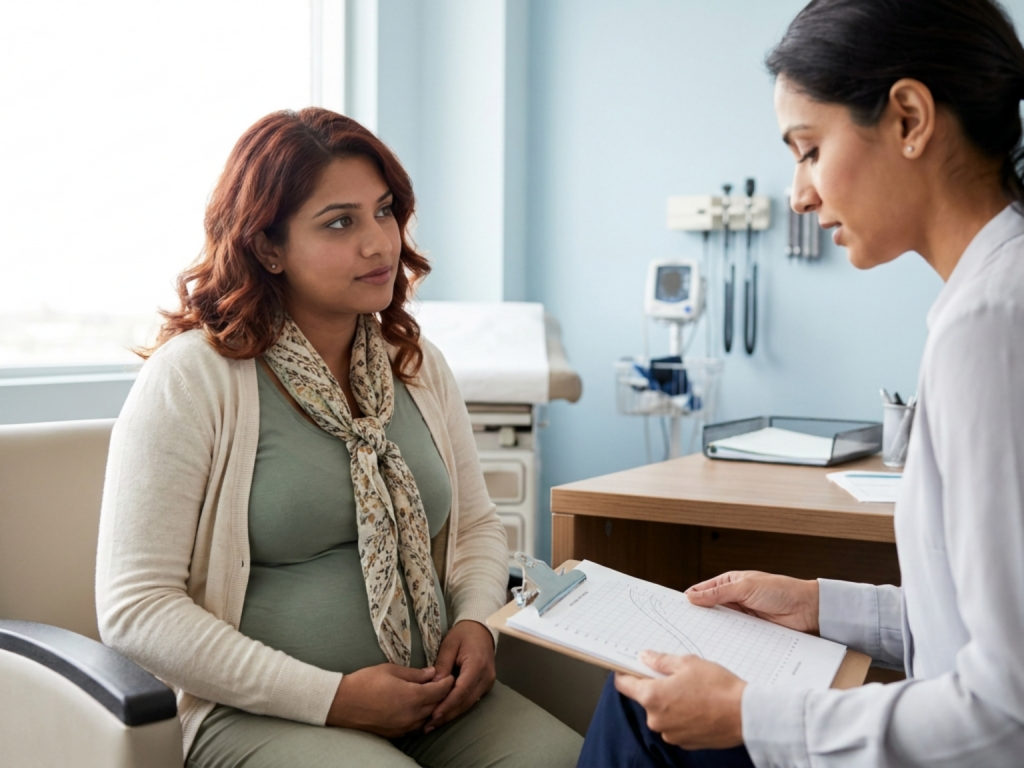
Intro
Pregnancy-related weight gain can be physiologically normal and medically expected, yet emotionally it may feel surprisingly difficult. For some people, the scale becomes a powerful source of worry: not only about appearance, but also about control, identity, attractiveness, competence, and how others will respond. That reaction is not trivial. Research suggests that fear of weight change is a psychological concern in its own right, not simply a matter of body dissatisfaction.
This article explores why weight gain anxiety can affect self-esteem during pregnancy, how those feelings may show up day to day, and what kinds of support can help. The goal is not to minimize the real emotional impact of body changes, but to frame them in a way that is compassionate, medically grounded, and practical.
Highlights
Pregnancy weight gain can activate fear, shame, or loss of control even when the pregnancy is healthy.
Self-esteem may be affected by internalized weight stigma, past dieting, or a history of disordered eating.
Anxiety about weight can show up as body checking, food restriction, avoidance of appointments, or social withdrawal.
Support is most effective when it addresses both the emotional response and the medical context of pregnancy.
You do not have to decide whether your feelings are 'valid' before asking for help.
Why pregnancy weight gain can trigger anxiety
Pregnancy changes the body in visible, often irreversible ways, and that can be emotionally complicated even when the pregnancy is wanted. Weight gain may symbolize more than a number on a scale: it can represent reduced control, a shift in identity, fear of judgment, or concern that one’s value is being measured through appearance. In this sense, fear of weight change is broader than simple dissatisfaction with a body part. It can be a response to pressure, stigma, and prior experiences with dieting or criticism.
Some people enter pregnancy with a history of chronic weight concern, disordered eating, eating disorder recovery, or repeated messages that thinness equals worth. Others may have experienced weight stigma in healthcare, family life, or relationships. Pregnancy can intensify those experiences because body change is expected and highly visible. Even when a person intellectually knows the weight gain is part of normal gestation, the emotional response may still be intense and immediate.
It is also common for people to compare their own bodies with idealized pregnancy images online or in real life. That comparison can make normal changes feel like failure, especially if the body is changing quickly or in ways that feel unfamiliar. None of this means the person is vain or ungrateful; it means the pregnancy is interacting with a meaningful psychological history.
How weight change can affect self-esteem
Weight change can influence self-esteem through several pathways. Research on the psychological consequences of weight change shows that shifts in body size can affect self-acceptance and how a person evaluates themselves. When someone has learned to associate worth with shape, appearance, or control, pregnancy-related gain may challenge the identity they have built. The result can be a drop in confidence that has little to do with actual functioning or health.
Weight-related stigma can make this worse. Stigma teaches people to see weight as a moral signal, rather than a biologic or clinical variable. In pregnancy, that message can become especially painful because the body is changing for a reason that is outside personal preference. A person may still feel embarrassed, unattractive, or less like themselves, even while understanding intellectually that these changes support fetal growth, expanded blood volume, uterine enlargement, and other normal physiologic adaptations.
Self-esteem can also be affected by how the body feels rather than how it looks. Shortness of breath, breast tenderness, stretch marks, edema, and changing mobility may all be experienced as losses. For many pregnant people, the challenge is not simply accepting a new appearance; it is renegotiating the meaning of the body. The most helpful frame is often not “How do I get back to who I was?” but “How do I stay connected to myself while my body is changing?”
Signs that weight anxiety is becoming a mental health concern
Some worry about weight gain is common. Concern becomes more clinically relevant when it starts to dominate daily life, interfere with nutrition or prenatal care, or worsen mood and functioning. Common signs include repeated weighing, frequent body checking in mirrors or photos, avoiding maternity clothes because they feel like evidence of change, or comparing weight gain obsessively with friends or online timelines. Others may become preoccupied with “earning” food, skipping meals, or overexercising in an effort to prevent gain.
Emotional signs matter too. Persistent shame, tearfulness, irritability, panic before prenatal visits, or rumination after eating can all signal that the distress is more than transient discomfort. For some people, the anxiety is tangled with broader antenatal anxiety symptoms such as racing thoughts, sleep disruption, muscle tension, and catastrophic thinking. If worry about the body is beginning to shape food choices, appointment attendance, or relationships, it deserves attention.
A clinician may consider perinatal mental health screening if the distress seems persistent or severe. Screening does not label someone as “too anxious” or “too focused on appearance.” It is a way to identify treatable distress early, before it becomes entrenched. That can be especially important for people with prior anxiety, depression, trauma, or disordered eating.
What a healthy medical perspective on pregnancy weight gain looks like
From a medical standpoint, pregnancy weight gain is not a sign of failure. It reflects a complex mix of fetal growth, placenta, amniotic fluid, blood volume expansion, breast tissue changes, and maternal fat stores that support lactation and metabolic demands. The expected pattern varies by starting body size, number of fetuses, and other clinical factors. That is why gestational weight-gain recommendations are individualized rather than universal.
What matters most is not whether the body stays within a social ideal, but whether weight gain is consistent with the person’s medical context and nutritional needs. This is where the conversation with an obstetric clinician is essential. A clinician can explain the expected trajectory, review whether there are any concerns about rapid gain or inadequate gain, and help distinguish medically relevant trends from normal fluctuation. For many people, having a concrete frame reduces anxiety because it replaces vague fear with specific information.
It can also help to remember that weight is only one variable among many. Blood pressure, glucose, fetal growth, movement, sleep, and overall wellbeing may be more informative than the scale alone. When weight becomes the only metric that feels meaningful, self-esteem can become fragile. A more balanced medical approach reinforces that pregnancy care is about health, not moral judgment.
Ways to protect self-esteem without minimizing real feelings
Protecting self-esteem during pregnancy is usually less about forcing positivity and more about reducing harm. Start by noticing what increases distress. For some people, the trigger is social media. For others, it is weekly weighing, comments from relatives, or trying on clothes that no longer fit. Once the trigger is clearer, small boundary changes can help. That may include limiting body-focused conversations, muting accounts that intensify comparison, or asking friends not to comment on your size.
It may also help to shift the language used internally. Instead of “I look huge” or “I’ve lost control,” try a more neutral description: “My body is changing as part of pregnancy.” Neutral language is not denial; it is a way to reduce unnecessary shame. Clothing that fits comfortably can also matter more than many people expect, because constant physical discomfort can reinforce negative self-appraisal.
Emotional support is equally important. Stress management in pregnancy can include brief breathing exercises, guided relaxation, journaling, and time with people who do not moralize appearance. If meals feel emotionally charged, prenatal nutrition support from a registered dietitian or obstetric team can help shift attention toward adequacy, regularity, and nourishment rather than control. If a person has a history of eating disorders, a therapist familiar with pregnancy can be especially valuable. The aim is not perfection; it is steadier self-respect.
When to ask for extra support
Extra support is warranted when weight anxiety starts to narrow life. That may include skipping prenatal visits, avoiding food groups out of fear, exercising compulsively, feeling unable to eat enough, or spending much of the day preoccupied with body size. It is also important to seek help if distress is accompanied by depression, panic attacks, intrusive thoughts, or a history of self-harm or eating disorder relapse.
If you are worried that your thoughts about weight are becoming rigid or hard to control, let your obstetric clinician know directly. You can also ask about perinatal mental health support, which may involve a therapist, psychiatrist, social worker, or dietitian. In many cases, the most effective plan is multidisciplinary because it addresses both the emotional side of the distress and the medical side of pregnancy care.
It is especially important to speak up if comments from others are worsening the problem. Well-meaning remarks about “bouncing back,” body shape, or “eating for two” can be hurtful and misleading. Supportive care should make room for the reality that pregnancy can be both meaningful and emotionally challenging. Asking for help is not overreacting; it is a reasonable response to a difficult experience.
Seek urgent help if
- You have thoughts of self-harm, hopelessness, or not wanting to continue the pregnancy-related distress.
- You are restricting food, vomiting, purging, or exercising compulsively.
- You feel unable to attend prenatal visits because of fear, shame, or panic.
- You have dizziness, fainting, rapid weight change, or signs of poor intake.
- A past eating disorder or severe anxiety is returning or getting worse.
Tools & Assistance
- Ask your obstetric clinician for a review of your expected pregnancy weight-gain range.
- Request a referral to a therapist experienced in perinatal mental health.
- Consider meeting with a registered dietitian for individualized prenatal nutrition support.
- Use a trusted pregnancy journal or app to note triggers, mood, and eating patterns.
- Bring a written list of concerns to prenatal appointments so weight anxiety is discussed directly.
FAQ
Is it normal to feel upset about weight gain in pregnancy?
Yes. Many people feel conflicted about body changes. The feeling is common, but if it becomes persistent or interferes with eating, sleep, or prenatal care, it is worth discussing with a clinician.
Does being anxious about weight mean I have an eating disorder?
Not necessarily. Anxiety about weight can occur without an eating disorder, but a history of restriction, purging, or intense preoccupation with shape should be taken seriously and assessed professionally.
How can I tell the difference between normal concern and a problem?
Concerns become more concerning when they take up a lot of mental energy, change your eating or exercise behavior, or make you avoid care, social situations, or necessary conversations.
Can my clinician help if I am embarrassed to talk about this?
Yes. Obstetric and mental health clinicians hear these concerns often. You can simply say that weight gain is affecting your self-esteem and ask for help.
Sources
- PubMed Central / National Library of Medicine — I Don't Want to Be Thin! Fear of Weight Change Is Not Just a Body Dissatisfaction Issue
- PubMed Central / National Library of Medicine — The Psychological Consequences of Weight Change
- National Center for Biotechnology Information / NIH — Psychological Issues Associated With Obesity
Disclaimer
This article is for general information only and does not replace individualized medical or mental health care. If weight-related anxiety is severe, persistent, or affecting eating, mood, or prenatal care, please consult your obstetric clinician or a qualified mental health professional.
















Please log in to leave a comment.