
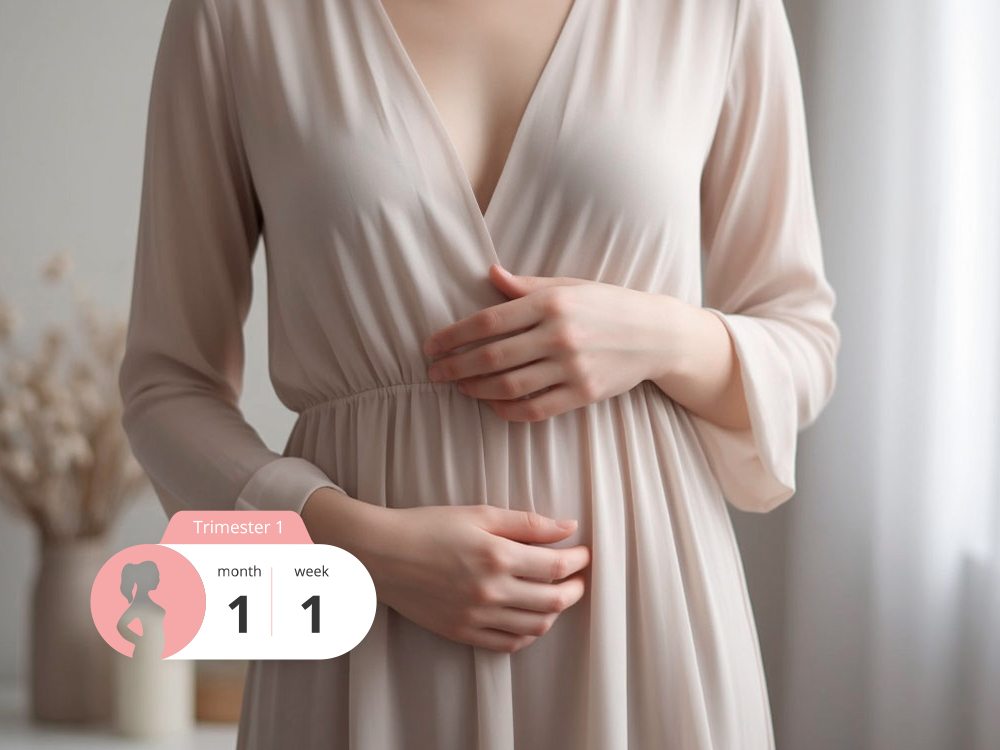
Intro
Pregnancy is calculated as forty obstetric weeks, beginning on the first day of the last menstrual period (LMP). The first obstetric week technically occurs before conception, but it marks the start of an important biological process — preparing the body for ovulation, fertilization, and implantation.
This stage is crucial for those who are planning a pregnancy, as it allows time to optimize health, adjust lifestyle habits, and create the best conditions for a future baby.
Highlights
The first obstetric week occurs before conception — it is part of the menstrual cycle, not yet an actual pregnancy.
Doctors count pregnancy from the last menstrual period (LMP), not from the date of fertilization.
No true pregnancy symptoms can be present during Week 1; any sensations are linked to menstruation.
This stage is ideal for preparing the body: start prenatal vitamins, adopt healthy habits, and reduce risk factors.
Folic acid intake, balanced diet, and medical check-ups are the most important steps at this stage.
Understanding the Timeline: Obstetric vs. Embryonic Age
- Obstetric Age: Counted from LMP. Used by healthcare providers because the exact date of conception is often unknown.
- Embryonic Age: Starts at fertilization, approximately 2 weeks after LMP.
Practical tip: When a doctor says “4 weeks pregnant,” conception likely happened only 2 weeks ago.
What Happens Biologically During Week 1
Even though conception hasn’t occurred yet, several biological processes are already in motion:
- Menstrual Shedding: The old endometrial lining is expelled, making room for a new one.
- Hormonal Reset:
- Estrogen begins to rise to stimulate follicle development.
- FSH, or Follicle Stimulating Hormone, signals the ovaries to mature follicles.
- Uterine Preparation: The endometrium begins to regenerate under the influence of estrogen, creating a nutrient-rich environment for a potential embryo.
- Egg Maturation: Dozens of follicles start developing, but usually only one dominant follicle will release an egg during ovulation.
Possible Sensations During Week 1
Although pregnancy symptoms are not yet present, some sensations may be experienced due to the menstrual cycle:
- Menstrual Cramps: Normal uterine contractions during menstruation.
- Breast Sensitivity: Linked to hormonal shifts.
- Fatigue or Low Energy: Caused by blood loss during menstruation.
- Mood Swings: A result of fluctuating estrogen and progesterone levels.
A missed period is often considered the earliest and most reliable sign that pregnancy may have begun, but that would not apply during the first obstetric week itself.
Tracking Ovulation and Fertile Window
Understanding ovulation can help those planning conception:
- Ovulation Calendar: Track cycle length and predict fertile days.
- Basal Body Temperature, or BBT: Measure temperature daily; a slight rise indicates ovulation.
- Ovulation Predictor Kits, or OPKs: Detect luteinizing hormone, or LH, surge, signaling ovulation within 24–36 hours.
- Cervical Mucus Monitoring: Fertile mucus becomes clear, stretchy, and slippery — resembling egg whites.
Preparing for Conception
The first obstetric week is an ideal time to start or reinforce healthy habits:
- Start Prenatal Vitamins: Especially folic acid, 400–800 mcg/day.
- Balanced Diet: Include whole grains, lean proteins, leafy greens, fruits, and healthy fats.
- Hydration: At least 1.5–2 liters of water daily.
- Exercise: Engage in moderate activity, such as walking, yoga, or swimming.
- Sleep Hygiene: Maintain 7–9 hours of quality sleep per night.
- Avoid Toxins: Eliminate alcohol, tobacco, and limit caffeine to less than 200 mg/day.
Psychological Preparation
Hormonal changes during the menstrual cycle can affect mood, but psychological preparation can set the tone for a healthy pregnancy:
- Mindfulness and Stress Reduction: Meditation, breathing exercises, or journaling can lower cortisol levels.
- Support System: Open communication with a partner or family helps create a positive emotional environment.
- Planning Ahead: Consider scheduling a preconception check-up and discussing any chronic health conditions with a doctor.
When Pregnancy Symptoms Actually Begin
True pregnancy-related symptoms, such as nausea, implantation bleeding, or missed period, typically appear during:
- Week 3–4, Obstetric: Fertilization and implantation occur.
- Week 4–5: Levels of hCG, or human chorionic gonadotropin, become high enough for a home pregnancy test to detect pregnancy.
- Week 5+: Morning sickness, fatigue, and breast changes may become noticeable.
Early pregnancy symptoms can include fatigue, nausea, frequent urination, constipation, breast tenderness, and cramping, but these are expected later than Week 1 and may also overlap with normal menstrual-cycle symptoms.
Potential Early Concerns and Prevention
Even though pregnancy hasn’t started yet, preconception health plays a huge role in reducing risks:
- Nutrient Deficiency: Start folic acid early to prevent neural tube defects.
- Infections: Treat urinary or vaginal infections before conception.
- Chronic Conditions: Control blood pressure, diabetes, thyroid function, and other health issues in advance.
- Toxic Exposure: Minimize contact with chemicals, radiation, and infectious diseases, such as rubella and toxoplasmosis.
Checklist for the First Week
- Start or continue prenatal vitamins
- Eat a nutrient-rich, balanced diet
- Track menstrual cycle and ovulation
- Maintain a positive mindset
- Get sufficient rest and light exercise
- Avoid alcohol, smoking, and unnecessary medications
- Schedule a preconception medical consultation if not done already
Key Takeaways
The goal for Week 1 is preparation, not worry — focus on building the best possible environment for conception in the coming weeks.
Pregnancy has not biologically started yet during the first obstetric week, but this stage is crucial for preparation.
Lifestyle adjustments, proper nutrition, and emotional balance are key factors that influence fertility and the health of a future pregnancy.
Understanding the difference between obstetric and embryonic weeks helps set realistic expectations about symptoms and timing.
Tools and Assistance
Preparing for pregnancy is easier with the right support and resources. Some useful tools and forms of assistance include:
- Ovulation Tracking Apps – Digital calendars that predict fertile days based on cycle length, basal body temperature, and hormonal patterns.
- Basal Thermometers – Accurate thermometers for measuring morning body temperature to track ovulation.
- Ovulation Predictor Kits, OPKs – At-home urine tests that detect the LH surge before ovulation.
- Prenatal Vitamins – Supplements with folic acid, iron, vitamin D, and other essential nutrients for early pregnancy support.
- Medical Support – Scheduling a preconception consultation with a gynecologist or fertility specialist to discuss health status, medications, and lifestyle.
- Counseling or Support Groups – Emotional and psychological support from professionals or communities of people who are also preparing for pregnancy.
- Healthy Lifestyle Coaching – Professional guidance on diet, fitness, and stress management before conception.
- Partner Involvement – Emotional and practical support from a partner helps maintain motivation, reduces stress, and builds a shared sense of responsibility.
When to Check In With a Healthcare Professional
- Seek medical advice for severe pelvic pain, very heavy bleeding, fainting, or fever during the menstrual period.
- Discuss chronic conditions such as diabetes, high blood pressure, thyroid disease, or epilepsy before trying to conceive.
- Review prescription, over-the-counter, and herbal medications with a clinician before pregnancy.
- Treat urinary or vaginal infections before conception when possible.
- Avoid alcohol, smoking, and unnecessary medication exposure while preparing for pregnancy.
Tools & Assistance
- Use an ovulation tracking app or calendar to track cycle length and fertile days.
- Consider basal body temperature tracking or ovulation predictor kits if you are timing conception.
- Start or continue prenatal vitamins with folic acid after confirming the right dose with your healthcare provider.
- Schedule a preconception consultation with a gynecologist, midwife, or fertility specialist.
- Use counseling, support groups, partner involvement, or healthy lifestyle coaching for emotional and practical support.
FAQ
Am I actually pregnant at 1 week pregnant?
In obstetric dating, Week 1 is counted from the first day of the last menstrual period. Conception has not occurred yet, so pregnancy has not biologically started during this week.
Can I have true pregnancy symptoms during Week 1?
No true pregnancy symptoms can be present during Week 1. Cramps, breast sensitivity, fatigue, or mood changes at this stage are linked to menstruation and hormonal shifts.
Why do doctors count pregnancy from the last menstrual period?
Healthcare providers use the last menstrual period because the exact date of conception is often unknown. This is called obstetric age.
What is the most useful thing to do during the first obstetric week?
Focus on preparation: start or continue prenatal vitamins with folic acid, eat a balanced diet, avoid toxins, track your cycle, rest well, and consider a preconception check-up.
When can a home pregnancy test usually become positive?
Home pregnancy tests usually become useful around Week 4–5 obstetric, when hCG levels may be high enough to detect pregnancy.
Sources
- mayoclinic.org — 1st trimester pregnancy: What to expect
- nhs.uk — Signs and symptoms of pregnancy
- aptaclub.co.uk — Early Signs & Symptoms of Pregnancy: 1-4 Weeks
Disclaimer
This article is for informational purposes only and does not replace medical advice, diagnosis, or treatment. Always consult a qualified healthcare professional about pregnancy planning, symptoms, medications, or health concerns.












cool