
Intro
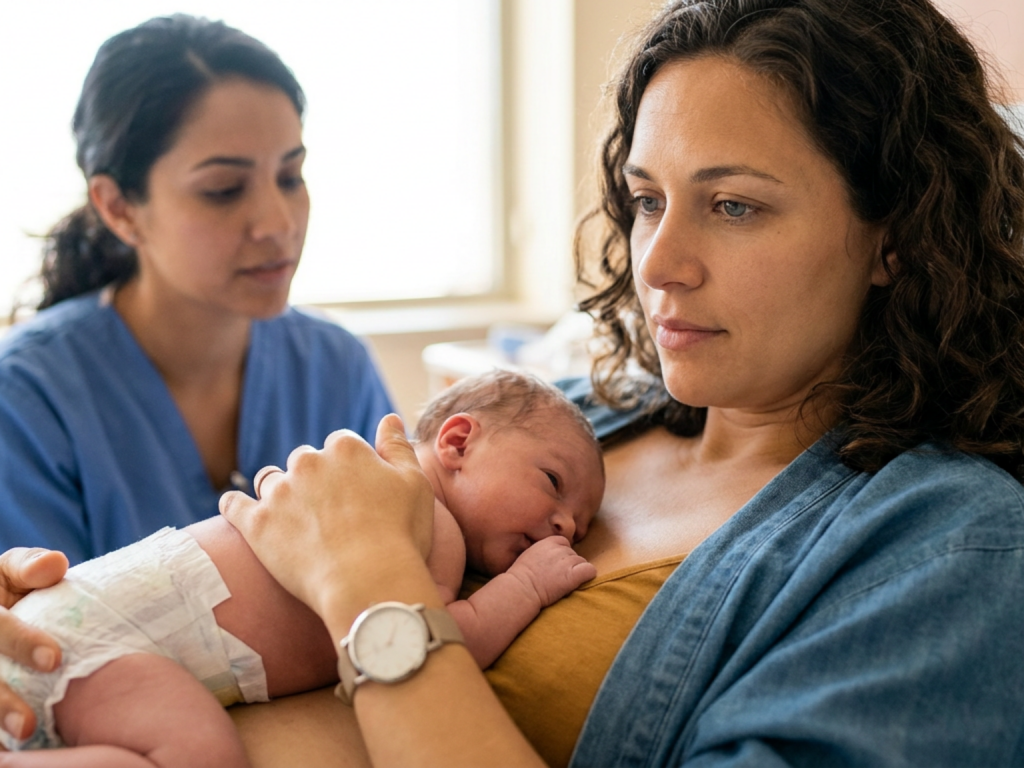
Skin-to-skin contact, sometimes called kangaroo care, means placing a newborn wearing only a diaper directly against a parent’s bare chest, then covering both with warm blankets. It can be deeply emotional, but it is also a physiologic intervention: the parent’s body helps support the baby’s transition from intrauterine to extrauterine life.
Many families wonder how long skin-to-skin should last, whether it is still helpful after the first hour, and what to do after a cesarean, preterm birth, or medical separation. The reassuring answer is that even imperfect, delayed, or brief skin-to-skin can matter. Your maternity, neonatal, or pediatric team can help tailor it safely to your baby’s condition and your recovery.
Highlights
Skin-to-skin in the first hour after birth supports newborn temperature, blood glucose regulation, breathing, heart rate, and early feeding behaviors.
The first uninterrupted session is often recommended for at least 60 minutes when parent and baby are clinically stable, but benefits can continue for months.
Skin-to-skin is beneficial after vaginal birth, cesarean birth, and at home, and it can often be adapted for preterm or medically monitored babies.
Safety matters: an awake, well-positioned adult and clear airway positioning are essential, especially when the parent is tired, medicated, or recovering from surgery.
What skin-to-skin means in the first minutes after birth
Skin-to-skin contact is more than a comforting cuddle. In the immediate postnatal period, the baby is placed prone on the birthing parent’s bare chest, ideally before routine non-urgent procedures, and covered with a dry warm blanket. The baby’s head is turned to the side, the neck remains neutral, the nose and mouth stay visible, and staff continue appropriate observation.
When parent and baby are stable, many birth settings aim for immediate skin-to-skin contact during the first hour, sometimes called the “golden hour.” This period coincides with a newborn’s alert phase, when primitive reflexes support breast-seeking behaviors such as rooting, hand-to-mouth movements, salivation, and crawling toward the nipple. These behaviors are not simply symbolic; they are part of normal neurobehavioral adaptation.
Skin-to-skin also helps reduce unnecessary stress during transition. Newborns move from a thermally stable, fluid-filled environment into air breathing, independent glucose use, and external temperature regulation. A parent’s chest can function almost like a biologic warmer, while the familiar heartbeat and voice provide sensory regulation. If immediate contact is interrupted for urgent medical reasons, families can usually restart as soon as the clinical team says it is safe.
Physiologic benefits for the newborn
Evidence supports skin-to-skin as a standard component of newborn care because it helps stabilize several vital systems at once. Newborns in skin-to-skin contact tend to maintain more optimal temperature, blood glucose, respiratory patterns, and heart rate. These effects are particularly valuable because cold stress and hypoglycemia can increase metabolic demand in the early hours after birth.
The mechanism is multifactorial. Thermal synchrony allows the parent’s chest temperature to support the infant’s temperature regulation. Reduced crying may decrease energy expenditure and oxygen consumption. Close contact can also support more organized sleep-wake cycling, which is important for feeding readiness and early neurologic regulation.
Skin-to-skin may also support immune protection. Contact with the parent’s skin and early feeding expose the baby to family-specific microbes and antibodies, helping shape early colonization and immune adaptation. This does not replace infection prevention, vaccination, or medical care, but it is one of the low-technology ways the newborn environment can be made more physiologic.
For preterm infants, kangaroo-style care can be especially meaningful, although it may require monitoring, help with lines or respiratory support, and neonatal team guidance. Even when a baby is in a neonatal unit, parents can ask when holding skin-to-skin may be possible and what signs would mean the baby needs a pause.
Benefits for breastfeeding, milk supply, and bonding
Skin-to-skin supports breastfeeding through both infant behavior and parental physiology. The newborn’s smell, touch, and movements stimulate oxytocin release. Oxytocin promotes uterine contraction after birth and supports milk ejection, while prolactin supports milk production. Many parents also find that skin-to-skin makes early latch attempts feel less rushed and more responsive.
Research summarized in recent evidence reviews shows that babies who receive skin-to-skin within the first hour are more likely to exclusively breastfeed in the following weeks and months. This does not mean that every breastfeeding challenge can be solved by holding a baby skin-to-skin; latch pain, prematurity, tongue mobility concerns, delayed lactogenesis, prior breast surgery, endocrine conditions, and infant illness can all require skilled assessment. However, skin-to-skin is a strong foundation for feeding support.
Bonding is another important benefit, and it is not limited to the birthing parent. A partner or support person holding the baby skin-to-skin can help regulate the newborn and build attachment, especially if the birthing parent needs medical care, rest, or surgical recovery. For families using bottles, donor milk, expressed milk, or formula, skin-to-skin remains valuable. Feeding method does not determine whether a baby deserves closeness, regulation, and comfort.
Parents who feel emotionally overwhelmed after birth should know that bonding is not always instant. Skin-to-skin can be gentle, quiet, and gradual. If the experience brings up distress, panic, numbness, or traumatic memories, asking for support is a medically appropriate part of postpartum care.
How long to do skin-to-skin in the hospital
When parent and baby are clinically stable, many maternity teams encourage uninterrupted skin-to-skin for at least the first 60 minutes after birth, and preferably until after the first feed. Some newborn assessments, drying, identification bands, and observation can often be done while the baby remains on the parent’s chest. Time-sensitive medical care should still take priority when needed.
After the first hour, skin-to-skin can continue in repeated sessions throughout the hospital stay. Practical opportunities include before feeds, during feeding cues, after a bath, after blood glucose checks, during fussiness, or when the baby is sleepy but stable. For babies being monitored for hypoglycemia, temperature instability, jaundice risk, or feeding difficulty, staff may encourage skin-to-skin as part of supportive care while also following medical protocols.
Families planning newborn care preferences may want to discuss minimizing newborn separation before labor, including how routine procedures are handled. It can help to ask which tasks can be performed at the bedside and which truly require moving the baby away. This is particularly relevant in busy units where workflows vary.
After surgical birth, early skin-to-skin after cesarean may be possible in the operating room or recovery area if the parent is awake, stable, and able to be safely supported. Recovery-room skin-to-skin often requires an extra adult or nurse to help position the baby away from the incision, monitor the airway, and protect sterile or surgical equipment. If immediate contact is not possible, delayed contact is still worthwhile.
Duration at home: days, weeks, and months
Skin-to-skin does not expire after discharge. At home, daily sessions can support feeding rhythms, infant state regulation, and parental confidence. Some health resources recommend continuing regular skin-to-skin for at least 3 months for full-term babies and around 6 months for preterm babies, adapted to the baby’s corrected age, medical needs, and family capacity.
There is no single required schedule. Some families do 20 to 30 minutes after a feed; others use skin-to-skin during cluster feeding, evening fussiness, or early morning waking. Longer sessions can be appropriate if the adult is awake and the baby is safely positioned. If the parent feels drowsy, the baby should be moved to a safe sleep surface rather than continuing chest-to-chest contact unsupervised.
Skin-to-skin can also be useful during transitions: after pediatric appointments, during mild overstimulation, while establishing pumping routines, or when a baby is learning to latch. For bottle-fed babies, holding skin-to-skin before or after paced feeding can preserve the relational and regulatory benefits of close contact.
As babies grow, they may become more alert, wiggly, or interested in the environment. The practice can evolve into cuddling against the chest after a bath, quiet contact during naps while the adult stays awake, or soothing contact before bedtime. The goal is not perfection; it is repeated safe opportunities for co-regulation.
Safety considerations and when to ask for help
Skin-to-skin is generally safe when performed with appropriate positioning and observation, but it is not passive. The adult should be awake enough to monitor the baby. The baby’s face must remain visible, the chin should not be pressed tightly to the chest, and the nose and mouth should be unobstructed. Blankets should cover the baby’s back, not the face.
Extra caution is needed when the parent has received sedating medication, magnesium sulfate, general anesthesia, high-dose opioids, or is severely exhausted. Assistance is also important after cesarean birth, with significant postpartum bleeding, faintness, fever, or limited arm mobility. In these situations, another alert adult or staff member can help maintain safe positioning.
Seek immediate medical attention if a baby has blue or gray color, pauses in breathing, limpness, persistent grunting, marked chest retractions, poor responsiveness, or difficulty maintaining temperature. Parents should also call their maternity or pediatric team for poor feeding, fewer wet diapers than expected, worsening jaundice, recurrent low blood glucose concerns, or any instinct that “something is not right.”
Skin-to-skin should complement, not replace, clinical care. It can fit beautifully alongside newborn medications, glucose monitoring, phototherapy planning, lactation assessment, and pediatric follow-up. If your birth or postpartum course was complicated, ask the team for an individualized plan that protects both bonding and safety.
Use skin-to-skin safely
- Keep the baby’s nose and mouth visible and unobstructed at all times.
- Do not continue skin-to-skin while sleepy unless another alert adult is actively supervising.
- Ask for hands-on help after cesarean birth, heavy bleeding, faintness, or sedating medication.
- Seek urgent care for blue color, limpness, breathing difficulty, or poor responsiveness.
- Follow neonatal or pediatric guidance for preterm babies or babies with medical monitoring needs.
Tools & Assistance
- Ask your birth team how the first hour after birth is usually protected for skin-to-skin.
- Add skin-to-skin preferences to your birth plan, including cesarean and recovery-room options.
- Request lactation support if latch, milk transfer, or milk supply is difficult.
- Use a reclined position, pillows, and an alert helper for safer home sessions.
- Contact your pediatric or neonatal team for individualized guidance if your baby was preterm or medically fragile.
FAQ
How long should the first skin-to-skin session last?
If parent and baby are stable, many teams aim for at least 60 uninterrupted minutes and ideally through the first feed. Medical needs may require adjustment.
Is skin-to-skin useful if I am not breastfeeding?
Yes. It supports temperature, breathing, heart rate regulation, calming, attachment, and responsive feeding regardless of whether the baby receives breast milk, donor milk, or formula.
Can skin-to-skin happen after a cesarean?
Often yes, if the parent and baby are stable and staff can support safe positioning. If it cannot happen immediately, recovery-room or later skin-to-skin is still beneficial.
When should we stop doing skin-to-skin at home?
There is no strict stopping point. Regular sessions for several months may be helpful, especially for preterm babies, but families can adapt frequency as the baby grows and needs change.
Can partners do skin-to-skin?
Yes. A partner or support person can provide warmth, calming, and bonding, especially when the birthing parent needs rest or medical care.
Sources
- Center for Breastfeeding — Strong Evidence Supports Skin-to-Skin Contact After Birth as Standard Care
- Texas Health Resources — The Benefits of Skin-to-Skin at Home
- NHS — Skin-to-skin contact with your newborn
Disclaimer
This article is for general educational purposes and is not a substitute for medical advice. Always consult your obstetric, midwifery, neonatal, or pediatric team about what is safe for you and your baby.

















Please log in to leave a comment.