
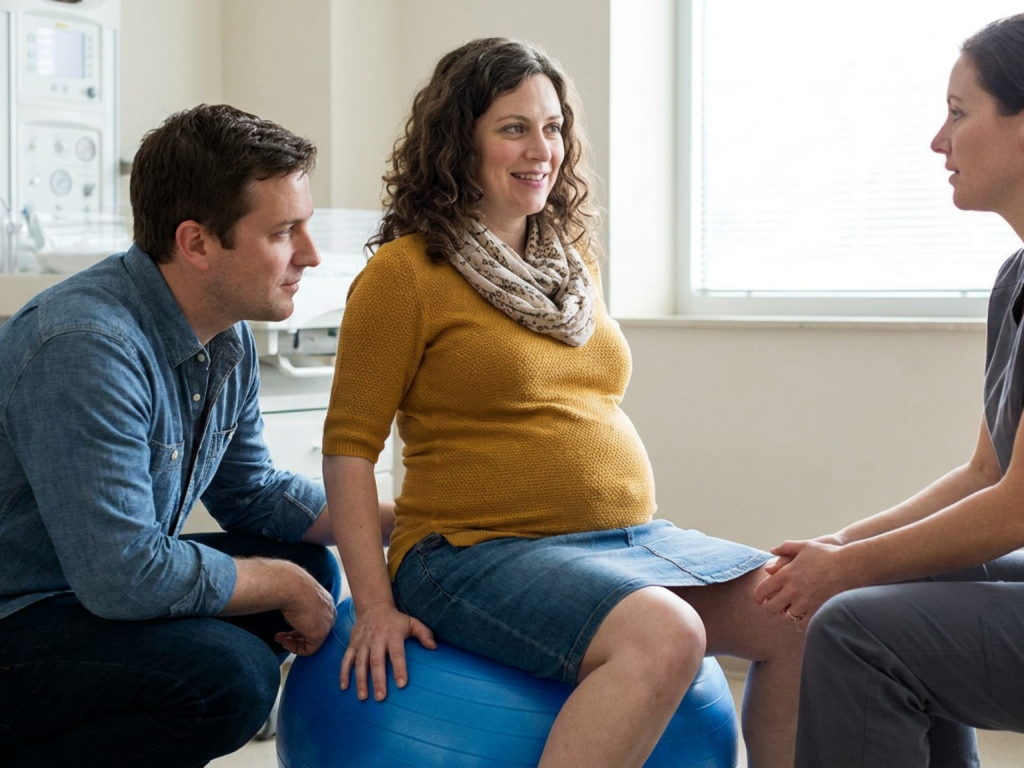
Intro
Breathing is one of the most accessible pain-coping tools in birth. It does not remove the intensity of contractions, and it is not a test of willpower or performance. Instead, it can help regulate arousal, reduce unnecessary muscle guarding, support oxygenation, and create a predictable rhythm when labor feels unpredictable.
Pain relief support works best when breathing is integrated with position changes, touch, reassurance, clinical monitoring, and, when desired or needed, pharmacologic options. The aim is not to choose a single “right” method, but to build a flexible set of techniques that can be adapted by the birthing person, support partner, doula, midwife, or obstetric team.
Highlights
Slow, steady breathing can reduce sympathetic nervous system activation and may modestly reduce acute pain intensity in some settings.
In labor, breathing techniques are most useful when paired with relaxation of the jaw, shoulders, pelvic floor, and abdomen.
Support people can help by cueing rhythm, protecting the environment, offering touch only with consent, and noticing signs of distress.
Breathing is complementary care, not a substitute for individualized medical assessment, fetal monitoring, or pain medication when clinically appropriate.
Why breathing can change the experience of labor pain
Labor pain is complex. It includes nociceptive input from uterine contractions, cervical dilation, pelvic pressure, tissue stretching, and sometimes back or hip pain from fetal position. It is also shaped by fear, fatigue, prior trauma, expectations, environment, and the sense of being supported or alone. Breathing cannot erase these inputs, but it can influence the body’s response to them.
When pain and fear escalate, the sympathetic nervous system often becomes more active. Heart rate rises, breathing may become shallow or rapid, and muscles of the jaw, neck, shoulders, abdomen, and pelvic floor may tighten. This protective response is understandable, but sustained tension can make contractions feel harder to tolerate. Slow breathing, especially with a longer exhale, may help shift the body toward parasympathetic regulation, lowering arousal and giving the brain a simple task to follow.
Evidence on slow deep breathing and acute clinical pain suggests possible reductions in pain intensity, although certainty is low and the best candidates and delivery methods are still being studied. Research on breathing practices for stress and anxiety is broader and generally more supportive: many slow-breathing interventions reduce perceived stress or anxiety. In birth, this matters because anxiety and pain often amplify one another.
It is helpful to view breathing as a stabilizing tool rather than an analgesic treatment in the strict pharmacologic sense. A contraction may still be intense, but the birthing person may feel more oriented, less panicked, and better able to release tension between surges.
Foundational skill: slow diaphragmatic breathing
Slow diaphragmatic breathing is a core technique for labor preparation because it encourages movement of the diaphragm, fuller exhalation, and relaxation of accessory breathing muscles. The diaphragm is the main respiratory muscle; when it descends during inhalation, the lower ribs and abdomen may gently expand. During exhalation, the diaphragm relaxes upward and the body can soften.
A simple practice is to place one hand on the upper chest and one hand on the lower ribs or abdomen. Inhale gently through the nose or mouth for a count of two, allowing the lower ribs to widen. Exhale for a count of three, letting the shoulders drop and the jaw unclench. The exact count is less important than the sensation of ease. If counting creates pressure or dizziness, use words instead, such as “in” and “release.”
Many people benefit from practicing outside of contractions first: before sleep, during prenatal stretching, or while sitting upright. The goal is to make the pattern familiar before labor becomes intense. During early labor, slow breathing for early labor can be used at the beginning of each contraction: one organizing breath, then a steady rhythm until the contraction fades.
Complete exhalation is often more useful than trying to take very large breaths. Overbreathing can cause lightheadedness, tingling around the mouth or fingers, or a sense of panic. If that occurs, slow down, reduce the depth of inhalation, lengthen the exhale gently, and tell the care team. Breathing should feel supportive, not forced.
Breathing patterns across the stages of labor
Different phases of labor may call for different breathing patterns. In early labor, when contractions are usually shorter and more spaced out, the priority is conserving energy. Normal conversation, rest, hydration as permitted, and gentle movement often matter more than formal technique. A slow inhale and longer exhale can help prevent early exhaustion.
In active labor, contractions are stronger and closer together. Patterned breathing in active labor may give structure: inhale gently as the contraction begins, exhale with a low sound, repeat at a comfortable pace, and take a recovery breath when the contraction ends. Some people like Lamaze-style breathing or focused breathing during labor, while others prefer quiet, unstructured breath awareness. Both are valid if they reduce panic and tension.
Transition can feel overwhelming, with intense pressure, shaking, nausea, or statements such as “I can’t do this.” At this point, complex instructions are rarely helpful. The support person can simplify: “Look at me,” “Drop your shoulders,” “One breath at a time,” or “Blow it away.” Short, soft exhales can help when the urge to push arrives before full dilation and the clinician advises not pushing yet.
During the second stage, breathing during pushing depends on clinical circumstances, fetal status, maternal preference, and the care setting. Some people use coached pushing with a breath hold; others use open-glottis pushing, exhaling or vocalizing while bearing down. Open-glottis techniques may feel more physiologic for some because they reduce throat clenching and allow pressure to build with less facial and jaw strain. The safest approach is individualized with the midwife or obstetric team, especially if epidural anesthesia, fetal heart rate concerns, or operative birth considerations are present.
Pain relief support beyond the breath
Breathing often works best when paired with body-based comfort measures. Labor pain is dynamic, so support should be dynamic too. A technique that helps for ten contractions may suddenly feel intolerable; changing course is not failure.
Position changes can reduce pressure, improve comfort, and help the birthing person feel more in control. Upright positions may use gravity; side-lying may conserve energy; hands-and-knees may reduce some back labor sensations; forward-leaning positions can make room for the abdomen and allow the pelvis to move. Movement should be guided by maternal stability, fetal monitoring needs, epidural effects, and clinical recommendations.
Touch can be powerful when it is wanted. Effleurage, or light rhythmic stroking, may help early labor. Firm sacral pressure in labor or counterpressure for pelvic pain may help when contractions are felt strongly in the back or sacrum. Hip squeezes can provide relief for some people with pelvic pressure. However, consent-based touch during birth is essential: the birthing person should be able to say “stop,” “lighter,” “harder,” or “no touch” without explanation.
Heat, cold, water, and sound are also useful. Warm packs on the lower back or lower abdomen may ease muscle tension if approved by the care team. Cool cloths can help with nausea or sweating. Hydrotherapy may reduce perceived pain for some people, depending on facility policy and maternal-fetal status. Low vocalization, humming, or open-throat sounds can coordinate exhalation and reduce jaw clenching. High-pitched panic sounds are not “wrong,” but shifting toward lower tones may feel more grounding.
How partners and support people can coach effectively
Partner support during labor pain is not about controlling the birth or correcting every breath. It is about creating safety, reducing cognitive load, and helping the birthing person return to a rhythm when pain peaks. The best coaching is usually brief, calm, and responsive.
Before labor, support people can ask what kind of help is welcome: verbal cues, silence, touch, eye contact, music, reminders to drink, or advocacy with staff. Preferences can change in labor, so the most useful question may be, “Is this still helping?” A person who loved massage at home may reject it in transition; a person who wanted silence may suddenly need direct coaching.
Helpful breath coaching often uses mirroring. The support person breathes slowly enough to be seen or heard, without demanding that the birthing person copy perfectly. Phrases such as “long exhale,” “soft jaw,” “let the shoulders melt,” or “rest now” can be effective. Between contractions, recovery breathing between contractions helps reset: one cleansing breath, a sip of fluid if allowed, a change of position, and a reminder that the last contraction is over.
Support people can also protect the environment. Dimming lights, limiting unnecessary conversation, asking visitors to step out, and relaying questions to the clinical team can reduce stress. If the birthing person appears frightened, dissociated, unusually short of breath, or unable to recover between contractions, the support person should alert the nurse, midwife, or physician rather than trying to solve it with breathing alone.
Using breath with medical pain relief options
Breathing techniques and medical pain relief are not opposing choices. Many people use breath work before an epidural, during epidural placement, while waiting for medication to take effect, or alongside nitrous oxide where available. Others use breathing throughout an unmedicated birth. The most compassionate approach is to keep options open and avoid framing any pain relief choice as a measure of strength.
During epidural placement, stillness can be important. A slow exhale, supported posture, and a clear focal point may help the person remain steady while the anesthesia clinician works. After an epidural, breathing can still support relaxation, rest, and pushing, even if contraction pain is reduced. If sensation is patchy or pressure becomes intense near birth, breath-based labor coping can again become important.
With nitrous oxide, the timing of inhalation matters and should be taught by the clinical team. The person usually begins breathing through the mask at the start of a contraction to allow effect as the contraction peaks. Combining nitrous oxide with calm, paced breathing may improve coping for some, but dizziness, nausea, or sedation should be reported promptly.
Opioid medications, regional anesthesia, and other interventions have benefits, limitations, contraindications, and monitoring requirements. Breathing can support coping, but it should never delay necessary assessment for severe pain, bleeding, fever, abnormal fetal heart rate concerns, hypertensive symptoms, or other warning signs.
Adapting techniques for anxiety, trauma, and sensory overload
Some birthing people find breath work calming; others find it triggering, especially if they have a history of panic attacks, trauma, respiratory illness, or experiences where breath control felt unsafe. A trauma-informed approach offers choices rather than commands. Instead of “breathe the right way,” support can sound like, “Would you like to follow my breath, make sound, or hold my hand?”
For anxiety, extended exhale breathing may be helpful: inhale gently, then exhale slightly longer, without strain. Counting can be grounding for some and irritating for others. Visual imagery may help: breathing down through the body, releasing the pelvic floor, or imagining each exhale widening space. If imagery feels too abstract, tactile anchors such as a cool cloth, a textured object, or steady pressure on the shoulders may work better.
People with asthma, cardiopulmonary disease, significant anemia, high-risk pregnancy complications, or symptoms such as chest pain, faintness, severe shortness of breath, or persistent dizziness should receive individualized medical guidance. Breath practices should be gentle and should not involve prolonged breath holding unless specifically directed in a clinical context.
The core principle is flexibility. Breathing and relaxation are tools, not obligations. If a technique increases distress, stop it, return to normal breathing, and ask for support. A calm, respectful environment may be as analgesic as any single method because it reduces fear and preserves agency.
When to seek clinical help promptly
- Severe shortness of breath, chest pain, fainting, or persistent dizziness during breathing practice.
- Vaginal bleeding, fever, severe headache, visual symptoms, or sudden swelling in labor.
- Decreased fetal movement before labor or concerns raised by fetal monitoring during labor.
- Pain that feels unusual, constant between contractions, or associated with maternal distress.
- Any breathing technique that worsens panic, dissociation, or a sense of losing control.
Tools & Assistance
- Practice slow breathing for two to five minutes daily before labor, without forcing deep inhalations.
- Create a birth support plan that lists preferred cues, touch preferences, and pain relief options.
- Ask a midwife, obstetrician, nurse, or childbirth educator to demonstrate breathing and pushing options.
- Use a contraction timer only if it reduces stress; stop tracking if it increases anxiety.
- Prepare comfort items such as a heat pack, cool cloth, water bottle, and music if allowed by the birth setting.
FAQ
Can breathing techniques replace an epidural or other pain medication?
No. Breathing may improve coping and reduce tension, but it does not provide the same analgesia as medical pain relief. It can be used with or without medication depending on preference and clinical circumstances.
What if I forget all the techniques during labor?
That is very common. A support person can help with one simple cue, such as “long exhale” or “relax your jaw.” You do not need perfect technique for breathing to be useful.
Is rapid breathing ever useful?
Brief light breathing or blowing may help when trying not to push before full dilation, but prolonged rapid breathing can cause dizziness or tingling. Follow guidance from your clinical team.
Should I practice breath holding for pushing?
Pushing style should be individualized. Some situations use coached breath holding, while others use open-glottis pushing. Discuss options with your midwife or obstetric clinician before labor when possible.
Sources
- National Center for Biotechnology Information (NCBI) / PubMed Central — Effects of Slow Deep Breathing on Acute Clinical Pain in Adults
- National Center for Biotechnology Information (NCBI) / PubMed Central — Breathing Practices for Stress and Anxiety Reduction
- U.S. Department of Veterans Affairs (VA) — Diaphragmatic Breathing to Assist with Self-Management of Pain
Disclaimer
This article is for general educational purposes and is not a substitute for personalized medical advice, diagnosis, or treatment. Always consult your obstetric, midwifery, anesthesia, or emergency care team about labor pain, breathing concerns, and pain relief options.
















Please log in to leave a comment.