
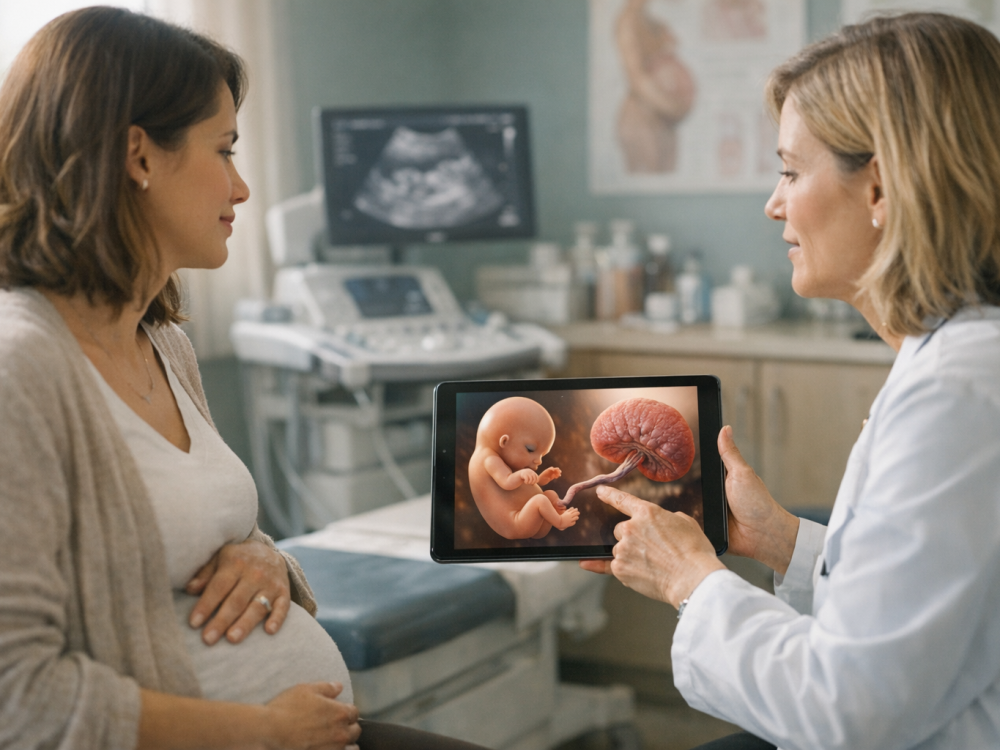
Intro
Week 10 of pregnancy is an important point in the first trimester: your baby is moving through a phase of rapid structural refinement, and many of the body systems that began forming earlier are becoming more recognizable. Although the fetus is still very small, the head, face, limbs, fingers, toes, and early skeletal framework are advancing quickly. For many pregnant people, this week can also feel physically intense as hormones continue to influence nausea, fatigue, breast tenderness, mood, and digestion.
Medically, week 10 is often discussed as part of the transition toward the end of the embryonic period and into increasingly fetal development. The placenta is also becoming more central as a support organ, helping provide oxygen and nutrients and producing hormones that sustain pregnancy. Every pregnancy is individual, so this overview is informational and should complement, not replace, care from your midwife, obstetrician, family physician, or other qualified clinician.
Highlights
By week 10, the arms, hands, fingers, feet, and toes are more defined, and the elbows may be able to bend as musculoskeletal development progresses.
Early bone formation is underway, with cartilage and developing skeletal structures gradually strengthening and shaping the body.
Facial features continue to mature, including the external ears, eyelids, upper lip, and a more rounded head profile.
The placenta is increasingly important for nutrient transfer, oxygen exchange, waste removal, and hormone production, although maternal symptoms may still be driven by high hormone levels.
New or severe symptoms should be discussed with a healthcare professional, especially heavy bleeding, severe pain, dehydration, fever, or fainting.
A snapshot of fetal development at week 10
At 10 pregnant, is highly active even though the pregnancy may not be visible to others. The is small, but the body plan is becoming more refined. The head remains proportionally large because brain growth is rapid, while the torso and limbs continue to lengthen and organize. According to major clinical pregnancy references, this includes visible progress in the arms, hands, fingers, feet, toes, and facial structures.
One of the most reassuring concepts at this is that is not simply about size. Growth at 10 is also about differentiation: cells and tissues are becoming more specialized, joints are taking shape, and external features are becoming easier to identify on high-quality ultrasound when clinically indicated. The eyelids are forming and may begin to protect the developing eyes, the upper lip and nose region are more distinct, and the external ears are continuing to take shape.
The has already been beating for several , and the NHS notes that by around week 10 it may beat very quickly, around 180 beats per minute. This is fer than an adult heart rate and can be normal in pregnancy. Heart rate interpretation, however, depends on gestational age, ultrasound method, and clinical context, so it should always be reviewed by a qualified clinician.
Bones and the early skeleton: what is forming now
Week 10 is a key period for early skeletal . The does not yet have mature bones in the way a newborn or adult does. Instead, the skeleton begins as softer cartilage and connective tissue templates gradually ossify, meaning they mineralize and harden over time. This long process continues throughout pregnancy and well after .
At this stage, bone formation is progressing alongside the development of joints and limb. The Mayo Clinic describes the elbows can bend around this time, and the fingers and toes become longer as webbing disappears. These changes reflect coordinated development of bones, cartilage, joints, muscles, tendons, nerves, and skin. In other words, a bending elbow is not just a bone milestone; it is a whole-limb milestone.
Important structural developments around week 10 include:
- More defined arms and legs, recognizable limb segments.
- Hands and feet that are becoming distinct.
- Fingers and toes lengthening as the earlier webbing reduces.
- Early fingernails and toenails beginning to form.
- Elbow bending and early joint function.
- Ongoing formation of cartilage and early bone structures.
Nutrition, placental function, hormones, and genetics all contribute to skeletal development. Most do not need special interventions beyond standard prenatal care, a balanced diet as tolerated, and recommended supplements such as folic acid or prenatal vitamins as advised by their clinician. If you have a medical condition, take medications, have a restricted diet, or have had bariatric surgery, individualized nutritional guidance is especially important.
Hands, feet, face, and movement: small changes with big meaning
At 10, many of the most emotionally meaningful milestones involve recognizable human features. Fingers and toes are becoming less paddle-like and more separated. The hands may move toward the body, and the elbows can bend. The feet and toes also continue to develop, with toenails beginning to form. These changes are often too subtle for the pregnant person to feel; movements are usually not felt until much later, often in the , especially in a first pregnancy.
The face is also changing quickly. The head becomes rounder, the external ears form more cl, and the upper lip and nasal area continue to develop. The eyelids are present and help protect the developing eyes. This does not mean the is ready for the outside world; rather, it shows that the anatomical blueprint is becoming increasingly organized.
It is natural to feel both wonder and anxiety when reading about detailed . Many people worry whether every milestone is happening exactly on time. In reality, gestational dating can vary, ultrasound visualization can vary, and fetal position can affect what is seen. A single image or measurement rarely tells the whole story. Your hehcare team will interpret findings using gestational age, history, symptoms, and, when needed, follow-up imaging or testing.
Placenta support: oxygen, nutrients, waste removal, and hormones
The placenta is one of the most remarkable in pregnancy. It develops from pregnancy-related tissue and functions as an interface between the maternal circulation and the . By week 10, it is increasingly important in supporting fetal growth, although placental maturation continues over the coming weeks. It helps transfer oxygen and nutrients to the fetus, removes carbon dioxide and waste products, and produces hormones that help maintain the pregnancy.
Placental support is not the same as direct mixing of maternal and fetal blood. Instead, exchange occurs across specialized tissue surfaces. This arrangement allows oxygen, glucose, amino acids, and other substances to move toward the fetus, while waste products move back toward the maternal system for elimination. The placenta also has selective and immune-related functions, but it is not an absolute barrier; some medications, infections, alcohol, nicotine, and other substances can cross or affect placental function. For that reason, medication and supplement use should be discussed with a healthcare professional.
Hormones associated with the placenta and early pregnancy, including human chorionic gonadotropin, progesterone, and estrogens, contribute to both pregnancy maintenance and symptoms. Nausea, food aversions, breast tenderness, fatigue, bloating, and constipation can all be influenced by hormonal changes. Symptoms often fluctuate, and improvement or worsening does not automatically mean something is wrong. Still, sudden severe symptoms or concerning changes deserve attention.
Your body at 10 weeks: uterus, symptoms, and emotional load
At week 10, the is expanding and may be about the size of an orange, according to NHS pregnancy guidance. You may not have a visible bump yet, particularly in a first pregnancy, but you might notice waistbands feeling tighter due to uterine growth, bloating, or changes in digestion. Some feel very pregnant; others feel surprisingly normal. Both experiences can occur in healthy pregnancies.
Common symptoms around week 10 include:
- Nausea or vomiting, often called morning sickness though it can occur at any time.
- Fatigue and increased need for rest.
- Breast tenderness or fullness.
- Frequent urination.
- Bloating, constipation, or heartburn.
- Heightened sense of smell, food aversions, or cravings.
- Mood changes, anxiety, or tearfulness.
For medically literate readers, it may help to think of these symptoms as downstream effects of endocrine, vascular, gastrointestinal, and metabolic adaptation. Progesterone can slow gastrointestinal motility, contributing to constipation and bloating. Blood volume and renal blood flow begin changing early, which can increase urination. Meanwhile, nausea may be associated with hCG levels and other hormonal and neurologic factors, although the exact mechanism is multifactorial.
If nausea and vomiting prevent you from keeping fluids down, if you are losing weight, or if you have signs of dehydration such as dizziness, very dark urine, or inability to urinate normally, contact a healthcare professional. Severe pregnancy nausea may require assessment and treatment, and it is not something you have to simply endure.
Prenatal care and screening conversations at this stage
Week 10 is often a time when prenatal care becomes more structured. Depending on where you live and your health system, you may have an initial booking appointment, dating ultrasound, blood tests, urine testing, or discussions about genetic screening. Some screening options are time-sensitive, so it is reasonable to contact your maternity care team if you are unsure what should happen next.
Typical care discussions may include:
- Confirming gestational age and estimated due date.
- Reviewing medical, obstetric, surgical, medication, and family history.
- Checking blood group, Rh status, anemia markers, infectious disease screening, and urine findings where recommended.
- Discussing aneuploidy screening options, which may include blood tests and ultrasound-based assessments depending on gestational age and local guidelines.
- Reviewing lifestyle factors such as smoking, alcohol, occupational exposures, nutrition, and exercise.
- Planning follow-up visits and when to seek urgent help.
Screening is not the same as diagnosis. A screening test estimates risk; diagnostic testing, when offered and chosen, provides more definitive information but may carry different considerations. Decisions about screening can be personal and sometimes emotionally complex. A clinician or genetic counselor can help explain benefits, limitations, timing, and possible outcomes.
Supporting bone and placental development safely
You cannot control every aspect of fetal or placental development, and it is important not to place unrealistic responsibility on yourself. Many developmental processes are biologically programmed. However, supportive habits and timely medical care can help create a healthier pregnancy environment.
General supportive steps include:
- Take prenatal vitamins or supplements as recommended by your healthcare professional, especially folic acid in early pregnancy.
- Eat a varied diet as tolerated, including sources of protein, calcium, vitamin D, iron, iodine, and omega-3 fatty acids where appropriate.
- Stay hydrated, particularly if nausea or vomiting is present.
- Avoid alcohol, smoking, vaping, and recreational drugs; ask for support if stopping is difficult.
- Review all prescription medicines, over-the-counter medicines, herbal products, and supplements with a clinician or pharmacist.
- Use food safety precautions, including avoiding high-risk foods for listeria or other infections according to local guidance.
- Engage in pregnancy-appropriate physical activity if you have no medical restrictions.
If you have chronic conditions such as diabetes, hypertension, thyroid disease, epilepsy, kidney disease, autoimmune disease, or a history of pregnancy complications, week 10 is an important time to ensure care is coordinated. Medication changes should not be made abruptly without medical advice, because untreated illness can also carry risks.
Emotional reassurance: uncertainty is common in week 10
The can feel like a long wait between milestones. You may be managing symptoms while not yet feeling movement, and you may not have had a scan or may be waiting for results. Anxiety is common, especially after prior loss, fertility treatment, medical complications, or difficult experiences with healthcare.
Support can be practical as well as emotional. Consider identifying one or two trusted people you can talk with, writing down questions before appointments, and asking your clinician what symptoms should prompt a call. If anxiety becomes persistent, intrusive, or interferes with eating, sleeping, working, or daily functioning, mental health support is appropriate and often very helpful. Pregnancy care includes psychological wellbeing, not only physical monitoring.
When to seek urgent medical advice
- Heavy vaginal bleeding, passing large clots, or bleeding with significant pain.
- Severe one-sided pelvic or abdominal pain, shoulder-tip pain, fainting, or collapse.
- Persistent vomiting with inability to keep fluids down or signs of dehydration.
- Fever, severe weakness, painful urination, or symptoms of infection.
- Severe headache, visual symptoms, chest pain, shortness of breath, or sudden swelling.
- Any symptom that feels alarming or significantly different from what your clinician told you to expect.
Tools & Assistance
- Prenatal appointment or booking visit with a midwife, obstetrician, or family physician
- Pregnancy-safe medication review with a clinician or pharmacist
- Local urgent maternity assessment unit, emergency department, or after-hours medical line for severe symptoms
- Written symptom and question tracker for prenatal visits
- Registered dietitian or prenatal nutrition service if diet, nausea, or medical conditions complicate nutrition
FAQ
Can I feel the baby move at 10 weeks?
Usually no. The fetus may make small movements, but they are typically too subtle to feel. Many people first notice movement later in the second trimester.
Are bones fully formed at week 10?
No. Early skeletal structures are developing, but bones are not mature. Cartilage and early bone formation continue to ossify and strengthen throughout pregnancy and after birth.
What does the placenta do at this stage?
The placenta increasingly supports oxygen and nutrient transfer, waste removal, and hormone production. It continues to mature over the coming weeks.
Is it normal for symptoms to fluctuate at 10 weeks?
Yes, symptoms such as nausea, fatigue, and breast tenderness can vary from day to day. However, severe pain, heavy bleeding, dehydration, fever, or fainting should be assessed promptly.
Should I have an ultrasound at week 10?
Ultrasound timing varies by country, clinic, symptoms, and medical history. Your healthcare professional can advise whether dating, viability assessment, or screening-related imaging is appropriate.
Sources
- Cleveland Clinic — Fetal Development: Week-by-Week Stages of Pregnancy
- Mayo Clinic — Fetal Development: The First Trimester
- NHS — 10 Weeks Pregnant Guide - Best Start in Life
Disclaimer
This article is for general medical information only and does not replace individualized advice, diagnosis, or treatment from a qualified healthcare professional. Seek urgent care for severe or concerning symptoms.












Please log in to leave a comment.