
Intro
Week 2 of pregnancy can feel counterintuitive: in standard obstetric dating, you are usually not pregnant yet. Pregnancy is counted from the first day of the last menstrual period, not from conception. For many people with an approximately 28-day cycle, week 2 is the time when the body is preparing to ovulate, the fertile window is open, and conception may occur near the end of the week or shortly afterward.
This week matters because timing intercourse or insemination around ovulation can increase the likelihood that sperm and egg meet in the fallopian tube. It is also a good moment to support the uterine environment and overall health before the embryo, if fertilization occurs, travels toward the uterus and prepares for implantation several days later.
Highlights
In week 2, ovulation is typically approaching or occurring, depending on cycle length and individual variation.
The fertile window includes the days before ovulation because sperm can survive in the reproductive tract for several days.
Fertilization usually occurs in the fallopian tube, while implantation generally happens later, often about 6 to 10 days after ovulation.
Pregnancy tests are usually not reliable immediately after ovulation because detectable pregnancy hormone rises only after implantation begins.
Healthy preparation during this week focuses on preconception care, folic acid, medication review, and recognizing when to seek medical advice.
Why week 2 is counted before conception
Pregnancy is based on the day of the period, often abbreviated as LMP. This convention is used because the exact day of ovulation and is not always known, while the period is usually easier to identify. As a result, the two s of a dated pregnancy occur before conception in many cycles.
In an average 28-day cycle, ovulation often occurs around day 14, though this is a broad estimate rather than a rule. People shorter cycles may ovulate earlier, and those longer cycles may ovulate later. Stress, illness, travel, brefeeding, perimenopause, polycystic ovary syndrome, thyroid disorders, and other factors can also shift ovulation timing.
For this reason, 2 is best understood as the late follicular phase for many : follicles in the ovary are maturing under the influence of follicle-stimulating hormone, estrogen is rising, and a surge of luteinizing hormone will trigger ovulation. If sperm are present in the reproductive tract at the right time, may become possible.
Ovulation and the fertile window
is the release of a mature egg from the ovary. After release, the egg is swept toward the fallopian tube, where fertilization can occur if sperm are present. The egg survives for a relatively short time, commonly about 12 to 24 hours after . Sperm, however, can survive longer in fertile-quality cervical mucus, sometimes up to several days.
This difference explains the . The most fertile days are typically the few days before and the day of ovulation itself. Intercourse or insemination before ovulation can be effective because sperm may already be waiting in the fallopian tube when the egg is released.
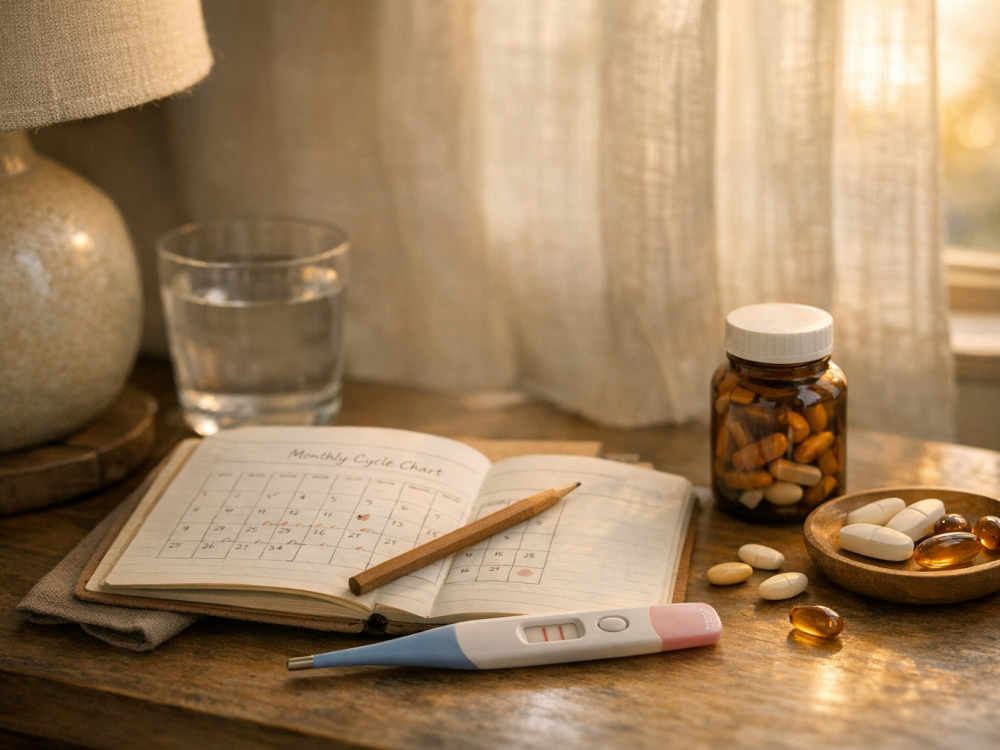
Common fertility awareness signs include:
- More abundant, slippery, stretchy cervical mucus, often compared with raw egg white
- A positive urinary luteinizing hormone test, suggesting ovulation may occur soon
- Mild pelvic discomfort or one-sided twinges in some people
- A basal body temperature rise after ovulation, which confirms ovulation retrospectively rather than predicting it
- Changes in libido, breast sensitivity, or cervical position, although these signs are less specific
These methods can be helpful, but none is perfect. If cycles are irregular, fertility tracking may be more difficult, and professional guidance can help clarify whether ovulation is occurring consistently.
Conception timing: when sperm and egg meet
Conception begins with , usually in the tube. Sperm must pass through cervical mucus, the uterus, and into the tube. Only a small fraction reach the vicinity of the egg. Fertilization occurs when one penetrates the egg and the genetic material combines, forming a zygote.
Timing is important, but it does not need to be exact to the hour. Because sperm can remain viable for days under favorable conditions, every 1 to 2 days during the window is often sufficient for many couples trying to conceive. For people using donor sperm, intrauterine insemination, or assisted reproductive technology, is more protocol-specific and should be guided by a clinician.
It is also important to remember that is probabilistic, not guaranteed. Even when is well timed and both partners are healthy, pregnancy may not occur in a given cycle. This can be emotionally difficult, especially when tracking is intensive. Taking breaks from testing or choosing a simpler schedule may help reduce pressure for some people.
From ovulation to implantation
If occurs, the embryo begins dividing as it moves through the fallopian tube toward the uterus. Over several days, it progresses through cell divisions and eventually becomes a blastocyst. occurs when the blastocyst attaches to and begins embedding into the endometrium, the hormonally prepared lining of the uterus.
does not happen in 2 for most pregnancies. It more commonly occurs about 6 to 10 days after ovulation, during what many call the two- wait. This is why very pregnancy tests are usually unreliable immediately after ovulation. Human chorionic gonadotropin, or hCG, is produced after begins, and it takes time to rise to detectable levels in urine or blood.
Some notice light spotting or mild cramping around the time might occur, but these symptoms are nonspecific. Similar sensations can occur from normal luteal-phase hormonal changes, premenstrual symptoms, cervical irritation, or other benign causes. Heavy , severe pain, or concerning symptoms be discussed a health professional promptly.
Preparing the body for implantation and early pregnancy
Preparation for is less about doing one special intervention and more about optimizing overall reproductive and metabolic health. The endometrium becomes receptive under the influence of estrogen and progesterone after ovulation. Many factors, including ovulation quality, uterine health, endocrine function, inflammation, and general wellbeing, can influence the reproductive environment.
Supportive preconception steps include:
- Taking a prenatal vitamin or folic acid supplement as advised by a healthcare professional, ideally before conception
- Reviewing prescription medicines, over-the-counter drugs, supplements, and herbal products for pregnancy safety
- Avoiding smoking and recreational drugs, and discussing alcohol and caffeine intake with a clinician
- Managing chronic conditions such as diabetes, hypertension, thyroid disease, epilepsy, autoimmune disease, or mental health conditions before pregnancy when possible
- Maintaining balanced nutrition, regular physical , adequate sleep, and stress-reduction practices that are realistic for your life
- Ensuring vaccinations and infection screening are up to date when appropriate
No diet, supplement, position, or timing method can guarantee implantation. Be cautious with unverified claims, especially products marketed as fertility boosters. Some supplements can interact with medications or may not be safe in pregnancy.
Emotional realities of week 2 and trying to conceive
The ovulation window can bring hope, anticipation, and sometimes pressure. For some people, tracking ovulation feels empowering; for others, it can make intimacy feel scheduled or stressful. Both reactions are valid. Trying to conceive can affect relationships, body image, sexual wellbeing, and mental health, particularly after previous pregnancy loss, infertility, or medical trauma.
It may help to agree in advance how much tracking feels sustainable. Some people prefer ovulation predictor kits and detailed charts, while others choose intercourse every few days across the cycle. If trying to conceive becomes emotionally overwhelming, consider speaking with a healthcare professional, fertility counselor, therapist, or support group.
Seek medical advice earlier rather than later if you have known reproductive health conditions, very irregular or absent periods, a history of pelvic inflammatory disease, endometriosis, recurrent pregnancy loss, chemotherapy or pelvic radiation exposure, or if either partner has known fertility concerns. Many guidelines suggest evaluation after 12 months of trying if under 35, or after 6 months if 35 or older, but individual circumstances may warrant earlier assessment.
What not to overinterpret this week
During week 2, most symptoms reflect ovulation or normal hormonal variation, not confirmed pregnancy. Increased cervical mucus, pelvic twinges, bloating, breast tenderness, and mood changes can occur around ovulation or in the luteal phase. These signs cannot reliably confirm that conception has happened.
Testing too can lead to confusion. A negative urine pregnancy test a few days after ovulation does not rule out pregnancy because may not have occurred yet and hCG may not be detectable. For the most reliable home result, many test from the day of the expected period or later, following the test instructions carefully.
If you are undergoing fertility treatment, follow your clinic’s testing schedule. Trigger shots containing hCG can cause false-positive tests if testing is done too soon, and medicated cycles may cause symptoms that mimic ]] pregnancy.
When to seek medical guidance
- Seek urgent care for severe pelvic pain, fainting, shoulder-tip pain, or heavy bleeding.
- Contact a clinician if periods are absent, very irregular, or associated with significant pain.
- Review medications and supplements before conception, especially for chronic conditions.
- Ask for earlier fertility advice if you are 35 or older, have known reproductive conditions, or have a history of pregnancy loss.
- Do not rely on early symptoms alone to confirm pregnancy; use appropriate testing and professional guidance.
Tools & Assistance
- Track menstrual cycle dates and estimated ovulation for several months.
- Use ovulation predictor kits if timing information would be helpful.
- Schedule a preconception appointment with an obstetrician-gynecologist, midwife, or primary care clinician.
- Prepare a medication and supplement list for pregnancy-safety review.
- Seek fertility specialist advice if trying to conceive is prolonged or medically complex.
FAQ
Am I actually pregnant in week 2?
Usually not yet. In standard pregnancy dating, week 2 often corresponds to the days leading up to ovulation, with conception possible near this time depending on cycle length.
When is the best time to have intercourse to conceive?
The most fertile days are generally the few days before ovulation and the day of ovulation. Sperm can survive for several days, while the egg usually survives for about 12 to 24 hours.
Can implantation happen during week 2?
For most people, implantation happens later, commonly about 6 to 10 days after ovulation, after fertilization and early embryo development.
Should I take a pregnancy test right after ovulation?
Testing immediately after ovulation is usually too early. hCG becomes detectable only after implantation begins and has risen enough to be measured.
What if I do not know when I ovulate?
Cycle tracking, cervical mucus observation, and ovulation predictor kits may help. If cycles are very irregular or absent, consult a healthcare professional.
Sources
- NHS — Conception: How It Works
- Mayo Clinic — Fertility awareness
- Flo Health — Two week wait (TWW): What to expect
Disclaimer
This article is for general educational information and is not a substitute for personalized medical advice, diagnosis, or treatment. Always consult a qualified healthcare professional about pregnancy planning, symptoms, medications, or fertility concerns.













Please log in to leave a comment.