
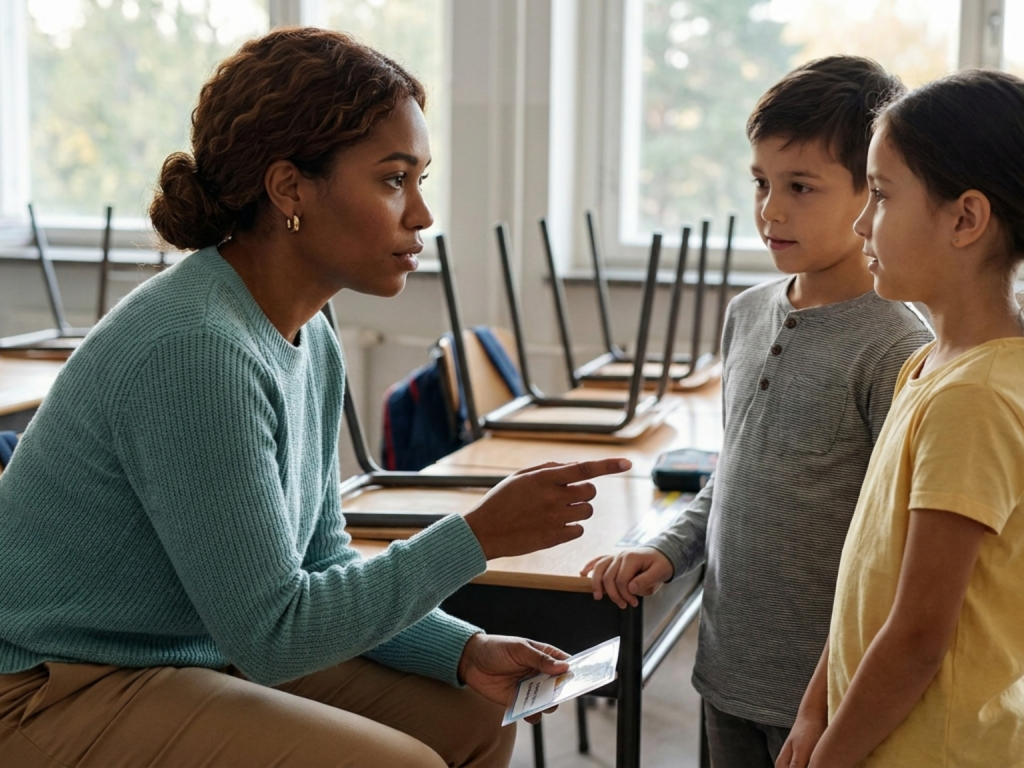
Intro
Bullying is not a normal rite of passage. It is a harmful social pattern that can affect emotional development, school engagement, sleep, somatic complaints, and long-term mental health for children who are targeted, children who bully, and bystanders. Families can help by teaching practical response skills while also shaping empathy, self-regulation, and safe peer norms.
This article offers developmentally sensitive strategies for helping children recognize bullying, respond safely, seek adult support, and participate in prevention. It is written for caregivers who want clear, compassionate guidance without shaming any child involved.
Highlights
Bullying involves repeated aggression and a power imbalance; it is different from ordinary conflict, although both need adult guidance.
Children are more likely to use safe responses when adults rehearse exact words, body language, and help-seeking steps before a crisis occurs.
Prevention works best when families, schools, and peers reinforce empathy, accountability, stress management, and clear anti-bullying rules.
Bystanders can become upstanders by interrupting harm, getting help, supporting the targeted child, or refusing to reward cruelty with attention.
Understanding what bullying is
Bullying is typically defined as unwanted aggressive behavior that involves a real or perceived power imbalance and is repeated or likely to be repeated. The power difference may involve physical size, social status, popularity, age, disability, race, gender expression, immigration status, academic ability, or access to embarrassing information. The aggression may be physical, verbal, relational, or digital.
It helps children when adults name the behavior clearly without labeling a child as permanently bad. For example: “That was bullying behavior because it was meant to hurt, it happened more than once, and the other child could not easily make it stop.” This distinction matters because routine peer conflict usually involves a more equal disagreement, while bullying requires stronger adult intervention and protection.
Bullying is an adverse childhood experience because it can activate chronic stress physiology. A child who feels unsafe may show hypervigilance, irritability, avoidance, headaches, abdominal pain, sleep disruption, declining school performance, or loss of interest in activities. These signs do not prove bullying is occurring, but they justify calm questions and, when concerns persist, consultation with school staff or a healthcare professional.
Create a home base of trust and communication
Children disclose bullying more readily when they expect adults to stay calm, believe them, and help without taking over in humiliating ways. A warm, communicative, involved parenting style is associated with lower risk of bullying behavior, and it also gives targeted children a safer place to recover. The goal is not to interrogate but to keep communication predictable.
Try brief, routine check-ins: “Who felt safe to be around today?” “Was there any moment you wished an adult had noticed?” “Did you see anyone being left out?” These questions are less threatening than “Are you being bullied?” and they invite details about the social climate.
When a child shares something painful, lead with validation: “I’m glad you told me. You did not deserve that. We will think through the safest next step together.” Avoid blaming questions such as “Why didn’t you stand up for yourself?” or “What did you do to cause it?” Shame can intensify withdrawal and does not teach skills. If your child has bullied someone else, warmth still matters. Accountability works better when paired with connection, emotional coaching, and repair, not humiliation.
Families can also strengthen parent-child communication skills by practicing listening before problem-solving. Reflect what you heard, ask permission to offer ideas, and include the child in decisions when safety allows.
Teach children to respond safely when targeted
A child’s response should prioritize safety, not winning the interaction. Many children freeze when threatened because the nervous system shifts into fight, flight, or immobilization. Rehearsal reduces cognitive load and makes a safer response more accessible under stress.
Teach a simple sequence: stand or sit with steady posture if safe, use a short neutral phrase, move toward people, and tell a trusted adult. Useful phrases include: “Stop. That’s not okay.” “I’m not doing this.” “Leave me alone.” “I’m going to the teacher now.” The tone should be firm, not insulting. Long explanations often give the aggressor more material.
For younger children, practice with role-play and puppets. For older children and adolescents, autonomy-supportive wording is often more effective: “You might try one sentence and then leave,” rather than “You should stand up to them.” This respects their social reality and reduces defensiveness.
Children also need permission to seek help early. Reporting bullying is not tattling; it is asking adults to stop harm. Create a specific help map: classroom teacher, bus driver, counselor, coach, lunch supervisor, parent, relative, or another safe adult. If bullying is digital, teach the child not to retaliate online. They can save screenshots, block or mute when appropriate, and involve an adult. If there are threats of physical harm, sexual coercion, stalking, or self-harm, adults should act urgently and follow school and local safety procedures.
Build bystander and upstander skills
Peers have powerful influence on bullying dynamics. Laughter, silence, filming, or forwarding cruel posts can reward bullying, even when a child feels uncomfortable inside. Informal peer involvement is one of the school-based components shown to reduce both bullying perpetration and victimization, which makes bystander education essential.
Children do not need to become heroes. They need safe options. An upstander might interrupt by changing the subject, invite the targeted child to leave, sit beside someone who is excluded, refuse to share humiliating content, or get an adult. A child can say, “Come with me,” “That’s not funny,” or “Let’s go.” If direct intervention could increase danger, getting help is the right action.
Practice decision-making with scenarios: “If three students are surrounding one child, what is safer: stepping between them or getting the lunch supervisor?” “If a group chat is mocking someone, what could you do besides adding a comment?” These conversations teach risk assessment and moral courage.
Connect this to peer pressure refusal skills. Children often know bullying is wrong but fear social exclusion. Rehearsing how to refuse participation, leave a group chat, or support a classmate privately can help them act according to their values even when belonging feels at stake.
Prevent bullying by teaching empathy, regulation, and accountability
Prevention begins before a bullying incident. Children are less likely to harm peers when adults model kindness, manage conflict respectfully, set clear limits, and stay involved in school and peer life. This does not mean permissiveness. It means combining warmth with structure.
Empathy can be taught as a skill. Ask children to notice facial expressions, body posture, and context: “What do you think happened in their body when everyone laughed?” “How would recess feel tomorrow if that happened to you?” Keep the focus on understanding impact, not forcing a scripted apology before the child is ready to mean it.
Children who bully may use moral disengagement: “It was just a joke,” “Everyone does it,” “They deserved it,” or “I didn’t touch them.” Help them identify these thinking patterns and replace them with responsibility: “A joke is not a joke if the other person is trapped or humiliated.” “A group doing it does not make it safe.”
Stress management also matters. Some children displace anxiety, shame, trauma exposure, impulsivity, or social insecurity onto peers. Adults should avoid diagnosing motives casually, but they can teach regulation: pausing, breathing, asking for space, naming anger, using movement, and repairing harm. Positive discipline strategies are useful because they emphasize clear expectations, logical consequences, repair, and replacement behaviors rather than fear-based punishment.
Work with schools as partners
Whole-school interventions with clear rules, consistent supervision, parent information, and peer involvement have the strongest track record. Bullying rarely resolves when families tell a child simply to ignore it. Schools need accurate information: what happened, who was involved, where and when it occurred, whether there were witnesses, and whether there is documentation such as messages or images.
When contacting school staff, use concise, factual language: “My child reports repeated name-calling and exclusion at lunch by the same students for three weeks. They are now avoiding school. I would like a safety plan and follow-up.” Ask who will monitor high-risk settings such as bathrooms, hallways, buses, locker areas, playgrounds, and online school platforms.
A school safety plan may include assigned check-in adults, seating changes, supervised transitions, restorative repair when appropriate, consequences for continued aggression, and support for the child who bullied. Restorative approaches should never require the targeted child to sit face-to-face with an aggressor before safety and consent are established.
Document communications and follow up. If the child has a disability, chronic illness, neurodevelopmental difference, or protected status that may be related to the bullying, additional school protections may apply depending on local law. Consider asking for a counselor, school psychologist, pediatrician, or child mental health professional to be involved if distress is significant.
Support recovery and know when to seek help
After bullying, children need restoration of safety, agency, and belonging. Encourage confidence-building activities where the child can experience competence: sports, art, music, coding, volunteering, faith community, clubs, or time with supportive relatives. These activities do not erase bullying, but they broaden the child’s identity beyond victimization.
Watch for persistent changes in mood, appetite, sleep, school avoidance, panic symptoms, unexplained pain, self-blame, social withdrawal, aggression, substance use in adolescents, or statements about not wanting to live. These are reasons to consult a pediatrician, licensed mental health clinician, or urgent crisis service as appropriate. Do not wait for a child to “prove” they are suffering enough.
Some children who bully also need professional support, especially if aggression is severe, escalating, associated with cruelty, trauma exposure, conduct problems, depression, anxiety, substance use, or family stress. The aim is not to excuse harm but to interrupt a developmental pathway that can damage both the child and others.
Finally, keep teaching conflict resolution skills alongside anti-bullying skills. Children still need to negotiate ordinary disagreements, apologize, repair, and listen. Active listening with children helps adults model the very interpersonal skills, including empathy and conflict management, that reduce bullying risk across the community.
When to act urgently
- Any threat involving weapons, sexual coercion, stalking, extortion, or severe physical harm requires immediate adult and school response.
- Seek urgent professional help if a child talks about suicide, self-harm, or feeling unable to stay safe.
- Do not force mediation between a targeted child and an aggressor when there is fear, coercion, or a power imbalance.
- Save evidence of cyberbullying, but avoid publicly reposting humiliating content.
- Consult a healthcare professional if bullying is associated with persistent sleep, mood, anxiety, pain, or school refusal symptoms.
Tools & Assistance
- A written bullying log with dates, locations, witnesses, screenshots, and adult responses
- A school safety plan naming trusted adults and high-risk settings that need supervision
- Role-play cards for short refusal phrases, help-seeking, and upstander actions
- Pediatrician or licensed child mental health consultation when distress persists
- Family meetings that reinforce empathy, repair, digital citizenship, and respectful conflict
FAQ
Should I tell my child to ignore bullying?
Ignoring alone is rarely enough. A child can avoid rewarding the aggressor with a big reaction, but adults should still document, supervise, and intervene.
What if my child is the one bullying others?
Stay calm and take it seriously. Use clear limits, empathy-building, repair, and consequences, and seek professional guidance if the behavior is severe or persistent.
Is reporting bullying the same as tattling?
No. Reporting is asking for help with harm or danger. Tattling is usually about getting someone in trouble when no one is being hurt.
Can bystanders really make a difference?
Yes. Peers can reduce the social reward for bullying by refusing to laugh, helping the targeted child leave, speaking up safely, or getting an adult.
When should a doctor or therapist be involved?
Consider professional support when bullying is linked to persistent anxiety, depression, sleep problems, somatic complaints, school refusal, aggression, self-harm thoughts, or major behavior changes.
Sources
- Parenting Science — How to prevent bullying: An evidence-based guide
- National Center for Biotechnology Information — Bullying Prevention in Adolescence: Solutions and New Challenges
- Centers for Disease Control and Prevention — Bullying | Youth Violence Prevention
Disclaimer
This article is for informational purposes only and is not a substitute for medical, mental health, legal, or school safety advice. Consult qualified professionals if a child is distressed, unsafe, or showing persistent symptoms.
















Please log in to leave a comment.