
Intro
Many children feel left out at some point, especially during busy social periods such as recess, team activities, or a new classroom change. For some, however, difficulty fitting in is persistent and painful. Repeated exclusion, being ignored by peers, or being treated as an outsider can affect mood, confidence, and school participation.
This article explains how social rejection can develop, why some children are more vulnerable, how the cycle can become self-reinforcing, and what supportive adults can do. It is written for caregivers and professionals who want a clear, developmentally informed view of a problem that is common, distressing, and often misunderstood.
Highlights
Social rejection in childhood is often a pattern, not a one-time event, and it can shape how a child expects other people to respond.
Shyness, social withdrawal, anxiety, aggression, and difficulty reading social cues can all increase the chance of peer neglect or exclusion.
Rejection sensitivity can make children react defensively to small cues, which may worsen relationships over time.
The consequences may include low self-esteem, depressive symptoms, academic difficulties, and reluctance to attend or participate at school.
Supportive adults can help by observing patterns, reducing shame, and creating safer, more structured peer experiences.
What difficulty fitting in can look like
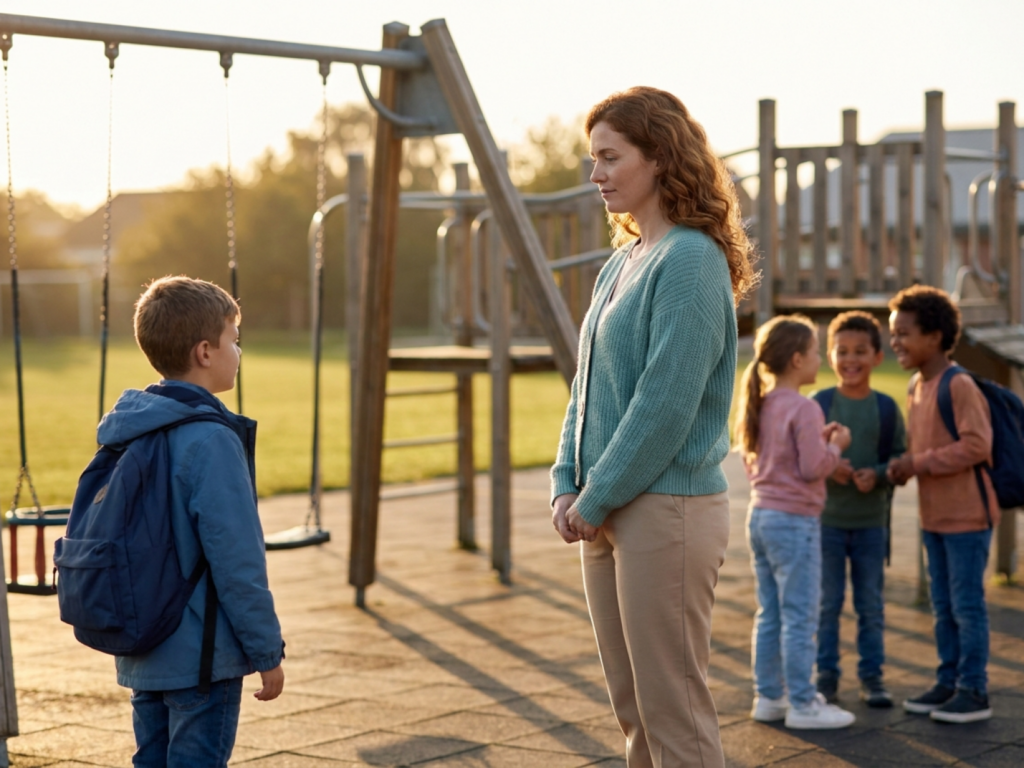
Difficulty fitting in does not always look dramatic. Some children are simply not invited into play. Others are present but remain on the edge of the group, speaking little and waiting for someone else to initiate. A child may come home saying no one wants to play with them, or may begin to dread recess, lunch, birthday parties, sports, or group projects. These experiences can happen in the classroom, on the playground, online, or in extracurricular activities.
Occasional exclusion is part of ordinary childhood life. Persistent peer rejection is different because it is repeated, emotionally loaded, and often visible across settings. The child may be quietly overlooked rather than openly bullied, which can make adults underestimate the harm. Yet repeated social exclusion can still feel humiliating and lonely. Over time, a child may begin to expect rejection before it happens, which can change how they approach every social encounter. Noticing the pattern early is often the first step toward helping.
Why some children are more vulnerable to rejection
Research shows that children who are shy, anxious, or socially withdrawn face a higher risk of peer neglect and rejection. When a child joins play less often, speaks softly, or seems hesitant, peers may misread the behavior as disinterest. A child with difficulty interpreting social cues may miss timing, reciprocity, teasing boundaries, or subtle invitations to join in. Others struggle because they are impulsive, very intense, or quick to react, which can disrupt peer interactions even when they want friendship.
Social anxiety in children can add another layer. Fear of embarrassment or negative evaluation may lead to silence, avoidance, or overpreparation that feels awkward to peers. In other cases, a child may have broader social communication concerns, making it harder to start, maintain, or repair interactions. None of this means the child is choosing to be left out. It means the child may need more support, more predictable practice, or a different social environment than the one they are currently in.
How rejection sensitivity can create a cycle
Some children become especially alert to signs of rejection. This is often described as rejection sensitivity: the child scans for cues of being ignored, excluded, laughed at, or replaced. Once that expectation is in place, ambiguous behavior may be interpreted as hostile even when no harm was intended. A pause in conversation, a missed invitation, or a neutral facial expression can feel like proof that the child is unwanted.
That expectation can shape behavior. A child may withdraw first to avoid being hurt, refuse invitations, interrupt abruptly, or react with anger to a minor slight. In some children, distress turns into aggression; in others, it turns into avoidance and silence. Either pattern can strain relationships and confirm other children’s negative assumptions. Studies suggest that rejection-sensitive children can experience more distress, more interpersonal difficulty, and more academic problems over time. The child is often trying to protect themselves, but the protection strategy may unintentionally make connection harder.
Emotional and academic consequences of social rejection
Repeated exclusion can erode a child’s sense of belonging. Low self-esteem often follows when a child starts to believe that being left out is proof of personal defect rather than a social mismatch, a stressful peer climate, or a temporary developmental phase. Some children become quiet and defeated; others become irritable, argumentative, or chronically on guard. Emotional responses can include sadness, shame, anxiety, and, in some cases, depressive symptoms.
The impact is not limited to feelings. Children who are worried about peers may participate less in class, avoid group work, or stop trying to make friends because the effort feels too risky. Peer exclusion and school dissatisfaction may show up as reduced concentration, reluctance to attend, falling grades, or complaints about school being unfair. Chronic social stress can also narrow the child’s chances to practice negotiation, empathy, compromise, and repair after conflict. The good news is that these effects are not fixed. A single stable friendship, a supportive teacher, or early mental health care can make a meaningful difference.
What adults can do at home and at school
The most helpful adult response is usually calm curiosity. Start by asking what happens before the child feels left out, who is present, and how they know they were excluded. Avoid telling the child to toughen up or to simply ignore it. Shame often makes social avoidance worse. Instead, validate the feeling and then look for patterns. Teacher observations of peer interactions can be especially useful because adults at school may notice whether the child is ignored, teased, overtalks, withdraws, or struggles to enter group play.
Support often works best when it is structured and gradual. One-on-one structured playdates may be easier than large, unstructured groups. Children may also benefit from social scripts for children, rehearsal of greetings or entry lines, and coaching in pragmatic communication skills such as turn-taking, topic maintenance, and reading conversational cues. If bullying is present, it should be addressed directly by adults and not treated as a child problem. The goal is not to force popularity. The goal is to build a few safer, more rewarding social experiences that can restore confidence.
When to seek professional help
Professional support is worth considering when social problems are persistent, intense, or clearly affecting daily life. Red flags include ongoing sadness, tearfulness after school, sleep or appetite changes, a sharp drop in confidence, frequent physical complaints before school, school refusal, or self-critical statements such as saying they are unlikeable or worthless. Some children show social distress before school, especially when the day includes recess, lunch, or group work. Others begin avoiding birthday parties, clubs, or sports because the risk of rejection feels overwhelming.
A pediatrician, school psychologist, child psychiatrist, or licensed therapist can help clarify what is driving the difficulty. Depending on the child, assessment may consider social anxiety, mood symptoms, bullying exposure, language or learning differences, or broader neurodevelopmental issues that affect reciprocity and social understanding. This is not about labeling a child as broken. It is about understanding the child in context and choosing support that fits. With timely, compassionate intervention, many children can improve confidence, learn new social skills, and feel less alone.
When to treat this as urgent
- Any talk of self-harm, wanting to disappear, or feeling hopeless needs prompt attention.
- Sudden withdrawal, tearfulness, or a major behavior change after peer conflict should not be ignored.
- Repeated bullying, threats, or physical aggression require immediate adult intervention.
- School refusal, panic, or strong physical complaints before school may signal significant distress.
- A clear decline in mood, sleep, appetite, or grades deserves professional review.
Tools & Assistance
- Pediatrician or family doctor
- School counselor or school psychologist
- Child and adolescent therapist
- Teacher feedback on peer interactions
- Structured playdate planning
FAQ
Is it normal for a child to feel left out sometimes?
Yes. Occasional exclusion happens in many peer groups. Concern rises when the pattern is frequent, painful, and affects mood, school, or self-esteem.
Can shy children be rejected more often?
They can. Shy or socially withdrawn children may join less often, which can lead to peer neglect or fewer chances to build friendships.
What is rejection sensitivity?
It is a strong expectation of being rejected. Children with this pattern may read neutral cues as negative and react in ways that make relationships harder.
Should adults force more socializing?
Usually not. Low-pressure, structured opportunities are often better than pushing a child into large or stressful social situations.
When should I ask for professional help?
Ask for help if the problem is persistent, if school participation drops, if bullying is involved, or if the child seems sad, anxious, or hopeless.
Sources
- NIH / PubMed Central — Social Withdrawal in Childhood
- PubMed — Rejection sensitivity and children's interpersonal difficulties
- NIH / PubMed Central — Causes and Consequences of Social Exclusion and Peer Rejection
Disclaimer
This article is for general educational purposes only and is not a diagnosis or a substitute for care from a qualified pediatric or mental health professional.














Please log in to leave a comment.