
Intro
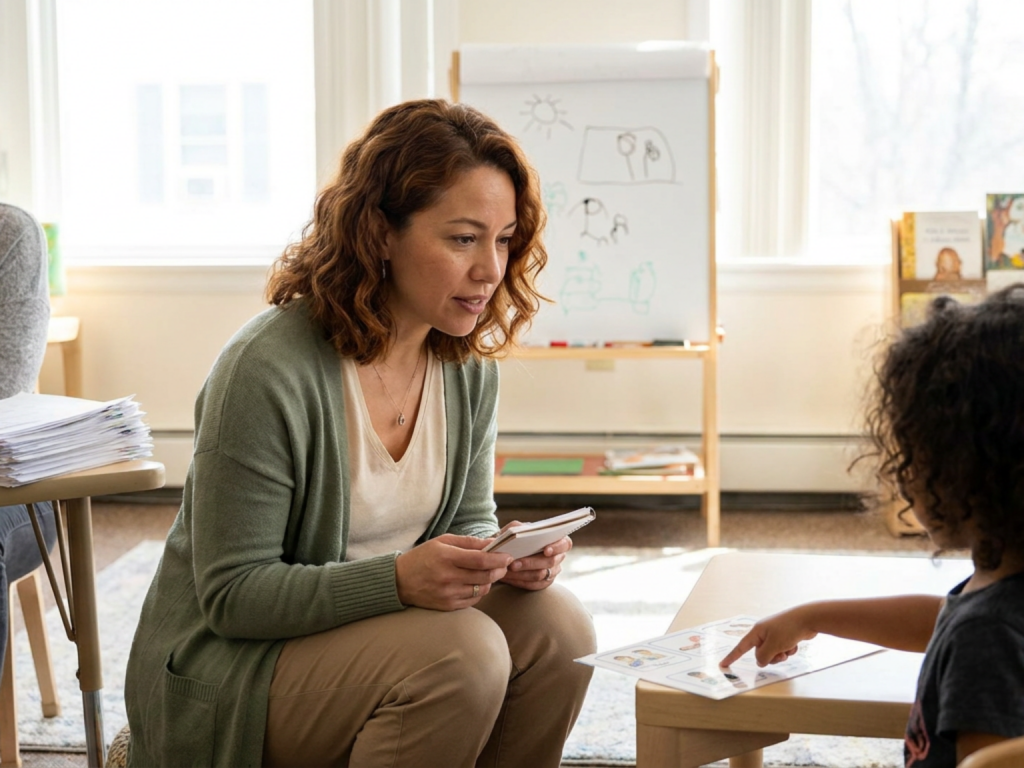
Positive discipline is a way of guiding children that combines warmth, respect, and firm boundaries. It is often misunderstood as being “soft” or permissive, but its central aim is neither indulgence nor control. Instead, it treats discipline as teaching: helping children develop self-regulation, empathy, problem-solving, responsibility, and a sense of belonging.
Highlights
Positive discipline is based on mutual respect: the child’s dignity matters, and so do the parent’s limits.
The philosophy emphasizes teaching and skill-building rather than punishment, fear, shame, or humiliation.
Research suggests Positive Discipline programs may be associated with lower parental stress, less authoritarian and permissive parenting, and improvements in child behavior and academic competence.
It works best when expectations are developmentally realistic and adapted to the child’s temperament, neurodevelopment, and family context.
Positive discipline does not replace professional care when a child has severe behavioral, emotional, developmental, or safety concerns.
What positive discipline means
Positive discipline is a relationship-centered approach to parenting and caregiving that views misbehavior as a signal: a child may be lacking a skill, struggling with emotion regulation, seeking connection, testing a boundary, or trying to meet a need in an immature way. The adult’s role is to respond with guidance that is both kind and firm.
The Positive Discipline Association describes the approach as respectful and encouraging, with the goal of helping children build responsibility, cooperation, and important life skills. Its principles include belonging and significance, mutual respect, long-term effectiveness, social and emotional skill development, and teaching rather than punishment.
In practical terms, positive discipline asks: “What does this child need to learn, and how can I teach it without damaging trust?” That question is very different from “How can I make this behavior hurt enough that it stops?” A child may comply temporarily when frightened or shamed, but fear-based compliance does not reliably build internalized self-control, empathy, or problem-solving capacity.
Positive discipline is not permissive parenting
Many parents worry that if they avoid yelling, threats, or harsh punishment, they will lose authority. Positive discipline does not ask parents to ignore misbehavior or remove boundaries. In fact, it depends on predictable limits. Children need adults to be clear about safety, respect, routines, and family expectations.
The difference is how those limits are held. A permissive response might allow a child to hit a sibling without interruption because the parent wants to avoid conflict. A punitive response might shame the child or retaliate. A positive discipline response would stop the hitting immediately, protect the sibling, name the boundary, help the child regulate, and later teach repair: “I will not let you hit. You were angry, and hitting hurts. Let’s move your body over here. When you are calm, we will check on your brother and practice what to do next time.”
This is warmth with clear limits. It preserves the adult’s leadership while reducing unnecessary humiliation and escalation.
The theoretical roots: belonging, encouragement, and authoritative parenting
Positive discipline is commonly linked to Adlerian psychology, which emphasizes belonging, social interest, encouragement, and the idea that behavior is purposeful. From this perspective, children are not simply “being bad”; they are often attempting to gain connection, autonomy, attention, or control with the limited tools available to them.
It also overlaps with the authoritative parenting style, which is associated with high warmth and high structure. Authoritative parenting differs from authoritarian parenting, which is high in control but low in emotional responsiveness, and from permissive parenting, which is high in warmth but low in structure. Positive discipline aims for the middle path: emotionally attuned, developmentally informed, and consistent.
A study of a Positive Discipline Parenting Program in a diverse, low-income sample reported measurable associations with reduced authoritarian and permissive parenting styles, lower parental stress, and improvements in child academic competence and behavior. This does not mean every family will experience the same outcomes, but it supports the idea that Positive Discipline is more than a slogan; it can be studied as a structured parenting approach.
Why connection matters for behavior
Children’s brains are still developing, especially systems involved in impulse control, executive function, frustration tolerance, and emotional regulation. The prefrontal cortex, which supports planning and inhibition, matures gradually across childhood and adolescence. When children are tired, hungry, overstimulated, anxious, or disappointed, their capacity to “use words” and think flexibly can drop quickly.
Connection does not mean agreeing with the behavior. It means helping the child’s nervous system return to a state where learning is possible. A dysregulated child is less able to process lectures, moral reasoning, or complex consequences. A calm adult presence, brief validation, and simple limits can reduce escalation: “You really wanted the tablet. It is hard to stop. The tablet is done, and I will help you calm down.”
After regulation comes teaching. This sequence matters: connect, contain, calm, then coach. When parents repeatedly pair limits with emotional safety, children gradually learn that boundaries are predictable and relationships can survive conflict.
How consequences fit into positive discipline
Positive discipline does not reject consequences. It rejects consequences that are arbitrary, humiliating, excessive, or unrelated to learning. Consequences are most useful when they are respectful, predictable, proportionate, and connected to the behavior.
Common forms include:
- Natural consequences: outcomes that happen without adult invention, when safe. For example, a child who refuses a jacket may feel cold for a short, safe period.
- Logical consequences: adult-guided outcomes related to the behavior. If toys are thrown, the toys are put away temporarily because throwing is unsafe.
- Repair: actions that help restore trust or fix harm, such as cleaning a spill, apologizing when ready, writing a repair note, or helping rebuild a sibling’s block tower.
- Problem-solving: collaborative planning for next time, such as practicing a phrase, choosing a calm-down space, or setting a visual routine.
The goal is consequences that teach repair, not retaliation. Children should understand what happened, why the limit exists, and what they can do differently.
Developmentally realistic expectations
Positive discipline requires matching expectations to the child’s developmental stage. A toddler who grabs is not morally equivalent to an older child who deliberately hides a broken rule. A preschooler may need repetition, visual cues, and physical proximity. A school-age child can increasingly participate in family meetings, agreements, and reflective problem-solving. Adolescents need respect for autonomy, privacy, and identity, while still needing boundaries around safety, sleep, school responsibilities, digital media, and substances.
Temperament also matters. Some children are more intense, more cautious, more sensory-sensitive, or more novelty-seeking. A child with language delays, sleep disorders, trauma exposure, attention difficulties, autism, anxiety symptoms, or other neurodevelopmental differences may need individualized support. Positive discipline can still be useful, but strategies may need adaptation, and parents should seek professional guidance when behavior is persistent, severe, or impairing.
Developmentally realistic expectations reduce unnecessary conflict. They also protect parents from interpreting immature behavior as intentional defiance when the child may be overwhelmed or skill-deficient.
The parent’s self-regulation is part of the method
Positive discipline is demanding because it asks adults to lead while emotionally activated. Parents are human; they get depleted, frightened, embarrassed, and angry. A supportive philosophy should not become another source of parental shame.
When a parent yells or reacts harshly, repair is possible. A repair might sound like: “I was angry and I yelled. That was not okay. I am sorry. The rule still stands, and I will try again.” This teaches accountability more powerfully than pretending adults never lose control.
Practical self-regulation strategies include pausing before responding, lowering the voice, using fewer words, stepping away briefly when the child is safe, naming one’s own feeling, and planning predictable responses for recurring conflicts. Parents managing depression, anxiety, trauma symptoms, substance use concerns, intimate partner violence, or severe stress deserve professional and community support. Parenting strategies work best when caregiver well-being is also addressed.
Everyday practices that reflect the philosophy
Positive discipline becomes most effective when it is embedded in daily family life, not reserved only for crises. Children learn through repetition, modeling, and participation.
Helpful practices include:
- State expectations before predictable transitions: “In five minutes we leave the park. You can choose one last slide or one last swing.”
- Use routines and visual supports for recurring tasks such as mornings, bedtime, homework, and screen transitions.
- Offer limited choices that preserve the boundary: “It is time to brush teeth. Do you want to use the blue cup or the green cup?”
- Model the behavior you want: respectful tone, apologies, waiting, emotional labeling, and problem-solving.
- Notice effort and contribution: “You kept trying even when the puzzle was frustrating.”
- Hold family meetings for older children to discuss chores, schedules, conflicts, and solutions.
These practices are not tricks to force compliance. They are ways of building a home environment where cooperation is more likely because children know what to expect and feel respected within the structure.
When positive discipline is not enough on its own
Some situations require more than parenting adjustments. If a child’s behavior is dangerous, persistent, developmentally unusual, or associated with major impairment at home, school, or with peers, it is appropriate to consult a pediatrician, child psychologist, child psychiatrist, developmental-behavioral pediatrician, occupational therapist, speech-language pathologist, or other qualified professional depending on the concern.
Seek support promptly if there is self-harm talk, suicidal statements, aggression causing injury, cruelty to animals, fire-setting, severe sleep disruption, sudden personality or behavior change, regression, suspected abuse, substance exposure, eating concerns, or major school refusal. These signs do not mean a parent has failed. They mean the family may need assessment, safety planning, and individualized care.
Positive discipline can be a strong foundation, but it is not a substitute for medical, developmental, or mental health evaluation when red flags are present.
When to seek extra help
- Seek urgent professional help if a child talks about self-harm, suicide, or wanting to die.
- Consult a healthcare professional if aggression is severe, escalating, or causing injury.
- Ask for evaluation when behavior changes suddenly or is accompanied by sleep, appetite, mood, or developmental regression.
- Do not rely on discipline strategies alone when trauma, abuse, neglect, or domestic violence may be involved.
- If parenting stress feels unmanageable, caregiver mental health support is part of child safety and family care.
Tools & Assistance
- Create a short list of family rules stated positively and reviewed when everyone is calm.
- Use visual routines for mornings, bedtime, homework, and screen-time transitions.
- Practice repair after conflict, including parent apologies when needed.
- Discuss persistent behavior concerns with your child’s pediatrician or a licensed child mental health professional.
- Coordinate with teachers or childcare providers so expectations and supports are consistent.
FAQ
Does positive discipline mean no consequences?
No. It uses consequences that are respectful, related to the behavior, proportionate, and designed to teach rather than shame or retaliate.
What if my child ignores calm instructions?
Calm does not mean passive. Move closer, use fewer words, restate the limit, follow through consistently, and revisit problem-solving when the child is regulated.
Can positive discipline work with strong-willed children?
Yes, but intense or highly reactive children may need more structure, preparation, sensory support, sleep attention, and adult consistency. Professional guidance can help if impairment is significant.
Is positive discipline evidence-based?
Research on Positive Discipline programs has reported associations with improved parenting style, reduced parental stress, and better child outcomes, though results vary by family context and implementation.
What should I do if I yell?
Repair. Apologize briefly, restate the boundary, and model accountability. A rupture followed by repair can teach children that relationships can recover after conflict.
Sources
- PubMed Central / National Library of Medicine — Effectiveness of Positive Discipline Parenting Program on Parenting Style, Child Academic Competence, and Child Behavior in a Diverse, Low-Income Sample
- Positive Discipline Association — What is Positive Discipline?
- AbilityPath — Positive Discipline and Guidance for Children
Disclaimer
This article is for informational purposes only and is not medical, mental health, or parenting treatment advice. Consult a qualified healthcare or mental health professional for concerns about your child’s behavior, development, safety, or your own well-being.


















Please log in to leave a comment.