
Intro
Evening can be one of the most emotionally loaded parts of a child’s day. After school, childcare, activities, homework, screens, meals, and family demands, many children are not simply "being difficult" at night; their nervous system may still be activated, their executive function may be fatigued, and their body may not yet have clear cues that the day is ending.
Highlights
A predictable evening routine helps children shift from daytime stimulation toward rest by using repeated cues, timing, and calming activities.
The goal is not a perfect schedule. It is a flexible structure that reduces decision fatigue, conflict, and physiologic arousal before sleep.
Screens, bright light, vigorous activity, and emotionally intense conversations late in the evening can make it harder for some children to settle.
Persistent sleep difficulty, snoring, breathing pauses, marked anxiety, pain, or daytime impairment should be discussed with a healthcare professional.
Why evening transitions matter
Evening is a biologic and behavioral transition, not just a clock time. During the day, children use substantial cognitive effort to follow instructions, inhibit impulses, manage peer interactions, and tolerate sensory stimulation. By late afternoon or evening, the prefrontal systems that support planning, impulse control, and flexible shifting may be relatively taxed. At the same time, the child’s circadian rhythm is moving toward night, sleep pressure is accumulating, and the household often becomes busier.
A structured evening routine for children works because it reduces ambiguity. When the same sequence happens most nights, the brain receives repeated predictive cues: play is narrowing, light is softening, demands are decreasing, and sleep is approaching. These cues can help lower autonomic arousal, the physiologic state associated with alertness, vigilance, and stress reactivity. A predictable structure also helps caregivers avoid negotiating every step from scratch.
This does not mean every evening must look identical. Children still need warmth, flexibility, and responsiveness. Illness, travel, family events, and developmental changes will alter the plan. The practical aim is a reliable rhythm: decompression, nourishment, preparation, connection, calming sensory input, and sleep. When that rhythm is visible and repeated, many children transition with less distress because they can anticipate what comes next.
Start with decompression after the day
For many children, the bedtime struggle begins hours before bed. A child who moves directly from school demands to homework, lessons, errands, or correction may arrive at evening already dysregulated. Building an after-school routine for children can protect the later bedtime window by giving the nervous system time to downshift before expectations rise again.
Decompression is not the same as unlimited screen time. Some children appear quiet with a device but remain cognitively and visually stimulated. A better decompression period may include a snack, hydration, outdoor movement, quiet play, drawing, music, reading, or time alone in a low-demand space. Children with sensory processing differences may need more specific supports, such as dimmer lighting, reduced noise, deep-pressure input, or a predictable order of events.
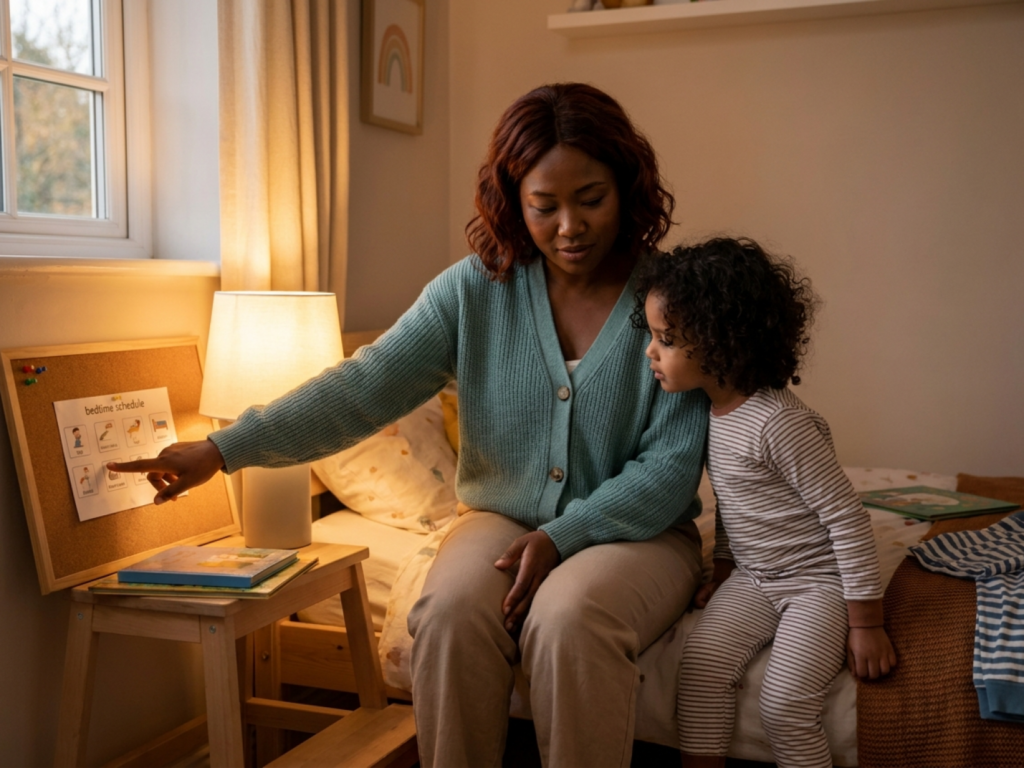
Caregivers can make this transition easier by naming it simply: “School is finished; now your body gets a reset.” For preschool and early school-age children, concrete transition cues for preschoolers may include a picture card, a timer, a song, or a repeated phrase. Older children may prefer a written checklist or a shared family calendar. The key is to separate recovery time from bedtime itself, so the final hour of the evening is not carrying the full burden of emotional regulation.
Build a predictable evening sequence
A useful evening structure usually has three phases. The first phase closes the active day: finish homework if needed, pack the bag, choose clothes, and complete any brief household tasks. The second phase prepares the body: dinner or evening snack, bathing or washing, toothbrushing, toileting, and medication only if already prescribed by the child’s clinician. The third phase cues sleep: dimmer light, quiet connection, reading, breathing, stretching, or another calming ritual.
Many sleep hygiene recommendations emphasize consistency, including regular timing and relaxing pre-bed activities. For families, that consistency is often more important than the exact activity chosen. A warm bath, gentle stretching, breathing exercises, reading in soft light, or meditation-style quiet time can all signal that wakeful activity is ending. The Kingston and Richmond NHS guidance describes relaxing activities such as reading, meditation, or a warm bath about 60 to 90 minutes before bed; for children, caregivers can adapt this window to age, temperament, and family logistics.
A consistent bedtime sequence might look like dinner, free play, tidy one area, bath, pajamas, teeth, two books, brief talk, lights out. For an older child it might be homework check, pack bag, shower, device docked outside the bedroom, reading, then lights out. The sequence should be short enough to repeat on difficult nights. If there are too many steps, the routine becomes another source of conflict rather than a bridge to sleep.
Use light, screens, and activity intentionally
Light is one of the strongest environmental signals for circadian timing. Bright light and interactive screens in the late evening can delay the subjective feeling of sleepiness for some children, particularly when content is fast, social, competitive, or emotionally charged. The issue is not only blue light; it is also cognitive arousal, reward anticipation, and the difficulty of stopping an absorbing activity.
A screen-free bedtime routine does not have to be punitive. It works best when framed as a body cue, not a moral judgment. Families can create a device parking place, set a household charging time, or use parental controls as a neutral external boundary. Ideally, the most stimulating media ends before the final wind-down period. If screens are necessary for communication, homework, or accessibility, reducing brightness, avoiding rapid content, and creating a firm stop point may still help.
Physical activity also needs timing. Outdoor play and sports earlier in the day can support sleep by increasing activity and reducing stress. Very vigorous play immediately before bed may be too activating for some children, while gentle stretching, slow yoga-like movement, or breathing exercises may reduce somatic tension. Caregivers can watch the child’s pattern rather than applying a rigid rule. If a child consistently becomes more alert after roughhousing, move that play earlier and reserve the last hour for calmer sensory input.
Support emotions without reopening the whole day
Children often bring their hardest feelings to bedtime because the environment finally becomes quiet. Worries about school, peer conflict, separation, illness, or family stress may surface just as caregivers are trying to finish the routine. Responding with empathy matters, but bedtime is usually not the best time for a long problem-solving session.
One approach is to include a brief, predictable connection ritual before lights out. This might be two questions, such as “What felt hard today?” and “What helped today?” It might be a worry notebook, a prayer or reflection, or a short cuddle. The caregiver can validate the feeling while containing the timing: “That sounds heavy. We are going to write it down, help your body rest, and talk more after breakfast.” This supports emotional regulation while protecting sleep onset.
For children with anxiety, trauma exposure, neurodevelopmental differences, or separation sensitivity, evening distress may need more individualized support. A visual schedule for school routines can help some children earlier in the day, while bedtime may require gradual reassurance, environmental predictability, and coordination with a pediatrician, therapist, or sleep specialist. Caregivers should avoid interpreting repeated distress as simple defiance when the pattern includes panic, somatic complaints, nightmares, or significant daytime impairment.
Adapt structure by developmental stage
Toddlers and preschoolers need concrete, sensory, and repetitive cues. A picture-based visual schedule, a limited choice between two pajamas, and a short sequence of the same songs or books can reduce transition distress. Because young children have immature time perception, “five more minutes” may be less useful than a visual timer or a concrete event such as “when this song ends.”
School-age children often benefit from participation in the plan. They can help choose the order of non-negotiable tasks, prepare the backpack, set out clothes, or check off a list. This supports executive function without expecting adult-level self-management. The caregiver remains the external organizer, especially when the child is tired.
Preteens may need privacy, autonomy, and a clearer explanation of physiology. Discussing circadian rhythm, sleep pressure, and the effect of late-night media can be more respectful than simply imposing rules. However, autonomy still needs boundaries. A bedroom full of notifications, gaming, social conflict, or homework stress can undermine sleep even when the child understands why rest matters.
Across ages, the best structure is firm but not harsh. It communicates, “Your body needs rest, and I will help you get there.” That stance preserves the caregiver-child relationship while keeping the evening from becoming an open-ended negotiation.
Know when to seek help
Even well-designed routines cannot resolve every sleep problem. Caregivers should seek professional guidance if a child has persistent insomnia symptoms, loud snoring, witnessed pauses in breathing, restless or painful legs, recurrent nightmares with marked distress, unusual nighttime behaviors, excessive daytime sleepiness, school decline, or significant mood or behavior changes. These patterns may reflect sleep-disordered breathing, restless legs syndrome, anxiety, medication effects, pain, reflux, eczema, seizures, or other medical or developmental factors.
It is also worth asking for help when bedtime has become a daily crisis despite consistent, compassionate structure. A pediatric clinician can review growth, medications, iron status if clinically indicated, mental health symptoms, and sleep timing. A psychologist, occupational therapist, or sleep specialist may help tailor routines for anxiety, sensory needs, autism, ADHD, trauma history, or family stress.
Caregivers do not need to wait until they are exhausted to raise concerns. Sleep affects learning, immune function, emotional regulation, caregiver wellbeing, and family relationships. A calm evening structure is a strong foundation, but it should sit alongside medical assessment when symptoms suggest more than ordinary transition difficulty.
When to get medical advice
- Loud snoring, gasping, or pauses in breathing during sleep should be discussed with a pediatric healthcare professional.
- Persistent insomnia, severe bedtime anxiety, or daytime sleepiness that affects school or behavior warrants assessment.
- Do not start sleep medicines, supplements, or melatonin for a child without clinician guidance.
- Pain, itching, reflux symptoms, restless legs, nightmares, or unusual nighttime behaviors may need medical review.
- Sudden sleep changes after stress, illness, medication changes, or trauma deserve careful professional support.
Tools & Assistance
- Create a simple visual evening schedule with no more than five to seven steps.
- Set a household device charging location outside the bedroom when practical.
- Use a brief worry notebook or morning follow-up plan for late-night concerns.
- Track sleep timing, snoring, awakenings, and daytime functioning before a pediatric visit.
- Coordinate with a pediatrician, therapist, occupational therapist, or sleep specialist when symptoms persist.
FAQ
How long should a child’s evening wind-down routine be?
Many families do well with 30 to 60 minutes, while some children need a longer 60 to 90 minute reduction in stimulation. The routine should be repeatable and not so long that it becomes another source of stress.
Is screen time always harmful before bed?
Not always, but bright, interactive, or emotionally intense screen use can make settling harder for some children. A consistent stop time and calmer alternatives are often helpful.
What if my child becomes upset every night at bedtime?
Use empathy and predictable limits, and look for patterns such as anxiety, separation distress, sensory overload, pain, snoring, or daytime impairment. Persistent distress should be discussed with a healthcare professional.
Should weekends have the same bedtime?
Some flexibility is normal, but large shifts can make weekday sleep harder. A broadly regular sleep and wake rhythm is usually easier for the child’s circadian system.
Can a bedtime routine help older children too?
Yes. Older children and preteens still benefit from predictable cues, reduced evening stimulation, and protected sleep timing, though they may need more autonomy in designing the routine.
Sources
- Harvard Health Publishing — Sleep hygiene: Simple practices for better rest
- Sleep Foundation — How to Build a Better Bedtime Routine for Adults
- Kingston and Richmond NHS Foundation Trust — Sleep hygiene :: Kingston and Richmond NHS Foundation Trust
Disclaimer
This article is for general educational information and is not a diagnosis or treatment plan. For persistent sleep problems, breathing symptoms, severe anxiety, medication questions, or safety concerns, consult a qualified pediatric healthcare professional.
















Please log in to leave a comment.