
Intro
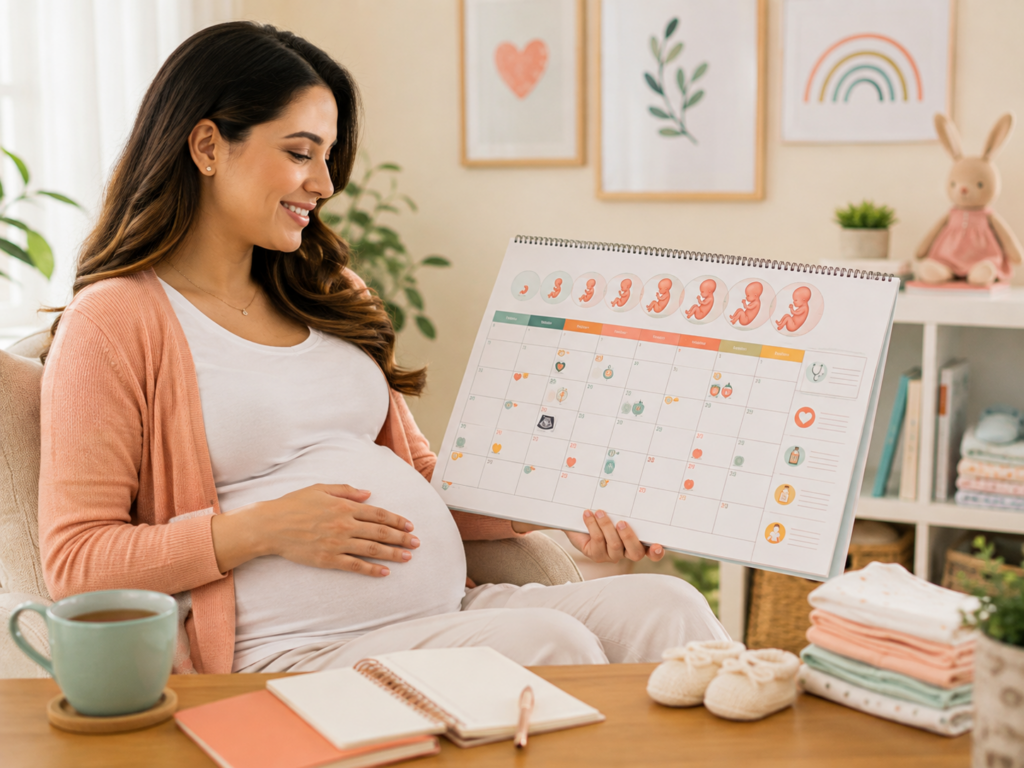
Pregnancy is often described as one of the most special and transformative periods in life. To help navigate it, this detailed pregnancy calendar divides the journey into weeks, months, and trimesters, describing changes in the mother's body and the baby's development.
The calendar combines medical information, practical recommendations, real-life experiences, and emotional support. It is intended as an informative guide; each pregnancy is individual, so questions about symptoms, tests, fetal development, or care should be discussed with a qualified healthcare professional.
Highlights
Pregnancy is divided into trimesters, months, and weeks, each accompanied by unique changes in the mother's body and the development of the child.
The calendar provides clear explanations, medical information, and real-life examples from parents' lives.
Weekly descriptions cover fetal development, maternal feelings, and health recommendations.
Expectant parents receive practical advice, expert guidance, and emotional support at every stage.
The guide describes the entire path from preparation for conception to the last weeks before childbirth.
What Is a Pregnancy Calendar?
Pregnancy is often described as one of the most special and transformative periods in life. To help navigate it, the pregnancy calendar divides this time into weeks, months, and trimesters. Each stage brings its own unique changes to both the mother’s body and the baby’s development. The calendar offers a detailed week-by-week guide to help you understand these changes.
A calendar can provide a clear way to follow the progression of pregnancy from preparation for conception to the last weeks before childbirth. It helps organize information about fetal development, maternal feelings, health recommendations, and preparation for birth. The descriptions are general guides rather than a substitute for individualized prenatal care.
Real Stories and Emotional Well-Being
In addition to medical explanations, many calendars include stories from parents who have already gone through pregnancy. These stories, often accompanied by ultrasound images and photographs, provide insight into what each week is like. Their advice, recommendations, and experiences help reassure expectant parents and make the journey less daunting.
Emotional balance during pregnancy is just as important as physical health. Expectant parents are advised to avoid stress, conflict, and unnecessary anxiety. Family support and sharing experiences with other parents can help reduce anxiety and fears. The calendar emphasizes this, offering both medical advice and kind, encouraging words at every stage.
Pregnancy can feel different from one person to another, and real-life accounts should be understood as experiences rather than predictions. A supportive family environment, communication with trusted people, and regular contact with healthcare professionals can help expectant parents approach each stage with greater confidence.
Weekly Fetal Development: Weeks 1-13
The earliest weeks include preparation for conception, fertilization, implantation-related changes, and the beginning of organ development. The calendar describes these stages in the following way:
- Weeks 1-2: The body begins preparing for conception; ovulation occurs.
- Week 3: Fertilization occurs, causing the sperm and egg to join together to create a new life.
- Week 4: The embryo resembles a cluster of rapidly dividing cells.
- Week 5: The foundations of the heart, blood vessels, and respiratory system begin to form.
- 6-7 weeks: The rudiments of the limbs appear, and the brain and digestive tract begin to develop.
- Weeks 8-9: Facial features such as ears, nose, and lips begin to form; the brain develops rapidly.
- 10-11 weeks: Tooth buds are formed, the baby is surrounded by amniotic fluid, and the external genitalia appear.
- Weeks 12-13: All major organ systems are present; the placenta is fully formed.
These descriptions show how quickly the early pregnancy progresses. They should be considered alongside the dating method and assessments used by the person’s healthcare professional.
Weekly Fetal Development: Weeks 14-27
During the second trimester, growth accelerates, the baby’s senses develop, and the mother may feel the first movements. The weekly development described in the calendar includes the following milestones:
- Weeks 14-15: The baby’s body is covered with fine hairs, called lanugo, and vernix caseosa for protection. The tiny heart pumps large amounts of blood.
- Weeks 16-17: Facial muscles allow frowning and blinking; brown fat tissue develops to regulate body temperature.
- 18-20 weeks: The baby begins to hear sounds, respond to the mother’s voice, and move actively.
- Weeks 21-22: Blood cells needed for immunity develop; taste buds begin to recognize the taste of amniotic fluid.
- Weeks 23-24: Subcutaneous fat begins to accumulate; the baby takes up more space in the uterus.
- Weeks 25-26: Bones and joints are getting stronger; eyes can now be opened.
Along with fetal development, the calendar provides information about maternal feelings and health recommendations. Physical sensations and the timing of noticeable changes can vary, so expectant parents should raise concerns or uncertainties during prenatal appointments.
Weekly Fetal Development: Weeks 27-42
The third trimester is characterized by continued brain development, increasing weight, stronger movements, and preparation for labor. The later milestones in the calendar are:
- Weeks 27-29: The third trimester begins; the brain develops rapidly, and thermoregulation improves.
- 30-31 weeks: The baby responds to light and sound; movements become stronger.
- 32-34 weeks: Hearing is well developed; the baby recognizes the heartbeat and the mother’s voice.
- 35-36 weeks: Weekly weight gain increases by approximately 200 g; cheeks become fuller.
- 37-38 weeks: The baby is considered full-term and ready for birth; lanugo disappears.
- Weeks 39-40: Movements slow down as the body prepares for labor.
- 41-42 weeks: The baby has long nails, hair, and open eyes; birth is expected any minute.
Fetal movement patterns and the timing of labor preparation require individual medical guidance. Any notable concern about movement, pain, bleeding, fluid loss, or other urgent symptoms should be discussed promptly with a healthcare professional or maternity service.
Key Stages by Trimester
Grouping pregnancy into trimesters provides a broader view of the changes described week by week:
- First trimester (1-13 weeks): Formation of vital organs, development of the placenta, and early physiological changes in the mother.
- Second trimester (14-27 weeks): Growth accelerates; the baby’s senses develop, and the mother feels the first movements.
- Third trimester (28-42 weeks): Rapid weight gain, brain development, and preparation for labor.
Each trimester has its own priorities and questions. The first focuses on early development and adaptation to pregnancy. The second brings continued growth and increasing awareness of fetal movement. The third focuses on ongoing development, preparation for labor, and practical planning for birth and newborn care.
The calendar is most useful when it supports, rather than replaces, regular prenatal care. Healthcare professionals can interpret the pregnancy timeline in relation to the individual pregnancy and recommend appropriate examinations and follow-up.
Recommendations, Tools, and Help
The calendar offers practical advice and expert guidance for expectant parents:
- Get regular medical checkups.
- Eat a balanced diet and drink enough fluids.
- Avoid stress and focus on emotional well-being.
- Prepare your birth plan and maternity hospital bag in advance.
- Read about childbirth and newborn care to feel more confident.
Useful tools and sources of help include:
- Opinions of obstetricians and gynecologists.
- Real-life experiences from other parents designed to inspire confidence and provide a new perspective.
- Ultrasound images and photographs as visual cues for development.
- Practical checklists and weekly recommendations for building healthier habits.
- Relaxation and stress reduction tips to maintain emotional balance.
- Guides to nutrition, self-care, and lifestyle adjustments during pregnancy.
A birth plan and maternity hospital bag can be prepared gradually. Reading about childbirth and newborn care, keeping questions for prenatal visits, and using reliable pregnancy information can make preparation feel more manageable.
When to Contact a Healthcare Professional
- A pregnancy calendar cannot assess an individual's health or confirm that fetal development is progressing normally.
- Do not use general weekly descriptions to diagnose symptoms or make decisions about treatment.
- Contact a healthcare professional promptly about bleeding, fluid loss, severe pain, or other urgent concerns.
- Seek guidance if fetal movements seem noticeably different from the established pattern.
- Follow the prenatal checkup and testing schedule recommended for the individual pregnancy.
Tools & Assistance
- Weekly pregnancy calendar for tracking fetal development and questions
- Regular prenatal checkups with an obstetrician or gynecologist
- Birth plan and maternity hospital bag checklist
- Reliable guides to nutrition, self-care, childbirth, and newborn care
- Support from family, healthcare professionals, and other parents
FAQ
What does a pregnancy calendar describe?
It organizes pregnancy into weeks, months, and trimesters and describes fetal development, maternal feelings, health recommendations, and preparation for birth.
Why are real-life pregnancy stories included?
Parents' stories can provide insight into what different weeks may feel like, offer practical experiences, and help reassure expectant parents. They do not predict an individual's pregnancy.
What are the main stages by trimester?
The first trimester covers 1-13 weeks, the second covers 14-27 weeks, and the third covers 28-42 weeks. Each includes different patterns of fetal development and maternal changes.
Can a pregnancy calendar replace prenatal care?
No. It is an informational guide. Regular medical checkups and individualized advice from a qualified healthcare professional remain essential.
Sources
- mamaspedia.com — Weeks 1-2 of pregnancy
- mamaspedia.com — Pregnancy at week 3
- mamaspedia.com — What to expect at 4 weeks
- mamaspedia.com — Pregnancy at week 5
- mamaspedia.com — Pregnancy at 6-7 weeks
Disclaimer
This article provides general pregnancy information and does not diagnose conditions or replace individualized medical advice. Consult a qualified healthcare professional about your pregnancy, symptoms, tests, and treatment.


















Please log in to leave a comment.