
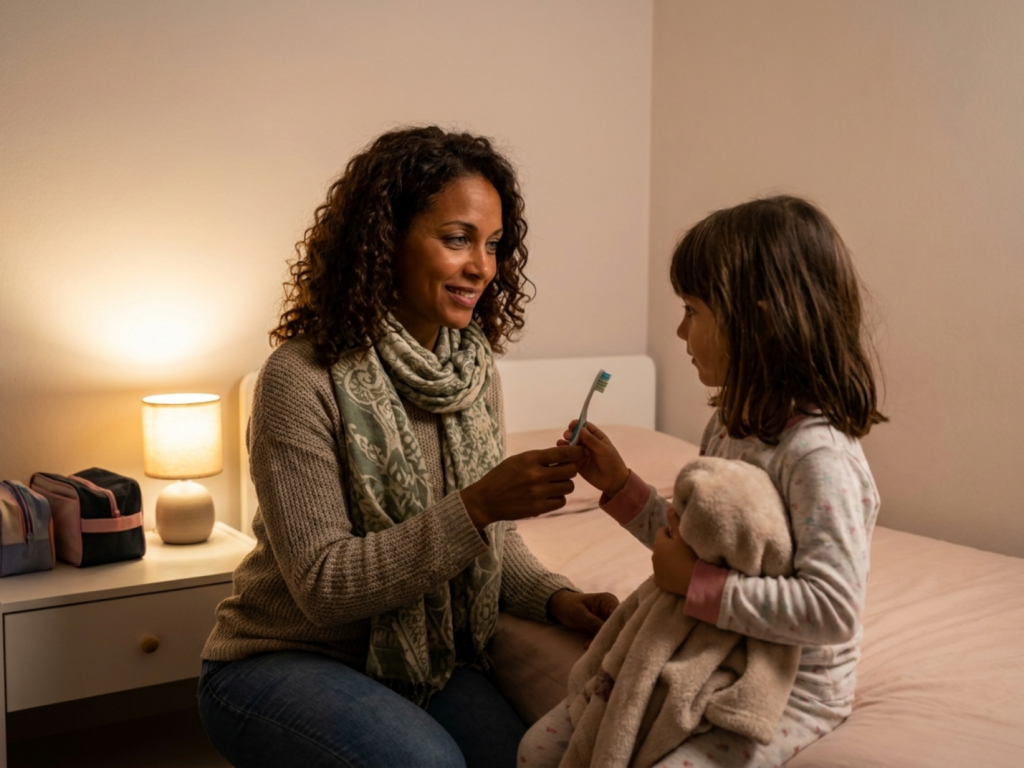
Intro
Sleepovers can be exciting, and they can also be a little daunting for children who feel safest with familiar cues at bedtime. A change of house, noises, light levels, bedding, and routines can all affect how a child settles. That does not mean a sleepover is a problem; it usually means the child needs a thoughtful plan.
Bedtime works best when the brain can predict what comes next. Research on bedtime routines describes them as repeated pre-sleep behaviors that help children wind down, and practical guidance from child health services emphasizes keeping the routine calm, consistent, and as familiar as possible. With a little preparation, a child can often enjoy time away from home and still sleep reasonably well.
Highlights
A short, familiar bedtime routine usually works better than trying to recreate every detail of home.
Packing comfort items and clear written instructions can reduce uncertainty for both the child and the host family.
A screen-free wind-down period is often helpful because screens can make it harder for children to settle.
Children with medical needs, sensory sensitivities, or significant anxiety may need a more detailed plan before an overnight stay.
If a child regularly snores loudly, has witnessed pauses in breathing, or seems unusually sleepy, a clinician should assess them.
Why familiar routines matter
Children do not need a perfect bedtime ritual to sleep well, but they do tend to sleep more easily when the steps before bed are predictable. The value of a bedtime routine is partly behavioral and partly physiological: repeated cues, such as washing, brushing teeth, reading, and lights dimming, help shift the body from active daytime alertness toward sleep. That shift can be harder in an unfamiliar home, where the child may also be adjusting to new people, sounds, and expectations.
For that reason, it helps to keep the routine simple and stable. Children usually cope better with a short, familiar sequence than with a long plan that is hard to repeat away from home. If the child usually has a bath, story, song, and a final goodnight phrase, keep the core elements and leave out anything that depends on being at home. The goal is not perfection. The goal is a reliable signal that bedtime is safe, calm, and approaching.
Preparing before the sleepover
Preparation often matters more than the sleepover itself. A child who knows where they are going, who will be there, and what bedtime will look like is less likely to feel blindsided at night. If possible, speak with the host family beforehand and explain the child’s usual bedtime routine, any fears, food needs, allergies, medicines, or sleep-related quirks. A few practical details can prevent stress later, especially if the child wakes in the night or needs comfort quickly.
A helpful approach is to talk through the evening in advance. For younger children, you might use a picture-based or verbal preview of the night. For older children, a brief conversation about where they will sleep, when lights go out, and how to ask for help may be enough. If the child has anxiety, sensory sensitivities, or routine-related distress, practicing a short overnight visit with a trusted relative can build confidence before a full sleepover.
- Share a written bedtime summary with the host family.
- Explain any medicines, inhalers, allergy plans, or emergency contacts.
- Review the child’s usual wake-up habits and any night-time comforts.
- Agree on how the child can ask for help without embarrassment.
What to pack for comfort and safety
Small, familiar items can make a big difference. A favourite blanket, soft toy, pillowcase, or sleep shirt can provide sensory continuity and help the child feel connected to home. Many children also settle better when they have their usual toothbrush, pyjamas, and any bedtime products they use every night. If the host home is busy or noisy, a night light or white-noise option may help some children, but only if it is already familiar and the child likes it.
It is also wise to pack with safety in mind. Younger children may need a sleeping surface that is appropriate for their age and developmental stage, and families should think about hazards such as cords, small objects, stairs, pets, or open windows. If the child has a medical condition, include everything needed for the night and make sure the host knows what to do in an urgent situation. A clear list is often more useful than trying to explain everything from memory.
- Comfort item from home, if the child uses one.
- Pyjamas, toothbrush, and any usual nighttime items.
- Written instructions for medicines or emergency care.
- Extra clothing and any sleep-related supplies the child may need.
Keeping the evening calm and screen-free
A child away from home often needs even more structure, not less, in the hour before sleep. A calm evening routine gives the nervous system time to downshift. That means fewer surprises, less stimulation, and fewer decisions once the bedtime sequence has started. In many families, a screen-free bedtime routine is a helpful part of this process because screens can increase alertness, delay sleep onset, and make it harder for children to switch off.
Try to preserve the basic shape of the usual evening routine for children. The sequence might be something like an evening snack, toothbrushing, a quiet story, a short chat, and then lights out. Keep the steps brief and predictable. If the child is older and wants a little independence, that can still fit within a consistent bedtime sequence. The important thing is that the child knows what happens next and does not need to negotiate each step. Predictability lowers friction and helps bedtime feel less like a performance and more like a familiar cue for sleep.
This is one reason many families find predictable family routines useful even outside the home. The child carries the habit, not the house.
Making the sleep space feel safe
The physical environment matters. Children often sleep best when the room is quiet, not too warm, and arranged in a way that feels orderly. Where the child sleeps should be age-appropriate and safe, with clear attention to the surfaces they use, the path to the bathroom, and any objects that could be a hazard in the dark. For some children, a familiar placement of the pillow or blanket is reassuring because it restores a sense of bodily orientation in a new place.
If the child is sharing a room, speak openly about privacy and night-time expectations. Some children fall asleep easily in a group setting; others need a little extra reassurance. It can help to identify one adult who is responsible for responding if the child wakes, feels frightened, or needs the bathroom. If a child has a history of night wakings, enuresis, or medical equipment use, those details should be planned for before bedtime rather than improvised after everyone is tired.
When the environment is safe and predictable, a child is more likely to tolerate the novelty of the sleepover and less likely to get caught up in the uncertainty of the room itself.
When to involve extra support
Some children need more than the usual sleepover plan. If a child has asthma, epilepsy, diabetes, significant allergies, severe eczema, developmental differences, or a history of panic at bedtime, it is sensible to discuss the overnight stay with the child’s healthcare professional beforehand. That is not because sleepovers are forbidden; it is because the family may need a more detailed safety plan, medication schedule, or emergency response pathway.
It is also worth seeking medical advice if the child snores loudly on most nights, has witnessed pauses in breathing, gasps during sleep, or seems excessively tired during the day. Those features can suggest sleep-disordered breathing and deserve proper assessment. Likewise, if bedtime distress is frequent, intense, or getting worse, the issue may be broader than the sleepover itself. A pediatrician, family doctor, sleep specialist, or child psychologist can help distinguish normal adjustment from a pattern that needs support. The most helpful next step is usually careful assessment, not guesswork.
For some children, a brief bedtime note, a visual schedule for children, or an extra check-in from home is enough. For others, the right plan may include a slower transition, a shorter visit, or a clinician-guided approach to anxiety and sleep.
When to be careful
- Do not force a child to stay if they are very distressed, unwell, or unsafe.
- Get a medical plan in advance if the child uses medicines, inhalers, insulin, seizure rescue treatment, or has severe allergies.
- Seek assessment if there is loud habitual snoring, witnessed breathing pauses, or unusual daytime sleepiness.
- Be extra cautious with toddlers and younger children in unfamiliar sleeping spaces.
- Avoid last-minute changes that make bedtime unpredictable.
Tools & Assistance
- A one-page sleepover checklist for packing and bedtime steps
- A short written note for the host family with medicines and emergency contacts
- A comfort item from home such as a blanket, pillowcase, or soft toy
- A pre-agreed check-in plan for the first night away from home
FAQ
Should a sleepover bedtime be the same as bedtime at home?
As close as practical is usually best, but a slightly shorter and simpler routine often works better away from home.
What if my child wants to call home at bedtime?
A brief planned check-in can help, especially for first sleepovers. Try to keep it short so it supports settling rather than extending bedtime.
Are screens okay before bed during a sleepover?
It is usually better to keep the pre-sleep period screen-free, because screens can make it harder for children to wind down.
What if my child has medical needs or takes night medicines?
Tell the host family in advance and review the plan with your child’s healthcare professional if anything about the overnight stay is complex.
Sources
- Sydney Children’s Hospitals Network — Sleeping away from home (sleep overs)
- NHS — Sleep and young children
- PubMed Central / NIH — A Comprehensive Assessment of Bedtime Routines and Strategies ...
Disclaimer
This article is for general information only and does not replace advice from a pediatrician or other qualified healthcare professional. If a child has medical needs, significant anxiety, or sleep symptoms, please seek individualized guidance.


















Please log in to leave a comment.