
Intro
An evening routine is the predictable bridge between a busy day and restorative sleep. For children, that bridge is not only practical; it also supports emotional regulation, family connection, oral health, and the circadian cues that help the brain prepare for sleep.
Highlights
A consistent evening routine can improve sleep duration, reduce night wakings, and make bedtime feel safer and more predictable.
The most effective routines are usually short, calm, repeatable, and matched to the child’s developmental stage.
Helpful components include toothbrushing, pajamas, reading, calming interaction, screen avoidance, and a consistent bedtime.
Persistent snoring, breathing pauses, severe anxiety, pain, or major sleep disruption should be discussed with a healthcare professional.
Why an evening routine matters
An evening routine for children is a repeated sequence of activities that helps the nervous system shift from alert daytime functioning to sleep readiness. Research on bedtime routines in young children links consistent routines with longer sleep duration, fewer night wakings, improved caregiver-reported sleep quality, and better emotional-behavioral regulation. The effect appears to be dose-related: the more consistently the routine is used, the more benefit families often see.
This makes sense biologically. Children depend heavily on external cues to organize behavior. Predictable routines reduce decision load, lower uncertainty, and create stable associations between specific actions and sleep. In developmental terms, routines are a form of co-regulation: the adult lends structure, calm tone, and timing until the child gradually internalizes the pattern. Over time, this can support child self-regulation skills such as waiting, transitioning, tolerating small frustrations, and settling the body.
An evening routine is not a guarantee that every child will fall asleep quickly. Temperament, neurodevelopmental profile, family stress, illness, medication effects, pain, and sleep disorders all influence bedtime. Still, a routine gives parents a practical, non-pharmacological foundation. It also helps separate behavioral bedtime resistance from possible medical concerns, because the family can observe what happens when sleep hygiene and predictability are already in place.
Core elements of a healthy evening routine
Most children do best with three to six repeated steps, completed in the same order most nights. The routine does not need to be elaborate. In fact, a routine that is too long may become difficult to maintain or may give a child more opportunities to negotiate. A useful target is about 20 to 30 minutes for the final bedtime sequence, after the household has already begun to quiet down.
Evidence-informed components include:
- Consistent bedtime: a stable bedtime helps align sleep pressure and circadian rhythm. Weekend variation may be unavoidable, but large shifts can make Monday mornings harder.
- Toothbrushing: oral hygiene before sleep reduces the time teeth are exposed to fermentable carbohydrates overnight. After brushing, water is usually preferable to milk, juice, or sweet drinks unless a clinician has advised otherwise.
- Pajamas and toileting: these simple cues mark the transition from daytime to nighttime and reduce later disruptions.
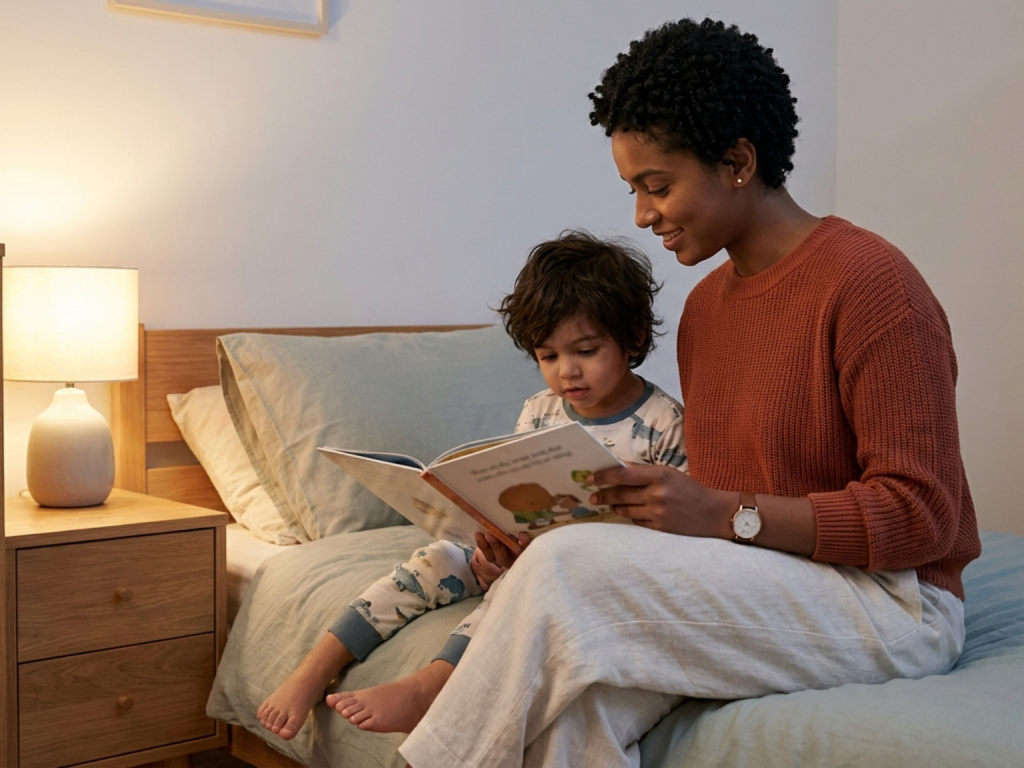
- Book reading: shared reading provides language exposure, closeness, and a low-arousal activity. It is often more sleep-compatible than active play.
- Calming connection: cuddling, quiet conversation, a song, prayer, breathing practice, or a brief gratitude ritual can meet a child’s emotional need for closeness before separation.
- Screen avoidance: phones, tablets, gaming, and fast-paced videos can delay sleep through cognitive stimulation, emotional arousal, and light exposure.
The best bedtime routine is one the family can repeat even on imperfect evenings. A calm, predictable version done most nights is usually more effective than a complex ideal routine done only occasionally.
Timing, sleep pressure, and the evening environment
Start the routine before a child is overtired. Overtired children may look hyperactive, silly, irritable, or oppositional because fatigue can impair executive function and emotional control. If bedtime regularly becomes chaotic, the first adjustment is often to move the wind-down earlier by 10 to 15 minutes for several nights and observe the response.
The wider evening environment matters as much as the final steps. Bright lights, loud television, vigorous play, conflict, and unfinished homework can all increase physiological arousal. A helpful pattern is to gradually reduce stimulation across the last hour of the day. This may include dimmer lighting, quieter voices, slower activities, and fewer choices.
Sleep hygiene also includes the bedroom. Many children sleep best in a dark or dim room, with a comfortable temperature and minimal noise. Some need a night-light for fear reduction; if so, a low, warm light is usually less disruptive than a bright overhead light. A consistent sleep space supports associative learning: the bed becomes linked with sleep rather than play, screens, or prolonged negotiation.
Food and drink timing should be individualized but sensible. Heavy meals, sugary snacks, caffeinated drinks, and large volumes of fluid close to bedtime may interfere with comfort, sleep onset, or overnight toileting. If a child genuinely needs a snack, parents can choose a small, predictable, non-caffeinated option and place it before toothbrushing so the routine remains consistent.
Making the routine emotionally safe
Many bedtime struggles are not deliberate misbehavior. Bedtime involves separation, darkness, reduced stimulation, and less parental availability. For a child with anxiety, sensory sensitivity, trauma history, or a recent family change, this transition can feel genuinely threatening. A supportive routine acknowledges the emotion while still holding the boundary.
Useful language is calm and brief: “You are safe. It is sleep time. I will check on you in five minutes.” Repeating the same words can be more regulating than long explanations. For children who repeatedly call out, planned check-ins may work better than waiting until distress escalates. The adult returns predictably, offers brief reassurance, and avoids restarting the whole routine.
Connection before correction is especially important. A child who feels rushed through bedtime may seek more contact through stalling. Ten minutes of full attention, such as reading, cuddling, or talking about the day, can reduce later bargaining. For some families, a “worry time” earlier in the evening helps. The child can name concerns, draw them, or place them in a worry box before the final bedtime routine begins.
Parents also deserve compassion. Evening is often when adult fatigue is highest. If a caregiver becomes angry, the nervous system of the child may become more activated, and bedtime can take longer. When possible, parents can simplify the routine, divide tasks between caregivers, or prepare pajamas, books, and school items earlier in the day.
Age and developmental adaptations
A routine should grow with the child. Toddlers often need a highly concrete sequence: bath, pajamas, brush teeth, two books, song, lights out. A bedtime visual schedule for toddlers can reduce repeated verbal prompting because the child can see what comes next. Choices should be limited: “blue pajamas or striped pajamas” works better than an open-ended negotiation.
Preschool children may enjoy small responsibilities, such as choosing the book or turning on the night-light. They also may test limits because imagination and fears are expanding. Consistent responses matter more than perfect words. If a child learns that asking for one more story leads to three more stories, the routine becomes less predictable.
School-age children usually benefit from more autonomy. Bedtime routines school age kids may include packing the school bag, laying out clothes, independent reading, and a brief parent check-in. Homework and emotionally intense conversations should ideally not be left until the last minutes before sleep. If worries appear at night, a written list for tomorrow can reduce the feeling that the child must solve everything in bed.
Neurodivergent children, including some children with autism spectrum disorder, ADHD, sensory processing differences, or intellectual disability, may need more explicit structure and environmental adaptation. This can include visual timers, sensory-friendly pajamas, predictable lighting, reduced noise, deep-pressure input if the child likes it, or a longer decompression period. Families should avoid using sleep supplements or medications without clinical guidance, particularly when a child has coexisting medical conditions or takes other medicines.
Common obstacles and practical troubleshooting
If bedtime is repeatedly difficult, look for the pattern rather than blaming the child or parent. Is the routine starting too late? Is the child falling asleep in the car after school? Are screens ending abruptly? Is hunger, reflux, eczema itch, constipation, pain, or medication timing contributing? Small adjustments can be powerful when they address the actual trigger.
For screen-related conflict, it helps to make the rule external and predictable: devices charge outside the bedroom at the same time every night. A screen-free bedtime routine should not feel like a sudden punishment. Replace the screen with a specific alternative, such as audio stories, drawing, Lego cleanup, reading with a parent, or quiet music.
For repeated requests after lights-out, parents can try a “bedtime pass” system: the child receives one card for a legitimate extra request, such as one hug or one question. After it is used, the routine is over. This can reduce endless negotiations while still giving the child a sense of control.
For siblings sharing a room, staggered bedtimes may be necessary, especially if one child is younger or more easily stimulated. A quiet activity for the older child can protect the younger child’s sleep onset. Families living in crowded or noisy housing may need practical compromises, such as white noise, a consistent sleep corner, or household quiet rules after a certain time.
If a routine has been inconsistent, change gradually. Choose two non-negotiable anchors first, such as toothbrushing and reading, then add a consistent bedtime. Celebrate cooperation, not speed alone. Children often need several weeks of repetition before a new evening pattern feels automatic.
When to seek professional advice
Even the best routine cannot treat every sleep problem. Parents should consult a pediatrician or qualified healthcare professional if a child has loud habitual snoring, gasping, witnessed pauses in breathing, restless sleep with daytime impairment, severe insomnia, frequent nightmares with distress, symptoms of anxiety or depression, unusual movements during sleep, seizures, chronic pain, poor growth, or significant behavioral deterioration.
Sleep-disordered breathing is particularly important to consider because it may present as snoring, mouth breathing, restless sleep, morning headaches, inattention, hyperactivity, or learning difficulties rather than obvious sleepiness. A clinician can assess whether further evaluation is needed. Similarly, iron deficiency, asthma, allergic rhinitis, reflux, eczema, and certain medications can affect sleep and deserve individualized medical review.
Parents should also seek help if bedtime has become unsafe, such as escalating aggression, self-injury, or caregiver exhaustion that feels unmanageable. Support may include pediatric assessment, behavioral sleep consultation, mental health care, occupational therapy for sensory needs, or family support services. Asking for help is not a failure; it is often the most protective step for both the child and the caregiver.
Medical and safety cautions
- Seek medical advice for habitual loud snoring, breathing pauses, gasping, or persistent mouth breathing during sleep.
- Do not give melatonin, sedating antihistamines, herbal products, or sleep medications without guidance from a healthcare professional.
- Discuss severe bedtime anxiety, self-harm statements, aggression, or major family distress with a pediatric or mental health professional.
- Persistent pain, itching, reflux symptoms, asthma symptoms, seizures, or unusual night movements need individualized clinical assessment.
- Avoid using screens, food, or threats as the main method to force sleep; these can worsen long-term bedtime associations.
Tools & Assistance
- Create a simple visual evening schedule with 3 to 6 steps.
- Set a household screen-off time and charge devices outside the bedroom.
- Prepare pajamas, toothbrush, books, and school items before the routine begins.
- Track bedtime, wake time, night wakings, snoring, and daytime behavior for one to two weeks if problems persist.
- Consult a pediatrician, pediatric dentist, sleep clinic, or child mental health professional when symptoms suggest more than routine resistance.
FAQ
How long should a child’s evening routine be?
For many children, the final bedtime routine works best at about 20 to 30 minutes. Some children need a longer wind-down before that, especially if they are sensitive, anxious, or very active.
Is a bath necessary every night?
No. A bath can be calming for some children, but it is not essential. The key is a repeatable sequence that helps the child settle and includes hygiene such as toothbrushing.
What if my child keeps asking for one more thing?
Use predictable limits. Meet essential needs before lights-out, then offer brief reassurance without restarting the routine. A planned check-in or bedtime pass may help some families.
When should screens stop before bed?
Many children benefit from stopping screens at least 30 to 60 minutes before bedtime. The exact timing can be adjusted, but devices should ideally stay out of the sleep space.
Can an evening routine fix all sleep problems?
No. Routines are helpful, but persistent insomnia, snoring, breathing pauses, severe anxiety, pain, or unusual nighttime behaviors should be reviewed by a healthcare professional.
Sources
- National Center for Biotechnology Information (NCBI) / National Institutes of Health (NIH) — Benefits of a bedtime routine in young children: Sleep, development and wellbeing
- University of Manchester — Study defines ideal children's bedtime routine
- National Sleep Foundation — Bedtime Routines for Children
Disclaimer
This article is for general educational information and does not replace medical diagnosis or treatment. Consult a qualified healthcare professional for persistent sleep problems, breathing concerns, medication questions, or significant distress.
















Please log in to leave a comment.