
Intro
Preteens are old enough to notice trends, compare routines, and ask for products that seem sophisticated, but their skin, bodies, judgment, and risk perception are still developing. Product mistakes at this age are often well-intentioned: a child wants clearer skin, better hair, a pleasing scent, or the confidence that comes from fitting in.
This article focuses on common preteen product mistakes, especially skin-care and cosmetic choices, and how families can respond without shame. The goal is not to ban curiosity, but to create safer, simpler routines and know when professional guidance is needed.
Highlights
The most common preteen product mistakes are usually excess, not neglect: too many products, too many active ingredients, and too much influence from social media routines.
Preteen skin can be more vulnerable to irritant dermatitis, allergic contact dermatitis, barrier disruption, and photosensitivity when adult cosmetic actives are used casually.
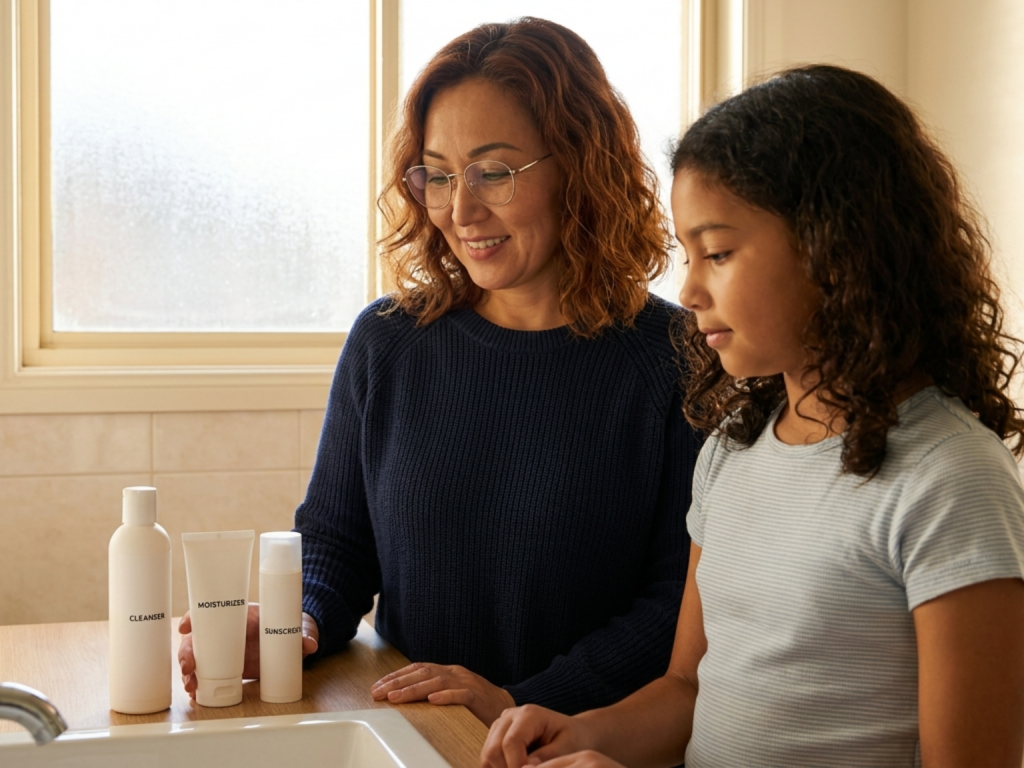
A simple routine, typically gentle cleansing, moisturizer, and broad-spectrum sunscreen, is often safer than a multi-step regimen unless a clinician advises otherwise.
Supportive conversations work better than ridicule; preteens need help separating marketing, peer pressure, and medical need.
Why preteen products deserve extra caution
Preteens, often around ages 9 to 12, occupy an awkward product category. They may no longer want products that look childish, yet many adult products are formulated for concerns they do not have: photoaging, collagen loss, deep hyperpigmentation, chronic acne, or mature skin texture. The mismatch matters because the stratum corneum, sebaceous activity, immune reactivity, and grooming habits of a preteen are not the same as those of an adult.
A major mistake is assuming that because a product is sold over the counter, it is automatically appropriate for a child. Cosmetic products may contain pharmacologically active ingredients such as hydroxy acids, salicylic acid, retinoid-like compounds, strong surfactants, and botanical sensitizers. These can be helpful in selected situations, but in a preteen using several products at once, they may produce irritant contact dermatitis, allergic contact dermatitis, peeling, stinging, and increased ultraviolet sensitivity.
The emotional context is just as important. A preteen asking for serum or exfoliating pads may be trying to manage embarrassment, peer comparison, or the feeling that their body is changing too fast. Families can validate the feeling while still setting limits: curiosity is normal, but young skin does not need an adult anti-aging routine.
Mistake 1: building a social media-sized skin-care routine
Multi-step routines are one of the clearest preteen product mistakes. Research and expert commentary have highlighted that girls in this age range may use many facial products, sometimes with multiple potentially irritating active ingredients in a single routine. The problem is cumulative exposure. A cleanser with fragrance, a toner with acid, a serum with vitamin C, a moisturizer with botanical extracts, and an exfoliating mask may each seem mild alone, but together they can overwhelm the skin barrier.
Barrier disruption often presents as tightness, burning, redness, itching, roughness, flaking, or a sudden inability to tolerate products that were previously comfortable. Some preteens misinterpret this as evidence that their skin is dirty or needs stronger treatment, so they add more products. This cycle can worsen inflammation and may aggravate acneiform eruptions.
A safer approach is a minimal baseline routine. For many preteens, that means a gentle cleanser when needed, a non-comedogenic moisturizer if the skin feels dry, and daily broad-spectrum sunscreen. If there is a specific concern such as persistent acne, eczema, severe dryness, or pigmentary change, it is better to seek medical advice than to layer multiple actives based on online recommendations.
Mistake 2: using adult anti-aging and exfoliating actives
Adult anti-aging products are often unnecessary for preteens because collagen production and dermal elasticity are generally robust at this age. More importantly, many of these products are not benign when used on young skin without supervision. Retinoids and vitamin A derivatives can cause retinoid dermatitis, with erythema, scaling, burning, and marked irritation. Some retinoid products are medications, and even cosmetic retinol-style products may be too aggressive for routine preteen use.
Exfoliating acids deserve similar caution. Glycolic acid, lactic acid, citric acid, and salicylic acid can reduce scale or oil in selected users, but repeated use may increase dryness, stinging, and sun sensitivity. Salicylic acid may be appropriate in some acne products, yet the concentration, frequency, body area, and the child’s other medical conditions matter. A preteen should not combine acid toners, exfoliating cleansers, peeling masks, and acne spot treatments simply because each product is marketed as skin-improving.
Families can use a practical rule: one active ingredient at a time, and only when there is a clear reason. If an active ingredient is needed, introduce it cautiously, avoid applying it to irritated or sunburned skin, and stop if significant burning, swelling, crusting, or worsening rash occurs. Medical input is advisable before using retinoids, strong acids, or products intended for adult anti-aging.
Mistake 3: ignoring fragrance, allergens, and long ingredient lists
Fragrance is a common source of trouble because it can act as an irritant or allergen, and it may be listed broadly rather than as individual scent chemicals. Preteens may be drawn to scented cleansers, body sprays, lip products, lotions, and masks because they feel fun and socially desirable. Unfortunately, fragranced products are also frequent contributors to contact dermatitis, especially when applied repeatedly to the face, eyelids, lips, underarms, or recently shaved skin.
Long ingredient lists are not automatically dangerous, but they increase the number of possible irritants and allergens. Botanical does not always mean gentle; essential oils, plant extracts, and “natural” fragrance blends can still sensitize the skin. The eyelids and lips are particularly reactive sites, and a child may not connect a rash around the eyes with a fragranced face mist or nail product used days earlier.
When choosing products, families can favor fragrance-free, dye-free, non-comedogenic options with short, understandable ingredient lists. “Unscented” is not always the same as “fragrance-free,” because masking fragrance may be added to hide odor. If a preteen has eczema, asthma, known allergies, or recurrent rashes, extra caution is reasonable, and a pediatrician or dermatologist can help identify whether patch testing or a simplified elimination routine is needed.
Mistake 4: treating normal puberty changes as product failures
Preteens may develop oilier skin, body odor, mild comedones, sweat changes, and new hair growth as puberty begins. These changes can be uncomfortable, but they are not automatically signs of poor hygiene or product failure. A child who believes every pore or bump is a flaw may scrub harder, wash more often, apply harsh acne treatments, or pick at skin, all of which can worsen inflammation.
Acne is especially prone to over-treatment. A preteen with a few clogged pores may use multiple acne washes, drying masks, alcohol-based toners, and spot treatments. This can produce irritant dermatitis that resembles worsening acne: redness, tenderness, peeling, and more visible bumps. The better first step is usually consistency with gentle cleansing and non-comedogenic products, while monitoring whether lesions are persistent, painful, scarring, or emotionally distressing.
Hygiene products also need balance. Deodorant may be appropriate when body odor appears, but strong antiperspirants, fragranced sprays, and repeated reapplication can irritate the axilla. Hair products can trigger forehead or back breakouts if oily or occlusive. Preteens benefit from simple explanations: puberty changes are expected, products should support comfort, and stronger is not the same as better.
Mistake 5: overlooking sunscreen and photosensitivity
Many preteen routines focus on serums and masks while missing the product with the strongest preventive value: sunscreen. Daily broad-spectrum sunscreen reduces ultraviolet exposure and is especially important if a child is using photosensitizing ingredients such as exfoliating acids or certain acne treatments. Even mild irritation can make sun exposure feel more intense, and sunburn can further damage an already compromised barrier.
Sunscreen selection should be practical. A preteen is more likely to use a product that feels comfortable, does not sting the eyes, and fits their activities. Mineral or chemical sunscreens can both be reasonable, but sensitive skin may tolerate some formulations better than others. The best sunscreen is one the child will use correctly and reapply during prolonged outdoor activity, sweating, or swimming.
Families should also avoid using sunscreen as permission to over-exfoliate. Sunscreen lowers risk, but it does not erase irritation from acids, retinoids, or harsh scrubs. If a product label warns about sun sensitivity, that is a signal to reconsider whether the product is necessary for a preteen at all.
Mistake 6: buying products without boundaries or shared routines
Product mistakes often happen when purchases are impulsive and unsupervised. A preteen may add items because a creator used them, because packaging looks appealing, or because friends are doing “hauls.” This is closely related to broader Preteen habits and routine challenges: executive function, peer influence, and emotional self-regulation are still developing, so a child may need external structure rather than unlimited choice.
A helpful strategy is a family product review. Keep only a few approved basics in the bathroom, store stronger products out of routine reach, and agree that new facial products require an adult check. This does not need to become a power struggle. Parents can say, “Let’s see what this is for, what active ingredients it has, and whether your skin actually needs it.”
It can also help to create a waiting period before buying trend-driven products. If the child still wants the item after a week, review the label together and compare it with what they already own. This teaches health literacy, marketing awareness, and self-advocacy. The goal is not perfect avoidance of every mistake; it is building a safer decision-making pattern before more potent adolescent and adult products enter the picture.
When to get professional help
Professional guidance is important when skin symptoms are severe, recurrent, or confusing. A pediatrician or dermatologist can help distinguish acne, eczema, perioral dermatitis, allergic contact dermatitis, infection, and other conditions that may look similar to families. They can also advise whether any active ingredient is appropriate for the child’s age, skin type, medical history, and symptoms.
Seek timely medical advice for facial swelling, blistering, weeping, crusting, intense pain, eye involvement, widespread rash, signs of infection, or a reaction after a new product that does not improve when the product is stopped. Also ask for help if acne is painful, leaving marks, causing scarring, or affecting mood and social participation.
Support matters. A preteen with irritated skin may feel embarrassed or guilty, especially if they used a product against advice. Responding calmly preserves trust and makes it more likely they will tell an adult next time. Product safety is not only about ingredients; it is also about communication, confidence, and knowing when expert care is the safest product of all.
Use extra caution if
- A product causes burning, swelling, blistering, crusting, eye symptoms, or rapidly worsening redness.
- A preteen is using retinoids, peeling acids, acne actives, or anti-aging products without clinician guidance.
- Rashes keep returning around the eyelids, lips, face, neck, underarms, or hands after cosmetic use.
- Acne is painful, scarring, widespread, or significantly affecting mood or school life.
- A child has eczema, known allergies, sensitive skin, or a history of strong reactions to topical products.
Tools & Assistance
- Keep a short product inventory with product name, purpose, and active ingredients.
- Use a two-week simplification plan: gentle cleanser, moisturizer if needed, and sunscreen while irritation settles.
- Ask a pediatrician, dermatologist, or pharmacist before introducing retinoids, acids, or medicated acne products.
- Check labels for fragrance-free, non-comedogenic, and age-appropriate wording rather than relying on social media claims.
- Take clear photos of rashes over time to share with a healthcare professional if symptoms persist.
FAQ
Does a preteen need a skin-care routine?
Usually only a simple one. Many preteens do well with gentle cleansing as needed, moisturizer for dryness, and daily sunscreen. Specific conditions such as acne or eczema may require clinician-guided care.
Are retinol or anti-aging products safe for preteens?
They are generally unnecessary and may irritate young skin. Retinoid-type products should not be used casually in children; ask a healthcare professional if there is a medical reason to consider them.
What should we do if a product causes redness or burning?
Stop the suspected product, avoid adding new actives, use gentle basic care, and seek medical advice if symptoms are severe, involve the eyes, blister, ooze, swell, or do not improve.
Is salicylic acid always bad for preteens?
Not always, but it should be used thoughtfully. It can irritate or dry the skin, especially when combined with other actives. A pediatrician or dermatologist can advise if it is appropriate.
How can parents set limits without shaming a preteen?
Validate the wish to feel confident, then review products together. Use language such as “your skin deserves gentle care” rather than “you are too young” or “you are being vain.”
Sources
- Northwestern University — TikTok teen skin-care routines are harmful
- Journal of Dermatology & Drug Therapy — Insights on the Sephora Kids Phenomenon
- University Hospitals — The Teen & Tween Skincare Craze: Harmless or Harmful?
Disclaimer
This article is for informational purposes only and does not diagnose, treat, or replace professional medical care. Consult a qualified healthcare professional for persistent symptoms, severe reactions, or product decisions involving medicated ingredients.















Please log in to leave a comment.