
Intro
Active play and organized sports help children build strength, coordination, cardiovascular fitness, confidence, and social skills. The right equipment cannot eliminate every injury, but it can reduce preventable risks and make movement more comfortable and enjoyable.
Choosing gear is less about buying the most expensive products and more about matching each item to the child, activity, environment, and level of supervision. Fit, condition, correct use, and adherence to recognized safety standards matter at least as much as brand names.
Highlights
Choose equipment designed for the specific activity rather than relying on general-purpose protective gear.
A properly fitted helmet, mouthguard, and other required protection should be comfortable enough for a child to wear consistently.
Replace damaged, outgrown, or poorly fitting gear promptly, especially equipment intended to protect the head.
Comfortable clothing, hydration supplies, sun protection, and visibility gear support safer participation as well as performance.
Ask a pediatrician, sports medicine clinician, coach, or qualified equipment specialist when a child has a medical condition, prior injury, or unusual equipment need.
Start with the activity, child, and setting
The best gear begins with a clear description of what the child will actually do. A helmet designed for bicycling is not automatically appropriate for football, equestrian activities, skiing, or ice hockey. Each sport exposes the body to different forces and fall patterns, so protective equipment should be designed and labeled for that activity. Follow the rules of the governing organization, school, club, or facility, and look for recognized safety certification where applicable.
Consider the child’s age, body size, coordination, experience, and willingness to use the equipment correctly. Children should be able to see, breathe, move their joints, and communicate while wearing protective gear. Equipment that is too heavy, restrictive, hot, or complicated may be removed during play, reducing its practical benefit. For families comparing age-appropriate activities for children, the same principle applies to gear: the item should match the child’s developmental abilities and the demands of the activity.
Also assess the setting. A child cycling on neighborhood streets may need visibility features, a well-maintained bicycle, and protection from traffic hazards. A child playing on a supervised field may need sport-specific padding, cleats, and a water bottle. A child at a pool or beach needs supervision and water-safety planning; flotation equipment is not a substitute for close, attentive adult supervision.
Make helmets the first safety priority
For activities with a meaningful risk of falls or collisions, use a helmet made for that activity and sized for the child. The American Academy of Pediatrics identifies bicycling, snow sports, ice skating, equestrian activities, and several other recreational sports as settings in which appropriate helmet use is important. A helmet is intended to reduce the likelihood or severity of some head injuries, but it cannot prevent every concussion or other injury.
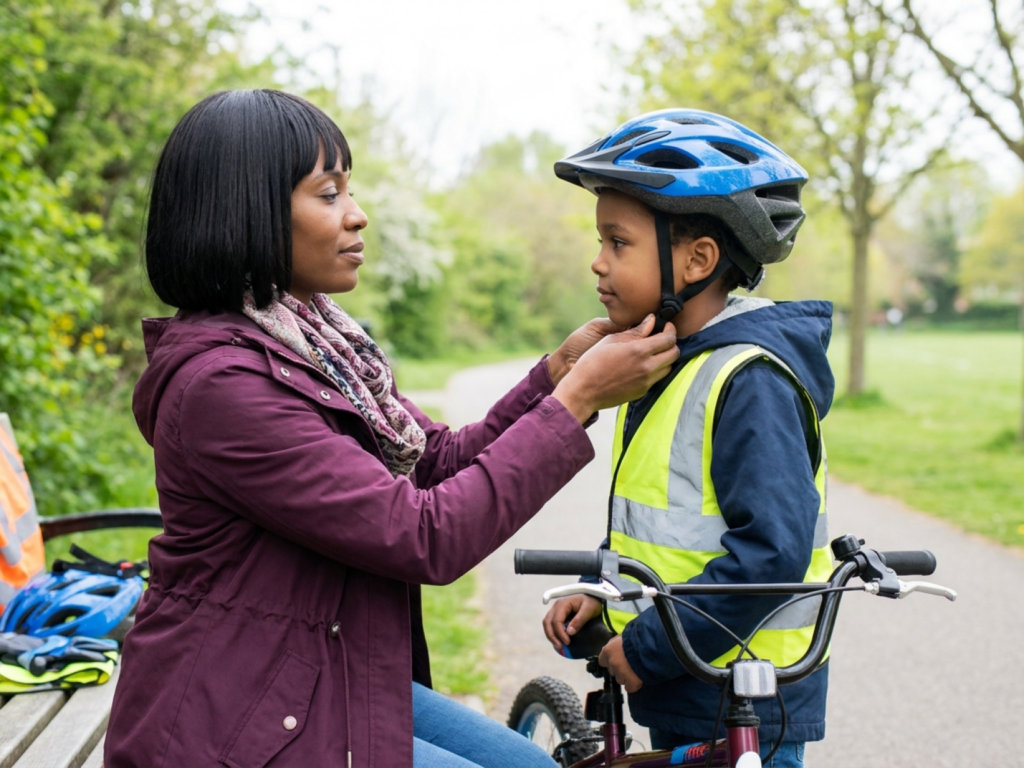
Fit should be checked each time a child receives a new helmet and periodically as the child grows. The helmet should sit level and low on the forehead, without blocking vision. Its retention straps should form a stable, comfortable configuration around the ears and under the chin. The child should be able to open the mouth comfortably without the chin strap becoming excessively loose. Follow the manufacturer’s fitting instructions rather than relying on appearance alone.
Replace a helmet after a significant impact, even if there is no visible damage, because internal protective materials may be compromised. Replace it when it is cracked, deformed, missing parts, or no longer fits. Do not buy a helmet that is too large for a child to grow into, and do not modify it with unapproved attachments. Used helmets require particular caution because their impact history may be unknown.
For younger children, adults should model consistent helmet use. A simple household rule—no riding or wheeled activity without the correct helmet—can be easier for children to remember than a long list of exceptions.
Choose protection for the specific sport
Sport-specific equipment should protect the body regions most likely to be injured without interfering with movement. The exact requirements vary by activity, age group, and local rules, but a practical checklist includes the following:
- Cycling, scooters, and skating: Use an activity-appropriate helmet. Depending on the activity and local guidance, wrist guards, knee pads, elbow pads, and reflective or high-visibility elements may improve protection and awareness. Check that wheels, brakes, fasteners, and footwear are also in safe working order.
- Football, hockey, lacrosse, and contact sports: Use the required certified helmet and padding, plus a mouthguard when recommended or required. Protective equipment should be fitted by knowledgeable staff when possible, particularly for head, shoulder, chest, hip, thigh, and lower-leg protection.
- Soccer, basketball, and field play: Well-fitting athletic shoes with appropriate traction can support stable movement. Children who need protective eyewear or other equipment should use products designed for sports rather than ordinary glasses or improvised substitutes.
- Baseball and softball: Use a certified batting helmet, athletic protective cup when appropriate, and required catcher’s equipment. Inspect helmets and face protection for cracks, loose padding, or damaged fasteners.
- Water activities: Use a properly fitted, activity-appropriate personal flotation device for boating and other situations in which it is required. Children should remain within close supervision; flotation devices do not make unsupervised water access safe.
- Equestrian and snow activities: Use a helmet specifically designed for the activity, along with clothing and footwear that support warmth, visibility, traction, and safe control.
Mouthguards can help protect the teeth, lips, cheeks, and tongue during activities with collision or contact risk. A mouthguard should remain in place without constant biting or adjustment. Dental or medical guidance can be helpful when a child has orthodontic appliances, jaw concerns, or difficulty tolerating a standard design.
Prioritize fit, comfort, and growth
Children grow quickly, but buying an oversized protective item is not a safe way to plan ahead. A properly sized item should stay positioned during ordinary movement and should not create pressure points, slipping, restricted breathing, or impaired vision. Have the child try gear on while wearing the clothing and footwear used for the activity. Check that fasteners close securely and that the child can perform basic movements such as bending, turning, jumping, or gripping.
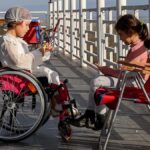
Growth and body changes can alter fit between seasons. Recheck helmets, shoes, shin guards, chest protectors, and mouthguards before each new sports session. Some equipment is adjustable, but adjustment has limits; a product that has reached its maximum setting may need replacement. Children with limb differences, chronic health conditions, sensory sensitivities, braces, or mobility needs may require adaptive equipment or individualized fitting rather than a standard product.
Comfort is a safety feature. Moisture-wicking layers, properly cushioned socks, breathable fabrics, gloves suited to the temperature, and shoes that do not cause pain can reduce distractions and premature fatigue. Avoid clothing with loose cords or dangling elements around moving equipment. For children with asthma, allergies, diabetes, seizure disorders, or other medical needs, families should follow the individualized plan provided by the child’s healthcare professional and ensure that responsible adults know what to do.
Support the whole activity, not only impact protection
Protective equipment is only one part of preparation. Active children also need practical gear that supports hydration, temperature regulation, visibility, and recovery. A refillable water bottle labeled with the child’s name is useful for school, practice, and outdoor play. During heat or prolonged activity, caregivers and coaches should provide regular opportunities for rest, shade, and fluids rather than waiting until a child reports intense thirst.
Sun protection may include a broad-spectrum sunscreen selected for the child’s age and skin needs, sun-protective clothing, a brimmed hat when compatible with the activity, and shaded breaks. In cold conditions, use layers that remain functional when wet and protect exposed extremities. Bright or reflective elements can improve visibility during low-light walking, cycling, and roadside activities, but they do not replace traffic awareness and supervision.
Children benefit from a brief, age-appropriate dynamic warm-up before vigorous sport, followed by a gradual increase in intensity. A warm-up might include easy movement, joint mobility, and activity-specific practice rather than painful stretching or exhaustive drills. Comfortable equipment should allow normal technique; persistent pain, limping, dizziness, breathing difficulty, unusual fatigue, or reduced coordination should prompt stopping the activity and seeking appropriate medical advice.
For families reviewing sports protective equipment for preteens, include the child in decisions about fit, comfort, and care. Participation improves when children understand why gear matters and can independently identify missing or damaged equipment.
Inspect, clean, and replace gear routinely
Make equipment checks part of the routine rather than an occasional response to a problem. Before use, look for cracks, tears, bent components, loose stitching, worn soles, missing padding, damaged buckles, and straps that no longer hold their adjustment. Examine bicycle and scooter brakes, wheels, handlebars, and reflectors as well as the child’s protective gear. Coaches or qualified technicians can assess specialized equipment when caregivers are uncertain.
Follow manufacturer instructions for cleaning and drying. Sweat, moisture, and dirt can affect comfort and may contribute to odor or material breakdown. Do not use harsh chemicals or heat unless the manufacturer permits them. Store helmets and padding away from extreme heat, direct sunlight, sharp objects, and heavy compression. Keep small replacement parts away from young children who might mouth or swallow them.
Record purchase dates for helmets and other safety-critical items, then check the manufacturer’s replacement guidance. Replacement is appropriate after a major impact, visible damage, substantial wear, or loss of fit. Secondhand gear can be economical, but its safety history, certification, and storage conditions must be known. When those details cannot be verified, new equipment is generally the safer choice for items that protect against impact.
If an injury occurs, do not use gear as a test of whether the child is ready to return. Possible concussion, significant pain, swelling, loss of function, breathing problems, or altered behavior should be evaluated according to medical guidance. Families can review resources about suspected concussion in children and discuss return-to-play decisions with a qualified healthcare professional.
Build a simple gear system children can manage
A manageable system reduces forgotten equipment and gives children increasing responsibility. Keep frequently used items together in a ventilated bag or designated storage area. Use a short checklist that includes the activity-specific helmet or protection, shoes, water bottle, weather gear, and any individualized medical supplies. Older children can learn to check straps, inspect for visible damage, and report discomfort; adults should still oversee safety-critical decisions.
Before enrolling in a new activity, ask the coach or facility for a written equipment list, required certification, fitting support, emergency procedures, and rules about jewelry, glasses, braces, or personal medical devices. A pediatrician, sports medicine clinician, physical therapist, athletic trainer, dentist, or occupational therapist may offer more individualized guidance when a child has a previous injury, disability, chronic condition, or persistent difficulty with standard gear.
The goal is not to equip children for every possible sport at once. Start with durable basics that match their actual activities, replace items as they grow, and maintain equipment consistently. This approach can protect safety, reduce unnecessary spending, and help active play remain positive rather than stressful.
Safety reminders
- Never use a helmet that has sustained a significant impact, even when damage is not visible.
- Do not substitute a bicycle helmet for a helmet designed for another sport.
- Protective equipment does not replace adult supervision, instruction, or safe facilities.
- Stop activity for concerning symptoms such as confusion, fainting, severe pain, breathing difficulty, or loss of coordination.
- Children with medical conditions or previous injuries may need individualized advice before starting or returning to sport.
Tools & Assistance
- A pre-activity checklist stored in the child’s sports bag
- A fitting appointment with a bicycle shop, sporting-goods specialist, or qualified coach
- A pediatric or sports medicine consultation for medical conditions or prior injuries
- A labeled, ventilated equipment bag with separate storage for wet clothing
- A seasonal inspection and replacement reminder on the family calendar
FAQ
Can my child use one helmet for every activity?
Usually not. Helmets are designed and tested for particular activities, so use the type specified for bicycling, snow sports, equestrian activities, contact sports, or other activities. Follow the manufacturer’s labeling and the rules of the program.
How do I know whether a helmet fits?
It should sit level, remain stable during movement, allow clear vision, and have comfortably adjusted straps. Use the manufacturer’s instructions or ask a qualified fitting professional. Replace it when it no longer fits or after a significant impact.
Is expensive gear always safer?
Not necessarily. Appropriate design, recognized safety certification, correct fit, intact materials, and consistent use are more important than price alone. A more expensive item is not beneficial if it is uncomfortable or unsuitable for the activity.
What should I do if my child reports pain during practice?
Stop the activity and assess the situation without encouraging the child to play through pain. Seek medical advice for persistent, severe, or recurrent pain, or for symptoms such as swelling, weakness, altered coordination, dizziness, or breathing difficulty.
Can secondhand protective equipment be safe?
It may be acceptable when the safety history, certification, age, storage, and condition are known. Avoid secondhand helmets or impact-protection equipment when prior impacts or damage cannot be ruled out.
Sources
- American Academy of Pediatrics — Helmet Use in Preventing Head Injuries in Bicycling, Snow Sports, and Other Recreational Activities and Sports
- Seattle Children’s — Safety Gear for Sports and Play
- Nemours KidsHealth — Sports & Exercise Safety
Disclaimer
This article provides general educational information and is not a diagnosis or a substitute for individualized medical advice. Consult a qualified healthcare professional for concerns about injury, medical conditions, equipment needs, or return to activity.










Please log in to leave a comment.