
Intro
Screen routines are the predictable family habits that guide when, where, why, and how children use digital media. They are not about perfection or shame; they are about helping children develop sleep-protective, socially connected, developmentally appropriate ways to live with technology.
Many parents feel pulled between educational apps, school platforms, video calls, games, and the real risks of excessive or poorly timed screen exposure. A useful screen routine blends boundaries with warmth, co-viewing, and flexibility, while leaving room for medical, developmental, and family-specific needs.
Highlights
Healthy screen routines focus on quality, timing, context, and child development, not only the number of minutes.
Screens are most disruptive when they displace sleep, physical activity, face-to-face interaction, reading, outdoor play, or emotionally responsive caregiving.
For younger children, co-viewing and high-quality content matter because children learn best through interaction, repetition, and adult narration.
A screen routine works best when adults model the same habits they ask of children, especially during meals, transitions, and bedtime.
What screen routines mean in childhood
A screen routine is a structured pattern for digital media use: when screens are available, what content is allowed, where devices are used, how long sessions last, and what happens before and after. For children, this predictability reduces negotiation fatigue and supports executive function, including impulse control, working memory, and transition planning.
The goal is not to remove every screen. Digital media may support learning, creativity, social contact, disability accommodations, telehealth, and family connection. The concern is unstructured, prolonged, solitary, or poorly timed use that crowds out biologically necessary activities. Children need sleep, movement, language-rich interaction, nutrition, imaginative play, and emotionally available adults for healthy neurodevelopment.
Medical and pediatric organizations increasingly emphasize a balanced approach. The American Academy of Pediatrics notes that there is no single universally safe screen time limit for every child; quality, content, co-viewing, communication, and balance are central. At the same time, age-specific screen time recommendations remain useful as guardrails, especially for younger children whose brains are rapidly developing and who learn primarily through human interaction.
Why routines matter for the developing brain and body
Excessive screen time has been associated in research with poorer language, motor, cognitive, and social outcomes, particularly when exposure starts early or replaces interactive play. Screen use may also be linked with sleep disruption, obesity risk, depressive symptoms, anxiety, and behavioral difficulties. These associations do not mean that every child who uses screens will develop problems, but they do support cautious, intentional routines.
Several mechanisms are plausible. Fast-paced content can increase arousal and make slower real-world tasks feel less rewarding. Background television may fragment play and reduce parent-child conversation. Blue-enriched evening light and emotionally stimulating content can delay melatonin signaling and bedtime readiness. Sedentary screen use can displace physical activity and may increase exposure to food marketing or mindless snacking.
Language development deserves special attention. Young children build vocabulary through contingent interaction: an adult notices what the child is looking at, responds, labels, waits, and expands. Passive video cannot reliably provide that reciprocal loop. For toddlers and preschoolers, co-viewing high-quality content is more supportive than handing over a device alone, because the adult can connect what appears on screen to the child’s real life.
Age-sensitive screen routines
Infants younger than 18 months generally benefit from avoiding screen time except video chatting with familiar people. This is not because a brief accidental exposure is dangerous, but because babies need direct sensory, motor, and relational experiences. Feeding, floor time, shared gaze, babbling exchanges, and sleep are more developmentally valuable than media.
For children 18 to 24 months, if screens are introduced, choose high-quality educational media and watch together. Keep sessions brief and avoid using screens as the default tool for distress. A toddler who always receives a phone during frustration may miss opportunities to learn co-regulation, naming feelings, waiting, and recovery with adult support.
For ages 2 to 5, many pediatric sources recommend no more than about one hour daily of high-quality programming, ideally co-viewed. Preschoolers are still developing symbolic thinking and emotional regulation. A short, predictable viewing window after outdoor play or quiet time is easier to manage than scattered access throughout the day.
For school-age children and adolescents, routines become less about a single number and more about function. Schoolwork, messaging, games, videos, and social media differ in purpose and effect. Families can protect sleep, meals, homework, movement, chores, and in-person relationships while allowing age-appropriate autonomy. A child daily routine by age can help families decide where screens fit without letting them dominate the entire day.
Building a practical family screen plan
A useful plan is specific enough to reduce conflict and flexible enough to survive real life. Start by listing the screens your child uses and why: school, entertainment, communication, creativity, calming, background noise, or babysitting during unavoidable tasks. Then identify the most vulnerable points in the day, such as mornings, meals, homework, car rides, and bedtime.
Many families do well with three categories:
- Screen-free times: meals, the first 30 minutes after waking, homework blocks unless needed, and the final hour before bed.
- Screen-free places: bedrooms overnight, dining areas, bathrooms, and sometimes the car for short trips.
- Screen-allowed windows: planned periods after responsibilities, physical activity, or connection have happened.
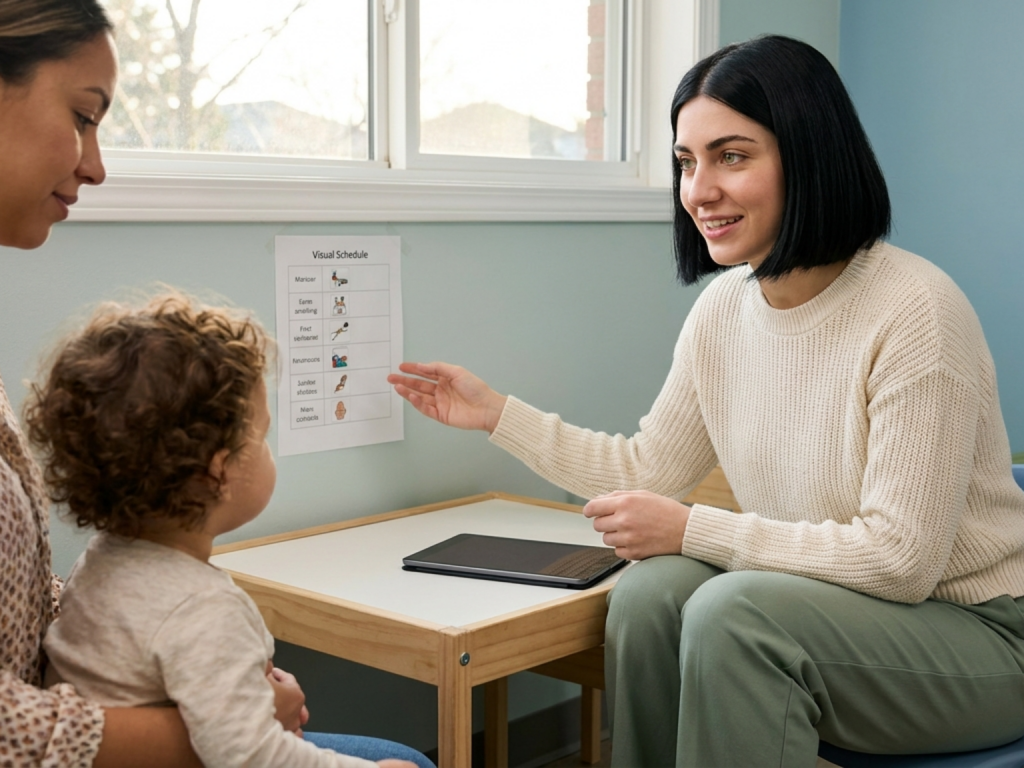
Use visible cues for younger children: a picture schedule, timer, or simple “first-then” statement. For example, “First pajamas and teeth, then one short episode with me, then books.” For older children, collaborate on rules, consequences, and exceptions. Children are more likely to cooperate when they understand the rationale: sleep quality, mood, attention, privacy, safety, and family connection.
Modeling is powerful. If adults scroll through dinner, answer messages during conversations, or sleep next to buzzing phones, children receive a competing lesson. A family charging station outside bedrooms makes screens out of bedrooms overnight a shared norm rather than a punishment.
Screens, sleep, and bedtime boundaries
Sleep is one of the most important reasons to create a screen routine. Evening screen use can delay sleep onset through light exposure, cognitive stimulation, emotional arousal, and “one more episode” reward loops. Poor sleep then worsens irritability, attention, impulse control, appetite regulation, pain tolerance, and school functioning.
A screen-free bedtime routine does not need to be elaborate. It may include a consistent device cut-off, charging devices outside the bedroom, dim lighting, hygiene, reading, quiet play, and a calming parent-child check-in. For children who resist, a predictable sequence matters more than a long lecture. Bedtime routines for children are often most successful when they are short, repeatable, and emotionally warm.
For adolescents, the issue is often social availability. Group chats, games, and social media can create fear of missing out and nighttime awakenings. Discuss notification settings, do-not-disturb modes, and privacy. If a teen needs a device for an alarm or diabetes technology, for example, problem-solve with their clinician or family rather than applying a rigid rule that ignores medical or practical realities.
Content quality and co-viewing
Not all screen time is equivalent. A video call with a grandparent, an accessible communication app, a slow educational program watched with a caregiver, a violent autoplay video, and late-night social media use have different developmental meanings. Quality includes pacing, age appropriateness, absence of manipulative advertising, emotional tone, educational value, and whether the child can discuss or apply what they see.
Co-viewing means more than sitting nearby. It involves naming, asking, pausing, explaining, and connecting screen content to real life. A parent might say, “The character is frustrated because the tower fell. What could she try?” This turns passive viewing into a language and social-emotional learning opportunity.
For older children, co-viewing may become co-discussion. Ask about algorithms, misinformation, cyberbullying, body image, advertising, and privacy. Avoid only interrogating or criticizing; curiosity keeps communication open. A supportive routine allows children to bring uncomfortable online experiences to adults without immediately fearing device confiscation.
Handling transitions, meltdowns, and resistance
Ending screen time is difficult because many platforms are designed to prolong engagement. Autoplay, rewards, bright colors, and social feedback activate attention and reward pathways. A child’s distress at stopping does not always mean addiction; often it reflects immature self-regulation plus a highly stimulating activity.
Plan the ending before the beginning. State the limit, use a timer the child can see, give a five-minute warning, and end at a natural stopping point when possible. Replace the screen with a concrete next activity: snack, bath, blocks, outdoor play, drawing, or helping with dinner. “Turn it off” is harder than “When this episode ends, we are putting the tablet to charge and choosing a puzzle.”
If meltdowns are frequent, reduce the intensity of content, shorten sessions, avoid screens when the child is hungry or exhausted, and keep limits consistent. Do not rely on screens as the only calming strategy. Children also need breathing games, movement, sensory tools, connection, and predictable family routines to build emotional regulation over time.
When to seek professional guidance
Screen struggles are common, but some patterns deserve additional support. Consider speaking with a pediatrician, developmental-behavioral clinician, psychologist, sleep specialist, occupational therapist, or school team if screen use is accompanied by major sleep impairment, declining school performance, persistent aggression around limits, loss of offline interests, anxiety or depressive symptoms, social withdrawal, or developmental concerns.
Medical caution is especially important when screens intersect with neurodevelopmental conditions, chronic illness, disability accommodations, feeding difficulties, trauma, or family stress. A child using a tablet for communication, motor access, or medical monitoring needs a different plan from a child using short videos for entertainment. The aim is individualized balance, not blanket judgment.
Parents should also seek help if they feel trapped in escalating conflict or shame. Screen routines are easier to change gradually than abruptly. Start with one high-yield change, such as devices outside bedrooms, a protected meal, or a predictable after-school window. Small, consistent shifts often produce more durable improvement than dramatic bans that families cannot maintain.
Seek advice promptly if
- Screen use is associated with persistent sleep loss, daytime sleepiness, or major school impairment.
- A child becomes repeatedly aggressive, panicked, or unsafe when devices are limited.
- There are concerns about language delay, social regression, depression, anxiety, or loss of offline interests.
- Online experiences involve bullying, exploitation, self-harm content, sexual content, or threats.
- A child depends on a device for medical, communication, or disability support and the family needs individualized guidance.
Tools & Assistance
- Create a written family media plan with screen-free times, screen-free places, and agreed exceptions.
- Use a shared charging station outside bedrooms for phones, tablets, and handheld gaming devices.
- Choose high-quality, age-appropriate media and co-view when possible, especially for young children.
- Ask your pediatrician or child psychologist for support if screen limits cause severe distress or functional impairment.
- Use device settings for bedtime modes, app limits, content filters, and disabled autoplay.
FAQ
Is all screen time harmful for children?
No. The developmental impact depends on age, content, timing, duration, context, and whether screens replace sleep, play, movement, learning, or relationships.
Should screens be allowed before bedtime?
It is usually best to avoid recreational screens in the final hour before sleep and to keep devices out of bedrooms overnight when possible.
What if my child needs screens for school?
Separate required educational use from recreational use. Protect breaks, posture, outdoor activity, meals, and sleep while meeting school expectations.
How can I reduce screen time without constant battles?
Start with one predictable rule, prepare transitions, offer an appealing next activity, and model the same boundary yourself.
When is professional help appropriate?
Seek guidance if screen use is linked with major sleep problems, aggression, anxiety, depression, developmental concerns, bullying, or unsafe online behavior.
Sources
- National Institutes of Health via PubMed Central — Effects of Excessive Screen Time on Child Development
- Children's Hospital of Orange County — The effects of screen time on children: The latest research parents should know
- American Academy of Pediatrics — Screen Time Guidelines
Disclaimer
This article is for informational purposes only and does not replace medical, developmental, or mental health advice. Consult a qualified healthcare professional for concerns about your child’s sleep, behavior, development, or safety.


















Please log in to leave a comment.