
Intro
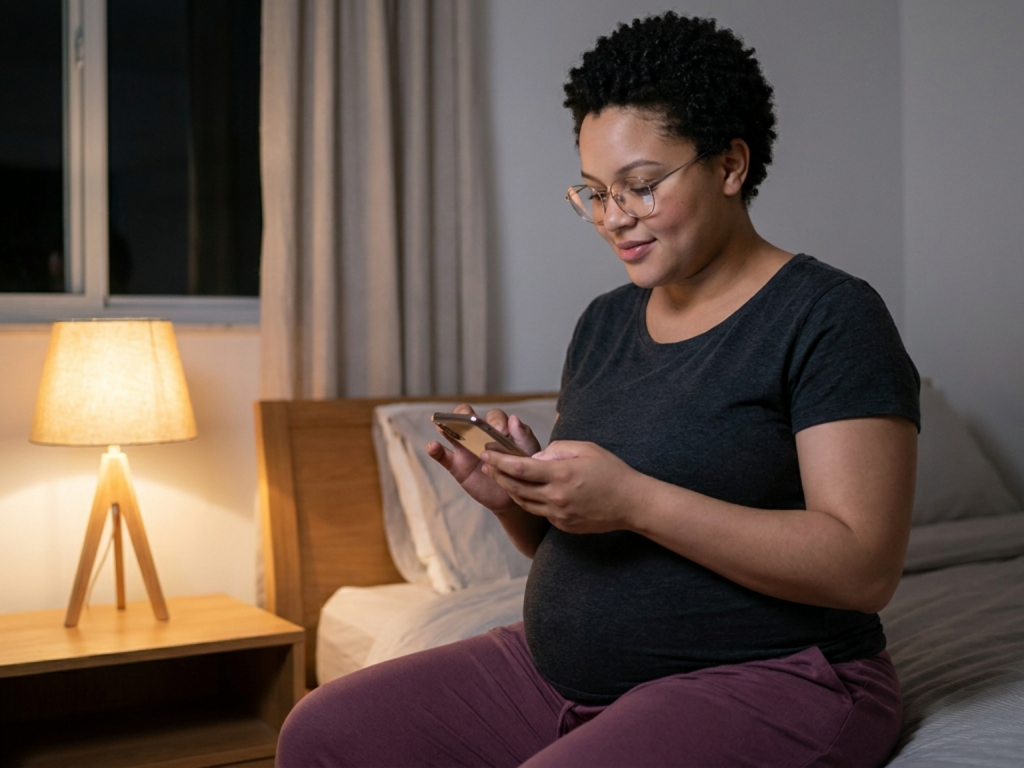
Many pregnant people notice that sleep becomes lighter, more fragmented, or harder to start as the evening goes on. Blue light from phones, tablets, computers, and some LEDs can add another layer to that challenge by signaling the brain to stay alert when the body is trying to wind down.
This article explains the biology behind blue light, what the research actually shows, and how to think about screen exposure in the broader context of pregnancy sleep. The goal is not to create fear about screens, but to help you understand where light matters, where other factors may be more important, and when it is worth discussing persistent sleep problems with a clinician.
Highlights
Blue light at night can suppress melatonin and shift the circadian clock later, which may delay sleep onset.
Pregnancy often makes sleep more fragile because of nocturia, reflux, discomfort, nausea, and mood changes, so even modest evening stimulation can matter.
The research most consistently links pre-bedtime device use with longer sleep latency, poorer sleep efficiency, and shorter total sleep time.
Practical changes such as dimming lights, shortening screen time before bed, and reducing stimulation can help without requiring a strict all-or-nothing approach.
How blue light affects the sleep-wake system
Blue light is the short-wavelength end of the visible spectrum. It is not inherently harmful in daytime; in fact, natural morning light helps anchor circadian timing and supports alertness. The issue arises when blue-enriched light is delivered late in the evening, after the brain has started to prepare for sleep.
Specialized retinal cells called intrinsically photosensitive retinal ganglion cells detect this light and send signals to the suprachiasmatic nucleus, the brain’s central circadian clock. That input helps suppress melatonin and can delay the internal signal that says it is time to sleep. Because of that, blue light may increase sleep latency, meaning it takes longer to fall asleep, and it can also reduce subjective sleepiness even when the body is tired.
Brightness and timing matter as much as color. A very bright white light late at night can be more disruptive than a dimmer source, even if both are technically present in the room. Screens also keep the mind engaged, so the sleep effect is often a combination of light exposure and cognitive activation.
Why pregnancy can make the effect feel stronger
Pregnancy changes sleep architecture and nightly comfort in ways that can make the system more vulnerable to small disruptions. Hormonal shifts, increased body temperature, reflux, pelvic pressure, nasal congestion, and more frequent urination all contribute to a lighter and more interrupted night. In that setting, blue light can act like the final nudge that keeps the brain awake a little longer.
This is one reason pregnancy sleep disruption often feels disproportionate to the amount of screen time involved. A few minutes of extra alertness may sound minor, but when sleep is already fragile, that delay can lead to a cascade: later sleep onset, fewer total hours in bed, and more fatigue the next day. Fatigue then makes bedtime routines harder to maintain, which can reinforce the cycle.
Pregnancy can also amplify sensitivity to stress and to conditioned arousal at bedtime. If scrolling, messaging, or late-night checking becomes paired with worry or anticipation, the bedroom can start to feel like a place for vigilance rather than rest. In that situation, reducing light alone may help less than changing the whole wind-down pattern.
What the evidence says about screens before bed
The best evidence comes from systematic reviews and meta-analyses of evening electronic device use. These studies generally find that blue-enriched light from phones, tablets, and similar devices can disturb sleep initiation, sleep maintenance, sleep efficiency, and total sleep time. In practical terms, people tend to fall asleep later, wake more during the night, or sleep less overall after late device use.
A separate review of blue light, sleep, performance, and wellbeing reports a similar pattern: blue light exposure is often associated with reduced tiredness, lower sleep quality, and shorter sleep duration. The findings are not perfectly uniform across every study or outcome, which matters. Some people are much more sensitive than others, and many studies cannot separate light effects from content, stress, or the habit of staying mentally active on a device.
That mixed picture does not mean the problem is imaginary. It means the size of the effect is usually modest rather than dramatic, and it is strongest when blue light is combined with long screen sessions, bright room lighting, and irregular bedtimes. For pregnant people, even a modest effect can matter if sleep is already being limited by other symptoms.
Practical ways to reduce evening exposure
Sleep hygiene for pregnant people is most useful when it is realistic. You do not need a perfect night routine, and you do not have to eliminate every screen to notice benefit. The goal is to lower stimulation at the time your brain is trying to shift into sleep mode.
- Dim overhead lights in the evening and use warmer, lower-intensity lamps when possible.
- Reduce screen brightness, keep devices farther from the face, and shorten the time spent on them before bed.
- Use a consistent wind-down routine that does not depend on scrolling, messaging, or work.
- If you need a phone nearby, consider limiting it to essential use rather than open-ended browsing.
- Try to get bright outdoor light earlier in the day, because daytime light helps strengthen circadian timing.
Night mode or blue-light filters may help, but they are usually only part of the solution. Lower brightness, less time on screen, and less mentally activating content tend to matter more than color adjustment alone. If evening device use is tied to work, caregiving, or anxiety relief, a clinician or therapist may help you build a plan that is kinder and more sustainable.
When blue light is not the whole story
It is easy to blame screens for every restless night, but pregnancy sleep disruption often has several contributors at once. Frequent urination, reflux, back pain, restless legs syndrome, nasal congestion, fetal movement, and anxiety can all fragment sleep independently of blue light exposure. If you reduce evening screens and still cannot sleep, that does not mean you have failed; it means something else may be driving the problem.
It is also worth noticing whether the issue is trouble falling asleep, staying asleep, or waking too early. Those patterns can point toward different causes. For example, restless legs symptoms often worsen at night, and sleep-disordered breathing can cause snoring, gasping, or unrefreshing sleep. In contrast, rumination and night worries in pregnancy may present as a racing mind even when the body feels physically comfortable.
Because the causes are often mixed, the most useful next step is not self-blame but pattern recognition. A brief sleep diary can help you and your care team see whether the main trigger is light, anxiety, pain, breathing symptoms, or something else. That information is especially helpful if insomnia is lasting more than a few weeks.
When to contact a healthcare professional
Persistent sleep problems deserve medical attention in pregnancy, especially if they are affecting daytime functioning, mood, blood pressure, or safety. The phrase sleep disturbances in pregnancy covers a wide range of issues, and some require assessment rather than lifestyle changes alone. Your obstetric clinician, midwife, or family doctor can help sort out whether the issue is likely to be behavioral, hormonal, respiratory, or related to iron deficiency or another condition.
Seek prompt advice if you have loud snoring, witnessed breathing pauses, severe daytime sleepiness, new panic symptoms, marked low mood, significant restless legs symptoms, or headaches that concern you. If you notice reduced fetal movement or other obstetric warning signs, contact your maternity team right away. The same is true if sleep loss is becoming unsafe, such as when you feel unable to drive, work, or care for yourself.
In many cases, clinicians can recommend non-drug approaches such as behavioral sleep strategies or further evaluation for underlying causes. The key is to treat blue light as one possible contributor, not the whole diagnosis.
When to seek medical advice
- Get prompt assessment for loud snoring, gasping, or witnessed breathing pauses during sleep.
- Do not assume persistent insomnia is only from screens if you also have pain, reflux, restless legs, or mood changes.
- Contact your maternity team urgently for reduced fetal movement or any obstetric warning sign.
- Ask for help if sleep loss is making it hard to function, stay safe, or manage daily tasks.
Tools & Assistance
- Discuss persistent insomnia or snoring with your obstetric clinician, midwife, or family doctor.
- Keep a one- to two-week sleep diary noting screen use, bedtime, awakenings, and daytime fatigue.
- Use dimmer bedside lighting and reduce screen brightness in the last hour before sleep.
- Build a non-screen wind-down routine, such as stretching, reading on paper, or quiet breathing exercises.
- Ask whether symptoms such as reflux, iron deficiency, or restless legs could be contributing to your sleep problems.
FAQ
Does blue light directly harm the pregnancy?
The main concern is its effect on your sleep and circadian timing, not direct fetal harm. Persistent sleep loss in pregnancy still deserves attention.
Is night mode enough to protect sleep?
It may help a little, but lowering brightness, shortening screen time, and reducing stimulation usually matter more.
Should I avoid all screens in the evening?
Not necessarily. A realistic reduction strategy is usually better than an all-or-nothing rule, especially if you need screens for work or family life.
When should I ask for medical help?
If insomnia is persistent, you snore or gasp, you are excessively sleepy during the day, or you are worried about mood, breathing, or fetal wellbeing, contact a clinician.
Sources
- SLEEP Advances — A systematic review and meta-analysis on the effects of electronic device use before bedtime on sleep and circadian rhythms
- Harvard Health Publishing — Blue light has a dark side
- PubMed Central — The influence of blue light on sleep, performance and wellbeing in the modern age
Disclaimer
This article is for educational purposes only and is not a substitute for individualized medical advice, diagnosis, or treatment. If you have persistent sleep problems or any pregnancy warning sign, please contact a qualified healthcare professional.
















Please log in to leave a comment.