
Intro
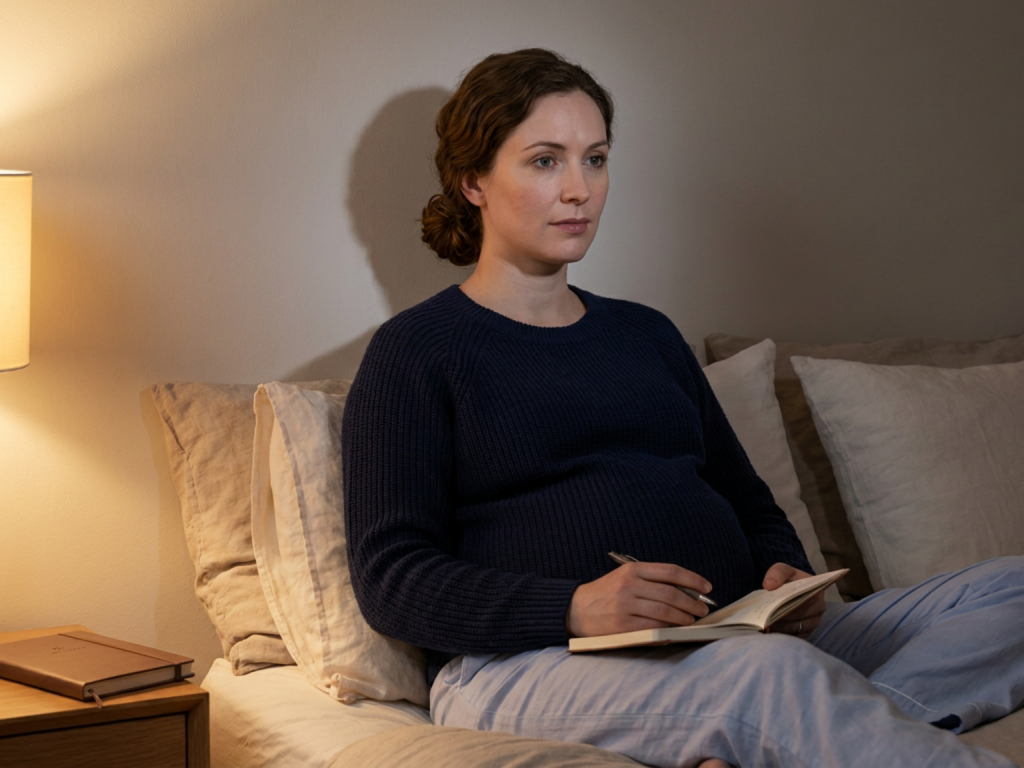
Pregnancy can make the night feel unusually loud. A quiet room may suddenly fill with thoughts about fetal wellbeing, upcoming birth, body sensations, parenting, finances, work, relationships, or whether a few hours of broken sleep will harm the baby. For many pregnant people, these worries are understandable responses to major physiological and emotional change. For some, however, bedtime itself becomes associated with dread, hypervigilance, and repeated difficulty falling or staying asleep.
Sleep anxiety is commonly described as fear, worry, or distress about sleep or bedtime. In pregnancy, it can overlap with insomnia, nocturnal panic-like symptoms, vivid dreams, nightmares, restless discomfort, reflux, frequent urination, and concerns about safe sleeping position. This article explains why night worries can intensify during pregnancy, how anxiety and sleep can reinforce each other, and what supportive, pregnancy-conscious steps may help while emphasizing when to involve a midwife, obstetrician, mental health clinician, or sleep specialist.
Highlights
Sleep anxiety is not simply “overthinking”; it can involve physiological arousal, conditioned fear of bedtime, racing thoughts, and avoidance of sleep-related situations.
Pregnancy can amplify night worries through hormonal changes, physical discomfort, fetal monitoring concerns, and anticipation of birth or parenting.
Poor sleep and anxiety can create a feedback loop: anxiety disrupts sleep, and sleep loss can lower emotional resilience the next day.
Non-drug approaches such as cognitive behavioral therapy for insomnia, tailored sleep hygiene, relaxation skills, and structured worry time are often first-line discussions in pregnancy.
Persistent insomnia, panic symptoms, intrusive thoughts, severe mood symptoms, or concerns about fetal movement should prompt professional assessment rather than self-management alone.
What sleep anxiety can look like in pregnancy
Sleep anxiety refers to worry or fear related to sleeping, not sleeping, or what might happen at night. It may appear as racing thoughts at bedtime, checking the clock repeatedly, dread as evening approaches, fear of nightmares, fear of waking in panic, or worry that insomnia will harm pregnancy. Some people become highly alert to normal body sensations such as fetal movements, uterine tightening, heart rate changes, shortness of breath, or pelvic pressure. This monitoring can feel protective, but it may also keep the nervous system activated.
Clinically, anxiety and sleep disturbance are closely linked. Insomnia, nightmares, and fragmented sleep commonly occur in anxiety disorders, and insufficient sleep can intensify irritability, threat perception, concentration problems, and emotional reactivity. During pregnancy, this interaction may be magnified because sleep is already being challenged by physical changes.
Occasional anxious nights are common and do not necessarily mean a psychiatric disorder is present. The threshold for seeking help is less about a specific number of bad nights and more about persistence, distress, impairment, and safety. If night worries interfere with daily functioning, prenatal care, nutrition, work, relationships, or your ability to feel safe, it is appropriate to raise them with a clinician.
Why pregnancy can make night worries stronger
Pregnancy changes sleep architecture, body comfort, and emotional salience. Hormonal shifts may affect thermoregulation, mood, and circadian rhythm. Later pregnancy often brings nocturia, reflux, back or pelvic girdle pain, leg cramps, nasal congestion, carpal tunnel symptoms, and difficulty finding a comfortable position. Even when anxiety is not the original cause, repeated awakenings create more opportunities for the mind to search for problems.
Night-time can also remove the distractions that help contain worry during the day. Questions that feel manageable at noon may feel urgent at 3 a.m.: Is the baby moving enough? Will labor be safe? How will I cope with pain? What if I cannot breastfeed? What if my relationship changes? What if I am not ready? These thoughts are not signs of failure; they often reflect the seriousness of becoming responsible for a new life.
People with previous anxiety, depression, infertility, pregnancy loss, traumatic birth, medical complications, high-risk pregnancy, limited support, financial strain, or a history of trauma may find nighttime especially difficult. In these situations, a proactive mental health plan during pregnancy can be as important as a birth plan.
The anxiety-sleep feedback loop
Anxiety activates the sympathetic nervous system and the hypothalamic-pituitary-adrenal axis, increasing alertness. This can make it harder to fall asleep, deepen sleep, or return to sleep after waking. The brain may begin to associate the bed with effort, vigilance, and frustration rather than rest. Over time, simply entering the bedroom can trigger anticipatory anxiety: “What if tonight is another bad night?”
Sleep loss then feeds the next day’s anxiety. Reduced sleep can impair prefrontal regulation of emotion, making worries feel more believable and less flexible. A tired pregnant person may also have less capacity for movement, meal planning, social connection, or problem-solving, all of which can further worsen mood and sleep.
A helpful goal is not to force perfect sleep. Trying to command sleep often increases performance pressure. Instead, treatment approaches such as cognitive behavioral therapy for insomnia aim to rebuild sleep confidence, reduce unhelpful conditioning, and change the behaviors and thoughts that keep insomnia going. In pregnancy, these strategies should be adapted to comfort, safety, medical conditions, and clinician guidance.
Pregnancy-conscious strategies that may help
Many sleep anxiety strategies are behavioral rather than medication-based, which makes them useful to discuss during pregnancy. They are not a substitute for care if symptoms are severe, but they can reduce the intensity of common night worries.
- Create a predictable wind-down period. A consistent 30- to 60-minute transition can signal safety to the nervous system. Keep it simple: dim lights, reduce emotionally charged media, prepare the room, use gentle stretching if approved, or listen to calm audio.
- Use “scheduled worry” earlier in the day. Set aside 10 to 20 minutes to write down worries, identify what is controllable, and list one next step. If a worry appears at night, remind yourself it has a daytime appointment.
- Reduce clock monitoring. Watching the time often increases threat calculation. If safe and practical, turn the clock away and use a gentle alarm rather than checking repeatedly.
- Practice a downshifting skill. Slow breathing, progressive muscle relaxation, guided imagery, or mindfulness of neutral sensations can reduce physiological arousal. The aim is not to “knock yourself out,” but to teach the body that wakefulness in bed is not dangerous.
- Reserve the bed for sleep and intimacy when possible. If you are awake and distressed for a prolonged period, consider getting up briefly to do something quiet and low-light, then return when sleepy. Adapt this if pelvic pain, dizziness, or medical advice makes getting up difficult.
- Address physical triggers. Discuss reflux, pain, restless legs symptoms, itching, snoring, witnessed pauses in breathing, or severe nasal congestion with a clinician. Treating the body discomfort can reduce the mental alarm that follows awakenings.
Sleep hygiene is often helpful, but it should not become another perfectionistic checklist. Pregnancy may require naps, extra pillows, medication timing adjustments, or more frequent bathroom trips. The goal is a flexible environment that protects rest, not rigid rules that create guilt.
When worries focus on the baby’s safety
Some pregnant people feel most anxious when they cannot directly confirm that the baby is well. This can lead to repeated fetal movement checking, searching online, comparing symptoms in forums, or lying awake waiting for reassurance. It is understandable to want certainty, especially after loss or complications, but reassurance-seeking can become a cycle: relief arrives briefly, then doubt returns stronger.
It is important to separate mental reassurance from obstetric safety advice. If you notice reduced or changed fetal movements according to the guidance you have been given, contact your maternity unit or healthcare professional promptly. Do not dismiss a genuine concern as “just anxiety.” Conversely, if clinicians have assessed you and the pattern is recurrent fear despite reassurance, ask about psychological support, perinatal mental health services, or anxiety-focused therapy.
A practical middle ground is to agree on a clear action plan with your maternity team: what changes require a call, whom to call, and what information to provide. Clear thresholds can reduce the burden of making medical decisions alone at night.
Medication, supplements, and pregnancy safety
Many people wonder whether they can take something to sleep during pregnancy. This is a medical decision and should be discussed with an obstetric clinician, midwife, psychiatrist, or pharmacist who knows your pregnancy, medical history, current medications, and gestational age. Avoid starting over-the-counter sleep aids, herbal products, sedating antihistamines, cannabis products, alcohol, or leftover prescription medication without professional advice.
Non-pharmacological approaches are often considered first because they avoid fetal medication exposure and can produce durable benefits. However, this does not mean medication is never appropriate. Severe anxiety, depression, trauma symptoms, or prolonged insomnia can also carry risks. In some cases, carefully selected treatment, including medication, may be part of a balanced care plan. The key is individualized risk-benefit discussion rather than self-prescribing or abruptly stopping existing treatment.
How to talk with your healthcare team
Sleep concerns are worth bringing to prenatal appointments, even if they feel “non-obstetric.” Sleep affects mood, coping, pain tolerance, decision-making, and overall wellbeing. If you are medically literate, it may help to describe symptoms in concrete terms rather than general labels.
- How long the problem has been present and how many nights per week it occurs.
- Whether the main issue is sleep onset, frequent waking, early waking, nightmares, panic-like awakenings, or fear of going to bed.
- Average sleep opportunity and estimated actual sleep time.
- Daytime effects such as fatigue, low mood, irritability, impaired concentration, or inability to function.
- Physical symptoms such as snoring, gasping, restless legs, itching, pain, reflux, or headaches.
- Any intrusive thoughts, compulsive checking, trauma memories, or thoughts of self-harm.
- Current medications, supplements, caffeine use, and any substances used to cope.
Possible supports include referral for cognitive behavioral therapy for insomnia, perinatal mental health assessment, anxiety-focused therapy, trauma-informed care, management of pain or reflux, or evaluation for sleep-disordered breathing. If your concerns are minimized and symptoms remain significant, it is reasonable to ask again or seek a second professional opinion.
Seek urgent or prompt help if
- You have thoughts of harming yourself, the baby, or someone else, or you feel unable to stay safe.
- You notice reduced or significantly changed fetal movements according to your maternity team’s guidance.
- You have severe panic symptoms, chest pain, fainting, or breathing difficulty that feels unsafe or unusual.
- Insomnia is persistent and causing major daytime impairment, inability to function, or worsening mood.
- You experience intrusive thoughts, hallucinations, extreme agitation, or feeling detached from reality.
- You are using alcohol, sedatives, cannabis, or unapproved medication to cope with sleep.
Tools & Assistance
- Keep a brief sleep-and-worry diary for one to two weeks to discuss with your maternity or mental health clinician.
- Ask your obstetric provider or midwife for a clear night-time action plan for fetal movement or urgent pregnancy concerns.
- Consider referral to cognitive behavioral therapy for insomnia or a perinatal mental health service.
- Use a written evening routine and a daytime scheduled-worry practice to reduce bedtime rumination.
- Speak with a pharmacist or prescribing clinician before taking any sleep aid, supplement, or sedating medication in pregnancy.
FAQ
Can anxiety itself harm my baby if I cannot sleep?
One bad night is not a catastrophe. Persistent severe anxiety or insomnia is worth treating because your wellbeing matters and because ongoing distress can affect functioning. Discuss symptoms with your healthcare team rather than trying to manage alone.
Is it normal to have vivid dreams or nightmares during pregnancy?
Vivid dreams and nightmares are commonly reported, especially when sleep is fragmented or emotions are heightened. If nightmares are frequent, trauma-related, or make you afraid to sleep, ask about psychological support.
Should I stay in bed until I fall asleep?
If lying in bed is making you increasingly anxious, some insomnia approaches suggest a brief, quiet, low-light break until sleepiness returns. Adapt this to pregnancy comfort and safety, and seek guidance if mobility or dizziness is an issue.
Can I take herbal remedies for sleep while pregnant?
Do not assume herbal means safe in pregnancy. Check with a qualified healthcare professional before using herbal products, supplements, sedating antihistamines, or any sleep medication.
When should I ask for mental health support?
Ask promptly if sleep anxiety is persistent, distressing, linked with panic or intrusive thoughts, worsening mood, trauma memories, or affecting daily life. Perinatal mental health support is a legitimate part of pregnancy care.
Sources
- National Library of Medicine / PubMed Central — Sleep and anxiety disorders
- Cleveland Clinic — Sleep Anxiety: What It Is, Causes, Symptoms & Treatment
- NHS — Sleep problems - Every Mind Matters
Disclaimer
This article is for general information only and does not replace medical advice, diagnosis, or treatment. If you are pregnant and worried about sleep, anxiety, symptoms, medication, or fetal wellbeing, contact your healthcare professional or maternity unit.


















Please log in to leave a comment.