
Intro
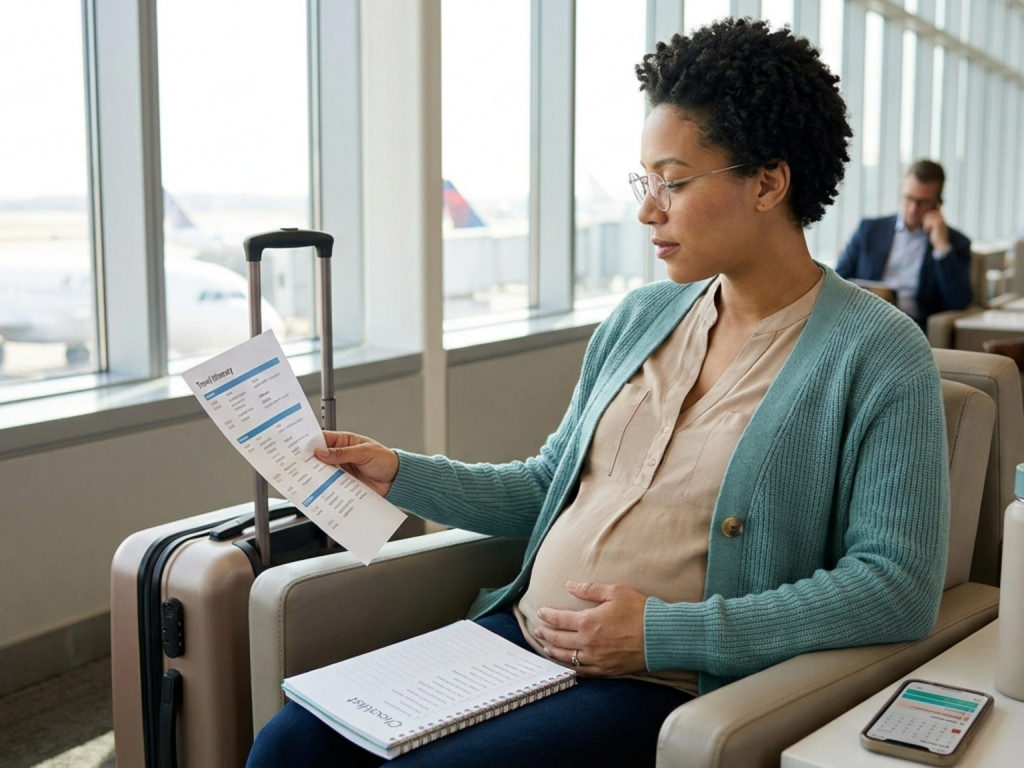
Pregnancy does not automatically mean a career has to stop, even when the job involves frequent flights, tight deadlines, public-facing responsibility, or long stretches away from home. But a pregnancy layered onto a high-stress, travel-heavy role often needs more planning than a routine prenatal schedule, because sleep loss, dehydration, immobility, time-zone shifts, and constant decision-making can all stack up.
The goal is not perfection or overprotection. It is to keep both maternal and fetal safety in view while preserving as much function, autonomy, and professional continuity as possible. For many people, that means anticipating travel risks, protecting rest, and asking early for individualized obstetric guidance rather than waiting until a problem forces a change.
Highlights
Pregnancy and travel can coexist, but the safest plan is individualized and should account for the trimester, route, and any obstetric complications.
High stress does not have to become a crisis, yet persistent anxiety, insomnia, or burnout deserves early attention and support.
Long periods of sitting, dehydration, and missed meals can make both travel and pregnancy symptoms harder to manage.
A realistic work plan may include fewer red-eye trips, more buffer days, and clearer backup coverage.
If complications arise, general travel advice no longer applies; your obstetric clinician’s guidance takes priority.
Why travel-heavy, high-stress work feels different in pregnancy
Pregnancy changes the baseline. Even in an uncomplicated pregnancy, there may be more fatigue, nausea, reflux, sleep fragmentation, urinary frequency, and sensitivity to missed meals or dehydration. In a job that rewards constant availability, those changes can be hard to accommodate because the body is asking for more predictability while the role may be demanding flexibility at all times.
Stress adds another layer. Acute pressure can sharpen performance briefly, but sustained stress can make it harder to sleep, think clearly, regulate mood, and recover between workdays. Many pregnant people notice that the issue is not only emotional strain; it is the cumulative effect of long workdays, compressed itineraries, airports, deadlines, and the pressure to appear unaffected. That is why a pregnancy plan for this kind of career should include both physical and psychological supports, not just a calendar review.
It can help to identify the highest-load parts of the job early: overnight flights, consecutive meetings, long car rides, conference weeks, or periods of on-call responsibility. Once the actual pattern is visible, you and your clinician can decide whether the schedule needs small adjustments or whether certain trips should be reduced, delayed, or reassigned.
Travel during pregnancy: what to plan before you leave
Travel is often possible in pregnancy, especially when the pregnancy is uncomplicated and the itinerary is planned carefully. Clinician guidance commonly emphasizes second trimester travel planning when possible, because many people have passed the most intense nausea of early pregnancy and are not yet dealing with the mobility and discomfort that can come later. That said, trimester alone does not decide safety; your personal obstetric history matters more.
For air travel in uncomplicated pregnancy, the main goals are to reduce immobility and dehydration. On long flights or long car rides, get up and move when it is safe, flex your ankles and calves, and drink water regularly. Pregnancy is already a more clot-prone state, so prolonged sitting can matter. If you have additional risk factors for venous thromboembolism, ask your clinician whether compression stockings or other prevention strategies are appropriate for you.
Seat belt positioning while pregnant also matters. The lap belt should stay low and snug across the hips and under the abdomen, with the shoulder belt between the breasts and off to the side of the belly. Pack snacks, any pregnancy medications, prenatal records, and a list of local medical facilities at your destination. If you are traveling internationally or to remote areas, ask in advance how you would access urgent obstetric care while traveling if symptoms develop.
- Choose an aisle seat when possible so you can move more easily.
- Keep water within reach and avoid arriving already dehydrated.
- Plan extra time for security, transfers, and restroom breaks.
- Review airline or cruise policies before booking, especially later in pregnancy.
Managing stress without pretending the workload is small
Stress management in pregnancy works best when it is concrete. General advice such as relax more is rarely enough for someone balancing client calls, deadlines, and travel logistics. More useful is a realistic menu of safe coping strategies in pregnancy: scheduled rest, gentle exercise with medical approval, brief relaxation practices, and visible support from colleagues, family, or friends. The aim is not to eliminate stress entirely, but to make recovery more reliable.
March of Dimes recommends rest, exercise with medical approval, relaxation techniques, and support networks as practical ways to cope. Those basics may sound simple, yet they become powerful when they are protected in the calendar. A ten-minute breathing exercise between meetings, a walk after a flight, or a firm cutoff for work email at night can reduce the feeling that pregnancy is happening in the margins of an already overloaded life. If you are already noticing persistent worry, low mood, panic, or loss of interest, perinatal mental health support is worth seeking early rather than waiting for symptoms to intensify.
For medically literate readers, it can be useful to think of stress as a physiologic load, not a moral failure. The question is not whether you are coping well enough. It is whether your current pattern is leaving enough sleep, nutrition, movement, and emotional bandwidth for pregnancy to remain stable.
Balancing work and rest when your schedule crosses time zones
Frequent travel can create circadian disruption in pregnant workers, especially when flights, late-night meetings, and early departures compress sleep. Even a healthy pregnancy can feel harder when the body clock is out of sync. Nausea may feel more intense, attention may dip, and emotional reserve may shrink. In practical terms, this means that balancing work and rest is not a luxury; it is a performance strategy and a safety strategy.
Where possible, reduce red-eye flights, protect one recovery night after long-haul travel, and avoid stacking demanding meetings immediately after arrival. If your role allows it, use virtual participation for some segments of a trip rather than insisting on every in-person appearance. Microbreaks at work matter too: sitting with feet up for a few minutes, eating at regular intervals, and stepping away from screens can interrupt the adrenaline-fueled pace that often accompanies travel-heavy jobs.
It can also help to track patterns. If your energy, nausea, headaches, or mood reliably worsen after certain routes or meeting blocks, that pattern is useful data, not a sign of weakness. A small schedule change made early may prevent a larger disruption later.
When to pause travel or seek urgent medical advice
General travel advice is only for uncomplicated pregnancy. If you have a pregnancy complication, your clinician has already advised against travel, or your symptoms are changing quickly, the plan should be reassessed rather than pushed through. This is especially important because travel can make follow-up care harder to access and can delay evaluation if something is wrong.
Seek prompt obstetric guidance for vaginal bleeding, fluid leakage, painful or regular contractions, reduced fetal movement, severe headache, visual changes, chest pain, shortness of breath, fainting, or calf pain and swelling. These symptoms do not automatically mean a serious problem, but they do deserve timely assessment. If you are told to avoid travel, that instruction should override work expectations, loyalty to a project, or fear of disappointing others.
Some pregnancies also require more individualized planning because of blood pressure disorders, placental issues, a history of preterm birth, or other medical conditions. In those situations, the safest approach is usually a direct conversation with the obstetric clinician, and sometimes a maternal-fetal medicine specialist, before tickets are booked or schedules are finalized.
How to build a pregnancy travel plan with your clinician and employer
A workable plan is usually specific, not generic. Before a major trip season, ask your prenatal team what precautions make sense for your situation, including whether you need an occupational health assessment for pregnancy. Bring a realistic itinerary, not just the destination: flight duration, time zones, expected walking, meal timing, on-call obligations, and how easy it would be to access care. The more concrete the information, the better the advice can be tailored.
At work, set expectations early. Share only what you are comfortable sharing, but be clear about what is needed: fewer overnight trips, more notice, extra breaks, a later departure, or a virtual option after a long-haul flight. This is where Balancing work and rest becomes practical rather than aspirational. If you have a trusted colleague or assistant, create a backup plan for delays, cancellations, and last-minute medical appointments. Keep copies of key prenatal information and destination medical contacts in an easily accessible place.
Think of the plan as a living document. As pregnancy progresses, the tolerance for travel and stress may change. A schedule that worked well in early second trimester may need revision later, and that does not mean the plan failed. It means it was responsive to physiology.
When to get help right away
- Do not continue travel if you have bleeding, fluid leakage, contractions, or reduced fetal movement.
- Seek urgent care for chest pain, shortness of breath, fainting, or one-sided leg swelling.
- If stress is causing panic, hopelessness, or inability to sleep for days, ask for perinatal mental health support.
- If your clinician says to avoid travel, treat that advice as medically binding for your situation.
- Call promptly if headaches, vision changes, or swelling suggest a possible blood pressure problem.
Tools & Assistance
- Prenatal care team phone numbers, including after-hours triage
- A travel checklist with medication, records, and emergency contacts
- An employer calendar that blocks recovery time after long trips
- A symptom tracker for contractions, headaches, bleeding, and fetal movement
- A perinatal mental health referral list or employee assistance program contact
FAQ
Is it always unsafe to fly while pregnant?
No. In many uncomplicated pregnancies, air travel is possible, but the timing and safety depend on your clinical situation, trip length, and any complications.
What is the best time to travel during pregnancy?
When travel is needed, many clinicians prefer the second trimester because symptoms are often more manageable, but individual medical factors matter more than trimester alone.
How can I reduce clot risk on long trips?
Move regularly when safe, stay hydrated, and ask your clinician whether you need additional prevention based on your personal risk profile.
What should I do if work stress feels overwhelming?
Talk with your prenatal clinician and consider perinatal mental health support early, especially if sleep, mood, or functioning are being affected.
Sources
- American College of Obstetricians and Gynecologists — Travel During Pregnancy
- PubMed — Travel During Pregnancy: Considerations for the Obstetric Provider
- March of Dimes — Stress and pregnancy
Disclaimer
This article is for educational purposes only and does not replace individualized obstetric care. If you are pregnant and have symptoms, complications, or a demanding travel schedule, consult your obstetric clinician or midwife.

















Please log in to leave a comment.