
Intro
Pregnancy does not automatically mean that work has to stop. For many people, continuing employment provides income, identity, structure, and social connection. At the same time, pregnancy changes cardiovascular load, sleep architecture, musculoskeletal strain, and stress reactivity, so the same schedule may feel very different from one month to the next.
Balancing work and rest is therefore less about perfect productivity and more about matching demands to your current physiology. That can include pacing, brief recovery breaks, changing hours, asking for pregnancy workplace accommodations, and noticing when fatigue or symptoms are telling you that your baseline has shifted. Individual needs vary, so decisions about workload, rest, and any restrictions should be made with your obstetric or midwifery team when needed.
Highlights
Work can be beneficial in pregnancy, but chronic imbalance tends to increase stress, fatigue, and lower day-to-day quality of life.
Rest is more than sleep: it includes microbreaks, reduced physical load, emotional decompression, and protected time off duty.
Pregnancy symptoms often fluctuate by trimester, so a schedule that works early on may need trimester-based work adjustments later.
Clear boundaries around hours, email, commuting, and physically demanding tasks can protect both maternal wellbeing and work performance.
If you develop concerning symptoms or your workload feels unsafe, prompt clinical review and workplace discussion are appropriate.
Why balance matters in pregnancy
Work-life balance is not just a lifestyle concept; it has measurable effects on stress physiology, mood, sleep, and overall functioning. In pregnancy, those effects can be amplified because fatigue, nausea, reflux, urinary frequency, pelvic discomfort, and sleep fragmentation may already be present. When work demands stay high while recovery time stays low, the result can be cumulative strain rather than a single dramatic problem.
That strain may show up as irritability, reduced concentration, more musculoskeletal pain, a sense of being constantly behind, or feeling unable to enjoy time away from work. In evidence-based discussions of work-life balance, the important point is not that work is harmful, but that persistent imbalance can erode health and quality of life. Pregnancy adds another layer: the body is supporting placental function, expanding blood volume, and adapting to a changing center of gravity, so restorative time matters.
A supportive approach starts with a simple question: what parts of the day are draining, and what parts restore you? For some people, the answer is obvious after a long commute or a twelve-hour shift. For others, the problem is less dramatic but still real, such as never sitting long enough to eat, answering messages late into the evening, or working through lunch because the day feels impossible to interrupt.
What rest actually means
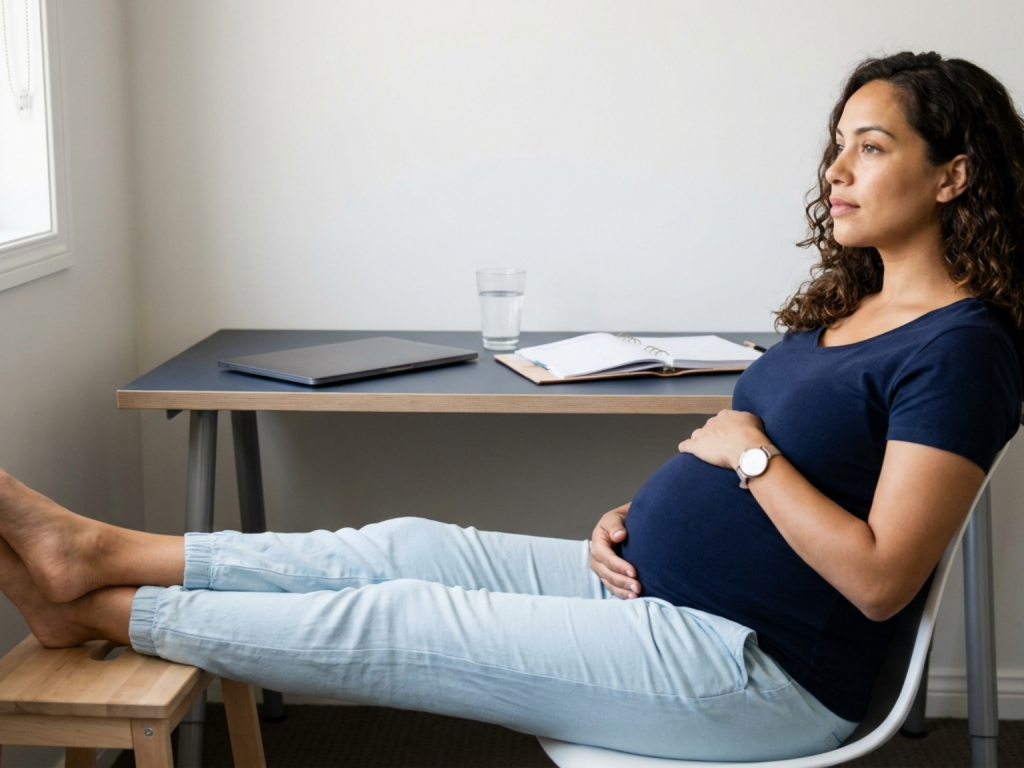
Rest is broader than sleeping at night. In pregnancy, rest includes any period that lowers metabolic demand, reduces pain or pressure, and gives the nervous system a chance to downshift. That might mean sitting with your feet up, lying on your side for a short time, taking a walk that is restorative rather than strenuous, or simply having a quiet lunch without multitasking.
It also includes mental rest. Constant alertness, decision fatigue, and emotional labor can be exhausting even if the job is not physically demanding. Many people find that the hardest part of balancing work and rest is not the workload itself but the feeling that they must always be available. Public-health guidance and mental health guidance both emphasize setting boundaries, using leave when possible, and not carrying work communication into every hour of the day.
Helpful forms of rest often include:
- Microbreaks of a few minutes every hour or two to stand, stretch, hydrate, or change posture.
- Protected breaks for food and fluids, especially if nausea or reflux makes large meals difficult.
- Emotional rest after demanding meetings, conflict, or intense caregiving roles.
- Sleep protection by reducing late-night screen time and avoiding unnecessary after-hours work.
If rest never feels restorative, that is a signal to reassess the schedule rather than push harder.
Common work factors that increase strain
Not all jobs stress the body in the same way. Some pregnancies are made harder by long work hours in pregnancy, rotating shifts, or night work, which can worsen fatigue and interfere with circadian rhythm. Others are more affected by prolonged sitting while pregnant, prolonged standing, repetitive lifting, or physically demanding tasks that increase back, pelvic, and leg symptoms.
Even office work can become uncomfortable if it involves uninterrupted sitting, poor ergonomics, or pressure to stay connected after hours. In such settings, the issue is often not the label of the job but the pattern of exposure: static posture, missed breaks, and high cognitive load. Similarly, shift-based work may be difficult because sleep timing becomes irregular and the body has less time to recover between shifts.
It is useful to think in terms of cumulative load. One busy day may be manageable, but repeated days without recovery can push the body beyond its current reserve. If your work includes lifting, prolonged standing, patient handling, stocking, cleaning, or repeated bending, the combination of pregnancy-related ligament laxity and changes in balance may make those tasks feel more taxing over time. A practical response is not to assume something is unsafe in every case, but to ask whether the task needs modification, rotation, extra help, or temporary reduction.
For some workers, the most effective change is a small one: a stool, a different station, fewer consecutive shifts, or moving a heavy task to a time of day when energy is better.
Practical ways to build balance into the day
Balance is easier to sustain when it is planned rather than hoped for. Start by identifying the most predictable pressure points: the commute, the first hour of the morning, the time after lunch, or the last stretch before the end of a shift. Then design recovery into those windows before fatigue becomes overwhelming.
Useful strategies include:
- Blocking short breaks on the calendar and treating them as non-negotiable.
- Drinking water regularly and keeping a snack available to reduce nausea and energy dips.
- Alternating posture, especially if you sit for long periods; brief standing or walking breaks can reduce stiffness.
- Using ergonomic supports such as lumbar support, a footrest, or a chair with better pelvic support.
- Reducing after-hours work by turning off notifications, setting an email boundary, or choosing one small time window for messages.
- Asking for help with physically heavy tasks rather than waiting until you are already exhausted.
When possible, use paid leave, sick leave, or scheduled time off strategically rather than only in crisis. The goal is to create a sustainable rhythm, not to prove endurance. Many people feel guilty about resting, especially if they are used to high achievement. In pregnancy, however, pacing is a legitimate adaptation, not a personal failure.
If you notice that weekends or days off are spent mainly recovering from work, the schedule may already be too demanding. That pattern deserves attention early, before it turns into persistent sleep debt or escalating pain.
When to ask for adjustments or clinical review
If work is becoming difficult to tolerate, it may be time to discuss occupational health assessment for pregnancy or a formal conversation with your employer about accommodations. This is especially relevant if your role involves heavy lifting, long standing, night shifts, repeated bending, chemical exposure, or tasks that cannot be modified informally. In some settings, a clinician can help document restrictions or recommend adjustments based on symptoms and job demands.
You should also seek medical advice promptly if you develop pregnancy warning signs at work such as vaginal bleeding, fluid leakage, regular contractions, severe abdominal pain, fainting, chest pain, shortness of breath at rest, marked swelling with headache or visual symptoms, or reduced fetal movement later in pregnancy. Symptoms that worsen with work may indicate that the current pace is no longer appropriate, even if you are still able to complete tasks.
Requesting help early often leads to better outcomes than waiting until you are depleted. Depending on the situation, changes may include lighter duties, more frequent breaks, reduced hours, remote work, altered start times, or temporary reassignment away from high-strain tasks. Those decisions are individualized, and they should be made in partnership with healthcare professionals when there is any doubt about safety.
It is also reasonable to speak up when you feel a task is outside your current capacity even if you do not have dramatic symptoms. Early adjustment is often easier than late recovery.
Protecting mental wellbeing while staying engaged at work
Pregnancy can intensify the emotional side of work-life balance. Some people feel pressure to keep performing exactly as before, while others worry that asking for help will be seen as weakness. That tension can create chronic stress, especially in workplaces that reward overextension. The Mental Health Foundation and healthdirect both emphasize the importance of reassessing priorities, setting boundaries, and speaking up when demands are excessive.
Helpful safe coping strategies in pregnancy include naming what is actually essential, letting lower-value tasks slide when possible, and separating urgent work from perfectionistic tasks that can wait. If your role is emotionally demanding, plan brief decompression between tasks rather than carrying one interaction into the next. For some people, support from a manager, doula, midwife, therapist, or trusted colleague reduces the feeling that they must handle everything alone.
This is also the point where perinatal mental health support may be valuable. Persistent anxiety, low mood, irritability, intrusive worries, or loss of pleasure are not simply signs that you are coping poorly; they can be symptoms worth discussing with a professional. If your sleep, appetite, or ability to function is deteriorating, or if work stress is making you feel trapped, ask for help early. Balance is not achieved by willpower alone. It is built through realistic expectations, supportive systems, and the willingness to revise plans as pregnancy evolves.
For many people, the most sustainable mindset is flexible rather than rigid: aim for enough work, enough rest, and enough support to keep both you and the pregnancy on stable ground.
Seek prompt medical advice if
- You have vaginal bleeding, fluid leakage, or regular contractions.
- You develop chest pain, fainting, severe shortness of breath, or a new severe headache.
- Your baby’s movements decrease later in pregnancy.
- Work-related fatigue is severe, persistent, or getting worse despite rest.
- You are unsure whether lifting, standing, shift work, or another task is safe for your situation.
Tools & Assistance
- Schedule short breaks and protect them on your calendar.
- Ask your obstetric or midwifery team about work restrictions if symptoms are increasing.
- Request an occupational health assessment for pregnancy when job demands are physically or emotionally heavy.
- Use employer sick leave, adjusted hours, or temporary duties when available.
- Keep a simple symptom log to identify which tasks drain you most.
FAQ
Is it normal to need more rest during pregnancy even if I can still work?
Yes. Many people need more recovery time as pregnancy progresses because fatigue, sleep disruption, and physical load increase. Needing rest does not mean you are unable to work.
How do I know if my workload is too much?
Warning signs include worsening exhaustion, pain that does not improve with breaks, poor sleep, rising anxiety, or symptoms that appear during or after work. A clinician can help interpret whether adjustments are needed.
Can I ask for changes to my schedule?
Yes. Common adjustments include shorter shifts, more breaks, reduced lifting, flexible start times, or remote work if your job allows it. Discuss options with your employer and healthcare professional.
What if I feel guilty resting?
Guilt is common, especially for high achievers. Rest in pregnancy is a health-supporting behavior, not a sign of laziness. Reframing rest as part of sustainable functioning can help.
Sources
- National Center for Biotechnology Information (NCBI) / PMC — Work-life Balance
- healthdirect Australia — Work-life balance - strategies and where to get help
- Mental Health Foundation — Work-life balance
Disclaimer
This article is for general information only and does not replace individualized medical advice. If you are pregnant and have symptoms, concerns about work, or questions about restrictions, please consult your obstetric, midwifery, or occupational health clinician.

















Please log in to leave a comment.