

Intro
Travel during pregnancy is often possible, especially when the pregnancy is uncomplicated and the itinerary is planned thoughtfully. Many people travel for work, family, rest, or major life events while pregnant, and it is understandable to want clear guidance rather than vague reassurance. The safest plan depends on gestational age, pregnancy complications, destination risks, mode of transport, access to obstetric care, and personal comfort.
This overview summarizes practical, evidence-informed considerations for medically literate readers. It does not replace individualized advice: before booking or departing, discuss your plans with your obstetrician, midwife, maternal-fetal medicine specialist, or travel medicine clinician, particularly if you have a high-risk pregnancy, chronic disease, prior obstetric complications, or an international itinerary.
Highlights
Mid-pregnancy is often the most comfortable and lower-risk time to travel, while very early pregnancy and the late third trimester may bring additional concerns.
Correct seat-belt positioning, hydration, regular movement, and venous thromboembolism prevention are central precautions for long trips.
Destination-specific risks such as malaria, Zika, foodborne illness, unsafe water, altitude, and limited maternity care should be assessed before travel.
Airlines, cruise lines, and insurers may have gestational-age restrictions or documentation requirements, so policies should be checked well in advance.
Travel should be reconsidered or avoided when warning signs, significant pregnancy complications, or inadequate access to urgent obstetric care are present.
Timing travel across pregnancy
For many uncomplicated pregnancies, travel is most feasible in the second trimester, roughly weeks 14 to 28. Nausea and profound fatigue may be improving, mobility is usually still reasonable, and the risk of common early pregnancy complications is lower than in the first trimester. Later in pregnancy, discomfort, contractions, hypertensive disorders, preterm labor risk, and the possibility of needing urgent obstetric or neonatal care become more relevant.
Timing should not be considered in isolation. A person at 22 weeks with placenta previa and recurrent bleeding may be advised very differently from someone at 32 weeks with an uncomplicated pregnancy traveling a short distance near a tertiary maternity unit. The key question is not simply “Can pregnant people travel?” but “Is this specific trip appropriate for this pregnancy, at this gestational age, with these available medical resources?”
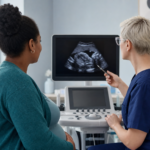
Before travel, confirm gestational dating, review the pregnancy problem list, and ask your clinician whether there are reasons to delay, modify, or avoid the trip. It is also sensible to carry a concise pregnancy summary, including estimated due date, blood type if known, major conditions, medications, allergies, ultrasound findings relevant to placental location or fetal growth, and clinician contact information.
When travel may be unsafe or needs specialist advice
Some situations make travel substantially riskier, especially if the destination has limited obstetric or neonatal services. Absolute and relative contraindications vary by guideline and clinical context, but several conditions commonly warrant avoiding travel or obtaining specialist input before departure.
- Threatened miscarriage, recent significant vaginal bleeding, or ruptured membranes.
- Current or prior preterm labor risk, cervical insufficiency, or a short cervix requiring close monitoring.
- Placenta previa, vasa previa, placental abruption history, or other bleeding-prone placental conditions.
- Preeclampsia, severe hypertension, poorly controlled diabetes, significant cardiac disease, severe anemia, or thromboembolic disease.
- Multiple gestation, especially later in pregnancy or with growth, cervical, or hypertensive complications.
- Fetal growth restriction or other conditions requiring frequent surveillance.
People with chronic conditions should plan earlier than usual, because medication safety, monitoring frequency, anticoagulation, insulin storage, oxygen needs, and insurance coverage can all affect itinerary choices. If you have epilepsy, inflammatory bowel disease, congenital or acquired heart disease, kidney disease, autoimmune disease, a history of venous thromboembolism, or another complex condition, pre-travel counseling can help determine whether the trip is reasonable and what contingency planning is necessary.
Air travel, long journeys, and blood clot prevention
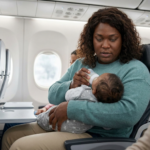
Commercial air travel is generally considered acceptable for many people with uncomplicated pregnancies, but policies vary by airline and by route. Many airlines restrict travel late in pregnancy, especially after 36 weeks for singletons or earlier for multiple pregnancies, and some require a clinician letter documenting gestational age and fitness to fly. International flights may have stricter rules, and return travel must also be considered: it is not enough to be eligible on the outbound journey.
Long periods of immobility increase the risk of venous thromboembolism, and pregnancy itself is a hypercoagulable state. Risk reduction focuses on circulation and hydration. Consider an aisle seat when possible, stand and walk at intervals, perform calf raises and ankle circles while seated, avoid crossing legs for prolonged periods, and drink fluids regularly. Graduated compression stockings may be appropriate for some travelers, particularly on long flights or long car trips, but people with vascular disease or unusual symptoms should ask a clinician about fit and suitability.
Cabin pressure changes in commercial aircraft are usually tolerated in uncomplicated pregnancy, but severe cardiopulmonary disease, significant anemia, or conditions that impair oxygenation require individualized advice. Airport security screening is not typically a pregnancy concern, but if you feel uncertain, ask airport staff about available screening options. For nausea, reflux, edema, urinary frequency, and fatigue, build in extra time and avoid overly tight connections.
Car, bus, train, cruise, and local transport safety
For car travel, seat-belt use is essential. The lap belt should sit low across the hips and pelvis, below the bump, not across the abdomen. The shoulder belt should pass between the breasts and to the side of the abdomen. Airbags should remain enabled, and the seat should be positioned to maintain distance from the steering wheel or dashboard while allowing safe control of the vehicle.
Long car journeys should be broken into regular stops for walking, stretching, hydration, and bathroom use. This is not merely about comfort; immobility contributes to venous stasis. If you are the driver, fatigue and pregnancy-related nausea can impair concentration, so consider sharing driving duties or reducing daily mileage. In a crash, even if symptoms seem mild, contact a healthcare professional promptly because placental injury or contractions may not be immediately obvious.
For buses and trains, choose routes with accessible restrooms and opportunities to move safely. For cruises, review the cruise line’s gestational-age policies, onboard medical capacity, evacuation procedures, and ports of call. Motion sickness treatment, outbreak risks such as norovirus, and access to pregnancy-safe medications should be discussed in advance. Local transport at the destination also matters: consider road safety, availability of seat belts, emergency response times, and whether remote excursions would delay access to obstetric care.
Destination risks: infections, vaccines, food, water, and environment
Pregnancy changes the risk-benefit calculation for travel medicine. Some infections are more severe in pregnancy or carry fetal risks, and some preventive measures are limited by gestational considerations. Before international travel, review the destination with a travel medicine clinician or obstetric clinician familiar with current advisories.
Zika risk is a major consideration because infection during pregnancy can cause congenital infection and severe fetal effects. Malaria is also particularly dangerous in pregnancy, increasing risks for maternal severe disease, miscarriage, preterm birth, low birth weight, and stillbirth. Travel to malaria-endemic regions should be carefully reconsidered; if travel is unavoidable, strict mosquito avoidance and pregnancy-appropriate chemoprophylaxis guidance from a clinician are essential.
Vaccination planning should occur well before departure. Some inactivated vaccines may be recommended when the risk of exposure is meaningful, while live vaccines are generally avoided in pregnancy unless a specialist determines the risk-benefit balance is exceptional. Do not assume that “natural” or over-the-counter preventive products are safe in pregnancy; discuss repellents, antimalarials, antidiarrheals, antiemetics, and antibiotics before use.
Food and water precautions are also central. Choose food that is thoroughly cooked and served hot, avoid unpasteurized dairy products, be cautious with raw or undercooked meat, seafood, and eggs, and use safe water for drinking and toothbrushing when local water safety is uncertain. These steps overlap with broader pregnancy food-safety advice because infections such as listeriosis, toxoplasmosis, salmonellosis, and traveler’s diarrhea can be more consequential when pregnant.
Environmental factors can also alter plans. High altitude may worsen breathlessness and reduce oxygen availability, particularly for people with anemia or cardiopulmonary disease. Extreme heat increases dehydration risk and can worsen dizziness or edema. Remote adventure travel, scuba diving, and activities with high fall or abdominal trauma risk generally require avoidance or substantial modification during pregnancy.
Preparing a pregnancy travel plan
A good travel plan reduces uncertainty. Start by identifying the nearest hospital with obstetric services at your destination, not just the nearest clinic. If you are beyond viability, consider whether neonatal intensive care is available. Check whether your health insurance covers pregnancy-related care, complications, neonatal care, medical evacuation, and international services; many policies exclude routine pregnancy or late-gestation travel.
Pack enough prenatal vitamins and prescribed medications for the entire trip plus extra days in case of delays. Keep medications in carry-on luggage, in original containers when possible. If you require refrigerated medication, ask your care team or pharmacist how to maintain safe storage. Bring snacks that are familiar and low risk, a refillable water bottle where water is safe, compression stockings if recommended, hand sanitizer, and copies of key medical information.
Itinerary design matters. Avoid scheduling every day tightly, and build in recovery time after long travel segments. Choose lodging with reliable climate control, safe food options, elevator access if needed, and proximity to medical care. If you have nausea, pelvic girdle pain, sciatica, edema, anemia, or sleep disruption, a less ambitious itinerary may be the safest and most enjoyable one.
Warning signs while traveling
Pregnancy warning signs should be taken seriously wherever you are. Seek urgent medical care for vaginal bleeding, leakage of fluid, regular painful contractions, severe abdominal pain, severe headache, visual symptoms, chest pain, shortness of breath at rest, fainting, unilateral leg swelling or pain, fever, persistent vomiting with inability to keep fluids down, or a marked change in fetal movement after the stage when fetal movement is routinely monitored.
If you are abroad or in an unfamiliar region, contact local emergency services first for urgent symptoms, then notify your obstetric care team when safe to do so. Do not delay evaluation because you are away from your usual hospital. If language barriers are likely, carry translated phrases for pregnancy symptoms and your gestational age, or use a reputable translation tool while recognizing its limitations in emergencies.
Travel can be emotionally complex in pregnancy. You may feel pressure from family, employers, or sunk travel costs. It is acceptable to change plans when symptoms, clinician advice, or destination conditions make travel less safe. A postponed trip is not a failure; it is often a protective decision for both maternal and fetal wellbeing.
Seek urgent care or reconsider travel
- Do not travel without medical advice if you have vaginal bleeding, ruptured membranes, preterm labor symptoms, or preeclampsia concerns.
- Seek urgent care for chest pain, shortness of breath, fainting, severe headache, visual changes, or one-sided leg swelling or pain.
- Avoid destinations where urgent obstetric or neonatal care would be inaccessible if you are at meaningful risk of complications.
- Discuss travel to areas with malaria, Zika, unsafe water, or major infectious outbreaks before booking.
- Check airline, cruise, and insurance restrictions for both outbound and return travel, especially in the third trimester.
Tools & Assistance
- Pre-travel obstetric appointment with itinerary review
- Travel medicine consultation for international destinations
- Written pregnancy summary and medication list
- Travel insurance review for pregnancy complications and neonatal care
- Map of nearby hospitals with obstetric and emergency services
FAQ
What is usually the best time to travel while pregnant?
For many uncomplicated pregnancies, the second trimester is often the most comfortable and practical time. Individual risks, destination, and access to care matter more than gestational age alone.
Can I fly during pregnancy?
Many pregnant people with uncomplicated pregnancies can fly, but airline policies, gestational age limits, and medical conditions may affect eligibility. Ask your clinician and check the airline’s rules before booking.
Should I wear compression stockings on long trips?
Graduated compression stockings may help reduce leg swelling and venous stasis on long journeys for some travelers. Ask a healthcare professional about the correct type and fit, especially if you have vascular disease or clotting history.
Is travel insurance important in pregnancy?
Yes. Confirm coverage for pregnancy complications, preterm birth, neonatal care, hospitalization, and medical evacuation. Routine pregnancy care and late-gestation travel may be excluded.
What should I do if I feel unwell while away?
For urgent symptoms such as bleeding, fluid leakage, severe pain, severe headache, chest pain, shortness of breath, fever, or reduced fetal movement, seek local emergency care promptly and then contact your usual maternity team.
Sources
- American College of Obstetricians and Gynecologists — Travel During Pregnancy
- NHS — Travelling in pregnancy
- Centers for Disease Control and Prevention — Pregnant Travelers
Disclaimer
This article is for general medical information only and does not diagnose, treat, or replace professional care. Consult your obstetric or travel medicine clinician before travel, especially with pregnancy complications or international itineraries.















Please log in to leave a comment.