
Intro
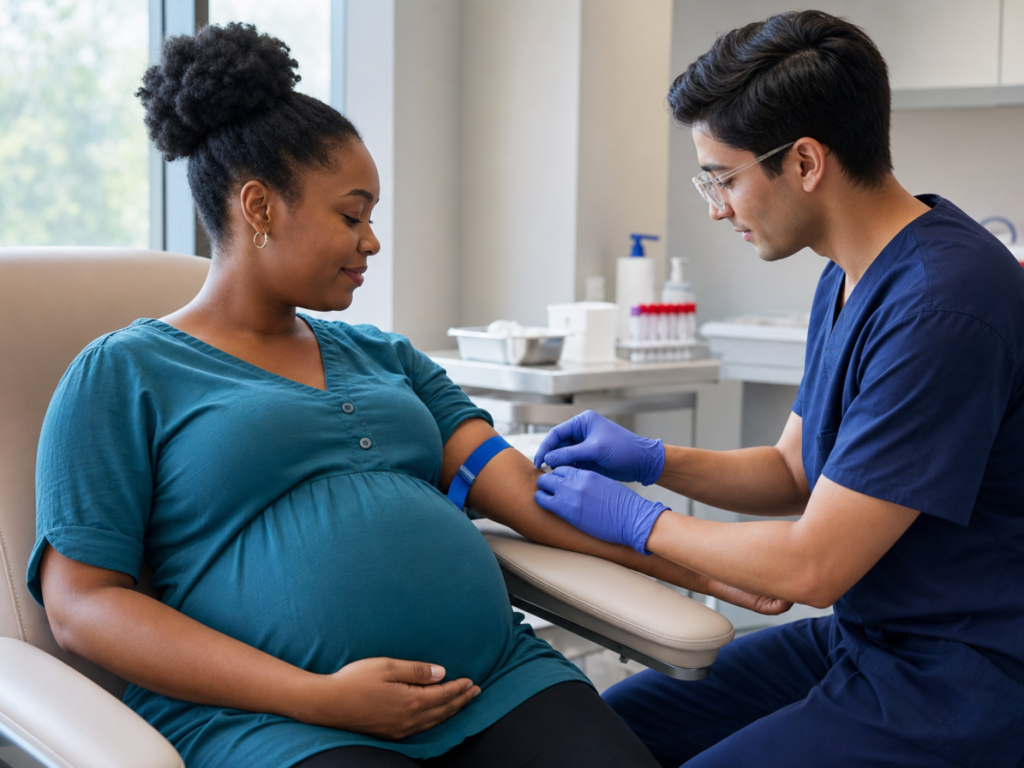
Routine blood tests in pregnancy can feel like a lot: tubes of blood, unfamiliar abbreviations, and results that may appear in an online portal before anyone has had time to explain them. Most of these tests are not looking for something rare or frightening; they are part of a structured safety net. They help your maternity team identify blood type issues, anemia, infections, immunity gaps, and glucose metabolism changes early enough to reduce risks for you and your baby.
Exactly which tests are offered, and when, varies by country, local guidelines, personal medical history, previous pregnancy history, and individual risk factors. This article explains the common routine blood tests used in prenatal care, what they are generally for, and how to interpret the process without trying to diagnose yourself from a single value.
Highlights
Early pregnancy blood work often includes a prenatal panel: blood type and Rh factor, antibody screen, complete blood count, and screening for selected infections.
A blood result is rarely interpreted in isolation. Gestational age, symptoms, prior results, medications, and local laboratory reference ranges all matter.
Some tests are screening tests, not diagnostic tests. An abnormal screening result usually means more assessment is needed, not that a condition is confirmed.
Blood tests can guide preventive treatment, such as Rh immune globulin for Rh-negative patients when indicated, iron therapy for anemia, or treatment of infections.
If you receive a concerning result through an online portal, it is reasonable to ask your obstetric clinician or midwife for context before drawing conclusions.
Why routine blood tests are part of prenatal care
Pregnancy places extra demands on the cardiovascular, hematologic, endocrine, renal, and immune systems. Routine blood testing gives clinicians a baseline early in pregnancy and helps detect conditions that may be silent at first. For example, anemia may develop gradually, hepatitis B infection may be asymptomatic, and clinically significant red blood cell antibodies may not cause symptoms in the pregnant person but can affect the fetus.
These tests also help personalize care. A person with low hemoglobin may need dietary counseling, evaluation for iron deficiency, or follow-up testing. Someone who is RhD negative may need specific preventive care if the fetus could be RhD positive. A patient with risk factors for diabetes may be screened earlier than the usual 24 to 28 weeks.
It can be emotionally unsettling to see values flagged as high or low. Pregnancy itself changes many laboratory values, including plasma volume, white blood cell count, and some markers of iron status. For this reason, interpretation should be done by a clinician familiar with pregnancy physiology and the laboratory’s reference ranges.
The first prenatal blood tests: the prenatal panel
Many clinicians order a group of early pregnancy blood tests often called a prenatal panel. According to MedlinePlus, this panel is used to check for diseases and infections that may affect the pregnant person and developing baby, and results can guide treatment to help prevent complications.
Although the exact panel varies, common early pregnancy blood tests include:
- Complete blood count, or CBC: measures hemoglobin, hematocrit, red blood cells, white blood cells, and platelets.
- ABO blood type and Rh factor: identifies whether your blood type is A, B, AB, or O and whether you are RhD positive or negative.
- Antibody screen: checks for red blood cell antibodies that could cross the placenta and affect fetal red blood cells.
- Rubella immunity: assesses whether you have immunity to rubella, an infection that can be serious in pregnancy.
- Hepatitis B screening: identifies infection so that newborn preventive steps can be planned.
- HIV and syphilis screening: detects infections where treatment during pregnancy can substantially reduce risks to the baby.
Additional blood tests may be recommended depending on region and individual risk, such as hepatitis C screening, varicella immunity, thyroid testing, hemoglobinopathy screening, or baseline kidney and liver function tests. These are not “one size fits all”; they depend on clinical context.
Blood type, Rh factor, and antibody screening
Blood type testing is routine because incompatibilities can matter in pregnancy. ABO type is important for transfusion safety, but RhD status and the antibody screen have particular relevance to fetal care.
If a pregnant person is RhD negative and the fetus is RhD positive, fetal red blood cells can sometimes enter the maternal circulation. The immune system may then form anti-D antibodies, a process called sensitization. In a current or future pregnancy, these antibodies can cross the placenta and attack fetal red blood cells. Preventive treatment with Rh immune globulin can greatly reduce this risk when used in appropriate situations, such as around 28 weeks in many protocols and after certain bleeding events, procedures, trauma, or delivery of an RhD-positive baby. Your clinician will advise based on your results and local guidance.
The antibody screen is broader than RhD alone. It looks for clinically significant red blood cell antibodies, such as anti-Kell or anti-c, that may require closer fetal monitoring. A positive antibody screen does not automatically mean the baby is harmed. It means the type and level of antibody, paternal or fetal antigen status when relevant, and pregnancy history need careful interpretation by obstetric professionals.
Complete blood count: anemia, platelets, and white blood cells
The complete blood count is one of the most common routine blood tests in pregnancy. It provides a snapshot of several blood components.
Hemoglobin and hematocrit help assess anemia. During pregnancy, plasma volume expands more than red blood cell mass, so hemoglobin concentration often falls slightly. This physiologic hemodilution is common, but true anemia, especially iron deficiency anemia, is also common and can contribute to fatigue, shortness of breath, palpitations, dizziness, and reduced reserve for blood loss at delivery. If anemia is identified, clinicians may evaluate iron studies, diet, bleeding history, hemoglobin variants, or other causes before recommending treatment.
Platelet count helps assess clotting capacity. Mild platelet reduction can occur in pregnancy, often called gestational thrombocytopenia, but more significant or rapidly falling platelet counts may require evaluation for other conditions. Platelets are also relevant when planning neuraxial anesthesia, such as an epidural, although decisions depend on the whole clinical picture.
White blood cell count often rises in pregnancy and can be higher during labor. A mildly elevated white count is not automatically a sign of infection. Symptoms, differential count, urinalysis, cultures, and clinical examination are usually more informative than the number alone.
Infection and immunity screening
Several routine prenatal blood tests screen for infections because early identification can protect both the pregnant person and the baby. ACOG notes that routine testing in pregnancy commonly includes blood tests for infections such as hepatitis B, hepatitis C, HIV, syphilis, and rubella immunity, depending on practice and guideline context.
Common infection and immunity-related tests include:
- HIV: treatment during pregnancy can dramatically reduce the chance of perinatal transmission.
- Syphilis: prompt treatment is important because untreated infection can cause serious fetal and neonatal complications.
- Hepatitis B: results guide newborn prophylaxis and follow-up.
- Hepatitis C: screening practices have expanded in many settings; positive results guide specialist care and infant follow-up.
- Rubella immunity: a non-immune result usually leads to counseling to avoid exposure during pregnancy and vaccination after delivery, because live rubella vaccine is not given during pregnancy.
- Varicella immunity: may be checked if there is uncertainty about prior chickenpox or vaccination.
Testing positive for an infection can be distressing, but many infections have clear management pathways. The most helpful next step is usually a timely conversation with your maternity team, not searching isolated lab values without context.
Glucose screening and gestational diabetes testing
Gestational diabetes is diabetes first recognized during pregnancy. It can increase the risk of fetal overgrowth, birth complications, neonatal hypoglycemia, hypertensive disorders, and future metabolic risk. Screening is routine because many people have no symptoms.
In many practices, glucose screening is offered between 24 and 28 weeks of pregnancy. ACOG describes glucose screening later in pregnancy as part of routine prenatal testing. Some people are tested earlier if they have risk factors such as previous gestational diabetes, known prediabetes, higher body mass index, polycystic ovary syndrome, or a strong family history of diabetes.
Methods vary. Some settings use a one-step oral glucose tolerance test. Others use a two-step approach, beginning with a nonfasting glucose challenge test; if that is above the threshold, a longer diagnostic oral glucose tolerance test follows. An abnormal screening result is not a moral judgment and does not mean you caused anything. Placental hormones can make insulin resistance rise as pregnancy progresses, even in people who eat well and are physically active.
If your glucose test is abnormal, your clinician will explain whether confirmatory testing is needed and what monitoring or management is appropriate. You may also find it helpful to read more about the glucose screening test and OGTT explained when preparing for the appointment.
Other blood tests that may be offered
Not every blood test in pregnancy is routine for everyone. Some are offered based on medical history, ancestry, symptoms, medications, prior pregnancy complications, or local policy.
Examples include:
- Hemoglobinopathy screening: checks for inherited conditions such as sickle cell disease, sickle cell trait, and thalassemias. Partner testing and genetic counseling may be recommended if a carrier state is identified.
- Thyroid function tests: may be ordered for thyroid symptoms, known thyroid disease, infertility history, autoimmune disease, or certain high-risk situations.
- Ferritin and iron studies: help distinguish iron deficiency from other causes of anemia.
- Vitamin B12 or folate levels: may be considered when anemia pattern, diet, gastrointestinal history, or medication exposure suggests deficiency.
- Baseline kidney or liver function tests: may be used in people with hypertension, kidney disease, diabetes, autoimmune disease, or other medical conditions.
- Cell-free DNA screening, often called NIPT: a blood-based screening test for selected chromosomal conditions, usually offered from around 10 weeks in many settings. It is a screening test, not a diagnostic test.
Because these tests answer different questions, it is worth asking your clinician whether a test is routine for all patients, recommended because of your personal risk profile, or optional screening.
Timing by trimester: what to expect
Timing varies, but a typical pattern is:
- First trimester or first prenatal visit: prenatal panel, CBC, blood type and Rh factor, antibody screen, infection screening, and immunity testing. Some people may also have early diabetes screening or additional baseline tests.
- Second trimester: glucose screening is often planned for 24 to 28 weeks. A repeat CBC may be performed around this time to reassess anemia and platelets.
- Third trimester: some clinicians repeat CBC, antibody testing for Rh-negative patients, or infection screening depending on local guidance and risk. Group B streptococcus screening is usually a vaginal-rectal swab rather than a blood test, typically performed later in pregnancy.
If you transfer care, move countries, or start prenatal care later, your clinician may repeat or catch up on tests. This does not necessarily mean something is wrong; it may simply ensure that essential information is available before delivery.
How to prepare and how to read results safely
Most routine prenatal blood tests require no special preparation. Glucose testing may have specific instructions about fasting, timing, or what you may eat beforehand, depending on the test used. Always follow the instructions from your clinic or laboratory rather than general internet advice.
Before your blood draw, consider asking:
- Which tests are being done today, and are any optional?
- Do I need to fast or avoid supplements before any test?
- How and when will results be communicated?
- What results would require urgent contact?
- Will abnormal screening results need confirmatory testing?
When results arrive, look for the clinician’s interpretation, not only the laboratory flags. A value outside the nonpregnant reference range may be expected in pregnancy, while a value that appears only slightly abnormal may matter if it is changing quickly or occurs with symptoms. If you are worried, contact your maternity team. You are not overreacting by asking for clarification; understanding your results is part of good prenatal care.
When to seek prompt medical advice
- Heavy vaginal bleeding, severe abdominal pain, fainting, or shoulder-tip pain needs urgent medical assessment.
- Fever, feeling very unwell, jaundice, or severe headache should be discussed promptly with a healthcare professional.
- Do not start iron, aspirin, anticoagulants, or high-dose supplements based only on a lab flag without clinician guidance.
- If you are RhD negative and have bleeding, abdominal trauma, or an invasive procedure, ask promptly whether Rh immune globulin is needed.
- If an infection screening result is positive, arrange timely follow-up to confirm results and plan care.
Tools & Assistance
- Bring a list of medications, supplements, allergies, and prior pregnancy complications to prenatal visits.
- Use your clinic portal or phone line to ask for interpretation of abnormal or unclear results.
- Keep a personal record of blood type, Rh status, antibody screen results, and major infection screening results.
- Ask your clinician whether fasting is needed before glucose testing or other scheduled blood work.
- Request translation or accessibility support if lab instructions are difficult to understand.
FAQ
How many blood tests are normal in pregnancy?
It is common to have blood tests at the first prenatal visit and again later for anemia and gestational diabetes screening. Additional testing depends on your health history, symptoms, prior results, and local guidelines.
Do routine blood tests check the baby’s chromosomes?
Not usually. Standard prenatal blood work checks maternal blood type, blood counts, infections, immunity, and related concerns. Cell-free DNA screening or NIPT is a separate optional screening test for selected chromosomal conditions.
Does an abnormal blood test mean something is wrong with my baby?
Not necessarily. Many abnormal results indicate a maternal condition that can be monitored or treated, or they may require repeat or confirmatory testing. Your clinician can explain the result in context.
Will I need to fast for routine pregnancy blood tests?
Most early prenatal blood tests do not require fasting. Some glucose tolerance tests do. Follow the specific instructions from your clinic or laboratory.
Can I decline routine blood tests?
You can ask questions and make informed decisions about testing. Before declining, discuss what the test is for, what risks it screens for, and what options would be available if a result were abnormal.
Sources
- American College of Obstetricians and Gynecologists — Routine Tests During Pregnancy
- MedlinePlus — Prenatal Panel: MedlinePlus Medical Test
- Pregnancy, Birth and Baby — Routine antenatal tests - blood tests, scans, swabs
Disclaimer
This article is for general educational purposes only and does not replace individualized medical advice. Always discuss pregnancy blood tests, abnormal results, and treatment decisions with your obstetrician, midwife, or qualified healthcare professional.


















Please log in to leave a comment.