
Intro
Preparing infant formula can feel like a high-stakes task, especially when you are tired, recovering from birth, caring for a premature baby, or trying to follow several different instructions at once. The goal of safe formula preparation is not perfection; it is reducing avoidable risks in a calm, repeatable way. Formula can nourish babies well, and a careful routine helps protect them from gastrointestinal infection, incorrect dilution, and burns from overheated feeds.
Highlights
Powdered infant formula is not sterile, so water temperature, hygiene, and prompt feeding matter, especially for newborns and medically vulnerable infants.
Always follow the exact mixing instructions on the formula container unless your baby’s healthcare professional gives individualized guidance.
Prepared formula should be handled like a perishable food: limit time at room temperature, refrigerate promptly when appropriate, and discard leftovers after feeding.
Clean hands, sanitized equipment, and disinfected preparation surfaces are core parts of safe formula preparation, not optional extras.
Why formula preparation safety matters
Infants have developing immune systems, smaller fluid reserves, and limited ability to compensate for dehydration or electrolyte imbalance. A preparation error that seems minor in an adult context can be clinically significant for a baby. Over-diluted formula may provide too little energy and can disturb sodium balance; overly concentrated formula may stress the kidneys and gut. Contamination can lead to vomiting, diarrhea, fever, poor feeding, and dehydration.
The concern is greatest with powdered formula because powdered infant formula is not sterile. It can contain bacteria rarely associated with severe neonatal infection, and contamination can also occur from hands, counters, scoops, bottles, nipples, or water. Ready-to-feed liquid formula is generally the lowest-risk option from a microbiological standpoint because it is commercially sterile until opened, which is why clinicians may recommend it for some premature, very young, or immunocompromised infants. However, every formula type still needs clean handling after opening.
Set up a clean preparation area
Before you touch feeding equipment, wash your hands thoroughly with soap and running water, then dry them with a clean towel. Clean the preparation surface with hot soapy water or an appropriate disinfectant, especially if the counter has been used for raw foods, diapering supplies, pets, or household chemicals. This simple sequence supports newborn infection prevention and lowers the chance that organisms will enter the bottle during preparation.
Cleaning newborn feeding equipment should be done after every feed. Wash bottles, nipples, rings, caps, and any mixing containers in hot soapy water, using a clean bottle brush that is reserved for infant feeding items. Rinse well and allow items to air-dry on a clean surface. Many families also use a dishwasher if the items are dishwasher-safe, ideally with a heated drying cycle.
Sanitizing is particularly important for babies younger than 2 months, babies born prematurely, and babies with weakened immune systems. Sanitizing can be done by boiling feeding items, using a steam sterilizer, or using another manufacturer-approved method. After sanitizing, avoid touching the inside of nipples, bottle rims, or caps. If equipment falls onto an unclean surface, clean and sanitize it again rather than wiping it quickly and hoping for the best.
Choose the right water and temperature
Water safety depends on your local water supply, the baby’s age and health status, and the type of formula. In many areas, tap water that is safe to drink may be used for infant formula, but families using private wells, areas with water advisories, or infants with special medical risks should ask a healthcare professional or local health authority. Bottled water is not automatically sterile unless labeled and handled as sterile, and it may still need boiling depending on the situation.
For powdered formula, several public-health authorities advise using freshly boiled water that has cooled but remains hot enough to reduce bacterial risk. The NHS advises letting boiled water cool for no more than about 30 minutes so it remains at least 70°C when mixed with the powder. This temperature helps reduce microbial contamination in the powder. After mixing, the bottle must be cooled quickly to feeding temperature before offering it to the baby.
Guidance may vary by country and clinical situation. Some instructions emphasize using water that has been boiled and cooled, while others prioritize following the formula label and local public-health advice. If your baby is premature, younger than 2 months, immunocompromised, or has complex medical needs, ask your pediatric team whether ready-to-feed formula or a specific water-preparation method is recommended.
Measure and mix formula accurately
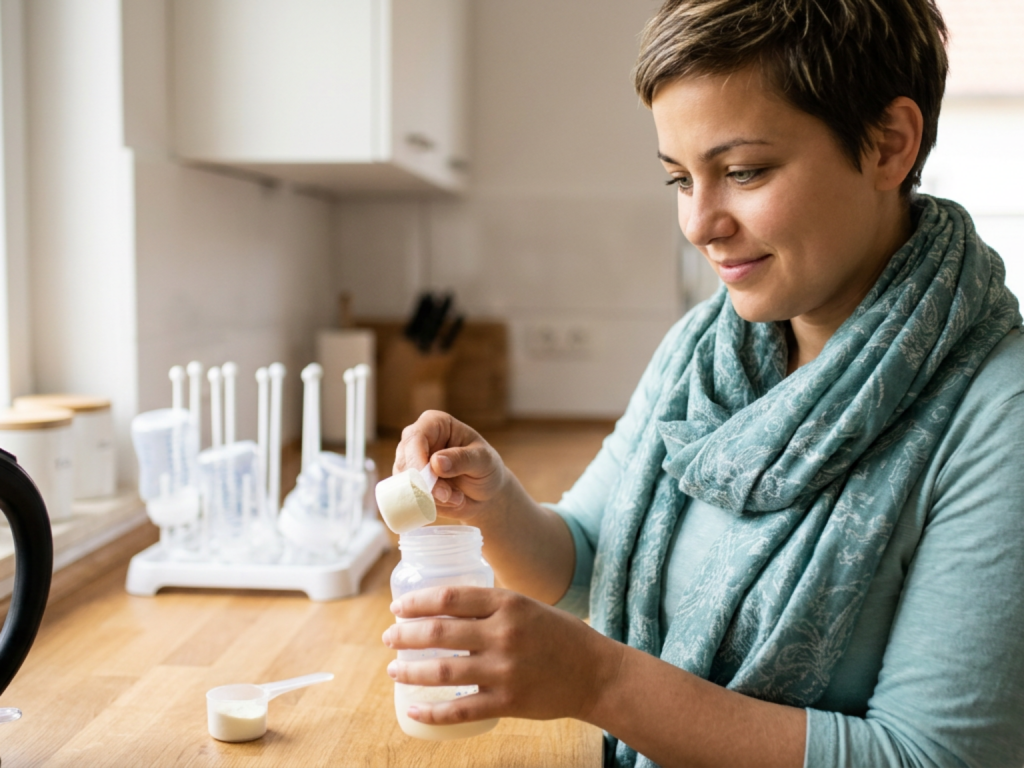
Read the formula container every time you open a new product, even if you have prepared formula before. Powdered, concentrated liquid, and ready-to-feed formulas are not prepared in the same way. Use the scoop provided with that specific formula container, level the scoop as directed, and add the exact amount of water stated on the label. Do not pack the powder down unless the manufacturer explicitly instructs you to do so.
For powdered formula, measure the water first, then add the powder. This helps ensure the final concentration is correct. For concentrated liquid formula, mix the concentrate with the exact amount of water specified. Ready-to-feed formula should not be diluted. Adding extra water to stretch feeds can cause inadequate nutrition and dangerous electrolyte dilution; adding extra powder can cause excessive solute load and gastrointestinal distress.
If a clinician prescribes a higher-calorie or modified concentration formula, follow the written plan exactly and ask for clarification if any step is unclear. Do not change formula concentration to address hunger, reflux, constipation, sleep, or weight concerns without medical guidance. A Baby feeding schedule by age can be helpful for understanding typical patterns, but it should not override your baby’s individualized growth and medical plan.
Cool and test the bottle before feeding
After mixing powdered formula with hot water, cool the bottle promptly by holding it under cold running water or placing it in a container of cold water. Keep the nipple and cap area above the waterline so cooling water does not contaminate the feeding surface. Swirl the bottle gently to distribute heat evenly; vigorous shaking can create foam and may make some babies more uncomfortable during feeds.
Test the temperature before feeding by dripping a small amount onto the inside of your wrist. It should feel lukewarm, not hot. Microwaves are not recommended for warming bottles because they can create hot spots that burn a baby’s mouth even when the outside of the bottle feels comfortable. If you use a bottle warmer, follow the manufacturer’s instructions closely and still test the temperature before feeding.
Feed your baby responsively, watching for cues such as relaxed hands, rhythmic sucking, turning away, slowing, or falling asleep. Formula feeding can be paced and attentive; it does not need to be rushed. If your baby repeatedly coughs, chokes, sweats, turns blue, tires quickly, or struggles to coordinate sucking and breathing, stop the feed and seek medical advice.
Use prepared formula promptly and store it safely
Prepared formula is perishable. Ideally, prepare each bottle fresh and feed it soon after mixing. If you prepare formula in advance, refrigerate it promptly in a clean, covered container or bottle and keep it cold until needed. Follow the product label and public-health guidance for maximum refrigeration time; many authorities advise using refrigerated prepared formula within 24 hours.
Once feeding begins, bacteria from the baby’s mouth can enter the bottle. Discard any formula left in the bottle after the feed rather than saving it for later. As a practical rule, prepared formula left at room temperature should not sit out for extended periods, and any bottle that has been partially consumed needs stricter discard timing. If you are unsure how long a bottle has been out, the safer choice is to throw it away.
For travel, carry water and powder separately when possible, or use unopened ready-to-feed formula. If you must transport prepared formula, keep it cold in an insulated bag with ice packs and use it within recommended time limits. Avoid leaving formula in a warm car, stroller, or diaper bag, where bacterial growth can accelerate.
Special situations that deserve medical input
Some babies need extra caution. If your baby was born prematurely, has a low birth weight, is younger than 2 months, has immune compromise, has a history of necrotizing enterocolitis, has congenital heart disease, has kidney disease, or is taking medications that affect fluid balance, ask the clinical team which formula type and preparation method is safest. In these situations, ready-to-feed formula may be recommended, but the choice should be individualized.
Also ask for help if feeding feels persistently difficult. Frequent vomiting, poor weight gain, blood in stool, persistent diarrhea, signs of dehydration, fever in a young infant, lethargy, or repeated refusal to feed should be discussed urgently with a healthcare professional. These signs do not automatically mean the formula is the cause, and it is important not to self-diagnose or repeatedly switch formulas without guidance.
Parents and caregivers often receive conflicting advice from relatives, social media, product marketing, and different healthcare systems. If instructions conflict, prioritize your baby’s clinician, local public-health guidance, and the manufacturer’s preparation label. Bring the formula container, a photo of the label, and your usual bottle to appointments so the team can review your exact routine.
Safety warnings
- Do not dilute ready-to-feed formula or change powder-to-water ratios unless a clinician provides a written plan.
- Do not microwave bottles because uneven heating can cause oral burns.
- Discard leftover formula after a feed; do not return it to the refrigerator for later.
- Seek urgent medical advice for fever, lethargy, dehydration signs, persistent vomiting, or poor feeding in a young infant.
- Ask a healthcare professional about preparation methods for premature, immunocompromised, or medically complex babies.
Tools & Assistance
- Keep a clean bottle brush and drying rack used only for infant feeding items
- Use a kettle, food thermometer, or bottle-cooling routine that fits local guidance
- Set phone reminders for refrigerator storage and discard times
- Ask your pediatrician, midwife, health visitor, or dietitian to review your mixing technique
- Keep ready-to-feed formula available for emergencies or travel if appropriate
FAQ
Is powdered formula sterile?
No. Powdered infant formula is not sterile, which is why hygiene, safe water temperature, and prompt use are important, especially for very young or medically vulnerable infants.
Can I make bottles ahead of time?
Fresh preparation is preferred. If you prepare bottles in advance, refrigerate them promptly, keep them cold, and use them within the time recommended by the label and public-health guidance.
Can I add extra water if my baby seems thirsty?
No. Changing the formula ratio can cause inadequate nutrition and electrolyte problems. Ask a healthcare professional about feeding volume, hydration, or constipation concerns.
What is the safest formula type for a newborn?
For many healthy infants, standard commercial infant formula prepared correctly is safe. Some premature, very young, or immunocompromised infants may be advised to use ready-to-feed formula; ask your baby’s clinician.
How do I know the bottle is not too hot?
Cool the bottle after mixing and test a few drops on the inside of your wrist. It should feel lukewarm, never hot.
Sources
- Mayo Clinic — Infant Formula: 7 Steps to Prepare It Safely
- NHS — How to make up baby formula
- Centers for Disease Control and Prevention — Infant Formula Preparation and Storage
Disclaimer
This article is for general educational purposes and does not replace medical advice. Consult your baby’s healthcare professional for guidance tailored to your infant’s age, health, and feeding needs.














Please log in to leave a comment.