
Intro
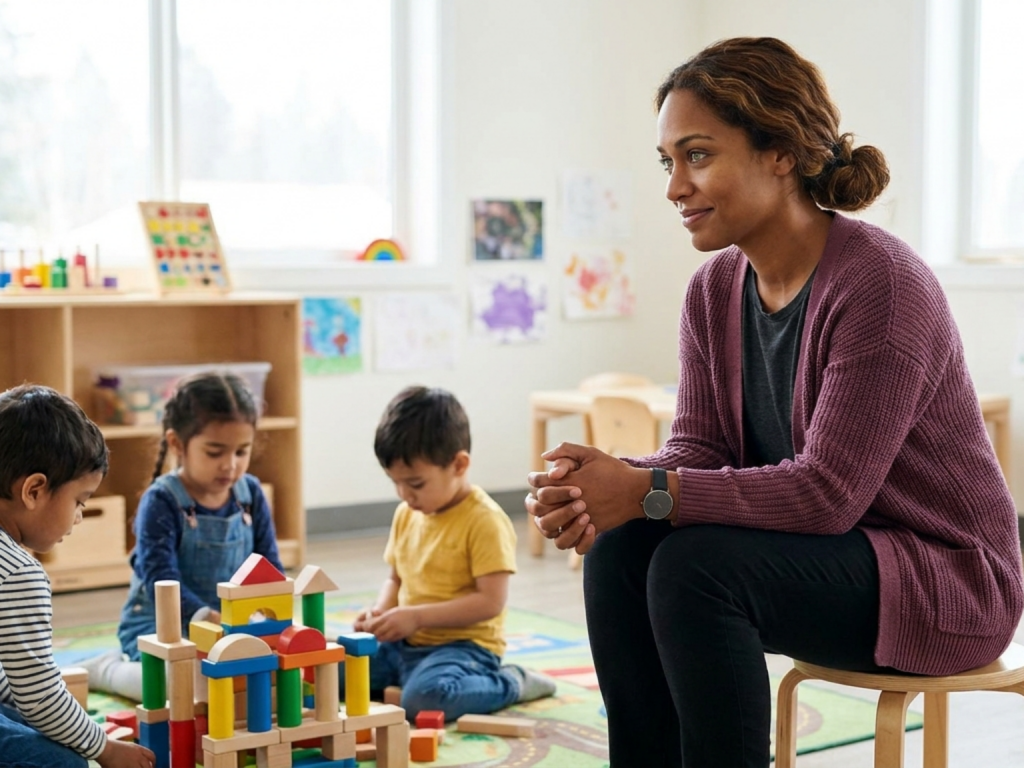
Friendship in the preschool years can look tender, noisy, changeable, and sometimes confusing. A child may call someone their best friend after one morning of block play, then feel devastated when that same child chooses a different partner after lunch. This is normal: preschoolers are still developing language, impulse control, perspective-taking, emotional regulation, and the social cognition needed to build stable relationships.
Highlights
Preschool friendships grow through repeated shared play, not through adult-style conversation or formal introductions.
Children need practice with sharing, turn-taking, listening, problem-solving, and noticing another child’s point of view.
Warm adult modeling, secure relationships, and calm supervision can support peer connection without taking over.
Some social difficulty is expected, but persistent isolation, aggression, anxiety, or developmental concerns should be discussed with a qualified professional.
What friendship looks like in preschool
Preschool friendship is often built around proximity, play themes, and shared routines. A child may choose a friend because they both like dinosaurs, sit near each other at snack, or repeatedly chase each other on the playground. These relationships can be meaningful even when they seem unstable. At this age, the brain systems involved in social cognition, inhibitory control, emotional regulation, and language are still maturing, so friendships may shift quickly from closeness to conflict and back again.
Many preschoolers move from parallel play, playing beside another child, toward associative and cooperative play, where they share materials, negotiate roles, and create a joint story. A child who says, “You be the doctor and I’ll be the baby,” is practicing symbolic thinking, role flexibility, and early empathy. These are foundational skills for later peer relationships.
Research summarized by the National Academies and NCBI notes that prior peer experience, such as child care, can support more positive, cooperative involvement with other children. This does not mean every child needs the same preschool path. It does suggest that repeated, supported exposure to peers helps children learn the unwritten rules of group life: how close to stand, how to enter play, when to wait, and how to recover after a disagreement.
The developmental skills behind making friends
When adults ask, “Why won’t my child just join in?” it helps to remember how many skills are required at once. Friendship is not a single ability; it is a complex developmental task involving language, motor coordination, sensory processing, emotional control, and executive function.
- Language: Children use words to invite, refuse, negotiate, pretend, and repair. A child with expressive language delay may want connection but rely on grabbing or yelling.
- Receptive understanding: Following play rules, understanding another child’s idea, and responding to social cues depend on comprehension.
- Executive function: Waiting, taking turns, shifting plans, and inhibiting impulses require immature but growing prefrontal networks.
- Emotion regulation: Disappointment, jealousy, excitement, and fatigue can overwhelm preschoolers. Co-regulation before self-regulation is often necessary.
- Theory of mind: Children gradually learn that another person can want, know, or feel something different from them.
These skills develop unevenly. A child may be advanced in vocabulary but struggle with frustration tolerance, or physically confident but easily overwhelmed by noise. Supportive adults can reduce shame by treating friendship as a skill set to practice, not a character test.
Attachment, temperament, and early peer experience
Early relationships shape, but do not rigidly determine, how preschoolers approach peers. Secure attachment in infancy has been associated with greater peer popularity and more harmonious preschool friendships. A securely attached child has usually had repeated experiences of comfort, repair, and responsive caregiving; those experiences can become a template for approaching others with curiosity and trust.
Temperament also matters. Some children are highly sociable and approach a group with enthusiasm. Others are slow-to-warm, observant, or sensitive to sensory input. A cautious preschooler may need time to watch before joining. That is not necessarily avoidance or pathology. In fact, encouraging a child to observe what others are doing can help them learn how to enter play: “They’re building a zoo. You could ask, ‘Can I make a cage for the tiger?’”
Moderate adult monitoring appears helpful. The goal is not to orchestrate every interaction or rescue children from all discomfort. Instead, adults stay near enough to notice exclusion, unsafe behavior, or escalating distress, while allowing children space to try solutions. This balanced stance supports autonomy and protects emotional safety.
Preschool learning 3 to 5 years explained often includes social-emotional learning in preschool because peer play is one of the main classrooms of early childhood. Children learn the social world by doing, repeating, and repairing.
How adults can model friendship skills
Preschoolers learn social behavior by watching adults. The tone adults use during disagreement, the way they greet neighbors, whether they apologize, and how they include others all become behavioral cues. A child who regularly sees adults listen, wait, compromise, and repair has more examples to imitate.
Useful modeling is concrete and visible. Instead of only saying, “Be nice,” adults can narrate social actions: “I’m going to ask before I use that,” “I’m disappointed, but I can try another idea,” or “I interrupted you; I’m sorry.” This gives children language scripts they can borrow during peer play.
Adults can also teach friendship micro-skills during calm moments:
- How to ask, “Can I play?”
- How to offer a role, such as “You can be the firefighter.”
- How to trade or take turns with a timer.
- How to say “Stop” clearly when a game feels uncomfortable.
- How to repair with words, actions, or both, such as “I’m sorry I knocked it down. I can help rebuild.”
Praise is most effective when it names the behavior: “You both decided to use the big blocks for the bridge. That was good teamwork.” Specific feedback strengthens the link between the child’s action and the positive social outcome.
Supporting playdates and group play without taking over
Playdates can help preschoolers maintain and deepen early friendships, especially when children have met in child care, preschool, or neighborhood settings. Short, predictable playtimes often work better than long, unstructured visits. Fatigue and hunger can quickly reduce impulse control, so timing matters.
Before a playdate, prepare the environment. Offer several activities rather than one prized toy that is likely to cause conflict. Blocks, pretend food, vehicles, art materials, simple outdoor equipment, and sensory bins can create flexible play. Put away treasured items your child is not ready to share; this is not failure, but realistic planning.
During play, stay calmly available. If children disagree, pause before intervening. Minor conflict is a learning opportunity. If the situation escalates, coach rather than judge: “You both want the truck. What can we do?” Younger preschoolers may need choices: “One can use it for two minutes, or you can find another truck together.”
Some children need entry strategies. You might quietly say, “Watch first. What are they playing? What job could you ask for?” This supports observation, social inference, and flexible participation. How preschoolers learn best is often through guided practice embedded in real play, not lectures after everyone is upset.
Helping with conflict, rejection, and loneliness
Friendship pain is real for preschoolers. Being told “You can’t play” may trigger intense sadness, anger, or shame. Adults should avoid dismissing the experience with “Don’t be silly” or “Just find someone else.” A more supportive response is, “That hurt your feelings. Everyone feels lonely sometimes. Let’s think about what you can do next.”
Understanding preschooler feelings helps adults respond to the emotion before solving the problem. When a child is dysregulated, the limbic system is highly activated and access to flexible reasoning is reduced. Calm presence, simple language, and physical space can help the child return to a state where learning is possible.
It is also important not to force friendship. Children are entitled to preferences, and not every peer relationship will become close. The goal is respectful inclusion and safe behavior, not compulsory best-friend status. If exclusion is repeated, targeted, or humiliating, adults should step in. Teachers can use buddy systems, small-group projects, and conflict-resolution routines to create opportunities for connection without publicly labeling a child as unpopular.
After conflict, repair matters more than a perfect apology. Some preschoolers say “sorry” automatically without understanding. Others show repair by helping rebuild, offering a toy, or agreeing to a new plan. Adults can guide repair in developmentally appropriate ways.
When friendship struggles need extra attention
Variation is normal. Some preschoolers prefer one close friend, some enjoy large groups, and some need solitude after stimulating social time. However, persistent or severe difficulty may warrant discussion with a pediatrician, child psychologist, speech-language pathologist, occupational therapist, or early childhood developmental specialist.
Consider seeking professional guidance if a child is consistently isolated despite supported opportunities, seems unable to understand simple social cues, has frequent aggressive behavior that harms others, shows extreme distress around peers, loses previously acquired language or social skills, or has sensory sensitivities that interfere with participation. These signs do not automatically indicate a diagnosis, but they deserve careful assessment in context.
Medical, developmental, and psychosocial factors can influence peer relationships. Hearing impairment, sleep disorders, language delay, neurodevelopmental differences, anxiety, trauma exposure, chronic illness, and family stress may all affect how a child manages group play. A qualified clinician can help distinguish typical developmental variability from concerns that need intervention.
Parents should also partner with educators. Ask what the teacher observes across settings: Does the child join one-on-one play more easily than groups? Are conflicts linked to transitions, noise, hunger, or specific materials? Pattern-based observation can guide practical supports while preserving the child’s dignity.
When to seek support promptly
- A child is frequently aggressive, injures others, or seems unable to stop unsafe behavior.
- A child has persistent social withdrawal, intense peer-related distress, or loss of previously acquired social or language skills.
- Friendship difficulties occur with significant speech, hearing, sensory, sleep, or developmental concerns.
- Bullying, repeated exclusion, or humiliating treatment is occurring in a care or school setting.
- Parents or educators feel worried that social struggles are affecting daily functioning or wellbeing.
Tools & Assistance
- Arrange short, structured playdates with two or three activity options.
- Use simple social scripts such as “Can I play?” and “Can I have a turn after you?”
- Ask preschool teachers for observations across group, outdoor, and one-on-one play.
- Consult a pediatrician or developmental professional if concerns are persistent or impairing.
- Practice emotion labeling and calming routines before and after peer play.
FAQ
Is it normal for preschool friendships to change often?
Yes. Preschoolers may form quick attachments and shift preferences as play themes, mood, and routines change. Stability usually increases with age and repeated positive experiences.
Should I force my child to share every toy on a playdate?
No. It is reasonable to put away treasured items and provide shareable toys. Sharing develops gradually and is easier when expectations are concrete and developmentally appropriate.
What if my child is shy and watches before joining?
Watching can be a useful strategy. You can support the child by naming what others are playing and suggesting a simple way to enter, without pressuring immediate participation.
When should I talk to a professional?
Seek guidance if social difficulties are persistent, severe, associated with developmental concerns, or causing significant distress at home or preschool.
Sources
- NCBI - NIH — Making Friends and Getting Along with Peers
- Raising Children Network — Preschoolers making friends
- Early Childhood Ireland — Developing friendships
Disclaimer
This article is for general educational purposes and does not replace medical, developmental, or mental health advice. If you are concerned about a child’s social development or behavior, consult a qualified healthcare professional.















Please log in to leave a comment.