
Intro
Friendship is a developmental achievement as well as a source of joy. Across childhood, children gradually move from parallel play and brief shared activities toward reciprocal, emotionally intimate relationships that involve loyalty, trust, repair after conflict, and a growing sense of identity.
Highlights
Friendship changes with cognitive, language, emotional, and social development, but age alone does not determine a child’s social path.
Young children often define friends by proximity and shared play, while older children increasingly value loyalty, fairness, and mutual support.
Adolescents usually place more emphasis on trust, self-disclosure, belonging, and autonomy within friendships.
Persistent isolation, bullying, or sudden social withdrawal deserves careful attention and may warrant support from health or school professionals.
Infancy and toddlerhood: the roots of social connection
Friendship does not begin as a miniature version of adult closeness. In infancy, the foundation is social engagement: eye contact, shared attention, turn-taking sounds, imitation, and the expectation that another person can respond. These early capacities are shaped by temperament, attachment experiences, sensory preferences, language development, and repeated opportunities to be near other children.
Babies may show preferences for familiar peers, but their relationships are usually organized around proximity and routine rather than stable mutual choice. A toddler may light up when a particular child arrives at childcare, imitate that child’s actions, or protest when a toy is taken. These behaviors are meaningful, but toddlers are still developing impulse control, perspective-taking, and symbolic language. Conflict is therefore common and not automatically a sign of poor social development.
Adults help most by creating predictable, low-pressure encounters. Short playtimes with duplicate toys, simple routines, and calm narration support early social learning. For example, saying, “You both want the truck; we can take turns,” gives language to an experience the child cannot yet organize alone. At this age, the goal is not to force sharing or label children as socially successful or unsuccessful. The goal is to build the neural and behavioral scaffolding for later reciprocity: waiting, noticing another child, recovering after frustration, and returning to play.
Preschool years: play, preference, and early reciprocity
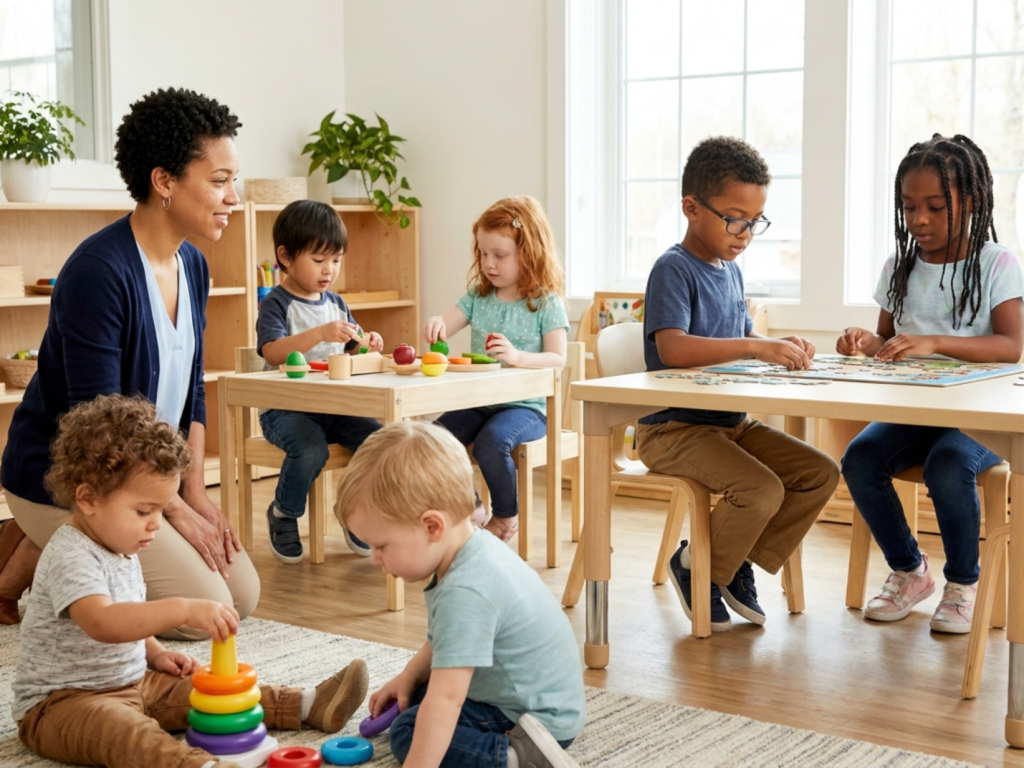
Between about ages 3 and 5, children often begin to describe other children as friends. How preschoolers make friends is usually visible in play: running together, building together, pretending together, laughing at the same idea, or repeatedly choosing the same partner. The friendship may be intense one day and disrupted the next, because preschoolers are still learning emotional regulation, flexible thinking, and social problem-solving.
Preschool friendships are commonly based on shared activities, physical proximity, and mutual liking. A child may say, “She is my friend because she plays dinosaurs with me.” This is developmentally expected. The deeper concepts of loyalty, privacy, and enduring emotional support are still emerging. Pretend play becomes especially important because it requires children to negotiate roles, scripts, rules, and meanings. These interactions strengthen executive function, language pragmatics, and early theory of mind, the ability to understand that another person may think or feel differently.
Caregivers can support preschool friendship skills through coaching rather than social performance pressure. Useful coaching includes practicing greetings, helping a child enter play by observing first, modeling words for frustration, and supporting repair after hurt feelings. A child who grabs, shouts, withdraws, or cries during peer play may not be “bad at friendship”; they may be overloaded, tired, hungry, anxious, or still developing the language needed for negotiation.
Some preschoolers prefer one familiar playmate, while others move easily among groups. Both patterns can be healthy. Concern rises when a child is persistently distressed around peers, frequently aggressive in ways that do not improve with guidance, loses previously acquired social communication skills, or seems unable to engage in shared attention. In those cases, pediatric, developmental, or early childhood mental health input can be helpful.
Early school age: rules, fairness, and belonging
In the early school years, roughly ages 6 to 8, children become more aware of group rules, fairness, inclusion, and comparison. Friendship development school age often includes the shift from “we play the same game” toward “we choose each other, help each other, and follow shared rules.” Children start to recognize that friendship involves cooperation over time, not just a pleasant moment.
School settings intensify peer learning because children spend more hours in groups, navigate classroom expectations, and encounter a wider range of personalities. They learn how to join an ongoing game, tolerate losing, manage teasing, respond to exclusion, and decide when to seek adult help. At the same time, their moral reasoning is still concrete. A child may feel deeply betrayed if a friend plays with someone else, because they may interpret friendship as exclusive or fixed.
Reciprocity becomes more visible. Children notice who shares, who keeps promises, who cheats, who listens, and who makes them feel accepted. They also begin to form reputations within peer groups, which can be protective or painful. A child who is labeled “bossy,” “weird,” “mean,” or “babyish” may need adult support to prevent that label from narrowing future opportunities.
Parents and teachers can help by focusing on specific social behaviors rather than global judgments. Instead of “be nicer,” a child may need concrete practice: asking to join, suggesting a compromise, reading facial cues, apologizing without excessive shame, or walking away from provocation. Structured clubs, small-group projects, and supervised recess options can reduce the social load for children who find unstructured peer time difficult.
Middle childhood: loyalty, mutual aid, and conflict repair
From about ages 9 to 12, friendships often become more stable and psychologically important. Children increasingly value loyalty, reliability, shared humor, secrets, and mutual aid. They may feel comforted by a friend who understands family stress, academic pressure, sports disappointment, or social embarrassment. Friendship becomes a place to practice identity, not only a place to play.
Perspective-taking improves during middle childhood, allowing children to understand that a friend can have mixed feelings or competing loyalties. This makes relationships richer, but it can also make conflict more complicated. Children may ruminate about whether someone is “really” their friend, whether a joke was meant to hurt, or whether a group is excluding them on purpose. Relational aggression, such as rumor-spreading, silent treatment, alliance-building, and social exclusion, can become more prominent.
Conflict is not automatically harmful. In healthy friendships, disagreements can teach negotiation, accountability, empathy, and repair. The key issue is whether the relationship allows emotional safety. A friendship that includes occasional arguments but also apologies, changed behavior, and warmth is very different from a pattern of humiliation, coercion, threats, or chronic exclusion.
Adults should resist the urge to micromanage every peer problem, but they should not dismiss distress as “just drama.” A supportive approach is to ask what happened, what the child felt, what they wanted, what they tried, and whether they feel safe. This helps the child build reflective capacity. When bullying, intimidation, discrimination, or self-harm talk is present, adult intervention is necessary. Consultation with school staff, a pediatrician, or a child mental health professional may be appropriate when distress is persistent or impairing.
Adolescence: intimacy, identity, and autonomy
Adolescent friendships are often marked by greater emotional intimacy. Teenagers may rely on friends for self-disclosure, validation, advice, and belonging. They may discuss worries, romantic feelings, body image, family conflict, sexuality, academic pressure, or future plans. This intimacy can be profoundly protective, but it can also amplify distress when friendships become unstable or controlling.
Developmentally, adolescence involves major changes in neurobiology, including ongoing maturation of executive function, reward sensitivity, emotion regulation, and social cognition. Peer approval can feel urgent because belonging is tied to identity formation. A teenager’s friendship group may influence clothing, music, language, risk behavior, sleep patterns, digital habits, and views about school or health. This does not mean parents become irrelevant. Warm, steady adult relationships remain protective, especially when teens face peer pressure or social rejection.
Digital communication in adolescents adds another layer. Texting, group chats, gaming platforms, and social media can maintain connection, especially for teens who feel isolated offline. They can also make exclusion constant and visible. A teen may be distressed not only by an argument, but by being removed from a chat, seeing friends gather without them, or feeling pressured to respond at all hours. Digital boundaries are therefore part of modern friendship development.
Healthy adolescent friendships usually allow privacy, difference, and growth. Warning signs include coercion, threats, humiliation, pressure to share sexual images, encouragement of dangerous behavior, or a relationship that isolates the teen from other supports. Adults can stay involved by being curious and non-punitive, asking about the quality of friendships rather than only monitoring names and platforms. If a teen shows marked withdrawal, severe mood changes, school refusal, substance use, self-harm concerns, or escalating conflict, professional assessment is important.
Why children develop friendships at different rates
Age-based patterns are useful, but they are not a timetable every child must follow. Research across the lifespan suggests that friendship patterns are shaped by personal and situational factors, not age alone. Children differ in temperament, language ability, sensory processing, attention regulation, anxiety level, motor coordination, cultural expectations, family stress, disability, neurodevelopmental profile, and exposure to stable peer groups.
A shy child may need longer warm-up time and smaller settings. A child with attention-deficit/hyperactivity traits may want friends but interrupt, miss cues, or act impulsively. An autistic child may seek connection in ways that differ from neurotypical expectations and may benefit from peers who share interests and accept direct communication. A child with chronic illness, hearing differences, speech-language disorder, or frequent school absences may have fewer opportunities for repeated peer contact. None of these patterns should be reduced to a character flaw.
Helping child build friendships starts with understanding the barrier. Some children need more practice with pragmatic communication. Some need adults to reduce bullying or exclusion. Some need environments where shared interests make conversation easier. Some need treatment or support for anxiety, depression, sleep problems, or developmental concerns. The most effective support is usually specific, compassionate, and collaborative: observe the pattern, ask the child what friendship feels like, coordinate with teachers when needed, and consider healthcare guidance if social difficulty is persistent, painful, or associated with functional impairment.
When to seek extra support
- A child is persistently isolated, rejected, or distressed by peer contact over weeks to months.
- There is bullying, coercion, threats, discrimination, or fear of going to school.
- Social withdrawal appears suddenly with mood changes, sleep disruption, appetite changes, or loss of interest.
- A child talks about self-harm, hopelessness, or not wanting to be alive.
- Friendship difficulties occur with developmental regression, severe aggression, or major impairment at home or school.
Tools & Assistance
- Speak with the child’s teacher or school counselor about observed peer interactions.
- Ask the pediatrician about developmental, hearing, language, sleep, anxiety, or mood concerns.
- Use structured activities based on the child’s interests to create repeated, low-pressure peer contact.
- Practice concrete scripts for joining play, setting boundaries, apologizing, and repairing conflict.
- Document patterns of bullying or exclusion and follow the school’s safeguarding process.
FAQ
Is it normal for a young child to change best friends often?
Yes. Preschool and early school-age friendships can be fluid because children often base friendship on current play, proximity, and shared interests.
Should parents arrange friendships for their child?
Parents can create opportunities, but children still need choice. Small, predictable settings often work better than forced socializing.
What if my child has only one close friend?
One supportive friendship can be healthy. Concern is higher if the relationship is controlling, frequently hurtful, or leaves the child isolated when that friend is unavailable.
When are friendship problems a medical or mental health concern?
They may warrant evaluation when distress is persistent, functioning is impaired, or there are concerns about anxiety, depression, neurodevelopment, bullying, or safety.
Sources
- PubMed Central — Friendship Trajectories and Health across the Lifespan
- Oxford University Press — Friendship in Childhood and Adolescence
- Karger — Review of Friendship Development across the Life Span
Disclaimer
This article is for general educational purposes and does not diagnose or treat any condition. Consult a qualified healthcare professional or mental health clinician for concerns about a child’s development, mood, safety, or functioning.

















Please log in to leave a comment.