
Intro
Friendships are not just a pleasant part of childhood; they are a central developmental experience. Through peers, children practice communication, empathy, negotiation, emotional regulation, and resilience. For some children, making friends comes easily. For others, shyness, impulsivity, language differences, anxiety, neurodevelopmental variation, frequent moves, bullying, or simply limited opportunities can make friendship feel confusing or discouraging.
Parents and caregivers can help without taking over. The goal is not to manufacture popularity, but to support social competence, confidence, and safe connection. A child may need gentle coaching, structured opportunities, adult modeling, or collaboration with teachers or clinicians when difficulties persist.
Highlights
Friendship skills develop gradually and can be taught through modeling, practice, and supportive feedback.
Short, structured play opportunities often work better than long, unplanned gatherings, especially for shy or socially inexperienced children.
Empathy, turn-taking, conflict repair, and emotional regulation are core friendship skills, not just manners.
Persistent social distress, isolation, bullying, or abrupt changes in behavior warrant discussion with teachers and healthcare professionals.
Why friendships matter in child development
Building friendships is a major developmental task of childhood. Peer relationships give children repeated practice in skills that adults use every day: reading social cues, waiting, sharing, compromising, expressing needs, managing disappointment, and repairing misunderstandings. Scientific reviews of early childhood development describe relationships with other children as a central pathway through which children develop social competence. Secure attachment in infancy, while not the only factor, is associated with later peer competence because early caregiver relationships help children learn trust, co-regulation, and expectations about how people respond to one another.
Friendship also supports mental and emotional health. A child who feels accepted by peers may be more willing to try new activities, tolerate frustration, and ask for help. Conversely, repeated rejection or exclusion can reinforce avoidance, anger, shame, or oppositional behavior. This does not mean every child needs a large social circle. Some children thrive with one or two close friends, and temperament matters. The meaningful goal is not popularity; it is the ability to connect, participate, and feel reasonably safe with peers.
Parents can view friendship as a skill domain rather than a fixed personality trait. A child who interrupts, clings, dominates games, withdraws, or gives up quickly may not be choosing to be difficult. They may be missing specific abilities: pragmatic communication in children, impulse control, emotion vocabulary, perspective-taking, or flexible problem-solving. When adults identify the skill gap, they can coach it more effectively and with less blame.
Start with your child’s temperament and developmental stage
Before offering advice, observe how your child approaches other children. Do they watch from the edge before joining? Do they rush into games and overwhelm peers? Do they prefer younger children, older children, or one-on-one play? Do they struggle most with transitions, losing, sharing attention, or interpreting jokes? These patterns help you tailor support.
Developmental expectations matter. Toddlers often engage in parallel play, playing near rather than with another child. Preschoolers may begin cooperative play but still need adult help with turn-taking and emotional outbursts. School-age children usually become more interested in shared rules, group identity, loyalty, and fairness. Adolescents may rely heavily on peer acceptance, digital communication, and more private social lives. Comparing a child to older siblings or highly social classmates can lead to unrealistic pressure.
Temperament is equally important. A slow-to-warm child may need repeated exposure to the same peer before feeling comfortable. A highly active child may do better with movement-based play than quiet conversation. A child with strong verbal skills may still struggle to notice boredom, irritation, or exclusion in another child. A child with social communication differences may need explicit teaching of unwritten rules that other children seem to absorb indirectly.
Use neutral language when discussing these patterns. Instead of saying, “You are bad at making friends,” try, “Joining a game is a skill we can practice,” or “It looks like waiting for your turn is hard when you are excited.” This keeps the child’s identity separate from the difficulty and makes improvement feel possible.
Create low-pressure opportunities for connection
Children need chances to meet peers repeatedly. Social skills rarely develop through lectures alone; they require practice in real interactions. Start with settings that match your child’s interests and tolerance. Clubs, sports, art classes, library groups, playground routines, faith or cultural groups, and neighborhood activities can help children meet others with shared interests. Shared activity reduces the pressure to “make conversation” because the activity itself provides structure.
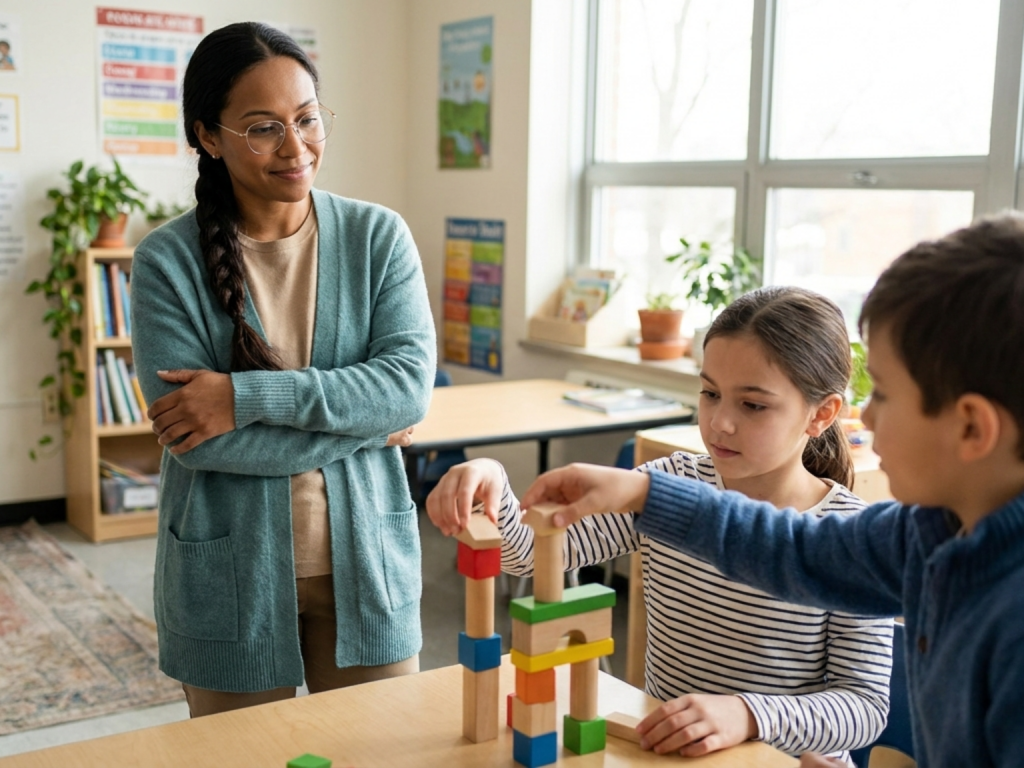
For children who feel anxious or become dysregulated in groups, short playdates can be more effective than long visits. A 45- to 60-minute playdate with one compatible child may prevent fatigue and conflict. Plan one or two activities in advance, such as building blocks, baking, drawing, kicking a ball, or a cooperative board game. Avoid starting with high-conflict activities if your child struggles with losing, sharing, or waiting.
It can help to rehearse simple social scripts before the event. For example: “Hi, do you want to play?” “Can I have a turn after you?” “What should we build?” “I need a break.” These scripts are not meant to make a child robotic; they reduce cognitive load during a socially demanding moment. Role-playing social skills at home can be playful and brief. Parent and child can take turns being the host, guest, or child trying to join a game.
Afterward, debrief gently. Ask, “What was fun?” “Was anything tricky?” “What might you try next time?” Praise effort and specific behaviors: “You asked what she wanted to play,” or “You stayed calm when the tower fell.” Specific feedback is more useful than global praise because it tells the child which actions build friendships.
Teach empathy, communication, and emotional regulation
Friendships rely on empathy and reciprocal communication. Children learn these abilities from repeated coaching and adult modeling. Name feelings in everyday situations: “He looks disappointed that the game ended,” or “You seemed frustrated when you had to wait.” Emotion vocabulary helps children connect internal states with behavior, which supports self-regulation and perspective-taking.
Teach listening as an active behavior. Many children need explicit instruction to face the speaker, pause before responding, ask a follow-up question, or notice whether the other child is still interested. Keep expectations developmentally appropriate; a preschooler’s listening will look different from a ten-year-old’s. For children who miss subtle cues, describe observable signs: “When he moved away and stopped answering, he may have wanted a break.”
Conflict is not a failure of friendship. In healthy relationships, children learn how to repair. A simple repair sequence can include: stop, calm the body, say what happened, listen to the other person, suggest a solution, and try again. For younger children, adults may need to co-regulate first: lower the voice, reduce stimulation, and help the child breathe or take space before discussing the problem.
Helpful coaching phrases include:
- “Tell me what you wanted, without grabbing.”
- “Ask if they want help before taking over.”
- “You can be upset and still use safe hands.”
- “A good apology says what you did and what you will try next.”
- “If a friend says stop, stopping is part of being a friend.”
Modeling matters. Children watch how adults disagree, apologize, include others, and speak about people who are absent. If a caregiver regularly shows patience, boundaries, humor, and repair after conflict, the child receives a living example of friendship skills in elementary school and beyond.
Support independence without taking over
It is natural to want to protect a child from loneliness or rejection. However, managing every interaction can unintentionally communicate that the child cannot handle social challenges. A balanced approach is to scaffold: provide enough support for success, then gradually step back. For a young child, this might mean helping start a play activity and then observing from nearby. For an older child, it might mean brainstorming how to invite a classmate over, then letting the child send the message or ask in person.
Offer choices rather than commands. “Would you rather invite Sam to the park or join the robotics club?” gives the child agency. Agency is important because friendships are reciprocal; a child must learn to notice their own preferences as well as others’. Some children are pushed into social situations they dislike and then appear “antisocial,” when the setting is simply a poor fit.
Encourage gradual exposure for shy children. This means starting with manageable steps and repeating them until confidence grows. A progression might be smiling at a classmate, saying hello, asking one question, joining a brief activity, and later inviting the child to play. Avoid forcing public performance, teasing the child about shyness, or speaking for them every time. Gentle preparation and predictable routines are usually more effective than sudden pressure.
At the same time, independence does not mean ignoring distress. If your child repeatedly reports exclusion, bullying, humiliation, or fear, intervene appropriately. Children need to know adults will protect safety and dignity. The skill is knowing when to coach from the sidelines and when to step in.
When a child struggles: look for patterns, not blame
Friendship difficulties can arise for many reasons. Some children have limited social exposure. Others have language delays, hearing difficulties, attention regulation problems, anxiety symptoms, motor coordination challenges, sensory sensitivities, learning differences, or neurodevelopmental conditions that affect social communication. Family stress, sleep deprivation, chronic illness, relocation, grief, or bullying can also change a child’s social behavior. None of these possibilities should be assumed from friendship problems alone, but they are worth considering if difficulties are persistent or impairing.
Track patterns over time. Does the child struggle across settings or only in one classroom? Are conflicts mainly during competitive games? Does the child misread sarcasm or facial expressions? Do they become aggressive only when overstimulated? Do they avoid peers because of fear of embarrassment? Clear observations help teachers, pediatricians, psychologists, speech-language pathologists, or occupational therapists decide whether further evaluation or support may be useful.
Collaborate with teachers early. Teachers often see peer dynamics that parents cannot observe, including group roles, recess behavior, seating patterns, and subtle exclusion. Ask specific questions: “Who does my child play with?” “When do conflicts happen?” “Are there children they seem comfortable near?” “Could a structured buddy activity help?” If school-based support is available, it may include social skills groups, counseling, classroom accommodations, or supervised peer activities.
Seek professional guidance if your child is persistently isolated, highly distressed, bullied, aggressive, regressing, refusing school, or showing sleep, appetite, mood, or anxiety changes. A clinician can help distinguish typical developmental variation from concerns that need assessment. Avoid diagnosing your child or another child based only on social behavior; careful evaluation considers developmental history, environment, function, and impairment.
Digital friendship and modern social life
Digital communication can support friendship, especially for children separated by distance or those who benefit from structured virtual playdates. A video call to build together, draw together, or play an age-appropriate cooperative game can be a bridge to connection. For some children, digital interaction lowers the intensity of face-to-face conversation and allows more time to process language.
However, digital spaces also require supervision and explicit teaching. Children may misinterpret tone, share impulsively, or encounter exclusion through group chats and online games. Discuss privacy, kindness, consent before sharing images, and what to do if a message feels threatening or humiliating. Younger children generally need close adult monitoring; older children need clear boundaries and a trusted pathway to ask for help without immediate shame or overreaction.
Use digital tools as one part of social development, not the entire social world. Many friendship skills, such as reading body language, negotiating shared materials, and tolerating real-time frustration, are best practiced in person. A healthy plan may include both: structured online contact with known peers and regular offline opportunities based on the child’s interests and energy level.
When to seek extra help
- Your child is persistently isolated, excluded, or distressed about having no friends.
- There are signs of bullying, intimidation, humiliation, or fear of school or activities.
- Friendship problems are accompanied by sleep changes, appetite changes, mood symptoms, aggression, regression, or school refusal.
- Your child has ongoing difficulty with communication, sensory regulation, attention, or understanding social cues across settings.
- You feel unsure whether the issue is typical development, anxiety, neurodevelopmental difference, or another concern.
Tools & Assistance
- Arrange short, structured playdates with one compatible peer.
- Practice simple scripts for joining games, taking turns, and asking for a break.
- Ask teachers for observations about recess, group work, and peer interactions.
- Use clubs or extracurricular activities based on the child’s genuine interests.
- Consult a pediatrician, child psychologist, speech-language pathologist, or school counselor if concerns persist.
FAQ
How many friends does a child need?
There is no required number. Some children are happy with one close friend, while others enjoy larger groups. Focus on connection, safety, and mutual respect rather than popularity.
Should I force my shy child to socialize?
Force usually increases anxiety. Gentle, gradual exposure with preparation, predictable settings, and praise for effort is more supportive.
What if my child is often rejected by peers?
Look for patterns and ask teachers what they observe. The child may need coaching in specific skills, a better-matched peer group, or professional evaluation if difficulties are persistent.
Are playdates still useful for school-age children?
Yes. Short, structured playdates can help school-age children deepen relationships, especially when the activity is based on shared interests.
Can online friendships be healthy for children?
They can support connection when supervised and age-appropriate, but children also need offline practice with body language, shared play, and real-time conflict repair.
Sources
- National Center for Biotechnology Information, National Institutes of Health — Making Friends and Getting Along with Peers
- University of Michigan Human Resources — Caring for Kids: Helping Your Child Build Meaningful Friendships
- Raising Children Network — How to help your child make friends
Disclaimer
This article is for informational purposes only and does not diagnose or treat any condition. Consult a qualified healthcare professional or school-based specialist for concerns about your child’s development, behavior, or mental health.


















Please log in to leave a comment.