
Intro
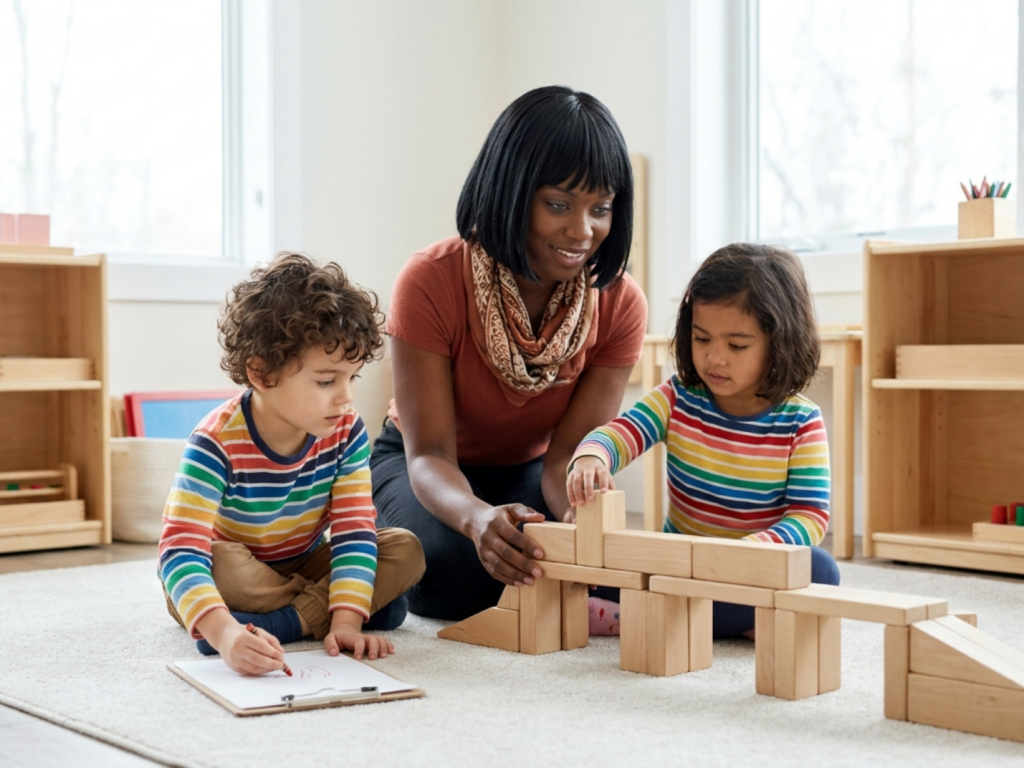
Children build more than towers when they stack blocks, fit pieces together, or test whether a bridge will hold a toy car. They are also practicing planning, flexible thinking, persistence, and early problem-solving. These abilities develop gradually, and they grow best when adults offer activities that are playful, a little challenging, and emotionally safe.
This article explains how to choose and adapt building activities so they support executive function, which includes working memory, inhibitory control, and cognitive flexibility. It also shows how to coach without taking over, when to simplify a task, and when to ask a pediatric or developmental professional for advice.
Highlights
Building play can support planning, self-control, and flexible thinking because children must decide, try, revise, and try again.
The best activities are not the easiest ones; they are the ones that are just challenging enough to invite problem-solving without causing overload.
Adults help most when they slow the child down, ask guiding questions, and praise strategy rather than only the finished result.
Simple household materials can be as useful as special toys when the activity is designed with a clear goal and room for experimentation.
Why building activities support planning and thinking ahead
Building activities are powerful because they ask a child to imagine an outcome before acting. A child has to choose pieces, predict what will happen, and notice whether the first idea works. That sequence is a form of planning, and it is closely tied to executive function in children. Executive function is a set of mental skills that helps a child hold a goal in mind, stop and start actions, and switch strategies when something goes wrong.
Research on early problem solving has shown that children reveal their thinking through action. In block play and tool use, motor behavior can show whether a child is planning ahead or simply reacting in the moment. When a child tests a tower, adjusts a bridge, or experiments with a ramp, the brain is learning that failure is information, not the end of the task. That is why building play can be so valuable: it gives repeated, concrete practice in noticing a problem, selecting a response, and checking the result.
For many children, the important skill is not building the biggest structure. It is tolerating the pause between idea and action. That pause is where planning begins.
What makes a building activity effective
Not every toy automatically teaches planning. The activity works best when it has a goal, a clear set of materials, and enough room for the child to make decisions. A strong building task should be open-ended, meaning there is more than one possible solution. It should also be adjustable, so an adult can make it easier or harder without changing the whole game.
To build preschool executive function skills, start with a simple structure and then add one new demand at a time. For example, ask the child to build a tower that is taller than a book, then to make it stable, then to copy a model, and later to build it with fewer pieces. The Institute of Education Sciences recommends intentionally designed games and activities, increasing challenge over time, and embedding practice across the day. That approach fits building play very well.
- Use materials that can be taken apart and tried again, such as blocks, cups, cardboard, magnetic tiles, or nesting toys.
- Give a clear purpose, such as making a bridge, a house for a toy animal, or a path that reaches a target.
- Ask a child to predict, plan, and review: What will you do first? What might happen next? What should change?
- Keep the task short enough that the child can stay engaged and successful.
Age-appropriate building ideas from toddlerhood onward
Young children do not need elaborate worksheets to practice planning. They need opportunities to touch, stack, compare, and repair. For toddlers, the aim is simple cause and effect. For preschoolers, the aim becomes choosing a strategy and following a sequence. By early school age, children can compare plans, track steps, and begin to explain why one solution worked better than another. These gradual shifts are part of normal growth, and they are closely related to toddler problem-solving skills in the earliest years.
Some useful examples include:
- Stacking and toppling games: Let the child predict how many pieces can fit before the tower falls.
- Bridge building: Ask the child to span two books or boxes and test whether a toy car can cross.
- Ramp experiments: Try different slopes, surfaces, or starting heights to see what changes the movement.
- Copy-the-model challenges: Show a simple structure and let the child recreate it from memory.
- Container and nesting tasks: Sort objects by size, fit them in order, and then reorganize when a piece does not fit.
These activities can be done at home, in preschool, or in therapy settings. The exact material matters less than the opportunity to plan, test, and revise.
How group play strengthens planning and flexible problem-solving
Building alone helps a child focus. Building with others adds negotiation, shared goals, and turn-taking. In group problem solving activities, children have to decide who will gather pieces, who will hold the structure, and what to do when two ideas conflict. That combination of planning and social coordination is especially useful because real life often requires both at once.
Group building can also reveal how a child responds when a plan changes. One child may want a tall tower, while another wants a road or a fort. Instead of treating that as a mistake, adults can frame it as a design problem: How can the group combine ideas? What can be built first? What needs to be moved to make space? This kind of coaching encourages flexibility without shaming disagreement.
If a child becomes upset, the goal is not to force collaboration instantly. The goal is to help the child return to the shared task with enough calm to think clearly. Short, well-supported building sessions are often more productive than long ones that end in fatigue.
How adults can coach without taking over
Adults often want to help quickly when a child is stuck, but too much help can remove the learning opportunity. A better approach is to scaffold. Scaffolding means offering enough support to keep the child engaged while still leaving the planning work in the child’s hands. That may include pointing to the next step, naming a strategy, or asking one focused question at a time.
Useful prompts include: What is your plan? What do you think will happen if you put that piece there? What could you try next? Should we make the base wider? This kind of language teaches children to pause before acting. It also fits the recent finding that planning time improves problem-solving performance, even when tasks become more difficult. In other words, a brief pause can be productive, not wasted time.
Praise should focus on strategy, effort, and recovery. For example, say, You tried a new base, or You noticed it was wobbly and fixed it. That teaches the child to value revision, not just success. Over time, children begin to internalize that same self-talk.
When to simplify the task or ask for extra support
Many children need a smaller step, not a different child. If the task is too difficult, simplify it by using bigger pieces, fewer steps, a clearer visual model, or a shorter time limit. If the task is too easy, add one new rule, such as building higher, copying a pattern, or using only certain pieces. The right level of challenge keeps the child alert but not overwhelmed.
Also watch for barriers that are not about thinking alone. Fine-motor difficulty, vision concerns, language delays, sensory overload, or fatigue can make building harder. A child who avoids the task may be signaling discomfort, not a lack of intelligence or motivation. If challenges are persistent across settings, or if a child seems far behind peers in daily play, discuss the concern with a pediatrician or a qualified developmental professional. They can help decide whether a developmental screening, occupational therapy input, or other support is appropriate.
Building activities should feel encouraging. When children are supported at the right level, they can experience success, frustration, recovery, and pride all in one play session. That combination is what helps planning skills grow.
When to pause and reassess
- Avoid small loose pieces for children who still mouth objects or cannot use them safely.
- Stop the activity if the child becomes highly distressed, exhausted, or unsafe while trying to build.
- Do not assume repeated failure means low ability; it may reflect motor, sensory, language, or attention barriers.
- Seek professional advice if difficulties are persistent across home, school, and play settings.
Tools & Assistance
- Large blocks, cups, cardboard tubes, and magnetic tiles
- A pencil and paper for a quick building plan or sketch
- A timer or sand timer to practice short planning pauses
- Support from a pediatrician, occupational therapist, or early childhood teacher if concerns persist
FAQ
What age can start building activities?
Even toddlers can begin with simple stacking, nesting, and knocking down. The task should match the child’s motor and attention skills.
Do children need expensive toys to practice planning?
No. Household materials such as boxes, cups, blocks, and cardboard can work very well when the goal is clear.
What should I do if my child gets frustrated?
Reduce the challenge, offer one small hint, and help the child pause before trying again. If frustration is frequent, shorten the activity and try again later.
How often should we do these activities?
Short, regular practice is usually better than long sessions. A few minutes many times a week can be enough.
Sources
- Institute of Education Sciences, U.S. Department of Education — What Works Clearinghouse Educators Practice Guide: Preparing Young Children for School – Recommendation 2: Strengthen children’s executive function skills using specific games and activities
- PubMed — The development of problem solving in young children
- Taylor & Francis Online — Preschoolers’ initial planning time on problem-solving performance across task difficulties: insights from intelligent tutoring mobile application log data
Disclaimer
This article is for educational purposes only and does not replace individualized medical, developmental, or therapy advice. If you are concerned about a child’s learning, behavior, motor skills, or safety, consult a pediatrician or qualified child development professional.
















Please log in to leave a comment.