
Intro
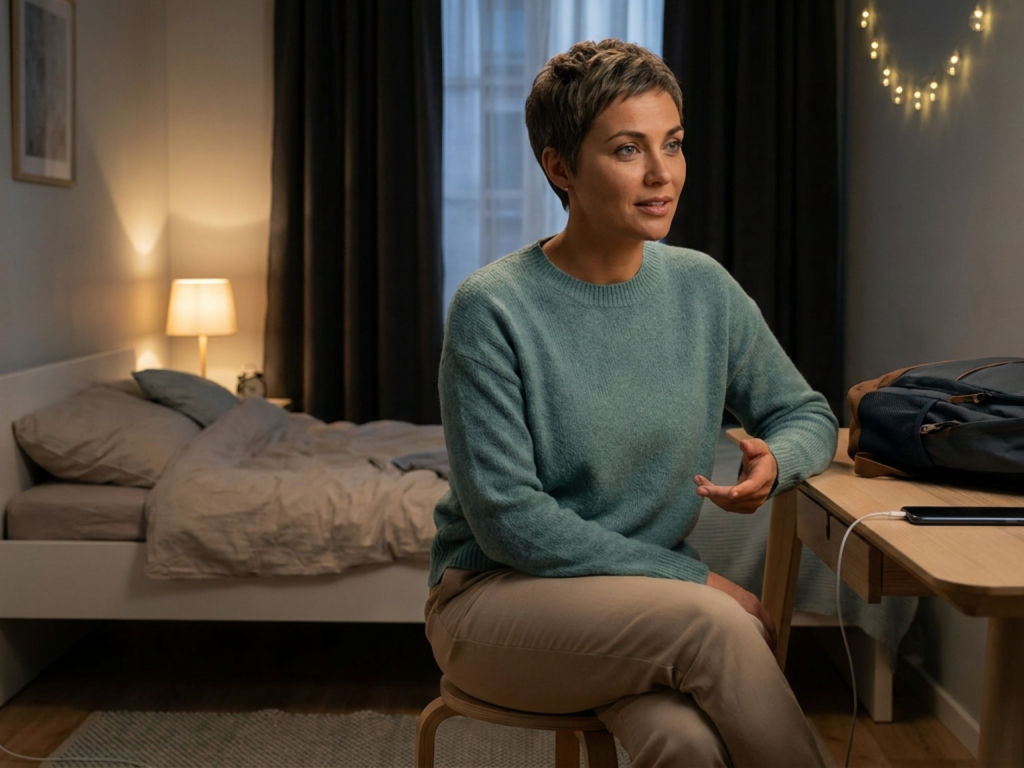
Teen sleep can be confusing for families because the adolescent body often seems to be awake at the very time school, activities, and household routines expect rest. This is not simply stubbornness or poor motivation. Puberty changes circadian timing, sleep pressure, mood regulation, and the way teenagers respond to light, stress, caffeine, and screens.
For medically literate parents and caregivers, it helps to view teen sleep as a biologically driven health behavior shaped by school schedules, mental health, neurodevelopment, family routines, and the sleep environment. The goal is not perfection, but a realistic pattern that protects learning, safety, emotional resilience, and physical development.
Highlights
Most teenagers ages 13 to 18 need 8 to 10 hours of sleep per night, and many do best near the upper end of that range.
Puberty commonly causes a later circadian phase, meaning a teen may not feel sleepy until later even when they are genuinely tired.
Insufficient sleep is linked with poorer attention, mood dysregulation, risk-taking, drowsy driving, and reduced academic functioning.
Consistent wake times, morning light, reduced evening light exposure, and a cool, dark bedroom can meaningfully support sleep.
Persistent insomnia, loud snoring, excessive daytime sleepiness, depression symptoms, or unsafe sleepiness should prompt medical evaluation.
How much sleep teens need
Most adolescents ages 13 to 18 need 8 to 10 hours of sleep each night. Some clinical experts describe the optimal target for many teens as around 9 to 9.5 hours, especially during periods of rapid growth, demanding academics, athletic training, or emotional stress. The exact number varies, but routinely sleeping 6 to 7 hours is usually not enough for a developing adolescent brain and body.
Sleep supports synaptic remodeling, memory consolidation, immune signaling, endocrine regulation, appetite hormones, and emotional inhibition. In practical terms, adequate sleep helps teens learn, tolerate frustration, recover from exercise, maintain safer reaction times, and regulate impulses. When sleep is chronically restricted, a teenager may look irritable, withdrawn, unmotivated, hyperactive, anxious, or physically run down rather than simply “sleepy.”
Families sometimes compare adolescents with younger children and expect less sleep as independence grows. It is true that sleep needs gradually decline across childhood, but teen sleep needs remain substantial. A useful framework is child sleep needs by age, because it shows that adolescence is not adulthood. A 16-year-old with a 6:30 a.m. wake time may need to be asleep by roughly 9:00 to 10:30 p.m. to meet the recommended range, which can conflict with biology and school demands.
Why the teenage body clock shifts later
During puberty, the circadian system commonly shifts later. Melatonin secretion, the biologic signal that helps the body prepare for sleep, tends to occur later in the evening. At the same time, many teens develop a slower buildup of subjective sleepiness across the day. This pattern is often described as teen circadian phase delay or adolescent circadian delay.
This does not mean boundaries are irrelevant. It means that telling a teen to “just go to bed earlier” may fail if the brain is not yet physiologically ready for sleep. Lying awake for long periods can also condition the bed as a place of frustration. A more effective approach is to shift the entire circadian signal: bright light soon after waking, dimmer light in the evening, regular meals and activity timing, and a predictable sleep-wake schedule.
Puberty and delayed sleep onset are amplified by modern lighting. Phones, tablets, laptops, gaming systems, and bright bedroom lights can suppress or delay melatonin signaling, especially when used close to bedtime. Content matters too: emotionally intense messages, social media conflict, homework stress, or competitive gaming can maintain cognitive and autonomic arousal even after the device is turned off.
Common reasons teens do not get enough sleep
Many adolescents are not sleep deprived because they lack insight; they are sleep deprived because sleep opportunity is squeezed from every direction. Early school start times are a major driver. A teen who must wake at 6:00 a.m. may need to fall asleep before 10:00 p.m. to get 8 hours, and closer to 9:00 p.m. for 9 hours. For a biologically delayed adolescent, that can be difficult without coordinated changes.
- Academic workload: Evening homework, test anxiety, and late extracurricular commitments can push bedtime later.
- Technology: Screens add light exposure, stimulation, social pressure, and time displacement.
- Caffeine: Coffee, energy drinks, pre-workout supplements, and some sodas can impair sleep onset and sleep depth for hours.
- Sports and employment: Late practices, competitions, rehearsals, or shifts reduce recovery time.
- Weekend oversleeping: Sleeping far later on weekends can worsen Monday morning circadian misalignment, sometimes called social jet lag.
- Mental health: Anxiety, depression, trauma, eating disorders, and neurodevelopmental conditions can disrupt sleep timing and quality.
It is important to avoid blame. Sleep loss often reflects an environment that is misaligned with adolescent physiology. The most successful plans usually reduce competing demands rather than relying only on willpower.
What inadequate sleep can look like
Teenagers do not always present with classic sleepiness. Some nap whenever possible, fall asleep in class, or sleep until noon on weekends. Others show more subtle signs: morning headaches, poor concentration, slower processing speed, emotional volatility, increased conflict, cravings for high-sugar foods, or declining athletic performance. In some teens, insufficient sleep can mimic or worsen attention problems.
Chronic sleep restriction can also affect safety. Drowsy driving is a serious concern for older teens, particularly early in the morning, late at night, after sports, or after a short sleep night. Reaction time, lane control, hazard perception, and decision-making all deteriorate with sleep loss. Families can treat adequate sleep as part of driving readiness, much like seatbelts, substance avoidance, and phone-free driving.
Sleep and mental health have a bidirectional relationship. Poor sleep can intensify anxiety, irritability, and depressive symptoms, while anxiety and depression can make sleep harder. A teen who is persistently exhausted, hopeless, socially withdrawn, self-harming, or unable to function should not be managed with sleep hygiene alone. A pediatrician or qualified mental health professional can help assess medical, psychiatric, and psychosocial contributors.
Building a realistic sleep routine
A sustainable routine begins with the wake time, not the bedtime. Because circadian rhythms are strongly anchored by morning light and activity, a consistent wake time helps the body predict when sleep should occur the next night. The schedule does not have to be identical every day, but large weekend shifts can undermine progress. Many families aim to keep weekend wake times within about 1 to 2 hours of school-day wake times when possible.
A pre-bed routine should be brief, repeatable, and low-friction. For example: finish essential homework earlier when possible, prepare clothes and school materials, dim lights, take a warm shower, charge the phone outside the bed area, and choose a calming activity such as reading, stretching, or quiet music. The routine should signal safety and predictability rather than become another performance demand.
Families may need to negotiate technology boundaries collaboratively. Phone-free zones can work better when they are framed as a whole-house health habit rather than a punishment. Parents and caregivers can model the behavior by reducing their own late-night device use. For some teens, an alarm clock can replace the phone at the bedside. Notifications should be silenced, and charging should ideally happen away from the pillow to reduce both light exposure and the urge to check messages.
Optimizing the bedroom and daily rhythm
The sleep environment should support the biology of sleep: dark, quiet, cool, and associated with rest. A bedroom temperature around 65°F, when comfortable and safe, is often recommended because body temperature naturally drops during sleep onset. Blackout shades, an eye mask, a fan, or white noise may help if light or sound is unavoidable. The mattress and bedding do not need to be expensive, but they should allow comfortable, safe sleep.
Morning light is a powerful tool. Exposure to outdoor light soon after waking helps advance the circadian clock, making it easier to feel sleepy earlier at night. Even a short walk to school, breakfast near a bright window, or time outside before first class can help. In the evening, dimming lights and reducing screen brightness can support melatonin timing.
Naps can be useful but require care. A short afternoon nap, such as 20 to 30 minutes, may help a very tired teen function without strongly disrupting nighttime sleep. Long naps or naps late in the evening can delay sleep onset. If a teen needs prolonged daily naps despite adequate sleep opportunity, that pattern deserves medical discussion rather than simple reassurance.
When to seek professional help
Sleep hygiene is helpful, but it is not a substitute for medical evaluation when warning signs are present. Families should consider contacting a pediatrician if insomnia persists for weeks, if the teen is unable to wake for school despite adequate time in bed, or if sleepiness interferes with safety, learning, or mood. A clinician can screen for depression, anxiety, substance use, medication effects, iron deficiency, thyroid disease, chronic pain, and other contributors.
Snoring also matters. Habitual loud snoring, witnessed pauses in breathing, gasping, restless sleep, morning headaches, or significant daytime sleepiness may suggest sleep-disordered breathing. This is not limited to younger children or adults. A pediatric sleep specialist evaluation may be appropriate if obstructive sleep apnea, restless legs syndrome, circadian rhythm sleep-wake disorder, narcolepsy, or another sleep disorder is suspected.
Families sometimes ask about melatonin. Melatonin may be useful in selected adolescents, particularly for circadian timing problems, but timing, dose, product quality, and underlying diagnoses matter. It should not be treated as a harmless substitute for schedule and light management. Discussing it with a pediatrician is especially important if the teen takes other medications, has neurologic or psychiatric conditions, or has persistent insomnia.
Seek medical advice promptly if
- A teen has loud habitual snoring, pauses in breathing, gasping, or severe restless sleep.
- Daytime sleepiness creates safety risks, including drowsy driving or falling asleep in unsafe settings.
- Sleep problems occur with persistent depression, self-harm thoughts, panic, substance use, or major functional decline.
- Insomnia or extreme delayed sleep timing persists despite consistent routine and adequate sleep opportunity.
- A teen needs long daily naps or cannot stay awake in class after apparently sufficient nighttime sleep.
Tools & Assistance
- Keep a 2-week sleep diary with bedtimes, wake times, naps, caffeine, screens, and mood notes.
- Create a family charging station outside bedrooms to support phone-free sleep.
- Use morning outdoor light and a consistent wake time as the anchor of the schedule.
- Discuss persistent sleep problems with a pediatrician before using supplements such as melatonin.
- Ask schools and community programs about later start times or schedule adjustments when feasible.
FAQ
Is it normal for a teenager to stay up late?
A later sleep phase is common in puberty, but regularly getting too little sleep is not ideal. The goal is to align biology, routines, and obligations so the teen can obtain 8 to 10 hours when possible.
Should teens sleep in on weekends?
Some catch-up sleep may help after a short week, but sleeping many hours later can worsen circadian misalignment. A weekend wake time within 1 to 2 hours of school days is often more stabilizing.
Are naps good or bad for teens?
Short early-afternoon naps can help some tired teens. Long or late naps may delay bedtime, and a need for frequent prolonged naps should be discussed with a healthcare professional.
Can a phone in the bedroom really affect sleep?
Yes. Light exposure, notifications, social stimulation, and the habit of checking messages can delay sleep onset and fragment rest. Charging phones away from the bed is a practical first step.
When should melatonin be considered?
Melatonin should be discussed with a pediatrician, especially if sleep problems persist, the teen has other health conditions, or medications are involved. Timing and underlying causes matter.
Sources
- Sleep Foundation — Teens and Sleep
- UCLA Health — How much sleep do teens need? And how to help them get enough
- Johns Hopkins Medicine — Teenagers and Sleep: How Much Sleep Is Enough?
Disclaimer
This article is for educational purposes only and does not diagnose or treat medical conditions. Consult a qualified healthcare professional for persistent sleep problems, safety concerns, or mental health symptoms.

















Please log in to leave a comment.