
Intro
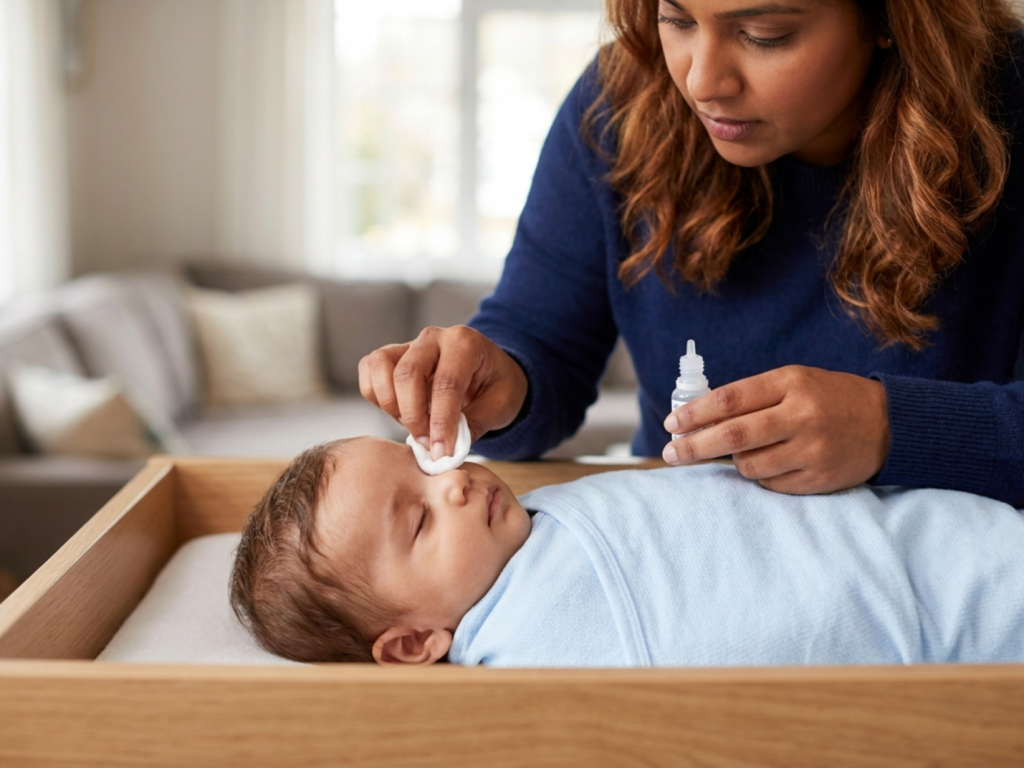
Cleaning a baby's eyes and nose is usually a matter of gentle hygiene, not aggressive cleaning. The goal is to remove crust, mucus, or milk residue without irritating delicate tissue or pushing material deeper into the eye or nasal passage.
In most routine situations, plain water for the eyes and saline for the nose are enough. If discharge is persistent, the eye looks red or swollen, or breathing is affected, the safer move is to seek advice from a healthcare professional rather than trying to solve it at home.
Highlights
Use a fresh piece of cotton wool or a clean cloth for each eye so you do not spread discharge from one side to the other.
Wipe the eye from the inner corner near the nose outward, using light pressure and a single pass when possible.
Saline sprays or saline washes can help loosen mucus in a baby's nose without harsh manipulation.
Sticky eyes and a congested nose are common, but persistent redness, swelling, fever, or feeding difficulty deserves medical review.
Why the eyes and nose need gentle care
Baby eyes and noses are not miniature adult structures. The conjunctiva, eyelid margins, and nasal mucosa are thin, highly vascular, and easily irritated. Even a small amount of dried milk, tear film debris, or mucus can look dramatic, but the answer is usually calm, local care rather than repeated cleaning.
In the eyes, discharge may collect at the inner corners because tears drain toward the nose through the nasolacrimal system. In the nose, mucus can dry quickly because infants breathe mostly through the nose and have narrow passages. That combination makes a little crusting common, especially after sleep, feeding, or a mild viral upper respiratory infection.
The practical goal is to restore comfort and preserve the skin and mucosal barrier. Overcleaning can do the opposite: it can redden the eyelids, inflame the skin around the nostrils, and make both areas more reactive. A careful routine should therefore be simple, brief, and repetitive only when there is a clear reason.
How to clean a baby's eyes
Start with hand hygiene. Wash your hands well, then prepare a clean bowl of water and soft cotton wool or a clean cloth. Many parents prefer cotton wool because it can be discarded after a single use. The key principle is the same either way: one clean piece per wipe, and one eye at a time.
Moisten the cotton wool or cloth with water, then gently wipe from the inner corner near the nose outward. That direction follows the natural drainage path and reduces the chance of moving debris toward the tear duct. If there is crusted discharge, hold the damp cloth over the closed eyelid for a few moments first so the material softens before you wipe. A warm compress can help with hardened discharge, but it should be comfortably warm, not hot.
If both eyes need attention, use a fresh piece of cotton wool or a fresh section of cloth for the second eye. Do not reuse the same piece after it has touched one eye. That simple habit matters because it reduces the chance of spreading infection from one side to the other. If the lashes are stuck together, loosen them gradually rather than pulling.
Routine eye cleaning should never involve cotton buds, tissue corners, or fingernails. Those can scratch the delicate ocular surface or irritate the eyelid margin. If the eye looks persistently red, the eyelids are swollen, or discharge becomes thick, green, or recurrent, the issue deserves professional assessment.
How to clear a baby's nose safely
A stuffy nose can interfere with feeding and sleep because young babies still prefer to breathe through the nose. The safest home approach is to soften the mucus rather than force it out. Saline spray or saline drops can loosen dried mucus and make it easier for the baby to clear the nose naturally.
Place the baby in a comfortable position, then use the saline as directed on the product or by the clinician who recommended it. After a short pause, the mucus may soften enough to come out with a sneeze or gentle wiping of the outer nostril. If you are using any form of nasal wash, keep the pressure very gentle and stop if the baby becomes distressed.
Clean only the visible outer part of the nostrils. A soft cloth or cotton pad can remove what is sitting at the entrance, but do not insert anything into the nostril. Cotton swabs, tissue twists, and other narrow tools can irritate the nasal lining or push mucus further in. The nose is not a place for probing. It is a place for softening and surface cleaning.
If the baby is feeding well, breathing comfortably, and otherwise alert, occasional mucus is usually manageable. If congestion starts to affect feeding or sleep significantly, or if the baby has repeated episodes, a clinician can advise whether a different approach is needed.
What to avoid during cleaning
Most problems in eye and nose cleaning come from doing too much. Avoid rubbing the eyes, even if they look sticky, because friction inflames the skin and can worsen discharge. Avoid using one cloth across both eyes or across the eye and nose without changing to a clean section. Avoid soaps, antiseptics, or medicated products unless they were specifically recommended for this purpose.
For the nose, avoid forceful suctioning, repeated probing, and inserting swabs or tissue. Those methods can traumatize the nasal lining and make congestion worse through swelling. Do not use adult decongestants or over-the-counter cold medicines unless a healthcare professional has told you to do so; infants are not small adults, and dosing is not interchangeable.
Also avoid trying to sterilize the area. The eye and nose are not meant to be stripped of all secretions. A modest amount of mucus and tear film is normal and protective. The purpose of cleaning is to restore comfort and function, not to make the skin look perfectly dry and polished.
If you find yourself cleaning the same area again and again, pause and ask whether the baby is truly uncomfortable or whether you are reacting to normal secretions. A restrained approach is usually the better one.
When to seek medical advice
Home care is appropriate only when the baby otherwise seems well. Seek clinical advice if the eye discharge is persistent, thick, or accompanied by marked redness, swelling, or sensitivity to light. Also seek help if the eyelids are glued shut repeatedly, if one eye is clearly more affected than the other, or if the symptoms do not settle with gentle cleaning.
For the nose, get help if congestion is interfering with feeding, if breathing looks labored, or if the baby is unusually sleepy, irritable, or difficult to settle. Any sign of dehydration, poor intake, or reduced wet nappies should be taken seriously. A fever in a very young infant should also be discussed promptly with a clinician, because the threshold for assessment is lower in early infancy.
It is also reasonable to seek advice if you are unsure whether the discharge is simple mucus or part of a wider illness. That is not overreacting. Babies can deteriorate quickly, and the cost of asking a professional is low compared with the risk of missing a more significant problem.
When in doubt, describe the pattern rather than guessing at the cause: when the discharge started, whether it is one-sided or both-sided, whether there is fever, and whether feeding or breathing has changed. Those details help clinicians judge the next step.
Making the routine easier
A small, repeatable routine is easier on both the baby and the caregiver. Keep a clean cloth, cotton wool, and saline within reach before you start. Wash your hands first, then work slowly and stop as soon as the visible debris is gone. There is rarely a need for prolonged cleaning sessions.
It also helps to separate eye care from other face care. If the baby has milk on the cheeks, saliva on the chin, or residue in the skin folds, handle those areas separately so you do not transfer material toward the eyes. That is where gentle face cleansing for babies becomes useful as a broader habit: clean the surrounding skin with soft, focused movements, then return to the eye or nose only if needed.
Many parents find it easiest to clean after a nap, a feed, or a bath, when crusted discharge has softened. Others prefer to do it before a feed so the baby can breathe more comfortably. Either approach is fine if the baby is calm and the method is gentle. The important part is consistency, not force.
Over time, the routine should feel almost boring. That is a good sign. The best eye and nose care in infancy is usually quiet, brief, and unremarkable.
When not to manage this at home
- Do not use cotton buds, fingernails, or other narrow tools inside the eye or nostril.
- Do not reuse the same cotton piece across both eyes.
- Do not force suction or probing if the nose is blocked.
- Do not use medicated drops, decongestants, or antiseptics unless a clinician advises it.
- Do not ignore fever, breathing difficulty, swelling, or worsening discharge.
Tools & Assistance
- Plain water and clean cotton wool or a soft cloth for eye cleaning
- Saline spray or saline drops for loosening nasal mucus
- A clean towel or cloth for drying the surrounding skin
- Your baby's pediatrician, family doctor, or local urgent care service for persistent symptoms
FAQ
Should I clean my baby's eyes every day?
Only as needed. Routine cleaning is useful when there is visible discharge or crusting, but the eyes do not need repeated wiping if they are clean and comfortable.
Can I use breast milk, soap, or baby shampoo in the eyes or nose?
No. For routine care, plain water is the safer choice for the eyes, and saline is the usual gentle option for the nose unless a clinician advises otherwise.
Is thick discharge always an infection?
Not necessarily, but thick, persistent, or worsening discharge should be assessed by a healthcare professional rather than assumed to be harmless.
What if my baby fights the cleaning?
Keep the process brief, gentle, and limited to what is necessary. If the baby remains distressed or the symptoms are worsening, ask a clinician for guidance.
Sources
- NHS — Washing and bathing your baby
- MedlinePlus Medical Encyclopedia — Stuffy or runny nose - children
- Cambridge University Hospitals NHS Foundation Trust — Eye care for your child
Disclaimer
This article is for general informational purposes only and does not replace medical advice, diagnosis, or treatment. If your baby has concerning symptoms, seek guidance from a qualified healthcare professional.

















Please log in to leave a comment.