
Intro
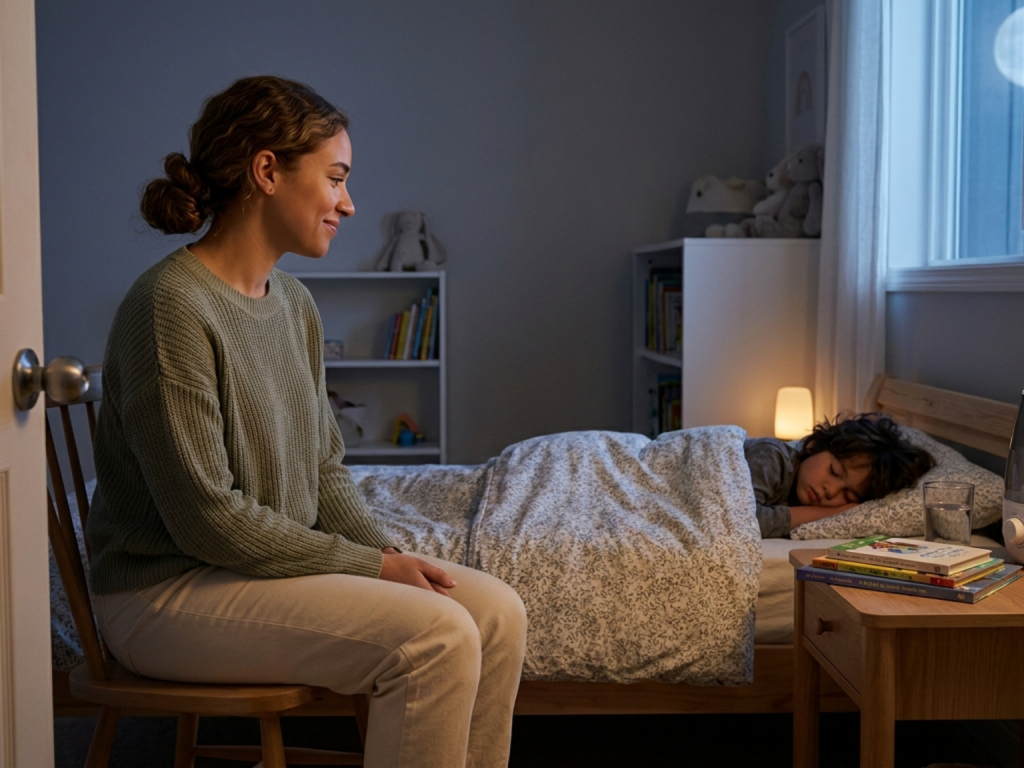
Night waking in school-age children can be exhausting and emotionally difficult for the whole family. Parents may wonder whether the child is frightened, overtired, seeking reassurance, unwell, or developing a sleep disorder. Children may feel embarrassed, anxious, or genuinely unable to return to sleep without help.
Most nighttime awakenings are not dangerous, but persistent or disruptive waking deserves careful attention. Sleep affects attention, learning, mood regulation, physical health, and family functioning. A calm, structured approach can help families identify patterns, reduce unhelpful sleep associations, and know when medical evaluation is needed.
Highlights
Night waking is common in childhood, but frequent or distressing awakenings can impair daytime attention, mood, and behavior.
School-age night waking may reflect behavioral sleep patterns, anxiety, environmental inconsistency, illness symptoms, sleep-disordered breathing, restless sleep, or medications.
A consistent bedtime routine, predictable parental responses, and a stable sleep environment are often central to improvement.
Snoring, breathing pauses, significant daytime sleepiness, pain, seizures, severe anxiety, or developmental regression warrant professional assessment.
Understanding night waking in school-age children
Night waking means a child wakes after sleep onset and has difficulty returning to sleep, especially when the awakening requires caregiver involvement or causes next-day impairment. Brief arousals are physiologically normal; all children cycle through lighter and deeper sleep stages. The clinical issue is not simply that a child wakes, but whether the waking is frequent, prolonged, distressing, associated with symptoms, or disruptive to learning, behavior, and family rest.
Research on pediatric sleep health suggests that waking overnight is a common sleep health issue in school-age children, affecting a substantial minority. Poor sleep health, including frequent nighttime awakenings, has been associated with poorer cognitive functioning and more ADHD-like symptoms. This does not mean night waking causes ADHD or that every restless sleeper has a neurodevelopmental disorder. It does mean that sleep should be considered when a child has inattention, irritability, impulsivity, emotional lability, or academic decline.
Development also matters. In infancy and early childhood, waking overnight is often the most prominent sleep behavior. By middle childhood, difficulty falling asleep and maintaining independent sleep may become more noticeable, especially when school pressures, screen use, anxiety, and inconsistent schedules enter the picture. Families should view night waking as a solvable pattern to understand, not a character flaw in the child or a parenting failure.
Common reasons a school-age child wakes at night
Night waking usually has multiple contributors. A child may have one major driver, such as obstructive sleep apnea, but many families find that mild discomfort, anxiety, inconsistent routines, and learned sleep associations overlap. A useful first question is: what does the child need in order to fall back asleep? If the answer is always a parent lying nearby, a light being turned on, a snack, or a device, the pattern may be maintained by sleep associations even if it began during an illness or stressful period.
- Behavioral insomnia in children: This term is often used when difficulty initiating or maintaining sleep is linked to learned associations, limit-setting challenges, or inconsistent bedtime responses. It is not a judgment; it describes a pattern that can often be improved with structured routines.
- Anxiety and bedtime fears: School-age children may worry about separation, safety, school performance, family conflict, storms, intruders, illness, or nightmares. They may be able to describe fears more clearly than younger children but still need adult help learning coping skills.
- Medical discomfort: Allergic rhinitis, asthma symptoms, eczema itch, reflux, constipation, headaches, growing pains, infections, or medication effects can fragment sleep.
- Sleep-disordered breathing: Habitual snoring, gasping, witnessed pauses, mouth breathing, restless sleep, morning headaches, or daytime sleepiness should prompt medical review.
- Restless sleep and movement symptoms: Some children have uncomfortable leg sensations, frequent limb movements, or iron-related restless legs symptoms. Evaluation may include a careful history and, when appropriate, laboratory testing guided by a clinician.
The role of routines and sleep associations
A consistent bedtime routine helps the brain predict sleep. For a school-age child, this usually means a sequence that is brief, warm, and repeatable: hygiene, pajamas, reading or quiet conversation, lights out, and a calm goodnight. The exact routine matters less than its consistency. Bedtime should ideally occur at a developmentally appropriate time and vary as little as possible between school nights and weekends.
One key principle is that the sleep environment at bedtime should match the sleep environment during the night. If a child falls asleep with a parent in bed, a bright hallway light, music that later turns off, or a television playing, the child may wake during a normal sleep transition and feel that something is missing. Many pediatric sleep programs advise placing children in bed drowsy but awake so they practice the skill of falling asleep in the same conditions they will encounter later.
Parents often worry that encouraging independent sleep means being cold or ignoring distress. It does not. A supportive approach can include reassurance, predictable check-ins, and praise for effort. The goal is to reduce the amount of intervention required, not to withdraw emotional availability. For example, a parent might check briefly at increasing intervals, use a calm phrase, avoid turning on screens or starting negotiations, and leave before the child is fully asleep. This is sometimes called a checking method. If awakenings continue after several weeks, the same consistent response can be used during the night.
Responding in the moment without escalating the pattern
When a child wakes at 2 a.m., everyone is more vulnerable to frustration. A preplanned response helps parents avoid bargaining, long explanations, or sudden changes in rules. The response should be calm, brief, and boring enough not to reward waking, while still conveying safety. A parent might say, “You are safe, it is sleep time, I will check on you again,” then leave. The words should be simple and repeated consistently.
For children who leave their room repeatedly, families may need a plan that is firm but gentle. Some children do better with a visual bedtime chart, a comfort object, or a small reward for staying in bed until a defined morning time. Positive reinforcement for children works best when it rewards the desired behavior, such as using coping skills or returning to bed, rather than punishing the waking itself. Rewards should be modest, immediate, and achievable.
It is also important to avoid inadvertently making night waking more powerful. Long conversations, repeated snacks, screen time, sleeping in a different bed every night, or changing rules during distress can strengthen the cycle. If a child is frightened, acknowledge the feeling while maintaining the boundary: “I know that felt scary. Your body can settle. I will check again.” Children learn from repeated experiences that waking is manageable and sleep can resume.
Daytime clues and the school connection
Night waking often shows up during the day. Some children become sleepy, but others become hyperactive, oppositional, tearful, impulsive, or distractible. Teachers may report that the child has trouble sustaining attention, remembering instructions, tolerating frustration, or completing tasks. Because insufficient or fragmented sleep can resemble behavioral or attentional problems, sleep history should be part of any evaluation for school-age behavior problems.
A child sleep diary is one of the most useful low-risk tools. For two weeks, caregivers can record bedtime, estimated sleep onset, awakenings, parental responses, wake time, naps, caffeine exposure, screen use, exercise, medications, illness symptoms, and next-day functioning. The purpose is not to create perfection; it is to identify patterns. For example, night waking may cluster after late sports practices, weekend schedule shifts, scary media, allergy flares, or stressful school days.
Families can also ask teachers for specific observations rather than broad judgments. Useful questions include whether the child is sleepier in the morning, more irritable after poor nights, or struggling with attention at predictable times. If academic or behavioral concerns are significant, clinicians may consider sleep alongside anxiety, ADHD, learning disorders, mood symptoms, family stress, and medical conditions. Integrated family-school interventions can be helpful when poor sleep and daytime behavior are reinforcing each other.
When medical evaluation is especially important
Many night waking patterns improve with consistent routines, but some require medical assessment. Parents should consult a pediatrician or qualified healthcare professional when awakenings are frequent, prolonged, worsening, or associated with daytime impairment. Evaluation may include a detailed sleep history, growth review, medication review, physical examination, screening for anxiety or mood symptoms, and consideration of referral to a sleep specialist, allergist, pulmonologist, neurologist, or behavioral health clinician depending on findings.
Red flags include loud habitual snoring, witnessed apneas, gasping, cyanosis, labored breathing, morning headaches, marked daytime sleepiness, sudden episodes that look seizure-like, confusion with injury risk, persistent pain, vomiting, weight loss, fever, severe nightmares after trauma, or new neurologic symptoms. Children with neurodevelopmental conditions, chronic illness, prematurity history, craniofacial differences, obesity, or significant allergic disease may need more individualized assessment.
Medication should not be started, stopped, or changed without professional guidance. This includes over-the-counter sleep aids, antihistamines used for sedation, melatonin, herbal products, and prescription medications. Although some interventions may be appropriate for selected children, the right approach depends on age, diagnosis, other medications, developmental profile, and the balance of benefit and risk.
Building a realistic family sleep plan
A good plan is specific, compassionate, and sustainable. Start with one or two changes rather than trying to fix everything at once. Choose a stable bedtime and wake time, protect a wind-down period, remove screens before bed, and make the bedroom dark, quiet, cool, and consistent. If the child needs a night-light, use a dim one that stays on all night. If sound is used, keep it steady rather than timed to shut off after sleep onset.
Discuss the plan during the day, not at 3 a.m. Children benefit from knowing exactly what will happen: where they will sleep, what they can do if they wake, how parents will respond, and what success looks like. Coping options might include slow breathing, cuddling a comfort object, looking at a visual reminder card, or quietly returning to bed. For anxious children, gradual exposure for childhood anxiety may be needed, ideally with guidance when symptoms are intense or impairing.
Parents should expect some variability. Illness, travel, family stress, or developmental transitions can temporarily disrupt sleep. If a plan is safe and appropriate, consistency over several weeks matters more than one difficult night. Caregivers also need rest and support. When sleep deprivation is affecting parental mood, work, driving safety, or the family’s ability to cope, asking for professional help is a strength, not a failure.
Seek prompt medical advice if
- Your child has loud habitual snoring, gasping, pauses in breathing, or labored breathing during sleep.
- Night waking is accompanied by seizures, fainting, confusion with injury risk, severe headache, persistent vomiting, fever, or weight loss.
- There is significant daytime sleepiness, falling asleep at school, academic decline, or unsafe behavior.
- Nightmares or nighttime panic follow trauma or are associated with severe distress or self-harm statements.
- You are considering melatonin, sedating antihistamines, supplements, or prescription sleep medication.
Tools & Assistance
- Keep a two-week sleep diary including bedtime, awakenings, symptoms, and next-day functioning.
- Create a predictable bedtime routine chart with the child during daytime hours.
- Ask the pediatrician about snoring, restless sleep, allergies, asthma, pain, medications, or anxiety symptoms.
- Coordinate with teachers to identify patterns between poor sleep and school performance or behavior.
- Consider referral to a pediatric sleep clinic or child mental health professional when impairment persists.
FAQ
Is it normal for a school-age child to wake at night?
Brief awakenings are normal. It becomes more concerning when waking is frequent, prolonged, distressing, requires repeated caregiver help, or affects daytime mood, attention, learning, or safety.
Should I stay with my child until they fall back asleep?
Occasional comfort is understandable, especially during illness or stress. If staying becomes required every night, a gradual plan with brief, predictable check-ins may help the child relearn independent sleep.
Can anxiety cause night waking?
Yes. School worries, separation concerns, nightmares, safety fears, and family stress can all disrupt sleep. Persistent anxiety, school refusal, or severe distress should be discussed with a healthcare or mental health professional.
When should snoring be evaluated?
Habitual loud snoring, gasping, pauses in breathing, restless sleep, morning headaches, or daytime sleepiness should be reviewed by a pediatrician because sleep-disordered breathing can affect health and learning.
Are sleep medicines the answer?
Medication is not the first step for most children and should only be considered with professional guidance. Behavioral, environmental, and medical contributors should be assessed first.
Sources
- National Institutes of Health / PubMed Central — Childhood sleep: physical, cognitive, and behavioral consequences of poor sleep health
- National Institutes of Health / PubMed Central — Child sleep behaviors and sleep problems from infancy to school-age
- Nationwide Children's Hospital — Nightwakings
Disclaimer
This article is for informational purposes only and does not replace medical evaluation, diagnosis, or treatment. Consult a qualified healthcare professional for concerns about your child’s sleep, breathing, behavior, medications, or safety.
















Please log in to leave a comment.