
Intro
Preschool sleep can be surprisingly complicated. A 3- to 5-year-old may be exhausted yet resist bedtime, wake repeatedly, have frightening dreams, or snore loudly enough to worry the whole household. These problems are common, but they are still worth taking seriously because sleep is tightly linked with attention, mood regulation, learning, growth, and family functioning.
This article reviews common preschool sleep issues in a practical, medically cautious way. It does not diagnose your child, but it can help you recognize patterns, collect useful information, and know when to involve a pediatrician, pediatric sleep specialist, dentist, psychologist, or other qualified clinician.
Highlights
Many preschool sleep problems are behavioral, environmental, medical, or a mixture of all three; the pattern over time matters more than one difficult night.
Night waking, parasomnias, and sleep-disordered breathing are especially important because research links them with later emotional and behavioral difficulties.
Consistent routines, adequate sleep opportunity, and a calm response to night waking can help, but snoring, breathing pauses, marked daytime sleepiness, or safety risks need medical review.
Families should not feel blamed: sleep is influenced by temperament, neurodevelopment, illness, household routines, room sharing, stress, and caregiver exhaustion.
Why preschool sleep deserves careful attention
Preschool sleep is not simply a pause between busy days. During sleep, children cycle through non-rapid eye movement and rapid eye movement stages that support memory consolidation, emotional processing, immune function, endocrine regulation, and neurodevelopment. When sleep is repeatedly shortened or fragmented, a preschooler may not look sleepy in the adult sense. Instead, they may become impulsive, oppositional, tearful, clingy, hyperactive, or less able to cope with transitions.
Research in preschool-aged children has found meaningful associations between sleep disturbance and later emotional and behavioral difficulties. In a prospective cohort study, night waking, sleep-disordered breathing, and parasomnias were among the most robust predictors of incident emotional and behavioral problems. Related reporting noted that children with new or ongoing sleep disturbances were more than twice as likely to develop new difficulties compared with good sleepers, and night-waking behaviors carried particularly high risk in that dataset.
This does not mean that poor sleep is the only cause of challenging preschool behavior. Developmental stage, temperament, language skills, anxiety, family stress, sensory differences, medical conditions, and school demands can all contribute. However, sleep is a modifiable domain. If a child is struggling with attention, tantrums, aggression, separation distress, or preschool emotional regulation, a careful sleep history is often a sensible starting point.
How much sleep do preschoolers usually need?
Most preschoolers need a generous sleep opportunity across 24 hours, often including nighttime sleep and, for some children, a daytime nap or quiet rest period. Needs vary, but persistent nighttime sleep of less than 9 hours is a signal to look more closely at the child’s routine, sleep quality, and daytime functioning. In one study of preschool children, 43.4% had total sleep duration less than 9 hours, making it the most common criterion identified among sleep problems in that sample.
The practical question is not only, “How many hours did my child spend in bed?” but also, “How much restorative sleep did they actually get?” A child who is in bed for 10 hours but wakes frequently, snores, has prolonged bedtime battles, or rises very early may still experience insufficient sleep. Conversely, occasional short nights during travel, illness, or family events are usually less concerning than a consistent pattern.
Clues that sleep may be inadequate include difficulty waking in the morning, falling asleep during short car rides, frequent late-day meltdowns, increased impulsivity, poor frustration tolerance, headaches, worsening listening problems in preschoolers, or regression in self-care skills. If these signs persist despite a reasonable schedule, it is worth discussing them with a clinician rather than assuming the child is simply “difficult.”
Bedtime resistance and sleep-onset difficulties
Bedtime resistance is one of the most familiar preschool sleep issues. It may look like repeated requests for water, extra stories, bathroom trips, fear of being alone, sudden hunger, or running out of the bedroom. Sleep-onset difficulty means the child has trouble falling asleep even when the bedtime routine appears complete. These patterns can arise from inconsistent schedules, overtiredness, late naps, stimulating evening activities, separation anxiety, screen exposure close to bedtime, or a mismatch between bedtime and the child’s circadian rhythm.
Supportive strategies often begin with predictability. A brief, repeatable routine might include toileting, toothbrushing, pajamas, a quiet book, a phrase of reassurance, and lights out. Visual schedules can help some children understand the sequence without repeated negotiation. Families may also benefit from deciding in advance how they will respond to “curtain calls,” because exhausted caregivers naturally become inconsistent when the requests keep coming.
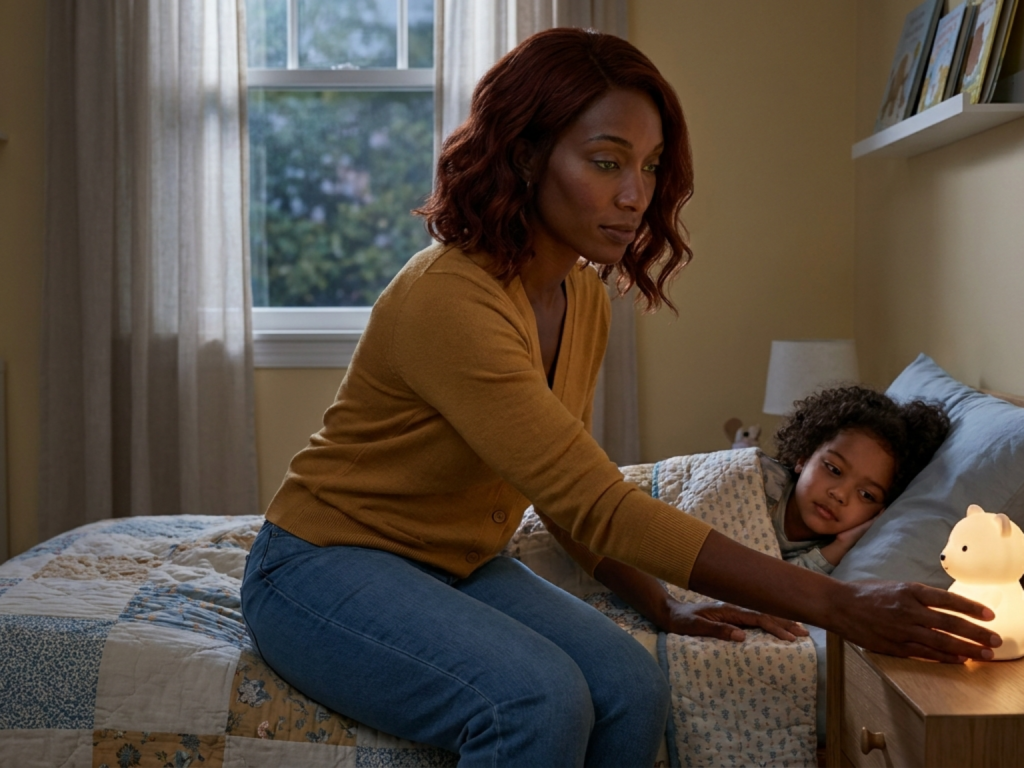
It is important to distinguish limit-testing from genuine fear or distress. Preschoolers have vivid imaginations and limited ability to separate dreams, worries, and reality. A calm check of the room, a night light, a transitional object, or practicing a coping phrase may help. If bedtime anxiety is intense, escalating, associated with trauma, or interfering with daytime participation, consider developmental screening for emotional behavior and consultation with a pediatric or mental health professional.
Night waking, co-sleeping patterns, and early morning waking
Night waking is developmentally common, but it becomes a sleep issue when it is frequent, prolonged, distressing, unsafe, or impairing the child or family. Preschoolers may wake because of learned sleep associations, nightmares, discomfort, asthma or eczema symptoms, reflux, nocturnal enuresis, environmental noise, inconsistent schedules, or sleep-disordered breathing. Some children fall asleep only with a caregiver present and then need the same condition restored after normal nighttime arousals.
Co-sleeping and room sharing are family decisions influenced by culture, housing, breastfeeding history, anxiety, and caregiver preference. The key clinical question is whether the arrangement is safe and restorative for everyone. Research on preschool sleep problems has reported higher prevalence among children who slept in a room with siblings, parents, or others compared with those sleeping in their own room. This finding does not prove that room sharing causes sleep problems, but it suggests that sleep environment can influence night waking, noise exposure, and settling patterns.
Early morning waking can be especially draining. It may reflect too-early bedtime, too-late bedtime with overtiredness, excessive daytime sleep, morning light exposure, household noise, or a child’s natural chronotype. Rather than changing everything at once, families can track bedtime, sleep onset, night wakings, wake time, naps, snoring, illness symptoms, and daytime behavior for one to two weeks. A child sleep diary can make medical and behavioral consultations more efficient.
Nightmares, night terrors, and other parasomnias
Parasomnias are unusual behaviors or experiences during sleep. In preschoolers, common examples include nightmares, sleep terrors, sleepwalking, confusional arousals, and rhythmic movements. Nightmares usually occur during rapid eye movement sleep and may leave the child awake, scared, and able to recall frightening content. Comfort, reassurance, and avoiding frightening media may be helpful. Recurrent nightmares can also be associated with stress, anxiety, trauma exposure, or certain medications, so context matters.
Night terrors are different. They typically occur out of deep non-rapid eye movement sleep, often in the first part of the night. A child may sit up, scream, sweat, appear terrified, and not recognize caregivers. Attempts to wake the child may make the episode longer or more confusing. Many children have little or no memory of the event. Sleep deprivation, irregular schedules, fever, and stress can increase vulnerability.
Most occasional parasomnias are benign, but safety and pattern recognition are essential. Secure windows and doors, remove tripping hazards, avoid top bunks if sleepwalking occurs, and mention episodes during routine care. Seek medical advice promptly if events are very frequent, involve injury, include unusual stiffening or rhythmic jerking, occur multiple times nightly, are associated with daytime neurologic symptoms, or if seizures are a concern. Because parasomnias were identified as robust predictors of later emotional and behavioral difficulties in preschool research, persistent episodes deserve thoughtful follow-up rather than dismissal.
Snoring, mouth breathing, and sleep-disordered breathing
Habitual snoring in children is not something to ignore. Pediatric sleep-disordered breathing exists on a spectrum from primary snoring to obstructive sleep apnea, in which airflow is repeatedly reduced or blocked during sleep. Preschoolers may have enlarged tonsils or adenoids, allergic rhinitis, chronic nasal obstruction, craniofacial factors, neuromuscular conditions, or overweight status contributing to risk. The JAMA Network Open cohort identified sleep-disordered breathing as one of the strongest predictors of incident emotional and behavioral difficulties, and children with overweight status had higher risk in the study context.
Possible signs include loud snoring on most nights, pauses in breathing, gasping, restless sleep, unusual sleep positions, sweating during sleep, persistent mouth breathing, morning headaches, bedwetting after dryness was established, daytime sleepiness, hyperactivity, irritability, or growth concerns. Some children with sleep-disordered breathing are not sleepy; they are wired, impulsive, and hard to settle.
A clinician may ask about symptoms, examine the nose, throat, tonsils, jaw, growth pattern, blood pressure, and allergic disease, and consider referral for sleep testing or an ear, nose, and throat evaluation. Families should avoid starting medications, supplements, or devices without professional guidance. If breathing pauses, bluish color, severe respiratory distress, or marked lethargy occur, urgent medical care is appropriate.
Restless sleep, discomfort, and medical contributors
Some preschoolers sleep poorly because their bodies are uncomfortable. Eczema itching, asthma symptoms, chronic cough, allergic congestion, constipation, reflux, recurrent ear problems, pain, fever, medication effects, and nocturnal enuresis can all fragment sleep. Restless legs syndrome in children and periodic limb movements are less obvious but may present as difficulty settling, leg discomfort, kicking, frequent position changes, or daytime fatigue. Iron deficiency can be relevant in some cases, but testing and treatment decisions should be clinician-led.
Neurodevelopmental differences can also affect sleep. Children with autism spectrum disorder, attention differences, sensory sensitivities, anxiety, or language delays may struggle with transitions, internal cues, and self-soothing. A child who cannot explain pain, fear, or sensory overload may communicate through bedtime refusal or night waking. Families should not be told that every sleep issue is “just behavior” without considering medical and developmental contributors.
When sleep problems coincide with illness symptoms, regression, weight changes, persistent snoring, feeding problems, seizures, developmental concerns, or significant daytime impairment from poor sleep, medical review is prudent. The goal is not to label a preschooler prematurely, but to avoid missing treatable contributors that make ordinary bedtime strategies fail.
A family-centered approach to improving sleep
A useful approach begins with observation rather than blame. Track the sleep schedule, bedtime routine, sleep location, night wakings, naps, caffeine or chocolate intake, screen timing, physical activity, medications, snoring, breathing effort, nightmares, and daytime behavior. Bring this information to the child’s pediatrician if the pattern is persistent or concerning.
General sleep hygiene measures are often reasonable to discuss with a clinician: a consistent wake time, morning light exposure, active daytime play, a calm pre-bed routine, limited evening screens, a cool and dark sleep environment, and predictable responses to waking. For some families, gradual changes are more realistic than abrupt ones. Caregivers working night shifts, sharing rooms, managing multiple children, or coping with their own sleep deprivation may need an adapted plan.
Behavioral insomnia in children can improve with structured parent guidance, but the strategy should fit the child’s developmental level, temperament, family values, and safety needs. If emotional distress, anxiety, trauma, or family conflict is central, early childhood mental health consultation may be more helpful than simply tightening bedtime rules. If snoring or breathing problems are present, medical assessment should come before assuming the solution is behavioral. Better sleep is not about perfection; it is about creating conditions where the child and household can recover, learn, and function.
When to seek medical advice promptly
- Loud snoring most nights, breathing pauses, gasping, bluish color, or labored breathing during sleep.
- Severe daytime sleepiness, sudden change in behavior, developmental regression, or safety concerns such as wandering outdoors.
- Frequent parasomnias with injury, unusual movements, loss of bladder control with stiffening, or concern for seizures.
- Sleep problems with poor growth, persistent headaches, chronic cough, pain, fever, or significant anxiety.
- Caregiver exhaustion or distress that makes it hard to keep the child safe or maintain daily functioning.
Tools & Assistance
- Keep a 1- to 2-week sleep diary including bedtime, wake time, naps, night wakings, snoring, and daytime behavior.
- Record brief audio or video of concerning snoring, gasping, or unusual nighttime events to show the pediatrician.
- Ask the child’s pediatrician about medical contributors such as allergies, asthma, eczema, reflux, constipation, iron deficiency, or enlarged tonsils.
- Consider referral to a pediatric sleep specialist, ear-nose-throat clinician, dentist with pediatric airway expertise, or child mental health professional when indicated.
- Use a simple visual bedtime routine and consistent caregiver response plan that fits the family’s living situation.
FAQ
Is it normal for a preschooler to wake at night?
Brief waking can be normal, but frequent, prolonged, distressing, or impairing night waking deserves attention, especially if it is associated with snoring, anxiety, pain, or daytime behavior changes.
Should I worry if my child snores?
Occasional snoring with a cold is common. Habitual loud snoring, breathing pauses, gasping, restless sleep, or daytime impairment should be discussed with a healthcare professional.
Are night terrors harmful?
Occasional night terrors are often benign, but ensure safety and discuss frequent, injurious, atypical, or seizure-like events with a clinician.
Can poor sleep look like behavior problems?
Yes. Preschoolers may show sleep loss as hyperactivity, irritability, impulsivity, tantrums, or difficulty with transitions rather than obvious sleepiness.
Is melatonin safe for preschool sleep problems?
Do not start melatonin or other sleep aids without medical guidance. The right approach depends on the cause of the sleep problem, the child’s health, and medication safety considerations.
Sources
- News Medical — Study highlights link between sleep disturbances and behavioral issues in preschool children
- JAMA Network Open — Sleep Disturbances and Emotional and Behavioral Difficulties in Preschool-Aged Children: A Prospective Cohort Study
- National Center for Biotechnology Information — Sleep Problems and Effective Factors in Preschool Children
Disclaimer
This article is for informational purposes only and is not a diagnosis or treatment plan. Consult a qualified healthcare professional for concerns about a child’s sleep, breathing, behavior, or development.















Please log in to leave a comment.