
Intro
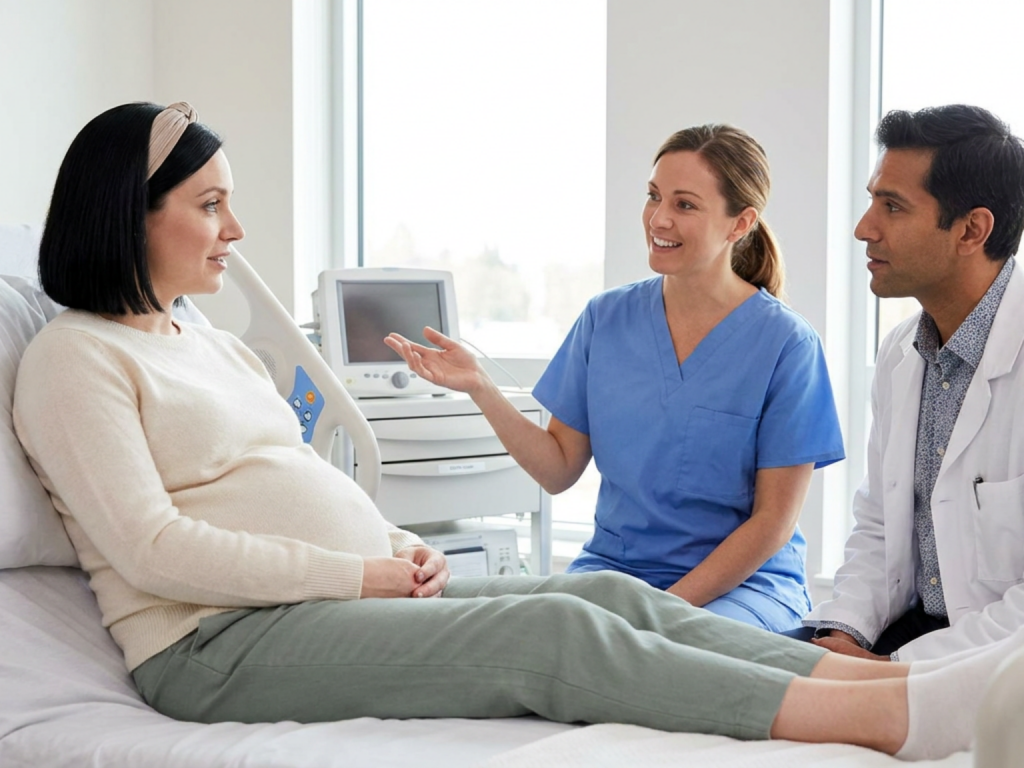
Birth choices are often described with emotionally loaded words: assisted, unassisted, medical, natural, low-intervention, physiologic, or managed. In real clinical life, these are not fixed categories but overlapping points on a continuum. A person may have a natural vaginal birth in a hospital, an assisted home birth with a midwife, an epidural-assisted labor that still progresses physiologically, or a cesarean delivery that becomes the safest option for parent and baby.
This article compares the major delivery approaches in a balanced way, with attention to safety, autonomy, evidence-based care, and the reality that birth plans sometimes need to change. It is not meant to rank one path as morally better than another; the safest and most respectful birth is one that matches the pregnancy, clinical circumstances, values, and available emergency support.
Highlights
Assisted birth means trained support is present; unassisted birth means no medical or midwifery professional attends the delivery.
Medical and natural delivery methods can overlap: a hospital birth can be low-intervention, and a home birth can still be professionally assisted.
Natural approaches such as upright positioning, water immersion, breathing techniques, and hypnosis may reduce some interventions for selected low-risk labors.
Medical interventions such as induction, epidural analgesia, operative vaginal delivery, and cesarean delivery can be lifesaving when complications arise.
The best plan is individualized, flexible, and discussed with qualified maternity care professionals before labor begins.
Understanding the terminology: assisted, unassisted, medical, and natural
Assisted birth generally means that a trained professional is present and responsible for monitoring labor, supporting delivery, and recognizing complications. This may include an obstetrician, family physician, certified nurse-midwife, registered midwife, labor and delivery nurse, anesthesiologist, neonatology team, or emergency surgical staff depending on setting and risk. The term can also refer more narrowly to operative assistance, such as vacuum or forceps delivery, but in discussions of birth settings it usually means skilled attendance.
Unassisted birth means giving birth without medical or midwifery attendance. Freebirth is a commonly used term for intentionally planning labor and birth without a qualified clinician or midwife present. This differs from an unexpectedly rapid birth before help arrives. It also differs from planned home birth attended by a licensed midwife, where prenatal screening, labor monitoring, newborn assessment, and a transfer plan are usually part of care.
Medical delivery methods involve clinical interventions intended to monitor, support, accelerate, relieve pain, or safely complete birth. Examples include continuous fetal heart rate assessment, induction or augmentation with oxytocin, amniotomy, epidural analgesia, systemic opioids, operative vaginal delivery, and cesarean delivery. These interventions may be elective, preventive, or urgent depending on the clinical context.
Natural delivery methods are usually understood as physiologic or low-intervention approaches. Natural vaginal birth may include spontaneous labor, freedom of movement, upright positions, hydrotherapy, breathing, massage, continuous labor support, and avoidance of pharmacologic pain relief unless requested or needed. Importantly, natural does not mean risk-free, and medical does not mean failure. These categories are tools for planning, not judgments about strength, identity, or parenting.
Assisted birth: what professional support adds
Professional attendance changes more than who catches the baby. Skilled maternity care involves risk assessment before labor, surveillance during labor, sterile or clean technique, recognition of abnormal bleeding, assessment of fetal wellbeing, management of shoulder dystocia, neonatal resuscitation when needed, and escalation to hospital or surgical care. In a hospital, assistance may include immediate access to blood products, anesthesia, operating rooms, antibiotics, magnesium sulfate, and neonatal intensive care. In a birth center or home setting, assistance typically emphasizes careful selection of low-risk pregnancies and early transfer if warning signs develop.
Assisted does not necessarily mean highly medicalized. Many hospital and birth-center teams support low-intervention birth, intermittent auscultation when appropriate, labor in water, mobility, delayed cord clamping, immediate skin-to-skin contact, and shared decision-making. Conversely, assisted birth can become more interventional if maternal or fetal indicators suggest benefit. The value of assistance is partly that it allows a plan to remain flexible.
Common reasons assistance becomes more active include prolonged labor with maternal exhaustion, fetal heart rate patterns suggesting hypoxia risk, hypertensive disease, fever, meconium with concern for compromise, malpresentation, cord prolapse, hemorrhage, severe perineal trauma, or retained placenta. None of these can be reliably predicted in every case, even after a reassuring pregnancy.
For many families, the reassuring aspect of assisted birth is not only technology but also clinical judgment. A skilled professional can help distinguish normal labor intensity from signs that require intervention. This support can preserve autonomy by giving timely, understandable information rather than leaving the birthing person or family to interpret rapidly changing events alone.
Unassisted birth and freebirth: autonomy, limits, and safety concerns
Some people consider freebirth because of previous traumatic care, desire for privacy, cultural or spiritual beliefs, fear of unnecessary intervention, limited access to respectful maternity services, or confidence in physiologic birth. These motivations deserve to be heard respectfully. Feeling safe, believed, and in control during labor matters; dismissing those concerns may push people further away from supportive care.
At the same time, unassisted birth carries distinctive risks because complications can evolve quickly and may require skills, equipment, medication, or surgical capability not available at home without a professional. Severe postpartum hemorrhage can become life-threatening within minutes. A newborn who does not breathe effectively may need immediate resuscitation. Shoulder dystocia, cord prolapse, placental abruption, eclampsia, or unexpected breech birth can require urgent trained response.
Planned home birth with a qualified midwife is not the same as freebirth. Attended home birth usually includes prenatal screening, confirmation that the pregnancy is low risk, supplies for maternal and newborn assessment, and a home birth transfer plan. Even then, evidence and guidelines emphasize careful selection and proximity to emergency services. Some conditions generally make out-of-hospital birth riskier, such as prior cesarean in many settings, multiple pregnancy, non-cephalic presentation, significant hypertension, placenta previa, preterm labor, or major fetal concerns.
People who feel drawn to unassisted birth may benefit from discussing the reasons with a trauma-informed obstetrician or midwife. Options may include changing providers, choosing a freestanding birth center, writing a birth preferences document, arranging a doula, requesting minimal cervical exams, planning intermittent monitoring when clinically appropriate, or ensuring consent-based communication. These alternatives may preserve many values of privacy and physiologic birth while retaining emergency safeguards.
Medical delivery methods: when intervention supports safety
Medical interventions in labor are not inherently good or bad; their value depends on indication, timing, proportionality, consent, and clinical execution. Induction of labor may be recommended for post-term pregnancy, ruptured membranes with infection risk, hypertensive disorders, diabetes with concerns, fetal growth restriction, or other maternal-fetal conditions. Augmentation may be used when labor stalls and there is a reason to help contractions become more effective. These measures require monitoring because uterine tachysystole can affect fetal oxygenation.
Pharmacologic labor pain relief options include nitrous oxide during labor, systemic opioids, and neuraxial techniques such as epidural or combined spinal-epidural analgesia. Epidurals are highly effective for pain relief and can be especially helpful during prolonged labor or when operative delivery becomes necessary. They may also have side effects, including maternal hypotension, fever, urinary retention, motor block, or longer second stage in some circumstances, so monitoring and individualized counseling matter.
Operative vaginal delivery, including vacuum or forceps delivery, may be considered when the cervix is fully dilated and birth needs assistance due to fetal status, maternal exhaustion, or certain maternal medical conditions where prolonged pushing is inadvisable. It requires specific criteria: known fetal position, engaged head, adequate pelvis, ruptured membranes, appropriate anesthesia, empty bladder, and readiness for cesarean delivery if unsuccessful.
Cesarean delivery can be planned or unplanned. It may be recommended for placenta previa, some malpresentations, certain prior uterine surgeries, multiple pregnancy scenarios, fetal compromise, obstructed labor, or failed induction. A cesarean can prevent catastrophic outcomes, but it is major abdominal surgery with risks such as hemorrhage, infection, thromboembolism, anesthetic complications, adhesions, and implications for future pregnancies. The decision is ideally made through informed discussion unless an emergency requires rapid action.
Natural and low-intervention methods: supporting physiologic labor
Natural approaches aim to work with the neurohormonal physiology of labor: oxytocin-driven contractions, endorphin release, mobility, pelvic flexibility, privacy, and continuous emotional support. For selected low-risk pregnancies, non-medical strategies can reduce discomfort, improve coping, and sometimes decrease the need for interventions without compromising safety. The key is that low-intervention care should still include observation for deviations from normal progress or wellbeing.
Common natural methods include upright positioning, walking, hands-and-knees, side-lying rest, birth balls, warm showers, water immersion, massage, counterpressure, breathing techniques, sterile water injections for back labor in some settings, hypnosis, music, aromatherapy if safe, and continuous support from a doula or trusted companion. Upright positions may use gravity and pelvic mobility to assist fetal descent. Water immersion may reduce pain perception and promote relaxation. Hypnosis and focused breathing can alter the cognitive experience of pain for some people.
The scientific literature increasingly frames these approaches not as fringe alternatives but as evidence-informed options that may be clinically equivalent to some interventions in appropriate circumstances. For example, water immersion or hypnosis may be alternatives to epidural analgesia for some people who prefer non-pharmacologic pain management. Upright or lateral pushing positions may be alternatives to routine supine positioning and may reduce the need for medically assisted delivery in selected cases.
However, natural methods are not a guarantee of uncomplicated birth. A person planning labor without pharmacological pain relief can still request medication later, and that change should be treated as adaptive rather than disappointing. Similarly, a low-intervention birth plan should specify which interventions are acceptable if indicated, such as antibiotics for group B streptococcus, intravenous access for hemorrhage risk, fetal monitoring for concerning heart rate patterns, or transfer to hospital if labor becomes unsafe outside the hospital.
Choosing a setting: hospital, birth center, home, or unassisted environment
Birth setting is one of the most important practical decisions because it determines which forms of assistance are immediately available. Hospital birth offers the broadest emergency capacity, including surgical delivery, anesthesia, blood transfusion, and neonatal resuscitation. It may also offer high-intervention routines depending on institution, but many hospitals now support mobility, doulas, intermittent monitoring for low-risk patients, hydrotherapy, and midwifery-led care.
Freestanding birth centers usually focus on physiologic birth for low-risk pregnancies. They often provide a less clinical environment, midwifery-led care, and non-pharmacologic pain support, but they do not provide cesarean delivery or the same level of emergency resources on site. Safety depends on strict eligibility criteria, experienced staff, equipment for stabilization, and rapid transfer agreements.
Planned home birth attended by a qualified midwife may appeal to people who want privacy, continuity, and minimal intervention. It requires careful screening, reliable transportation, proximity to hospital care, and clear triggers for transfer. According to medical guidance, planned home birth has been associated in some analyses with higher risks of infant death, seizures, and serious nervous system disorders compared with planned hospital birth, although absolute risks may remain low in carefully selected low-risk pregnancies. This is a central counseling point, not a reason to shame families.
Unassisted birth removes professional assessment and emergency response from the setting. Even if labor appears normal, the absence of skilled attendance can delay recognition of problems. Anyone considering this route should be encouraged to seek compassionate counseling, review emergency scenarios, and consider safer alternatives that still respect bodily autonomy.
Building a flexible, informed birth plan
A useful birth plan is less a script and more a communication tool. It identifies values, preferences, consent needs, cultural or spiritual practices, trauma triggers, pain management priorities, newborn care wishes, and thresholds for intervention. It also acknowledges that labor is dynamic and that clinical information may change. The goal is not to control every event but to make decision-making clearer under stress.
For medically literate readers, it may help to organize preferences by phase: latent labor, active labor, second stage, third stage, cesarean contingencies, and newborn care. For example, one might prefer spontaneous labor if safe, mobility and upright positions, intermittent auscultation if eligibility criteria are met, avoidance of routine amniotomy, epidural on request rather than early by default, delayed cord clamping if newborn status allows, and immediate skin-to-skin contact. The same plan can state acceptance of continuous monitoring, oxytocin, operative vaginal delivery, or cesarean delivery if specific indications arise.
Pre-labor consultation is especially important for people with prior cesarean, hypertensive disorders, diabetes, fetal growth concerns, placenta abnormalities, multiple gestation, breech presentation, anticoagulant use, significant cardiac disease, or previous obstetric trauma. Discussion should include local resources: emergency cesarean capability, transfer times, anesthesia availability, neonatal support, and postpartum hemorrhage management.
Perhaps the most compassionate framing is this: birth is not a performance. A natural vaginal birth, an epidural birth, an assisted vacuum birth, and a cesarean birth can all be powerful, dignified, and loving. The healthiest plan is one that combines respect for physiologic birth with readiness to use medical care when it improves the chance that parent and baby leave birth safe.
Seek urgent professional care
- Heavy vaginal bleeding, fainting, severe abdominal pain, or signs of shock require emergency evaluation.
- Reduced or absent fetal movement before labor should be assessed promptly by maternity care professionals.
- Fever, severe headache, visual symptoms, chest pain, seizures, or high blood pressure symptoms need urgent care.
- Green or foul-smelling fluid, cord prolapse, or a baby not breathing well after birth are emergencies.
- If planning out-of-hospital birth, discuss transfer criteria and emergency transport before labor begins.
Tools & Assistance
- Schedule a prenatal consultation with an obstetrician or qualified midwife to review eligibility for each birth setting.
- Create a birth preferences document that includes both low-intervention wishes and emergency contingencies.
- Ask about local hospital transfer times, neonatal resuscitation resources, and postpartum hemorrhage protocols.
- Consider a doula or trauma-informed support person for continuous emotional and communication support.
- Attend evidence-based childbirth education that covers natural coping methods and medical interventions.
FAQ
Is unassisted birth the same as natural birth?
No. Natural birth usually means low-intervention or unmedicated physiologic birth. Unassisted birth means no medical or midwifery professional is present, which adds safety concerns even if the labor is otherwise physiologic.
Can I have a natural birth in a hospital?
Often, yes. Many hospitals support mobility, water therapy, doulas, intermittent monitoring when appropriate, and unmedicated vaginal birth, while keeping emergency care available.
Does using an epidural mean the birth is no longer vaginal or empowering?
No. Epidural analgesia changes pain management, not the value of the birth. Many people have a vaginal birth with an epidural and still experience informed, active participation.
When is operative vaginal delivery considered?
Vacuum or forceps delivery may be considered when birth needs to be expedited in the second stage and specific safety criteria are met. It should be performed by a trained clinician with readiness for cesarean if needed.
What is the safest delivery method?
There is no single safest method for everyone. Safety depends on maternal health, fetal status, pregnancy risk factors, gestational age, prior uterine surgery, setting, clinician skill, and emergency resources.
Sources
- PubMed Central (National Library of Medicine, NIH) — Normal childbirth: The natural, non-medical, alternative approaches to the most common medical interventions in labor
- Mayo Clinic — Home birth: Know the pros and cons
- Pregnancy, Birth and Baby — What is freebirth
Disclaimer
This article is for general medical information and does not replace individualized care from an obstetrician, midwife, or other qualified clinician. Seek urgent medical help for concerning symptoms in pregnancy, labor, birth, or postpartum recovery.

















Please log in to leave a comment.