
Intro
A C-section birth story can hold many truths at once: relief, fear, gratitude, grief, pride, pain, and love. For some parents, cesarean birth is planned and calm; for others, it arrives suddenly after hours of labor, changing the expected ending of pregnancy in minutes.
This article combines a realistic first-person-style narrative with medically grounded explanations, so readers can understand what a cesarean section may feel like physically and emotionally. It is not a substitute for individualized obstetric care, but it can help you ask informed questions and feel less alone.
Highlights
A real C-section experience often includes both clinical precision and intense emotion, especially when the surgery is unplanned.
Regional anesthesia, sterile preparation, fetal monitoring, uterine incision, birth, placental delivery, and layered closure are common parts of the operative sequence.
Recovery is usually measured in weeks, not days, and includes pain control, wound care, mobility, feeding support, and emotional adjustment.
Feelings after cesarean birth can be complex; sadness or disappointment does not mean a parent is ungrateful for a healthy baby.
When the birth plan changed
I had imagined early labor at home, breathing through contractions, arriving at the hospital already well into the rhythm of birth. For the first several hours, that is almost what happened. The contractions were strong but organized, and the monitors showed the baby moving between sleep and activity. I remember watching the tracing, learning the language of peaks and baselines, and trying to trust that my body and baby were working together.
Then the tone in the room shifted. The midwife and obstetrician explained that the fetal heart rate pattern had become less reassuring, especially after contractions. They did not rush their words, but they were clear. We tried repositioning, intravenous fluids, and a pause in medication that had been supporting contractions. For a short time, the tracing improved. Then it dipped again.
The recommendation was an emergency C-section during labor. I heard the word emergency and felt my mind separate from the room. Part of me understood the clinical reasoning: persistent decelerations can suggest reduced fetal reserve or impaired oxygenation. Another part of me was still holding the birth plan I had written weeks earlier. I asked if the baby was in immediate danger. The obstetrician said the situation was urgent rather than chaotic, but waiting could increase risk.
Consent felt both necessary and surreal. I signed a form acknowledging bleeding, infection, injury to surrounding organs, anesthesia complications, and blood clots. The team explained what would happen next. My partner put on theatre clothing. I cried, not because I thought I had failed, but because the story had changed faster than my heart could follow.
Entering the operating room
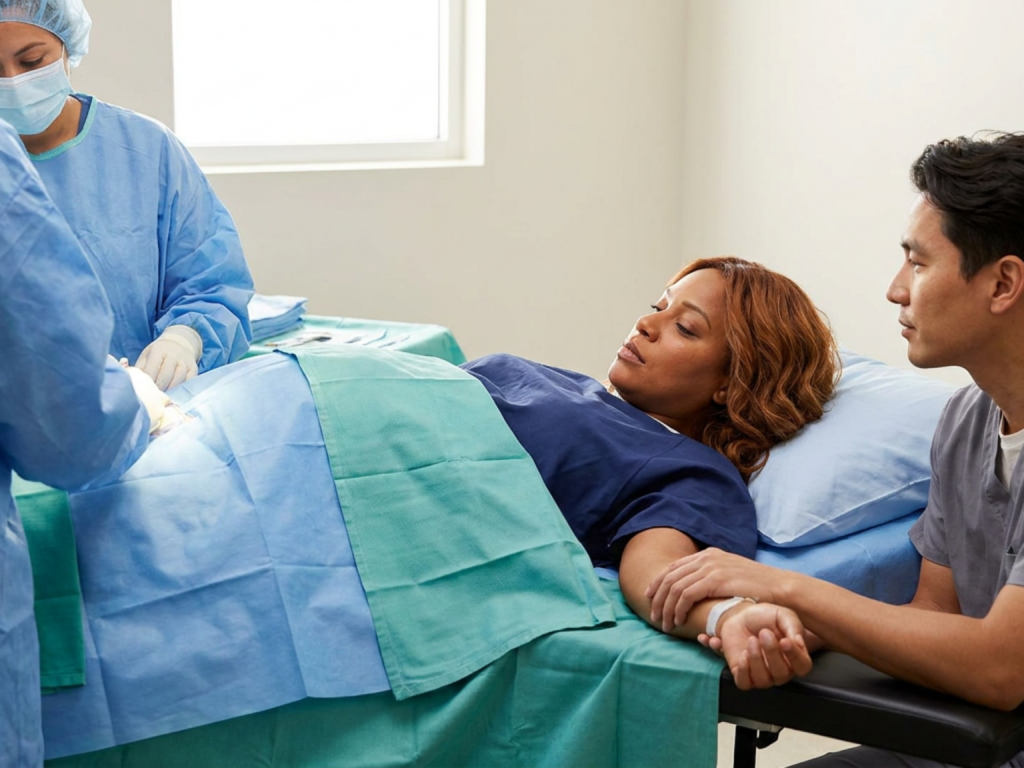
The operating room was brighter and colder than the labor room. There were more people than I expected: obstetricians, anesthetic staff, nurses, a pediatric or neonatal clinician, and someone documenting times and medications. Each person had a job, and that structure helped. It made the room feel purposeful rather than frightening.
I already had an epidural, so the anesthetist adjusted it for surgical anesthesia. Some people receive a spinal anesthetic instead, depending on timing and clinical circumstances. Regional anesthesia for C-section usually means the parent is awake but numb from the abdomen downward. The anesthetist checked the level of numbness using cold sensation and gentle touch. I could feel pressure, movement, and tugging, but not sharp pain. That distinction mattered: sensation was not absence of experience, but it was not the same as being cut.
C-section sterile preparation began quickly. A catheter drained my bladder to reduce injury risk and keep it decompressed. My abdomen was cleaned with antiseptic solution, sterile drapes were placed, and a screen separated my view from the surgical field. I remember my arms feeling slightly restricted by monitors and intravenous lines, which made me feel vulnerable. The anesthetist stayed near my head and narrated the reassuring parts: blood pressure stable, oxygen level good, baby coming soon.
Before the incision, the team completed safety checks: my identity, allergies, antibiotic prophylaxis, anesthesia level, and indication for surgery. That pause made me feel seen as a person, not only as a procedure. My partner sat beside me and kept one hand near my shoulder because I could not comfortably reach much else.
The moment of birth
The surgery itself moved quickly. I did not see the low transverse abdominal incision, but I felt rhythmic pressure as the tissue layers were opened. The obstetrician later explained that many cesareans use a low transverse uterine incision, which generally heals well and may be relevant when discussing future birth options. In the moment, all I knew was pressure under my ribs, rocking through my torso, and the anesthetist reminding me that pressure was expected.
Then someone said, “You are going to feel a lot of pushing.” It was an odd sentence during a surgical birth, but accurate. The baby was lifted from the uterus, and the room held its breath for a second that felt far too long. Then there was a cry. Not cinematic, not gentle, but real. My whole body reacted before my mind did. I sobbed with relief.
The neonatal clinician assessed the baby briefly. Because the baby was vigorous, we were able to have a short moment of cheek-to-cheek contact near the drape while the team continued surgery. Not every cesarean allows immediate skin-to-skin; it depends on maternal stability, neonatal transition, operating room policy, and staffing. Still, even that brief closeness helped me connect the surgical room to the fact that birth had happened.
Placenta removal during C-section occurred after the baby was delivered. I could feel more tugging and pressure as the uterus was managed, bleeding assessed, and medications given to support uterine contraction. The closure took longer than the birth. Layers had to be repaired carefully: uterus, fascia, subcutaneous tissue when needed, and skin. While everyone else moved into the next clinical steps, I lay there trying to understand that I was no longer pregnant.
The first hours after surgery
Recovery began in a monitored area where nurses checked my blood pressure, pulse, bleeding, uterine tone, pain score, urine output, and the surgical dressing. My legs were heavy from anesthesia, and I shook uncontrollably for a while, a common response after birth, anesthesia, temperature changes, and adrenaline. I was thirsty but initially allowed only small sips until the team was comfortable with my nausea risk.
The first attempt at feeding felt awkward. I had expected feeding to be instinctive, but positioning after abdominal surgery required creativity. A nurse helped with a side-lying position and later a football hold to keep pressure off the incision. Whether someone breastfeeds, chestfeeds, pumps, or formula feeds, support matters after cesarean birth because pain, fatigue, IV lines, and limited mobility can complicate the first attempts.
Postoperative cesarean pain control was not about eliminating all sensation. It was about keeping pain low enough to breathe deeply, cough, hold the baby, sleep briefly, and begin moving safely. My team used scheduled non-opioid medications and discussed stronger options if needed. I learned not to wait until pain was severe before speaking up, because severe pain made movement more frightening.
The first time standing was humbling. A nurse lowered the bed, checked that I was not dizzy, and helped me sit before standing. My abdomen felt as if it needed both hands for support. Short walks reduced stiffness and helped lower the risk of blood clots, but no one expected athletic recovery. I shuffled to the bathroom like someone learning gravity again.
Going home with an incision and a newborn
At discharge, I carried instructions for incision care, medication timing, activity limits, bleeding expectations, and warning signs. The baby went home in a car seat; I went home with a tender abdomen, swollen feet, a uterus still contracting, and the strange sensation that a major operation had happened just as parenthood began.
The first week was the hardest physically. Getting in and out of bed required planning. Laughing, coughing, and sneezing needed a pillow held against the incision. I avoided lifting anything heavier than the baby because the abdominal wall and uterine incision were healing. Stairs were possible but slow. Showering felt like an achievement. The incision looked neater than I expected, but I checked it daily for spreading redness, increasing warmth, drainage, separation, or worsening pain.
By the second and third weeks, I could walk more comfortably, but fatigue came in waves. Friends sometimes assumed that because the baby was born safely, I should feel recovered. In reality, cesarean section recovery often takes four to six weeks for basic healing, and some sensations, numbness, scar sensitivity, or core weakness can last longer. Healing is not only the skin; the uterus and deeper fascial layers need time too.
I appreciated practical help more than inspirational comments. Meals, laundry, holding the baby while I showered, and driving to appointments were more useful than being told to “enjoy every minute.” I did enjoy many minutes. I also cried through many minutes. Both were true.
The emotional afterbirth
The emotional recovery was less linear than the physical one. I felt grateful for the surgery because I believed it protected my baby. I also felt grief that labor did not end as I had imagined. At night, I replayed the moment the room changed. I wondered whether I had missed a sign, whether I had asked enough questions, whether my body had failed. In postpartum life, tired thoughts can become harsh thoughts.
Research on birth experiences after cesarean shows that women’s perceptions are deeply shaped by communication, control, support, and whether the cesarean was planned or unexpected. Qualitative accounts often describe an unplanned C-section as emotionally disruptive, even when medically appropriate. This matched my experience: the incision healed faster than the story did.
Postpartum anxiety also appeared in quiet ways. I checked the baby’s breathing often. I felt uneasy when discussing the birth because people either minimized it or looked frightened. A clinician eventually asked a simple question: “When you think about the birth, do you feel safe in your body now?” That opened a conversation about intrusive memories, sleep, and support. Not everyone with a difficult birth develops postpartum depression, anxiety, or trauma symptoms, but screening and early help can be protective.
What helped most was a postpartum debrief with the obstetric team. They reviewed the fetal monitoring, the interventions attempted, the indication for surgery, and the operative notes. Hearing the clinical timeline did not erase my sadness, but it reduced self-blame. It also helped me understand what information would matter for future pregnancies.
Looking back with compassion
Months later, I no longer describe the cesarean as the opposite of birth. It was birth, but it was also surgery, and both truths deserve respect. The operating room did not make the experience less maternal. The scar did not make the effort invisible. The fact that other people performed the operation did not mean I did nothing. I consented, endured, recovered, fed, soothed, and healed.
If I could speak to myself before that day, I would say this: learn the basics of cesarean birth even if you hope for vaginal birth. Ask about family-centered cesarean options, such as clear drapes, immediate skin-to-skin when safe, partner presence, delayed cord clamping when appropriate, and narration preferences. Ask what happens if labor changes. Preparation does not invite complications; it gives you language if plans shift.
I would also say that no single birth story should become a rule for everyone. A planned cesarean for placenta previa, breech presentation, prior uterine surgery, or maternal medical indication may feel calm and empowering. An urgent cesarean after labor may feel frightening. A medically uncomplicated surgery may still be emotionally hard. A difficult operation may still be remembered with pride.
The best birth care recognizes both physiology and personhood. It explains risk without coercion, offers choices where choices exist, and remains compassionate when choices narrow. A real C-section story is not only about an incision and a baby. It is about the moment a parent crosses into a new life through a door they may not have expected, carrying strength they may not yet know how to name.
When to seek urgent medical advice
- Heavy bleeding, soaking pads rapidly, passing large clots, or feeling faint needs urgent assessment.
- Fever, worsening incision redness, pus-like drainage, separation, or escalating pain may suggest infection and should be reviewed promptly.
- Chest pain, shortness of breath, one-sided leg swelling, or sudden severe headache can be emergency warning signs.
- Thoughts of self-harm, harming the baby, or feeling unable to stay safe require immediate emergency or crisis support.
- Severe abdominal pain, persistent vomiting, or foul-smelling lochia should be discussed with a healthcare professional.
Tools & Assistance
- Write down questions for your obstetrician or midwife before discharge and at the postpartum visit.
- Use a medication schedule approved by your care team to avoid falling behind on pain control.
- Arrange practical support for meals, transport, older children, and household tasks during early recovery.
- Request a birth debrief if you feel confused, distressed, or self-blaming about how the cesarean unfolded.
- Contact a perinatal mental health service if anxiety, low mood, intrusive memories, or panic persist.
FAQ
Is it normal to feel disappointed after a medically necessary C-section?
Yes. Relief and disappointment can coexist. If sadness, guilt, intrusive memories, or anxiety feel persistent or overwhelming, speak with a healthcare professional.
How long does C-section recovery usually take?
Many people need about four to six weeks for basic recovery, but pain, fatigue, numbness, scar sensitivity, and emotional processing can last longer.
Can I hold my baby right after a cesarean?
Often yes, if you and the baby are stable and the hospital has support for safe positioning. In some situations, newborn assessment or maternal care must come first.
Does a C-section mean I cannot have a vaginal birth later?
Not always. Vaginal birth after cesarean may be an option for some people, depending on the uterine incision, prior history, pregnancy factors, and local clinical resources.
What should I ask at my postpartum appointment?
Ask about incision healing, pain, bleeding, contraception, activity, pelvic floor and abdominal rehabilitation, mood screening, and implications for future pregnancies.
Sources
- National Institutes of Health / PubMed Central — The Experience of Women Giving Birth after Cesarean Section—A Qualitative Study
- Novant Health — Mom to mom: Here's what my C-section experience was like
- Tommy's — Annie's c-section birth story
Disclaimer
This article is for informational purposes only and does not replace medical advice, diagnosis, or treatment. Always consult your obstetric, midwifery, anesthesia, pediatric, or mental health professional about your individual care.

















Please log in to leave a comment.